NAMIBIA — The Story Behind the Lens
They say Africa is a continent you either love instantly or it never leaves you. For me, it was immediate. My journey into Namibia’s wilderness began alongside fellow photographer Vincent Verstraete, with a shared passion for its raw landscapes and wildlife.
I returned several times, including journeys with my partner, each visit revealing another side of this extraordinary country. From the air, I flew over the vast dunes of Sossusvlei, the haunting Skeleton Coast and endless desert landscapes, discovering a scale and geometry impossible to fully appreciate from the ground.
Damaraland — Desert Elephants and the Night Sky
In Damaraland, we immersed ourselves in one of Namibia’s harshest environments, tracking the legendary desert elephants and observing their remarkable ability to survive with very little water in an unforgiving landscape.
Here, the experience continued long after sunset. We slept in simple tents beneath an immense African sky, where the Milky Way stretched across the darkness with extraordinary clarity. Far from towns and artificial light, the night seemed almost infinite.
Inside the tent, every sound carried a different meaning. The wilderness never truly stopped; it simply became invisible. Knowing that wildlife was moving somewhere beyond the darkness created a profound awareness of how small we were within this landscape.
The Milky Way above, the desert around us and the unseen wilderness beyond the tent created a feeling that no photograph can completely reproduce.
Etosha National Park became another major destination, and one of Namibia’s prime locations for wildlife photography. Around the waterholes, the rhythm of the wilderness becomes almost hypnotic. Animals emerge from the dry landscape, approach cautiously, drink and disappear again.
The real reward is patience. You may wait without knowing what will appear next, until suddenly the waterhole becomes a stage for an extraordinary interaction.
Etosha also offered something particularly special: the possibility of photographing wildlife at night from within a safe, protected environment. Watching the darkness around a waterhole while knowing that wildlife was moving beyond the boundary gave nocturnal photography an entirely different meaning.
The contrast was remarkable, during the day, the harsh Namibian light revealed the animals and their surroundings; after sunset, darkness transformed the same environment into a world of anticipation and mystery.
Namibia continues to leave a lasting imprint on me. From the vast geometry of the desert to the desert elephants of Damaraland and the wildlife of Etosha, every journey has reminded me that patience, observation and respect are as important to the photograph as the camera itself.
And perhaps that is what keeps drawing me back: Namibia is not simply a place to photograph. It is a place to experience.
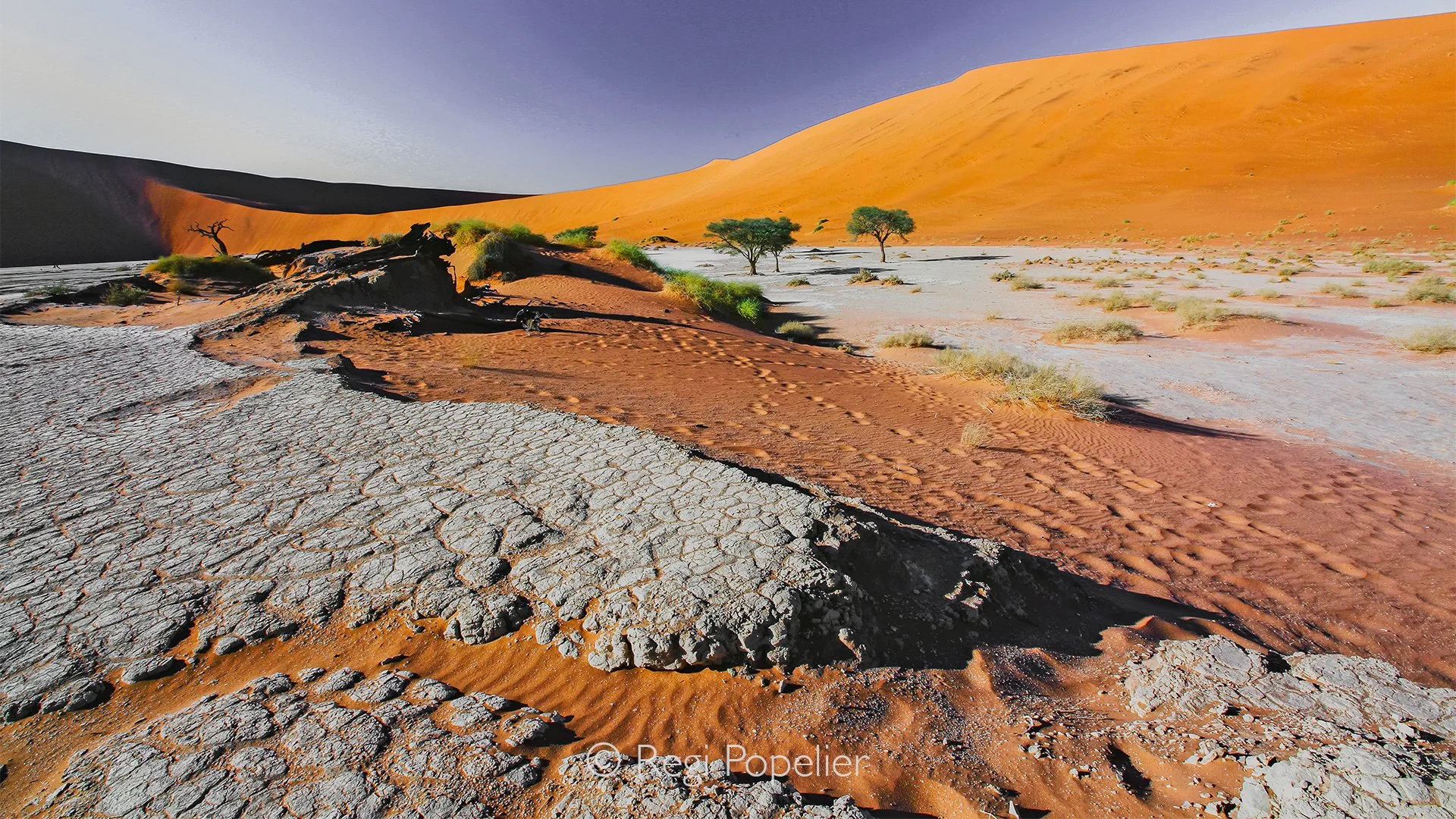
Namibia001 - The contrast of the landscape in Deadvlei.
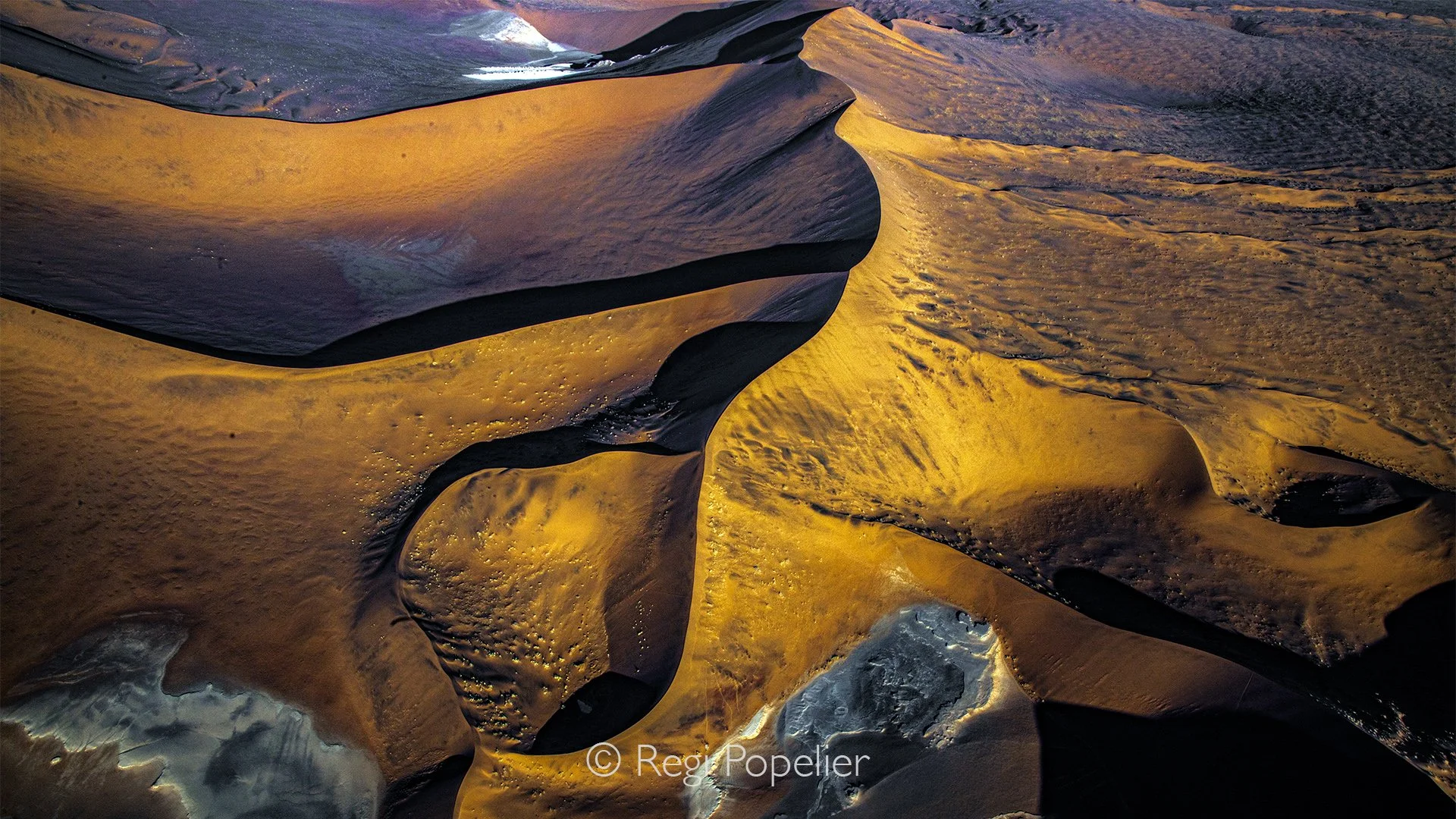
Namibia002 - Aerial image from skeleton coast.
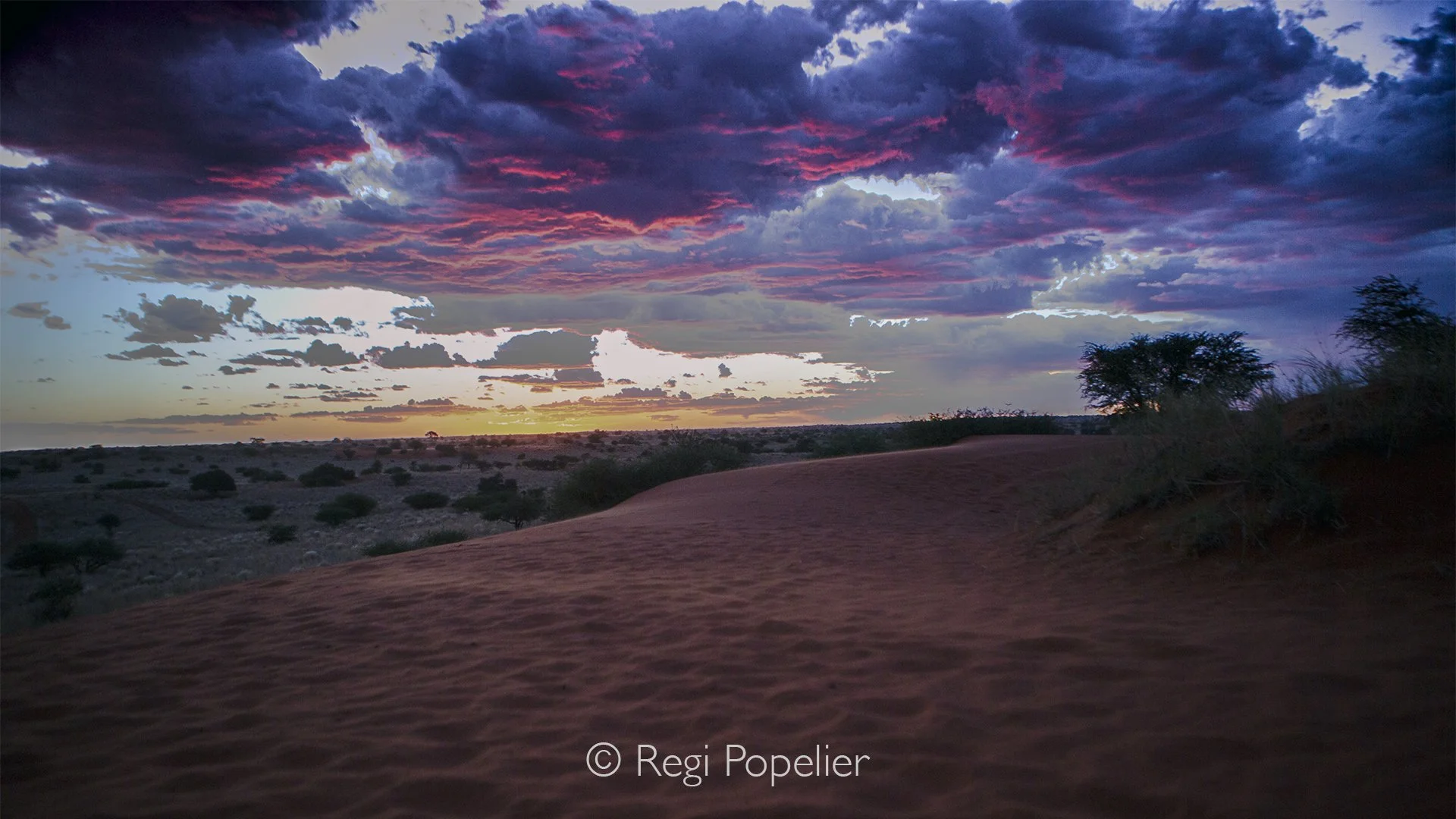
Namibia003 - On the road to Quiver
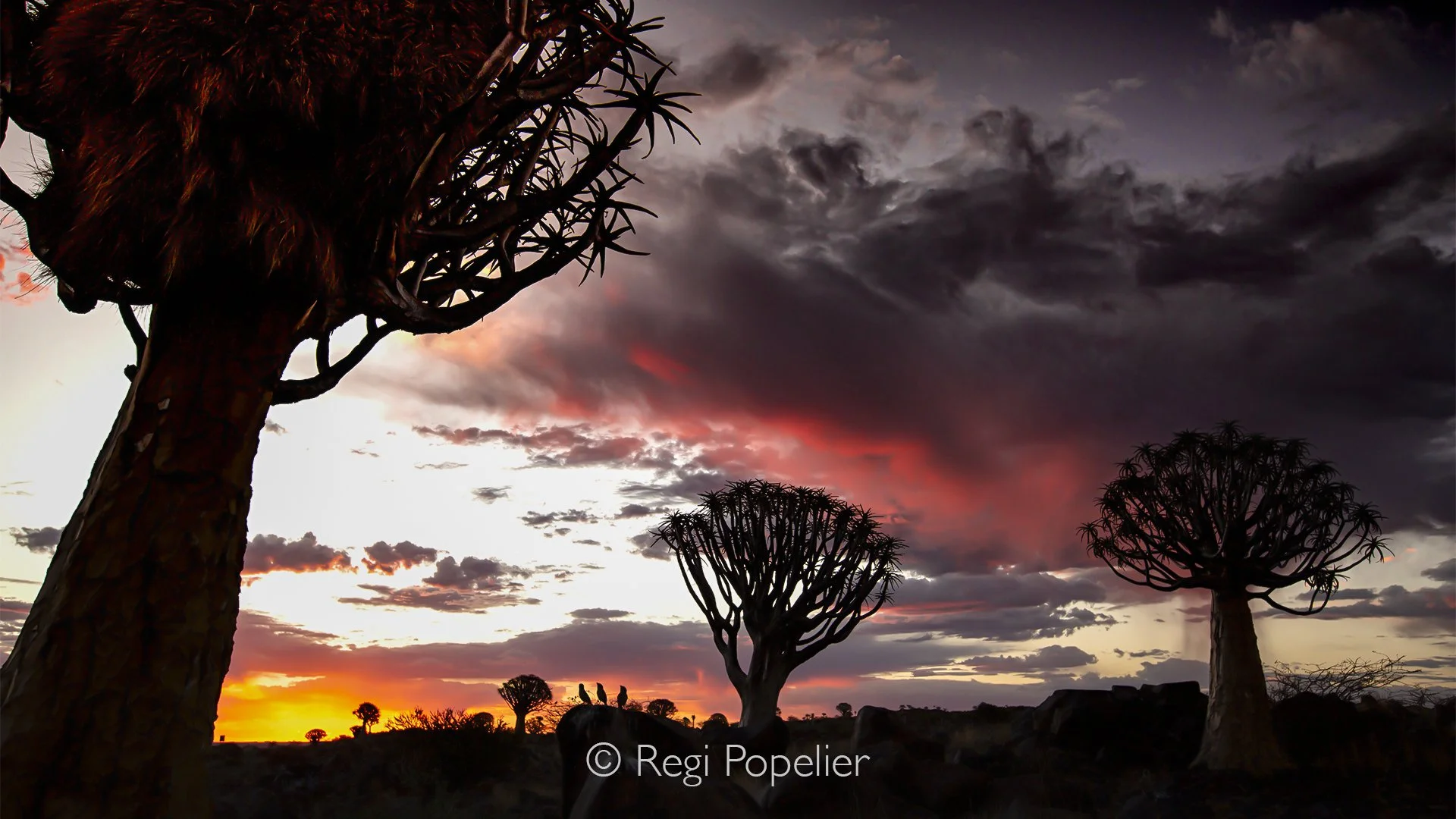
Namibia004 - evening and night photography at Quiver
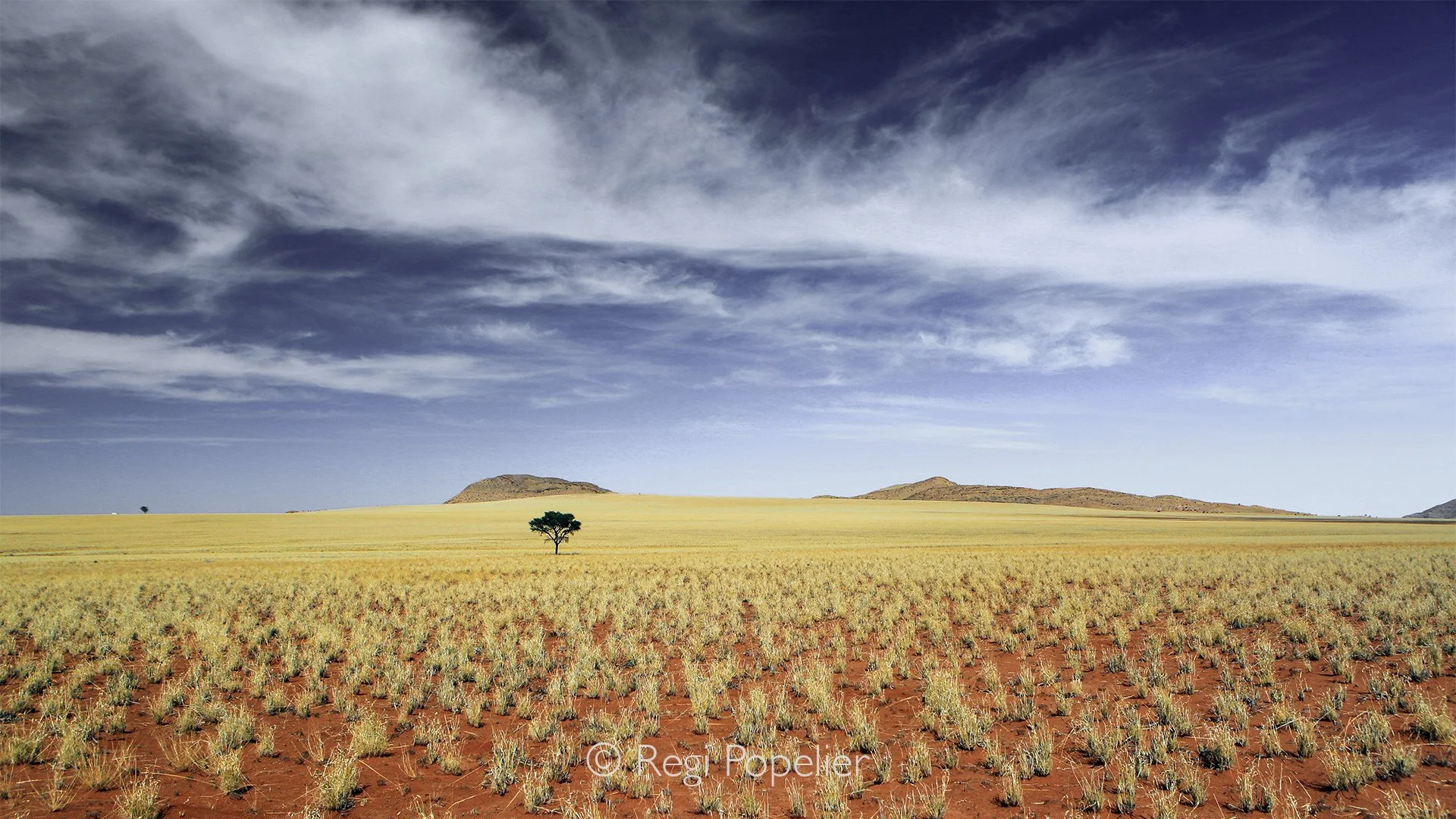
Namibia005 - Amazing Landscape.
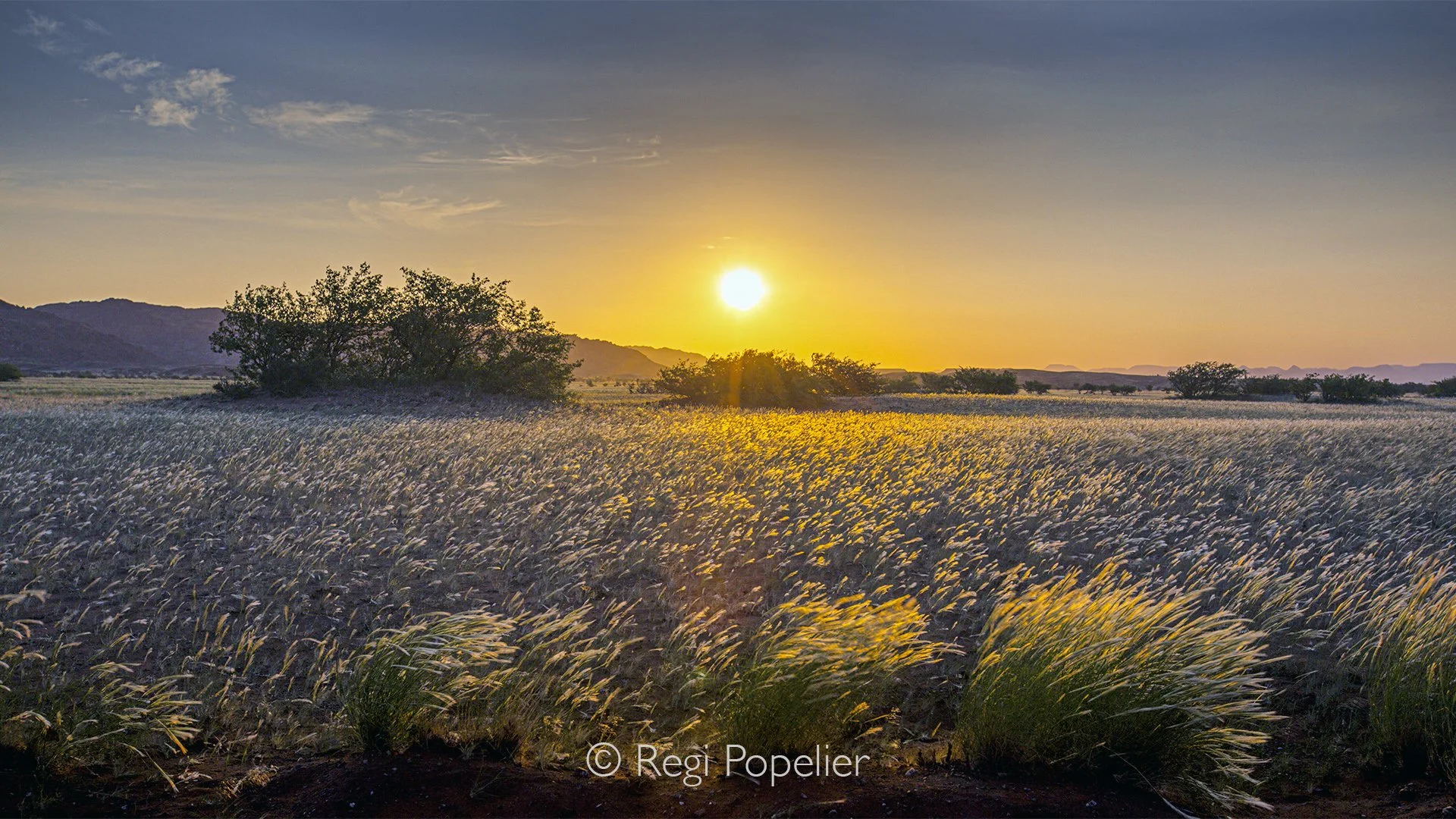
Namibia006 - Upcoming sun luminating high grasses.
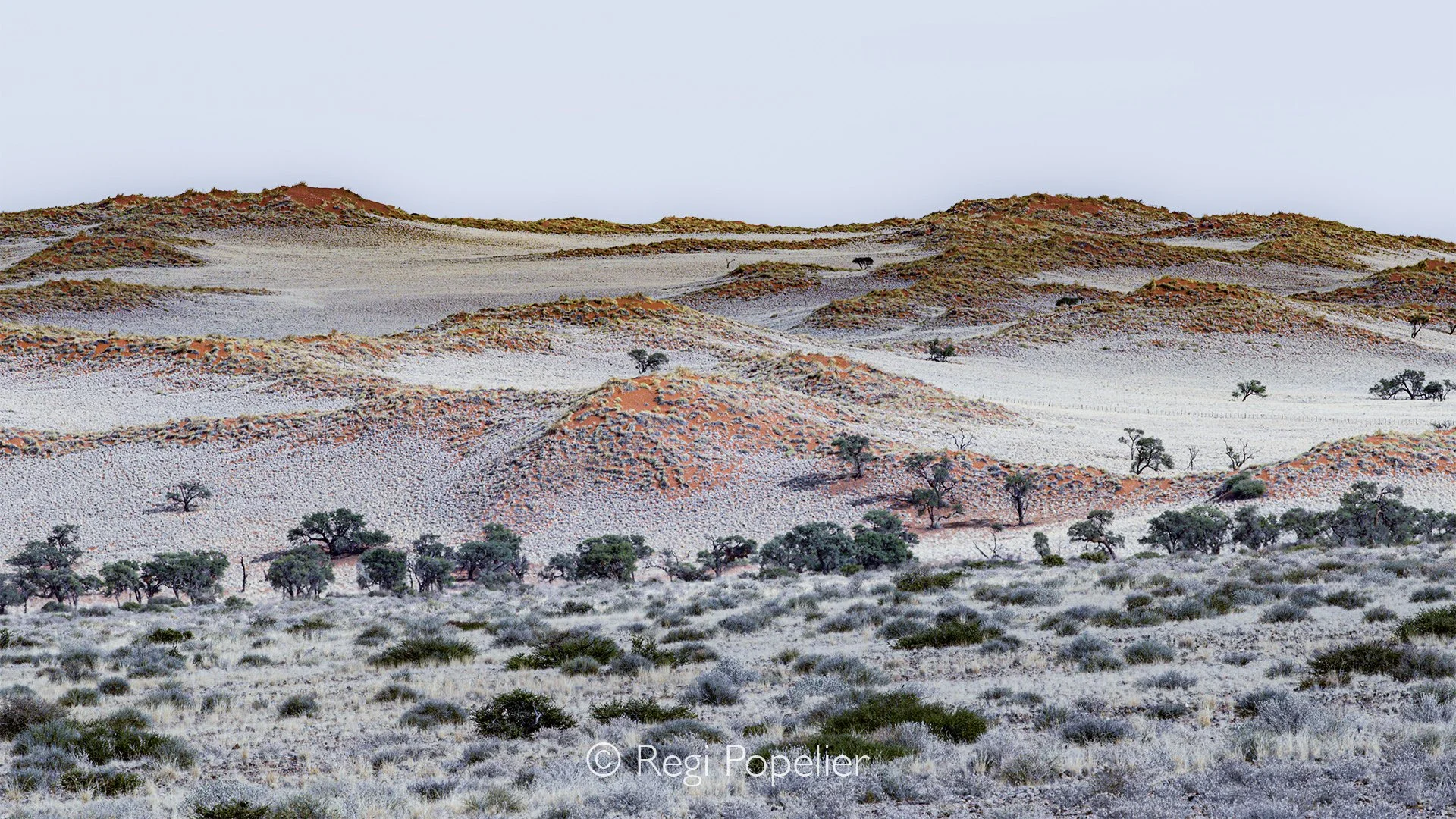
Namibia007 - The famous Fairy Circles of the Namib Desert. Photographed while standing on the roof of our car.
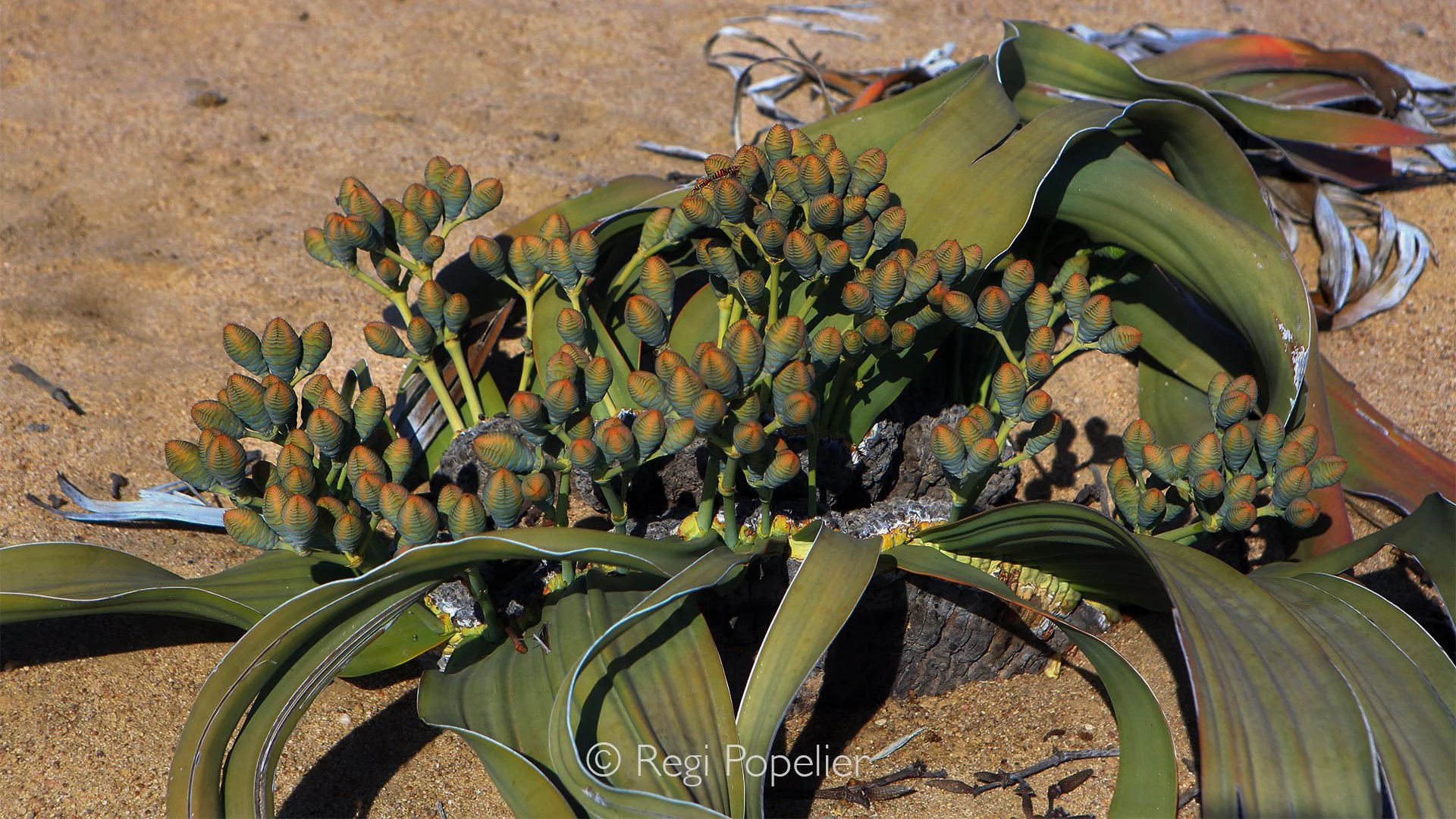
Namibia008 - The Welwitschia Mirabilis is a plant which is endemic to the Namib desert in Namibia and Southern Angola.
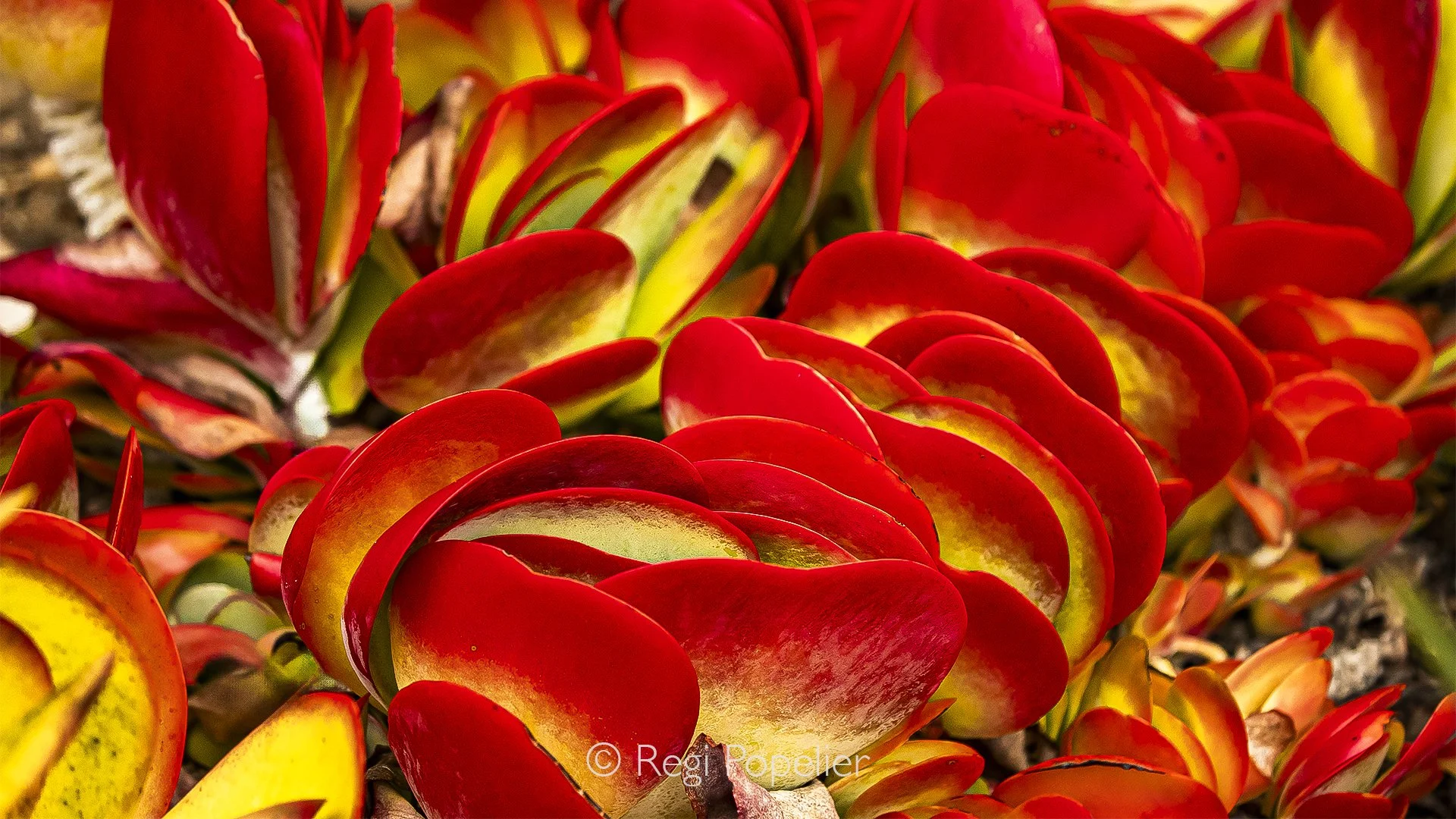
Namibia009 -
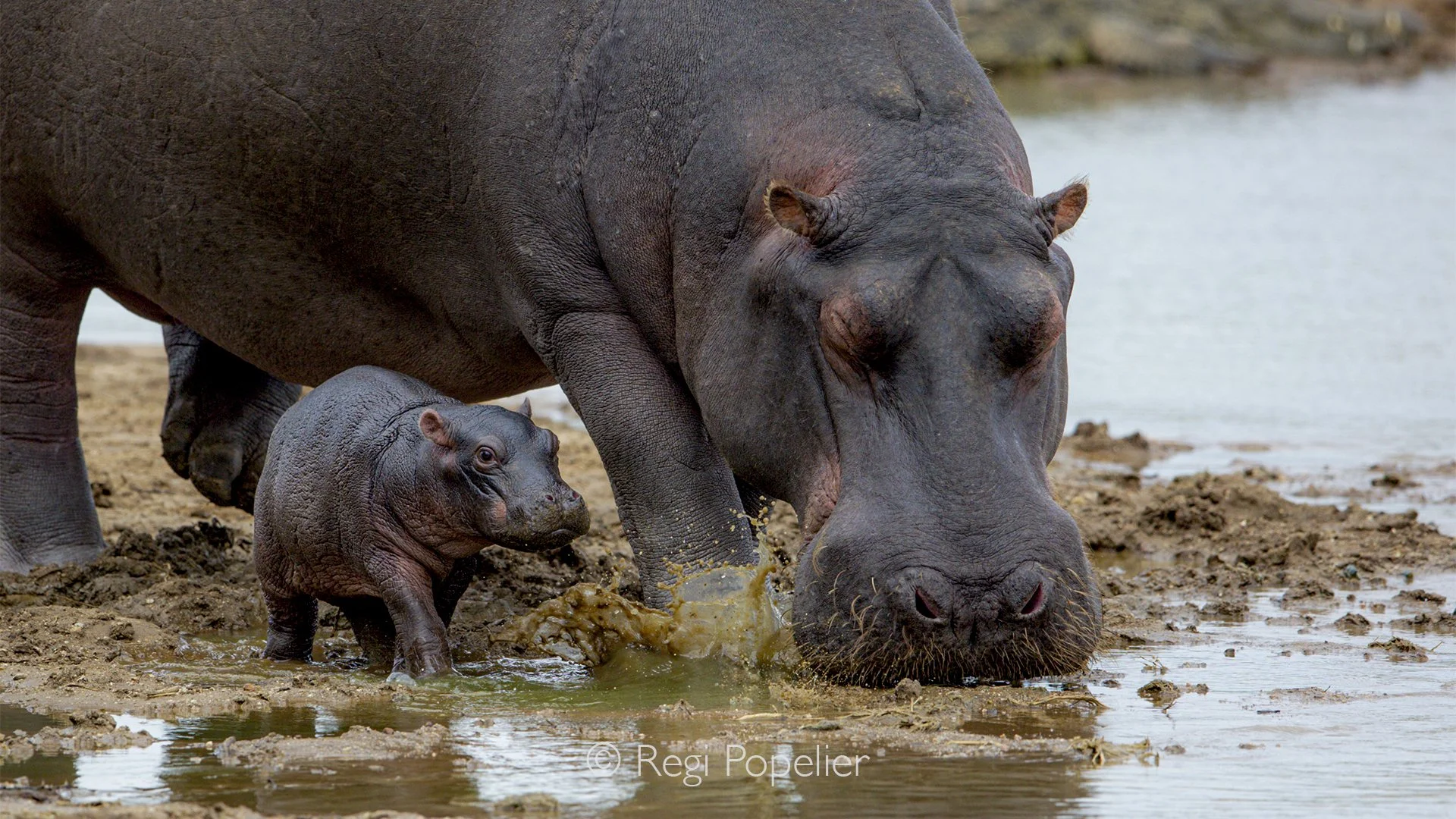
Namibia010 - Mother hippo with her new born calf.
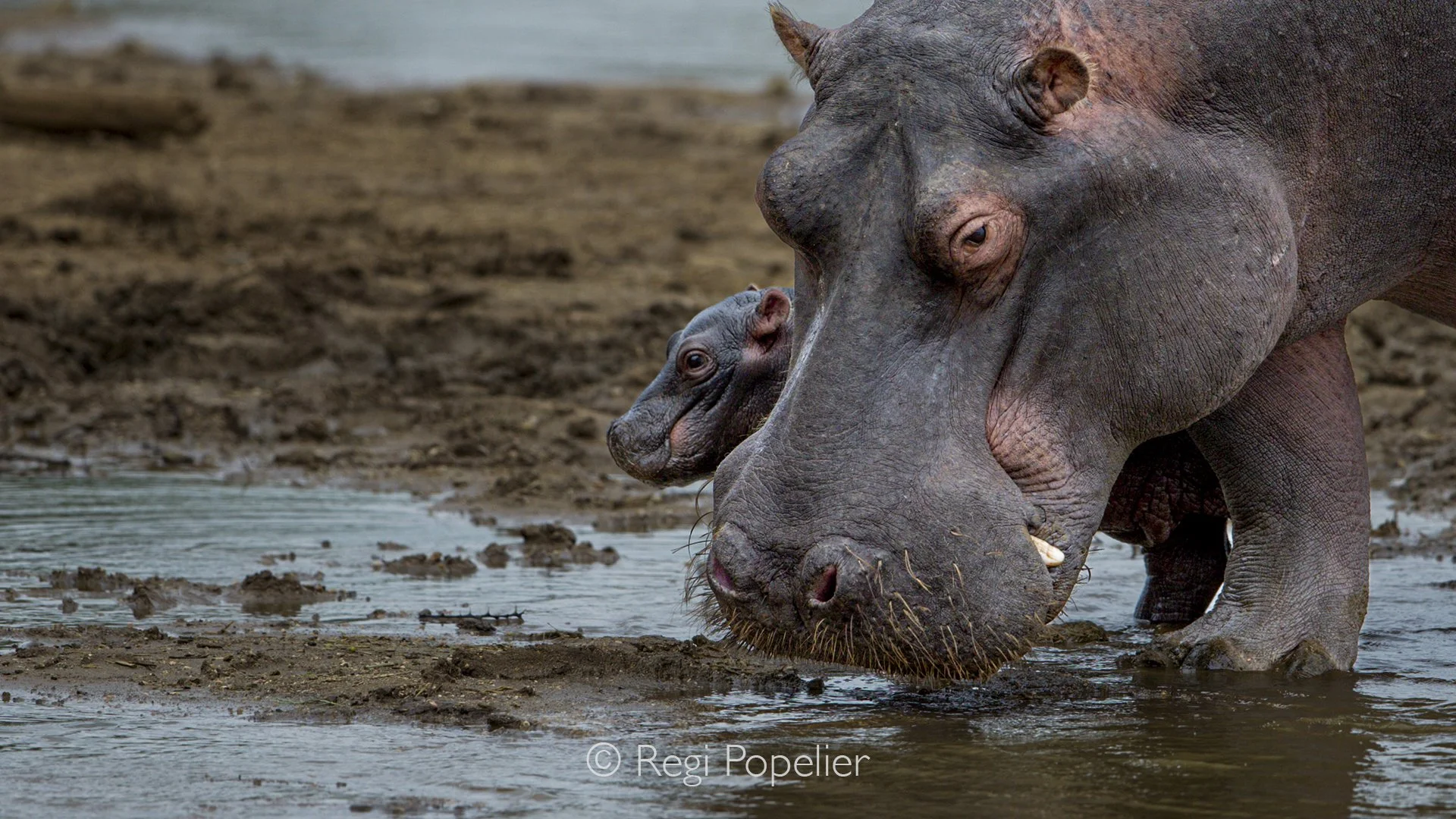
Namibia011 - Mother and calf.
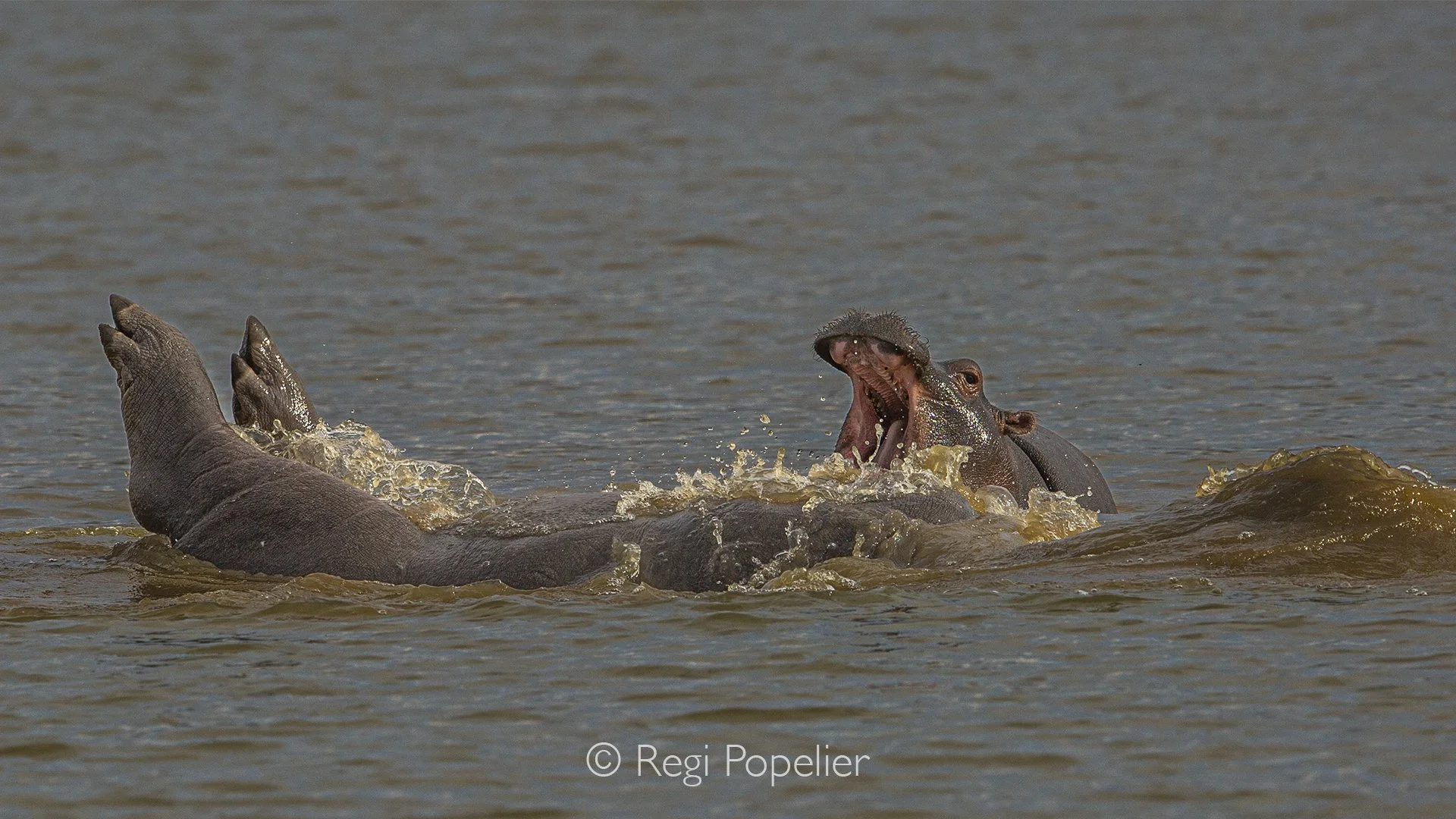
Namibia012 - Playtime at Erindi.
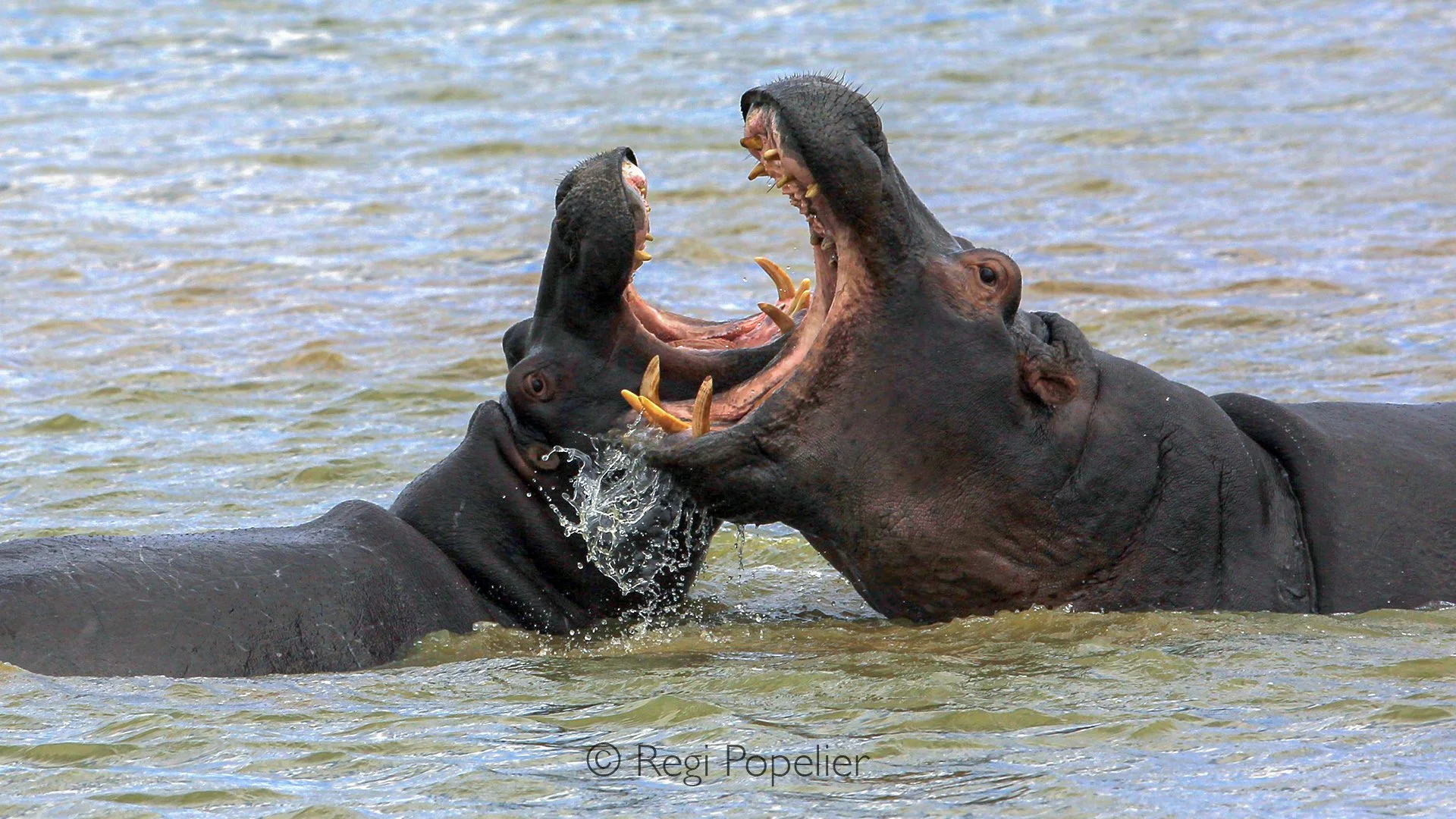
Namibia013 - Hippo's courtship the introduction to the mating game.
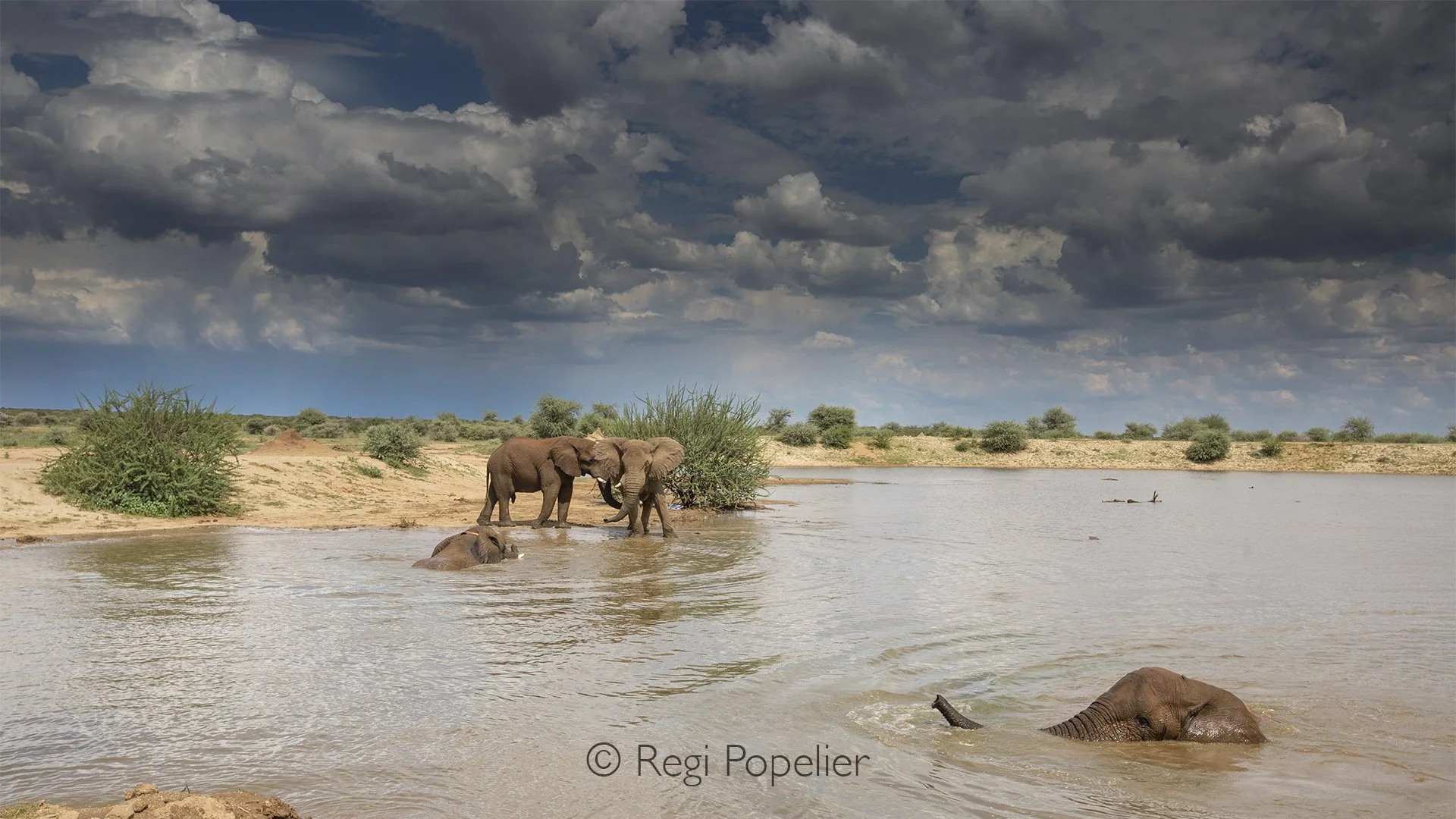
Namibia014 - Playtime for elephants at Erindi.
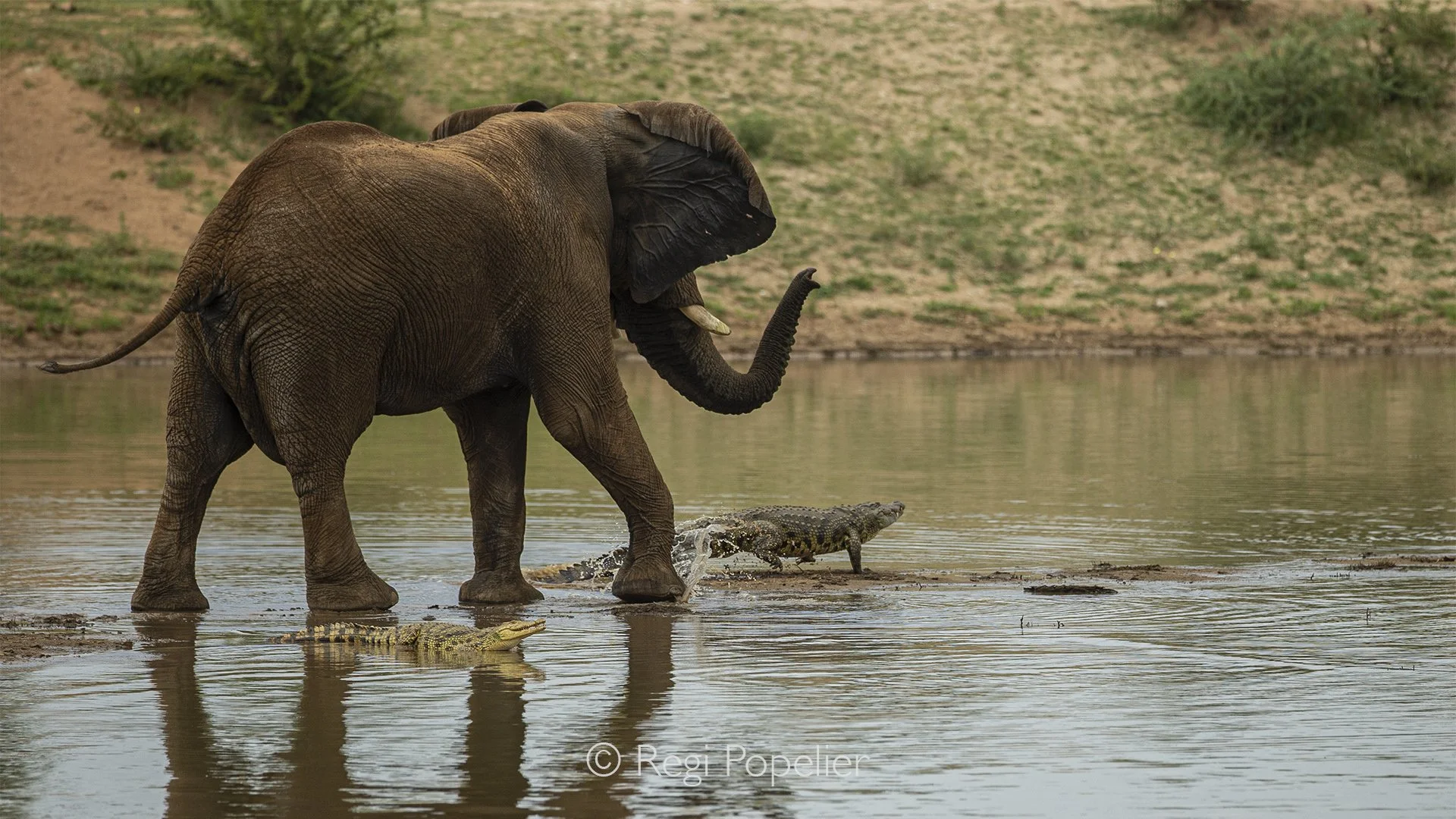
Namibia015 - Clearing the area.
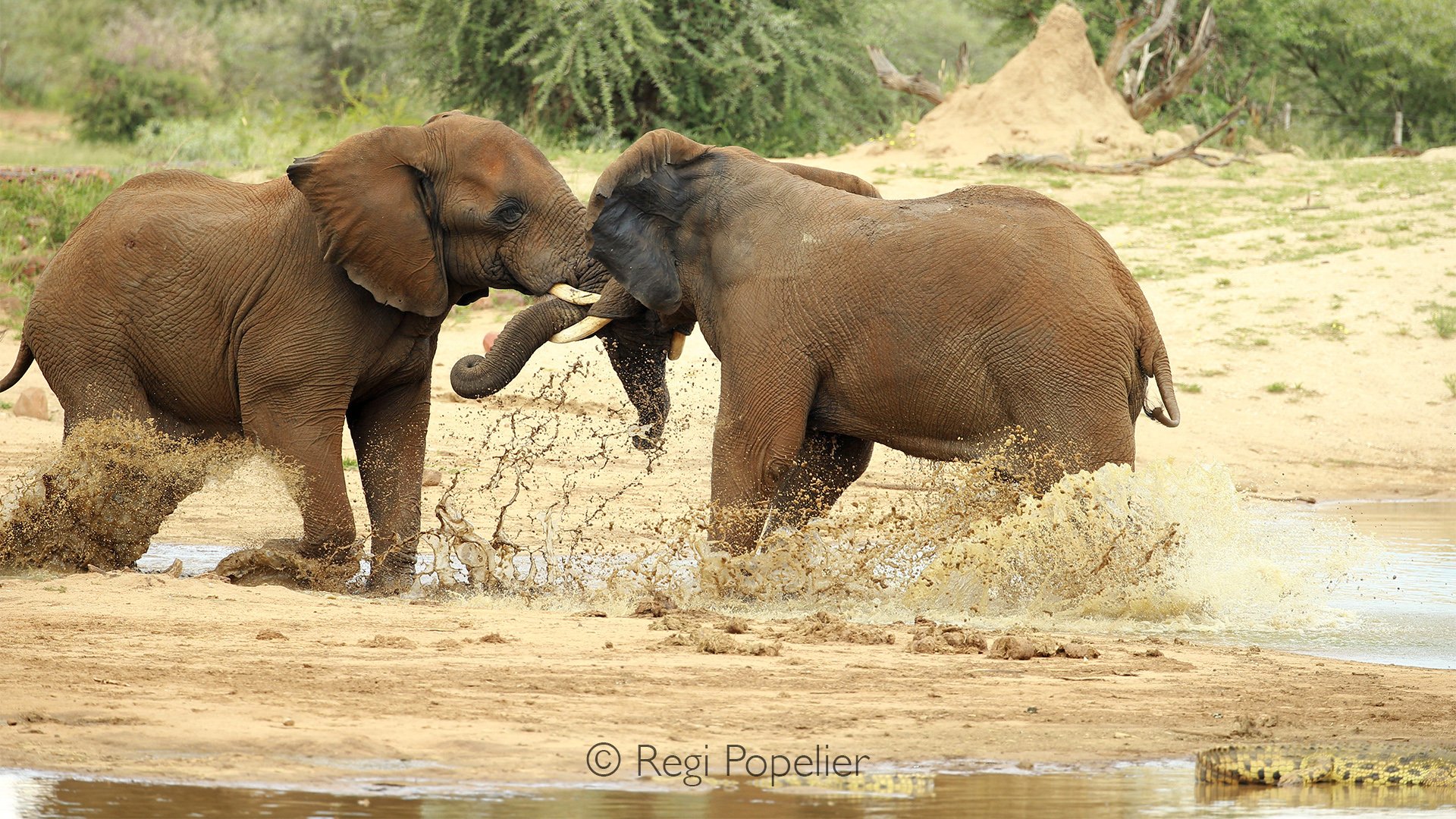
Namibia016 - Heavyweight playground.
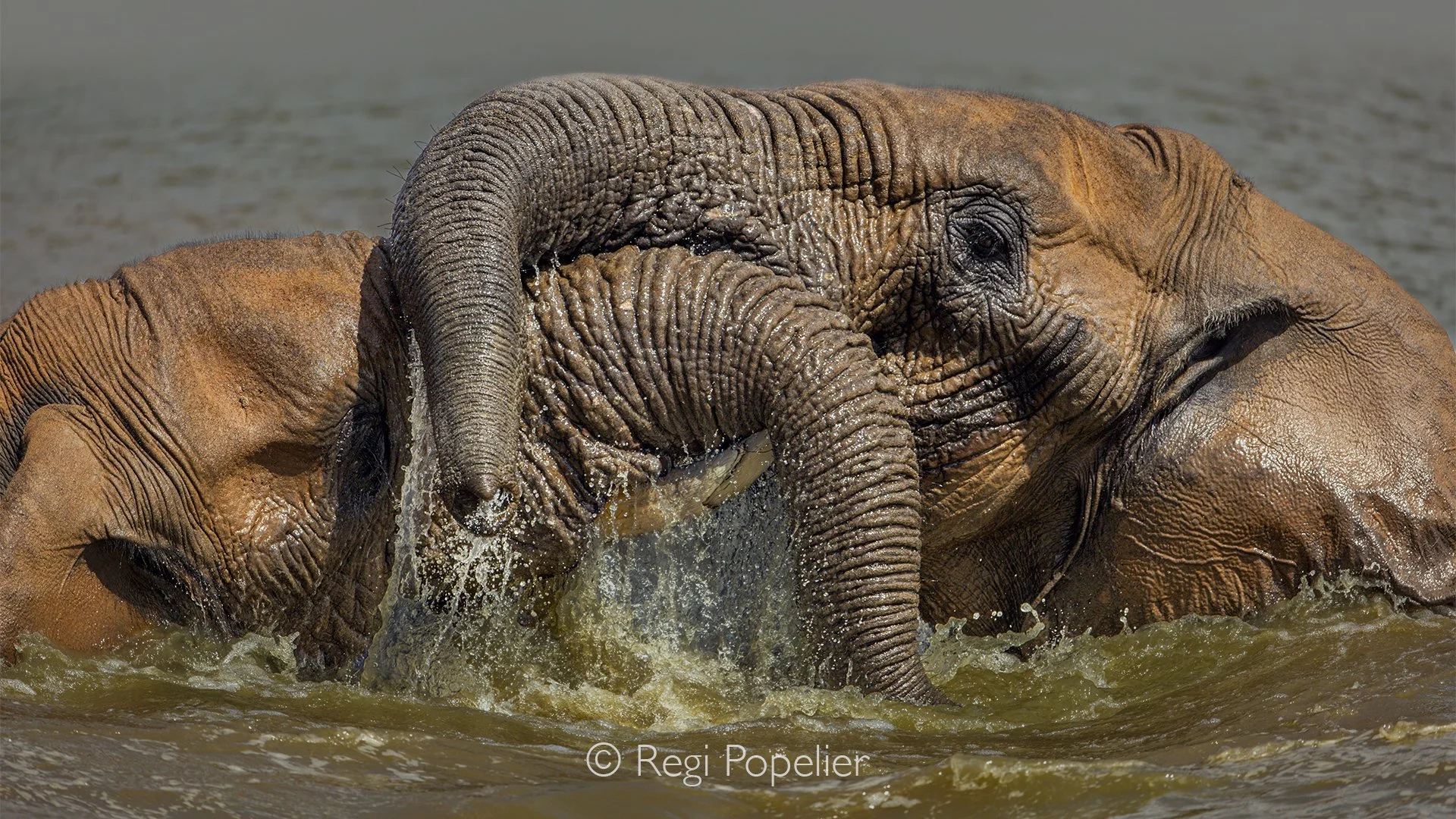
Namibia017 - the game goes on, this time in the lake.
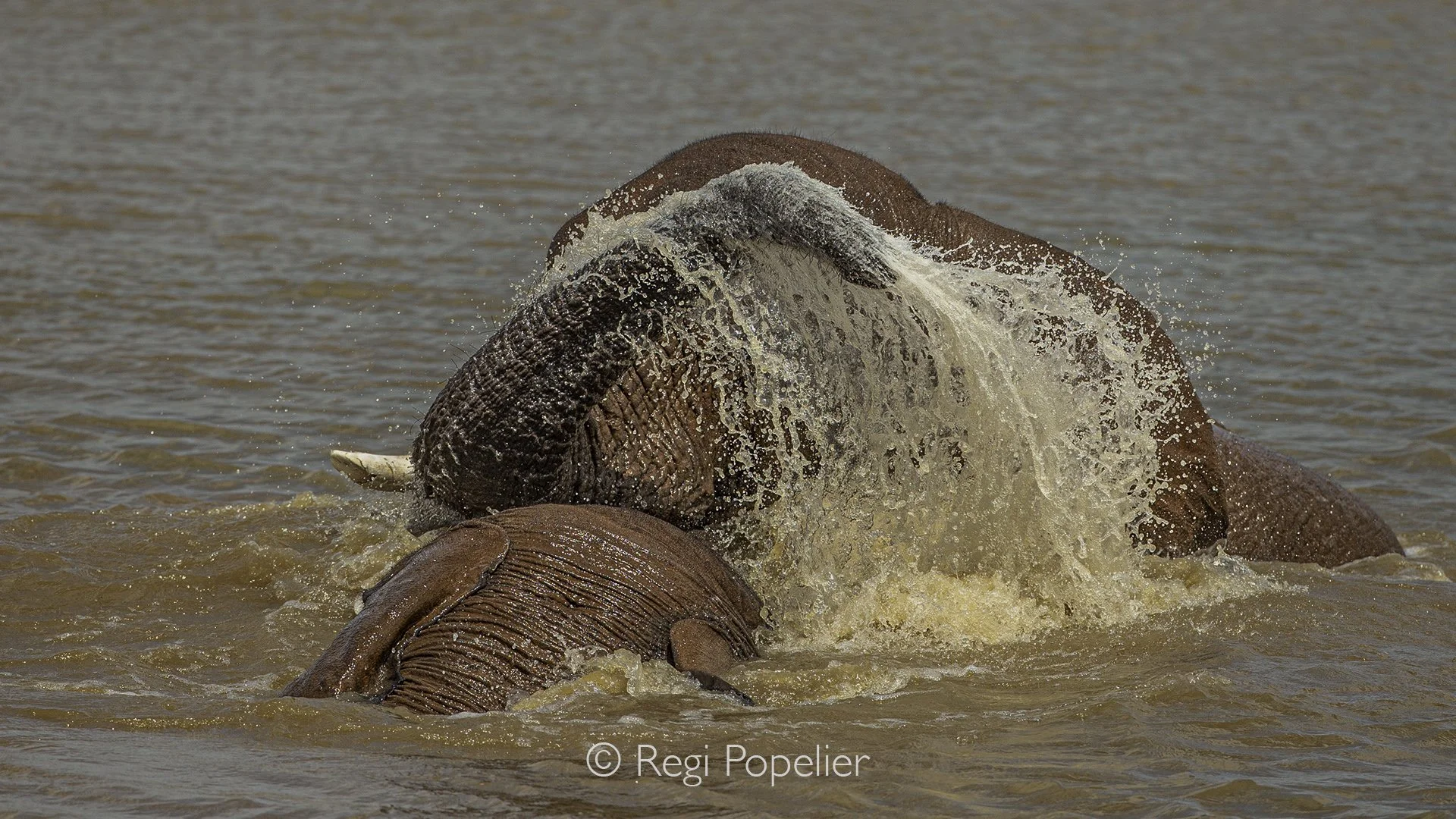
Namibia018 - Always nice to photograph.
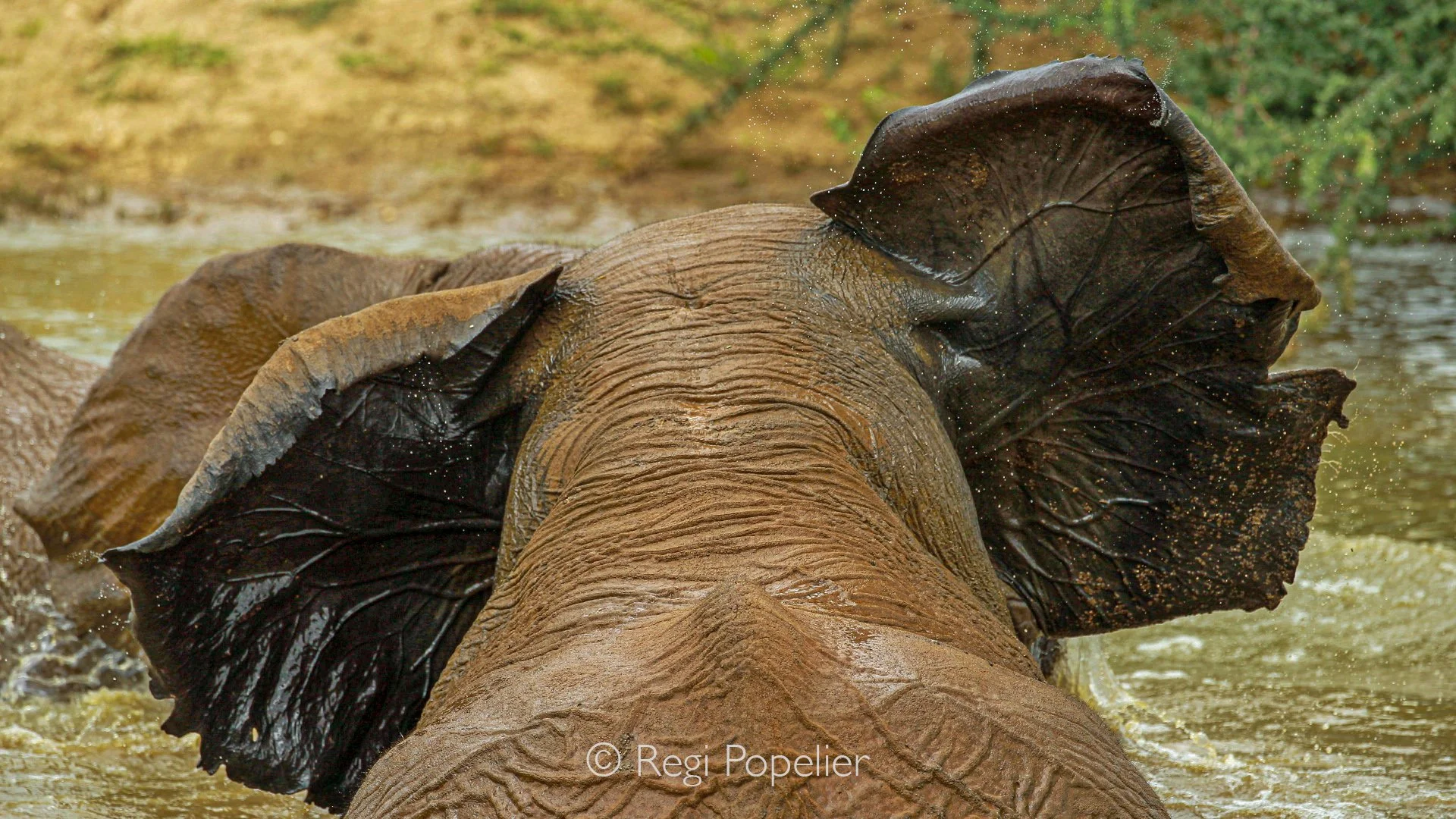
Namibia019 - Anatomy of cooling: The prominent veins visible on the back of the ears act as natural radiators to dissipate body heat.
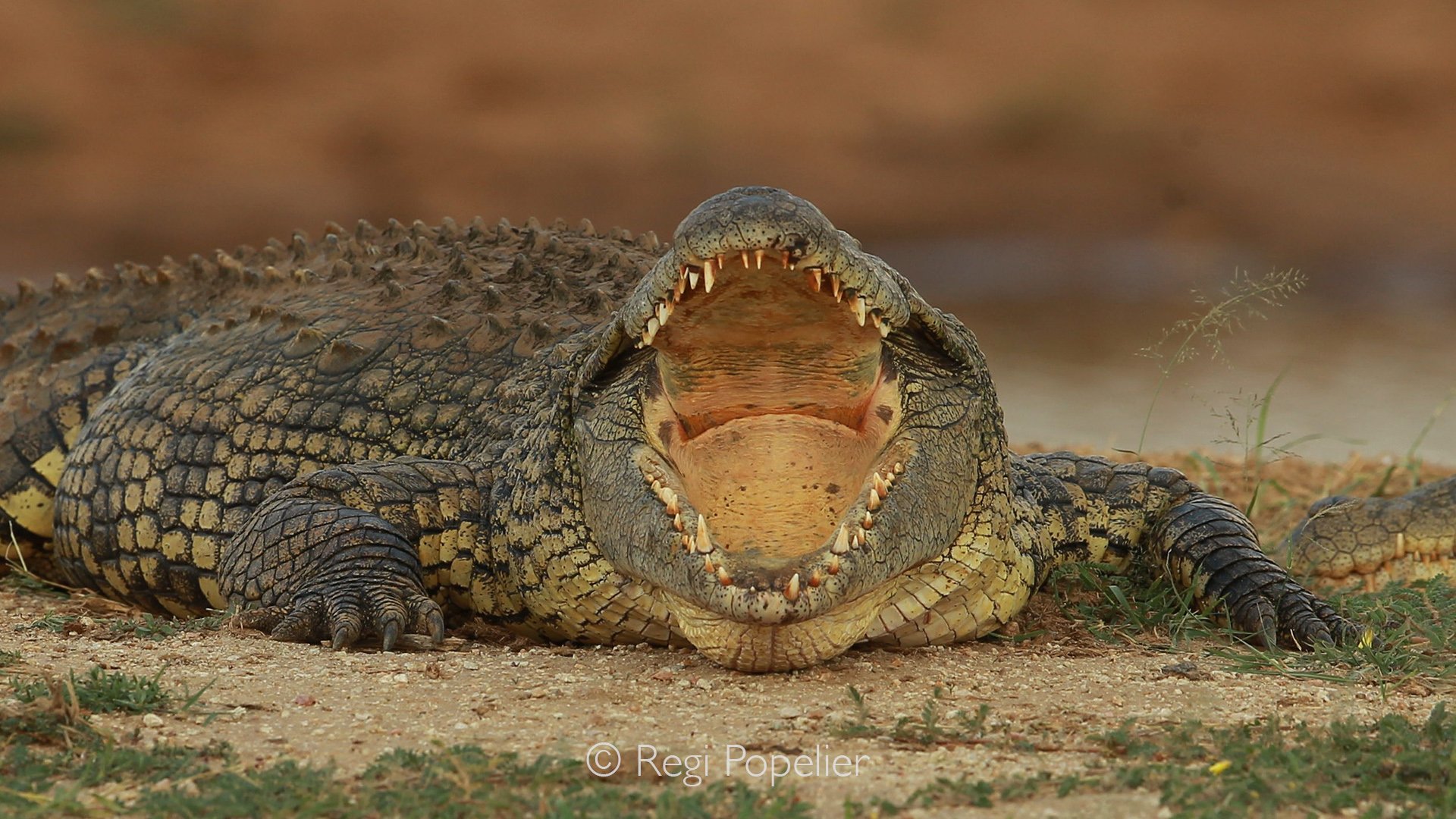
Namibia020 - Evaporative cooling: Because reptiles cannot sweat, the open mouth acts as a natural radiator to prevent overheating while basking in the African sun
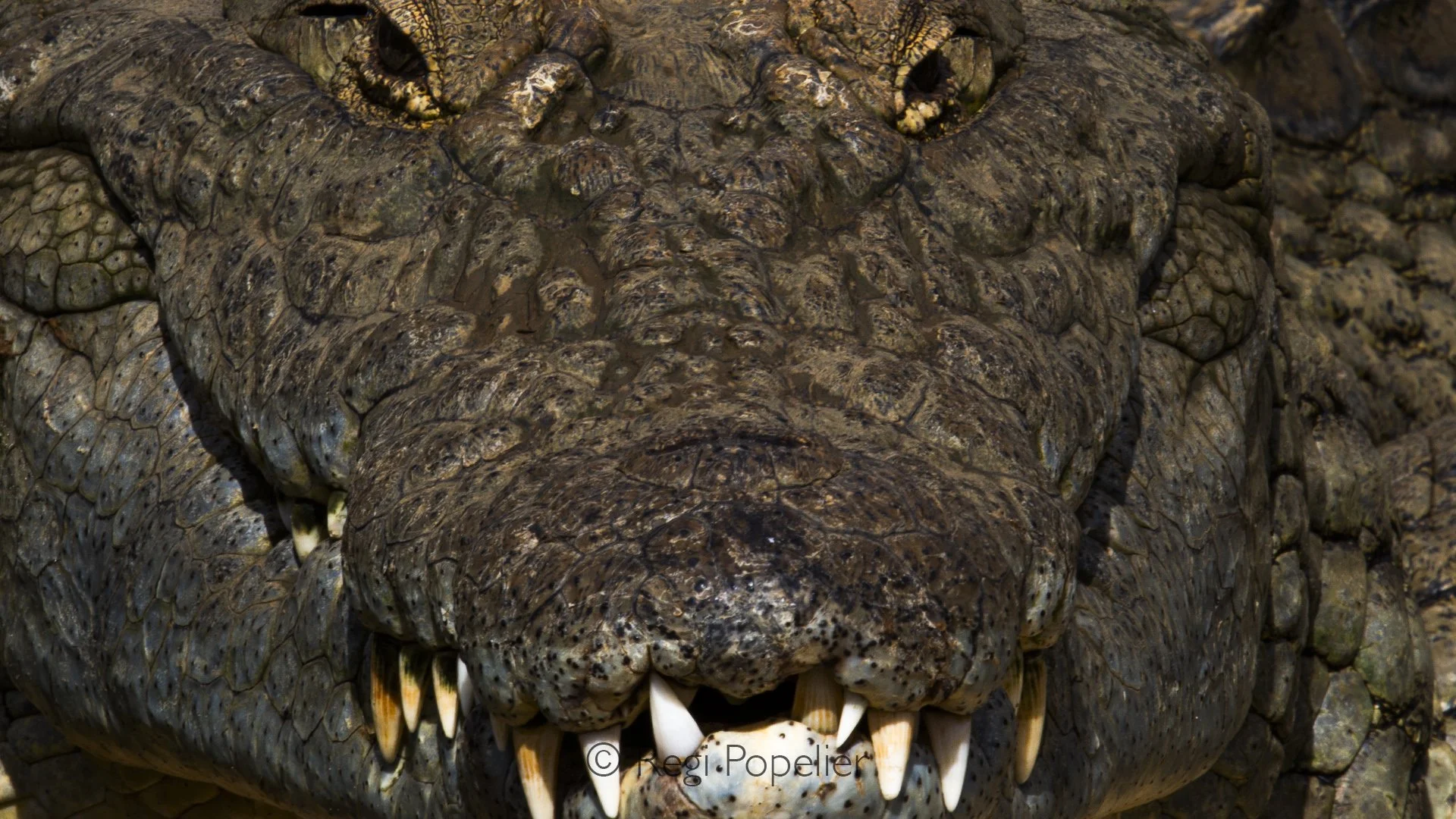
Namibia021 - Frontal detailed image.
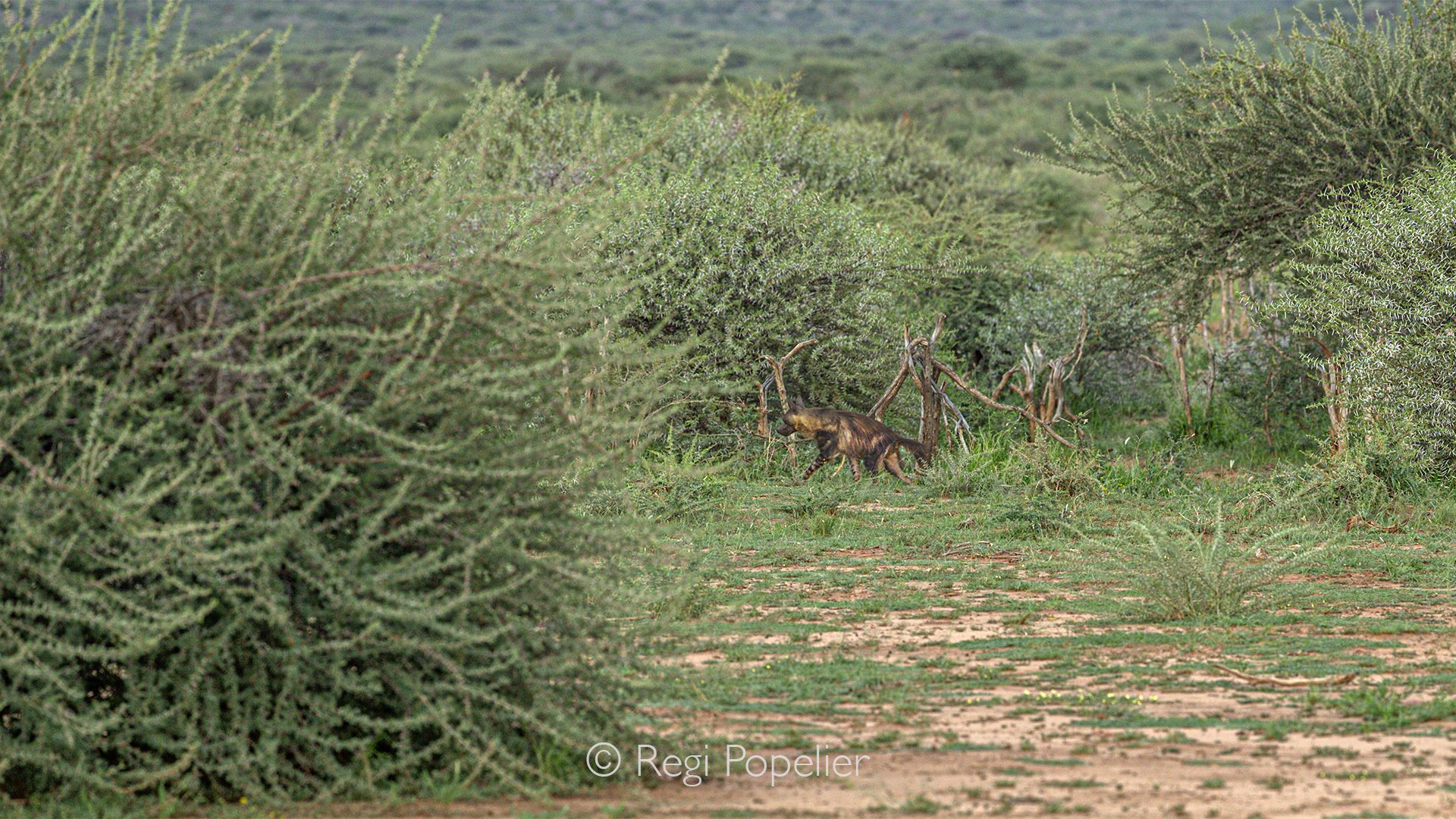
Namibia022 - Hours of stillness, broken by seconds of pure adrenaline. Capturing this elusive brown hyena required split-second reactions; these desert specialists utilize a rapid, efficient gait to cover massive distances, leaving a photographer with just a heartbeat to get the shot.
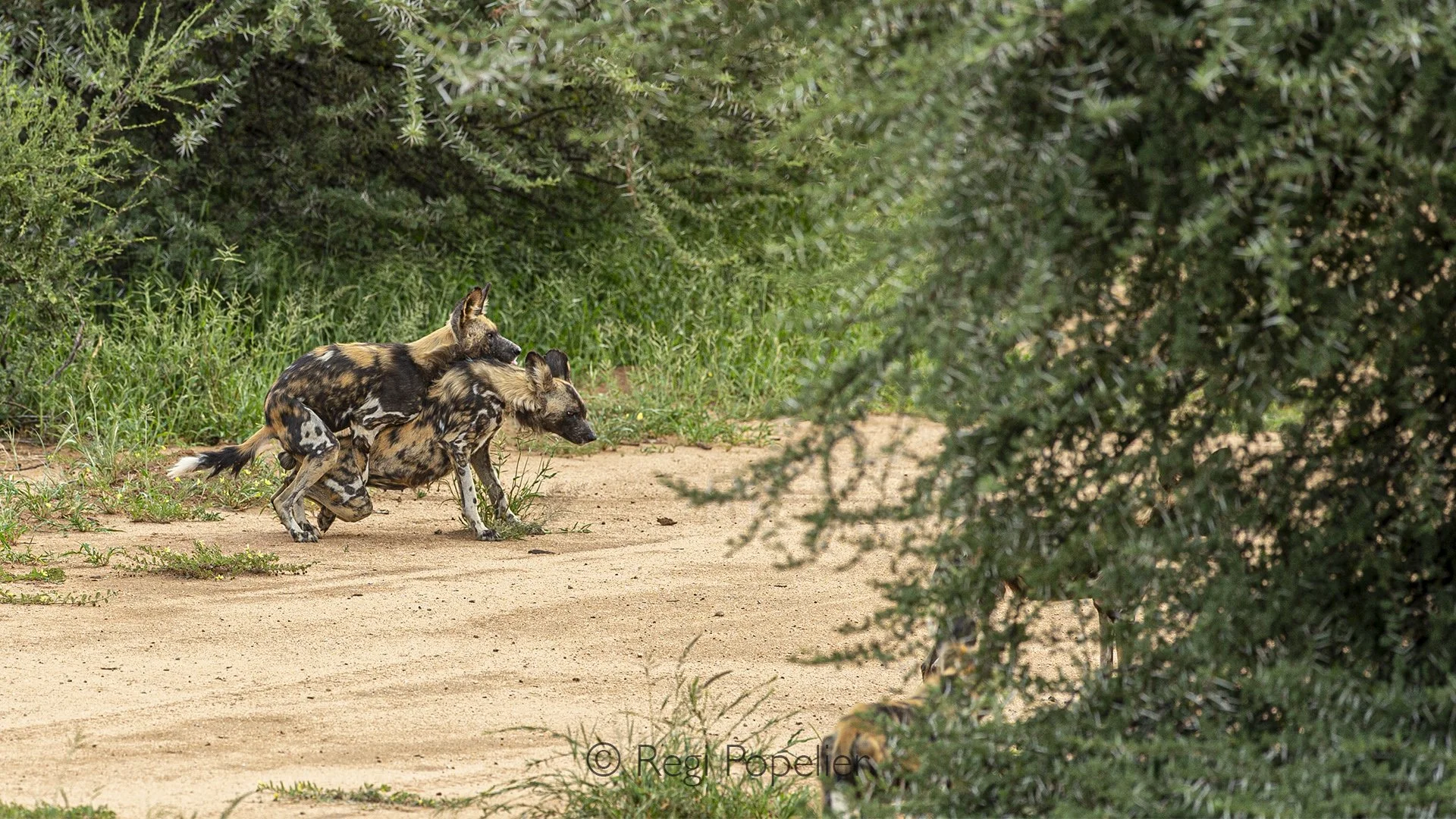
Namibia023 - The privilege of patience: Witnessing this brief, intimate event offers a rare glimpse into the complex social structure where typically only the dominant alpha pair reproduces to ensure pack survival.
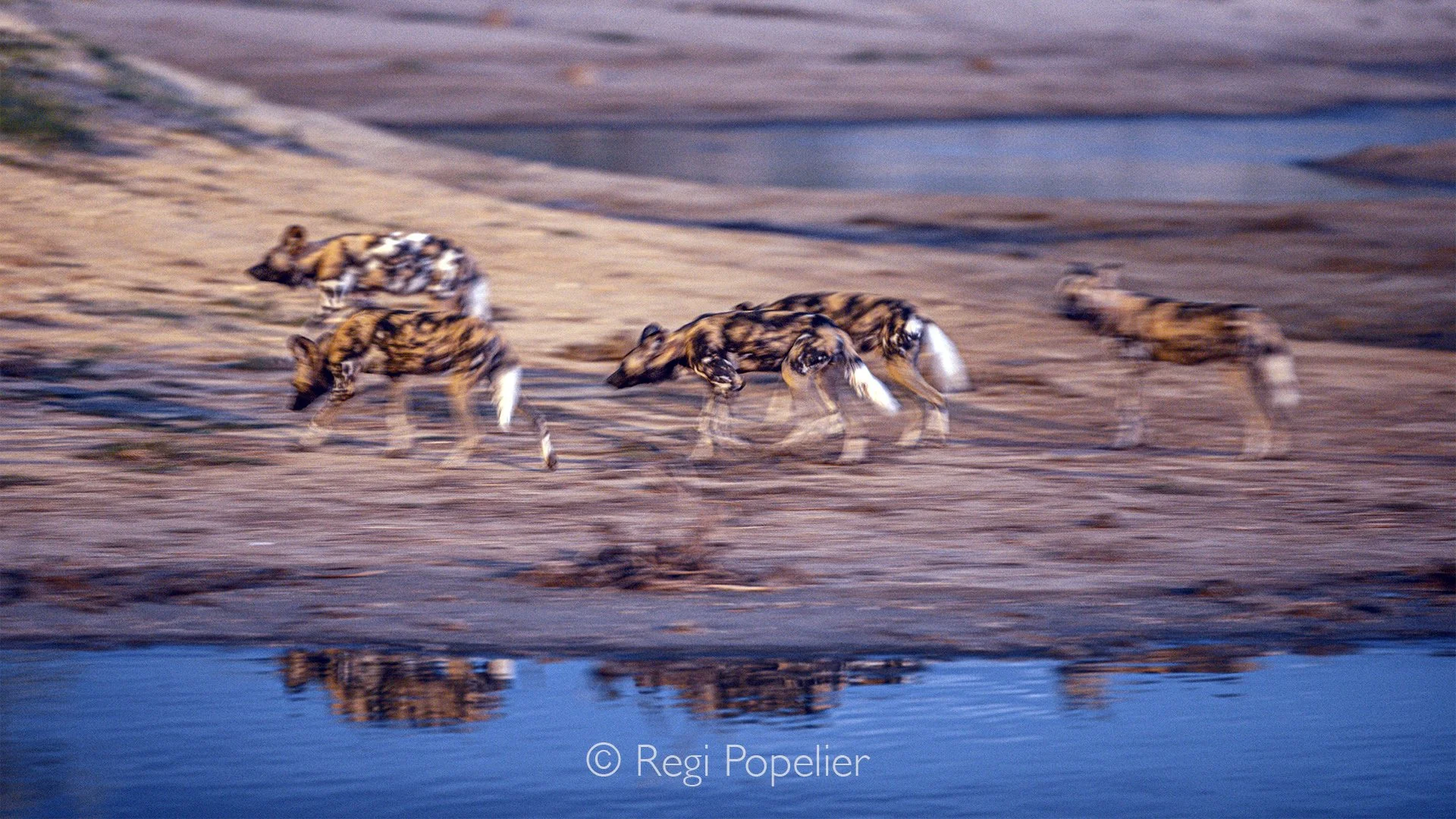
Namibia024 - Behind the motion blur. Photographed with a slow shutter speed, this shot emphasizes the chaotic speed of a passing pack. Their unique tricolor coats dissolve into streaks, mirroring their camouflage in the moving bush.
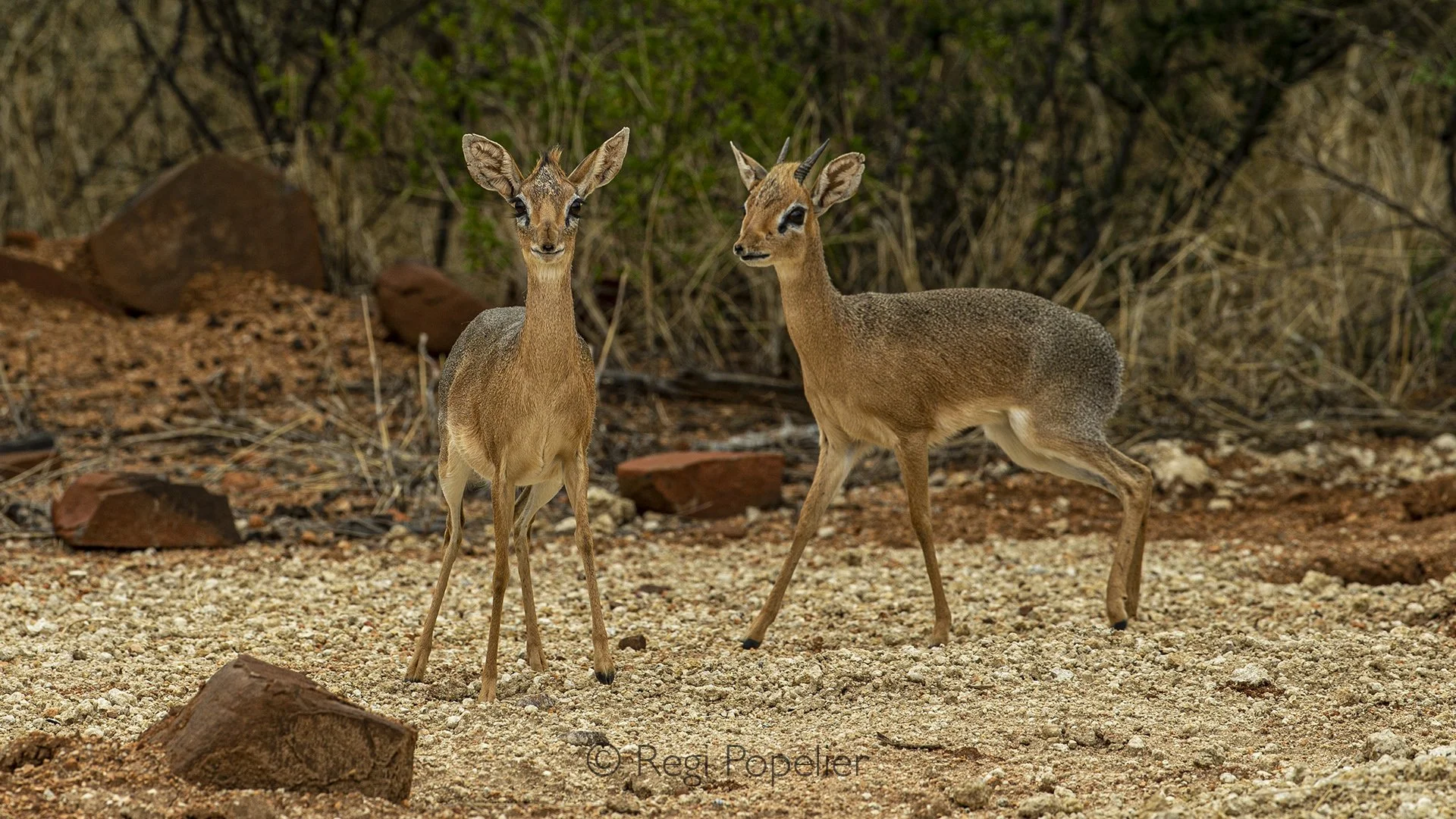
Namibia025 - Behind the lens of a miniature world: While they seem to be frozen for the camera, these alert herbivores are actually evaluating the photographer using their excellent eyesight and scent glands located just below the eyes.
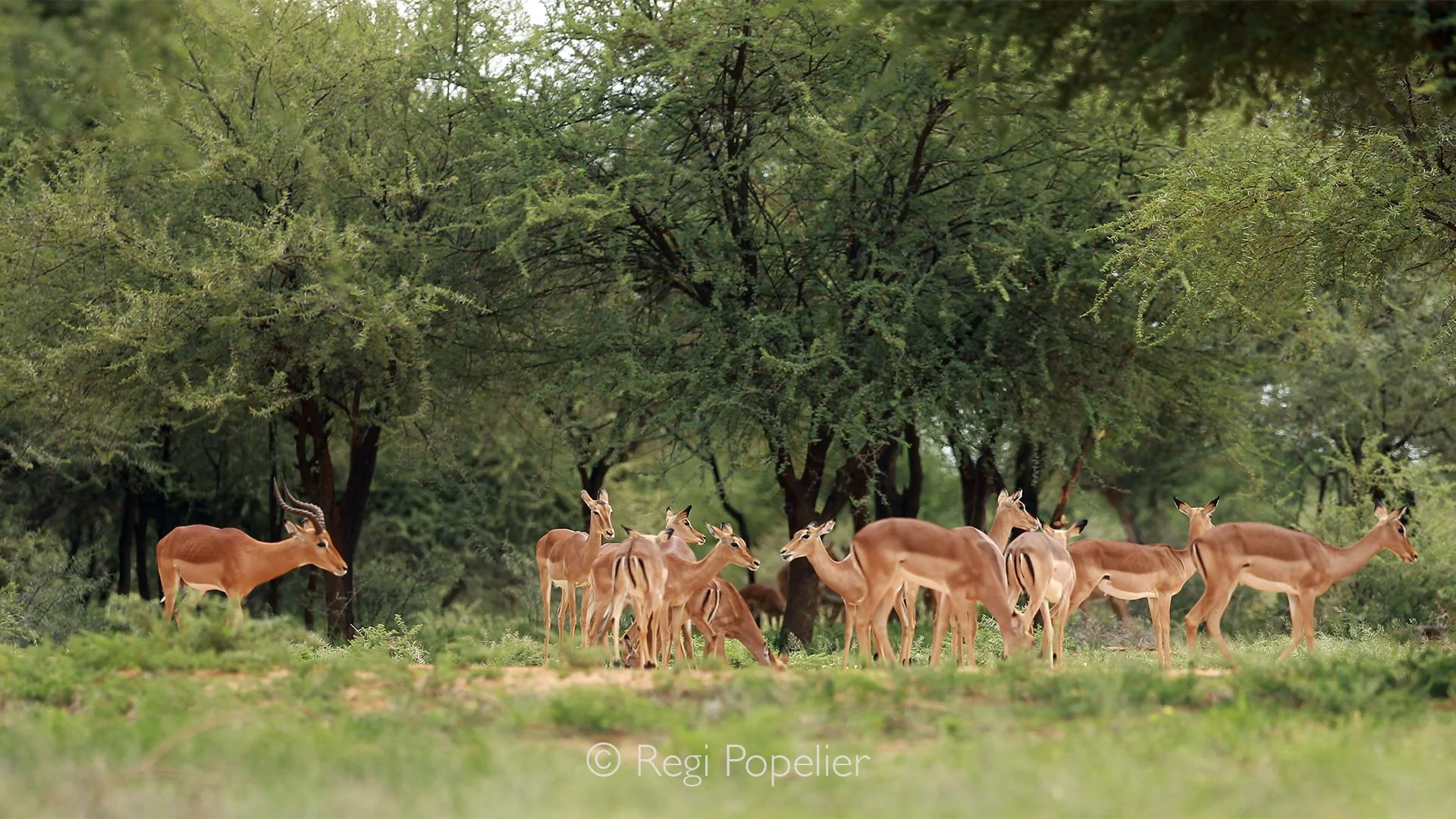
Namibia026 - Impala's under the foliage of acacia trees.
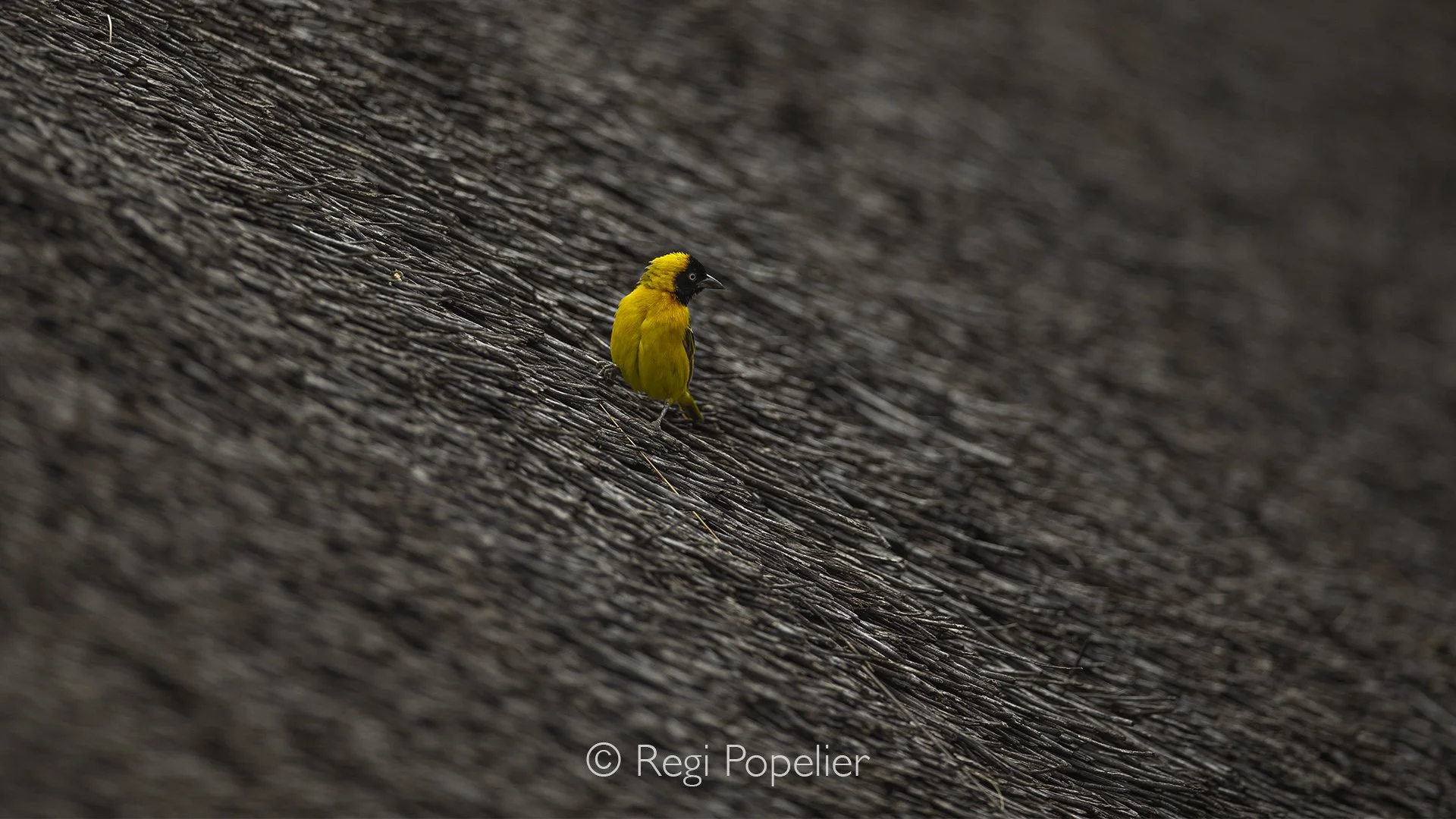
Namibia027 - The architect's inspection: Capturing this weaver bird on a thatched roof provides a beautiful visual parallel, these birds are master builders themselves, weaving intricate grass nests that mimic the very texture he is perched on.
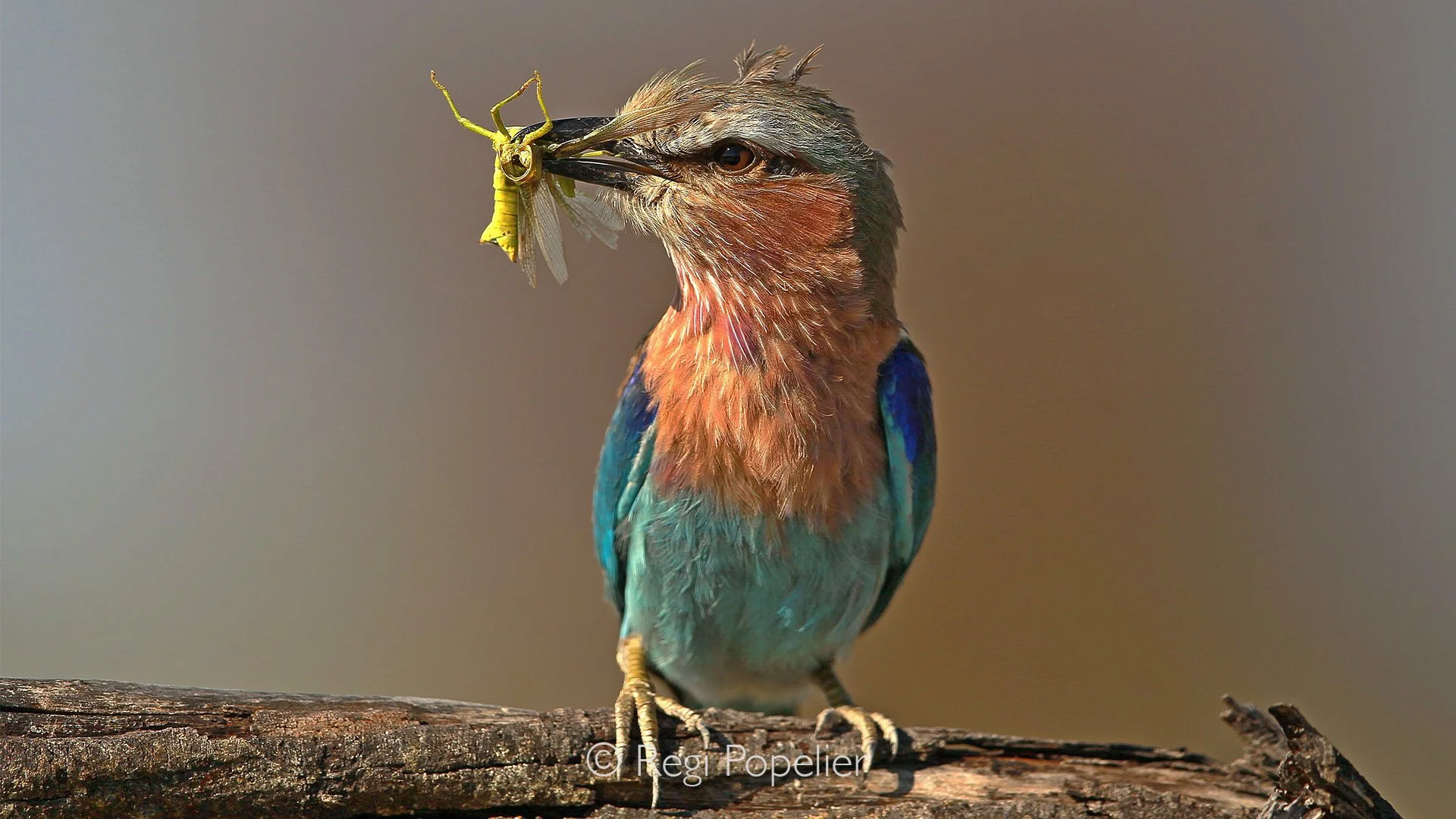
Namibia028 - Lilac Crested roller while having his snack.
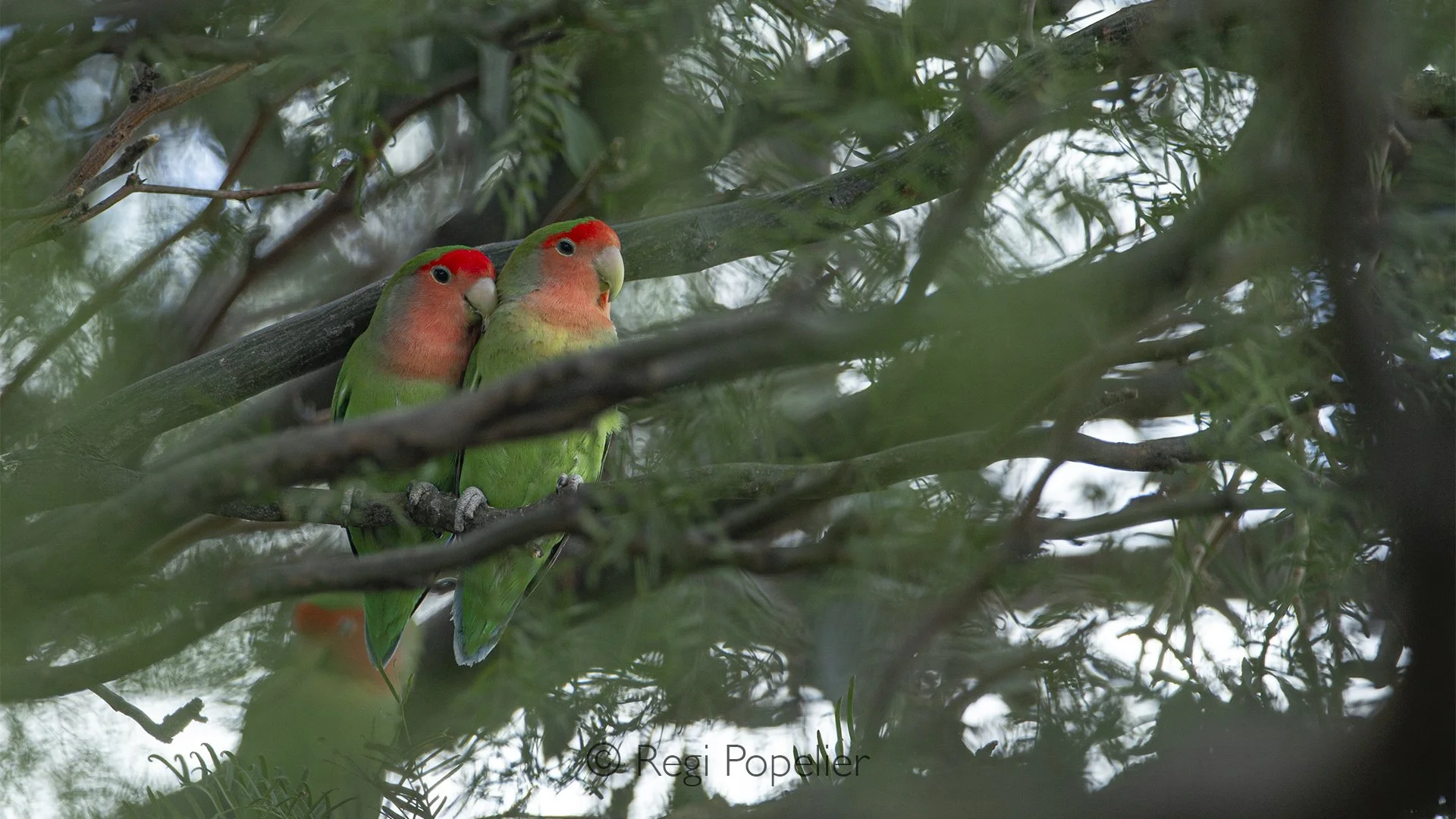
Namibia029 - Namibia Peach-faced Lovebird (Agapornis roseicollis roseicollis)
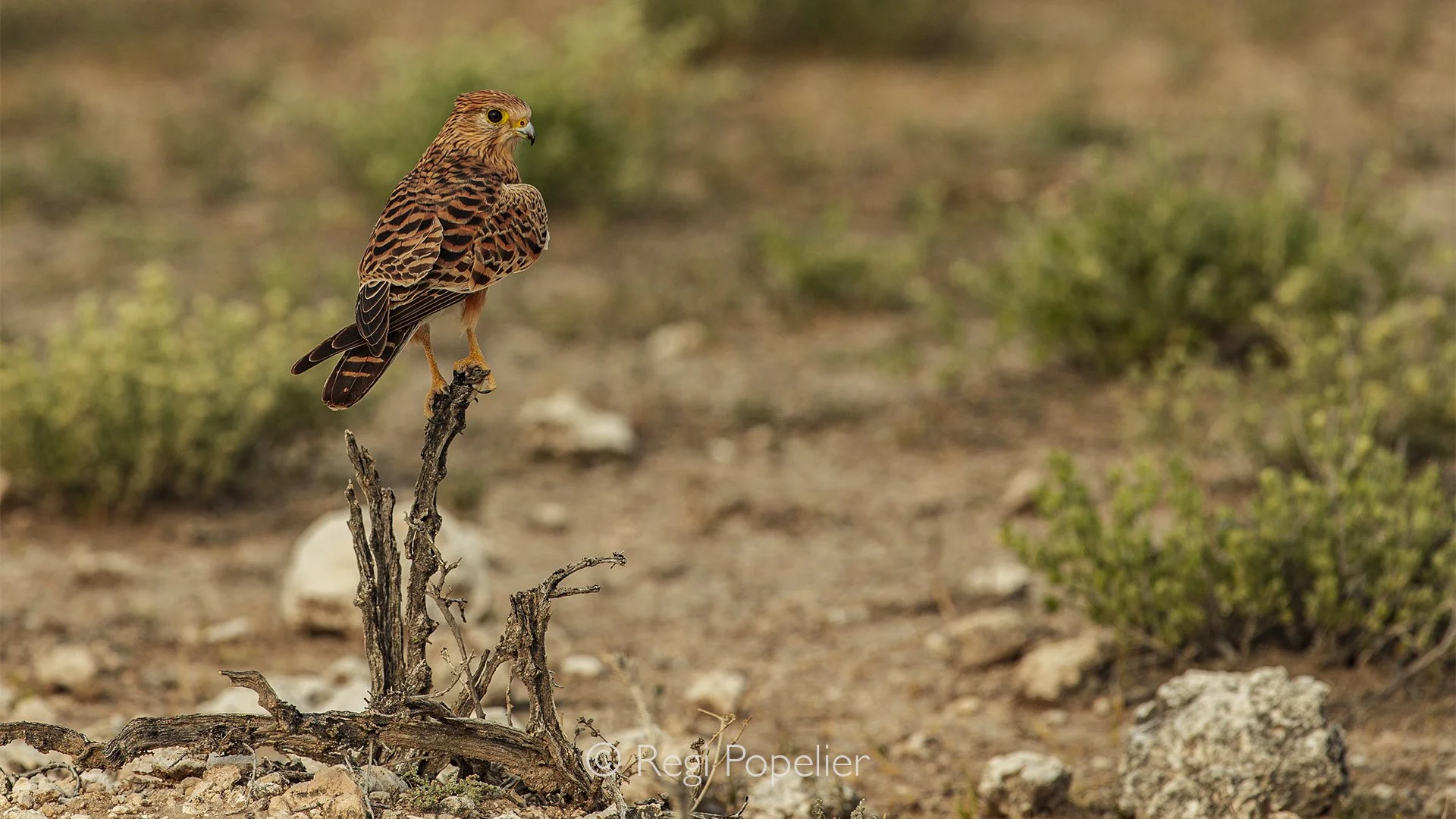
Namibia030 - Lesser Kestrel in splendid light.
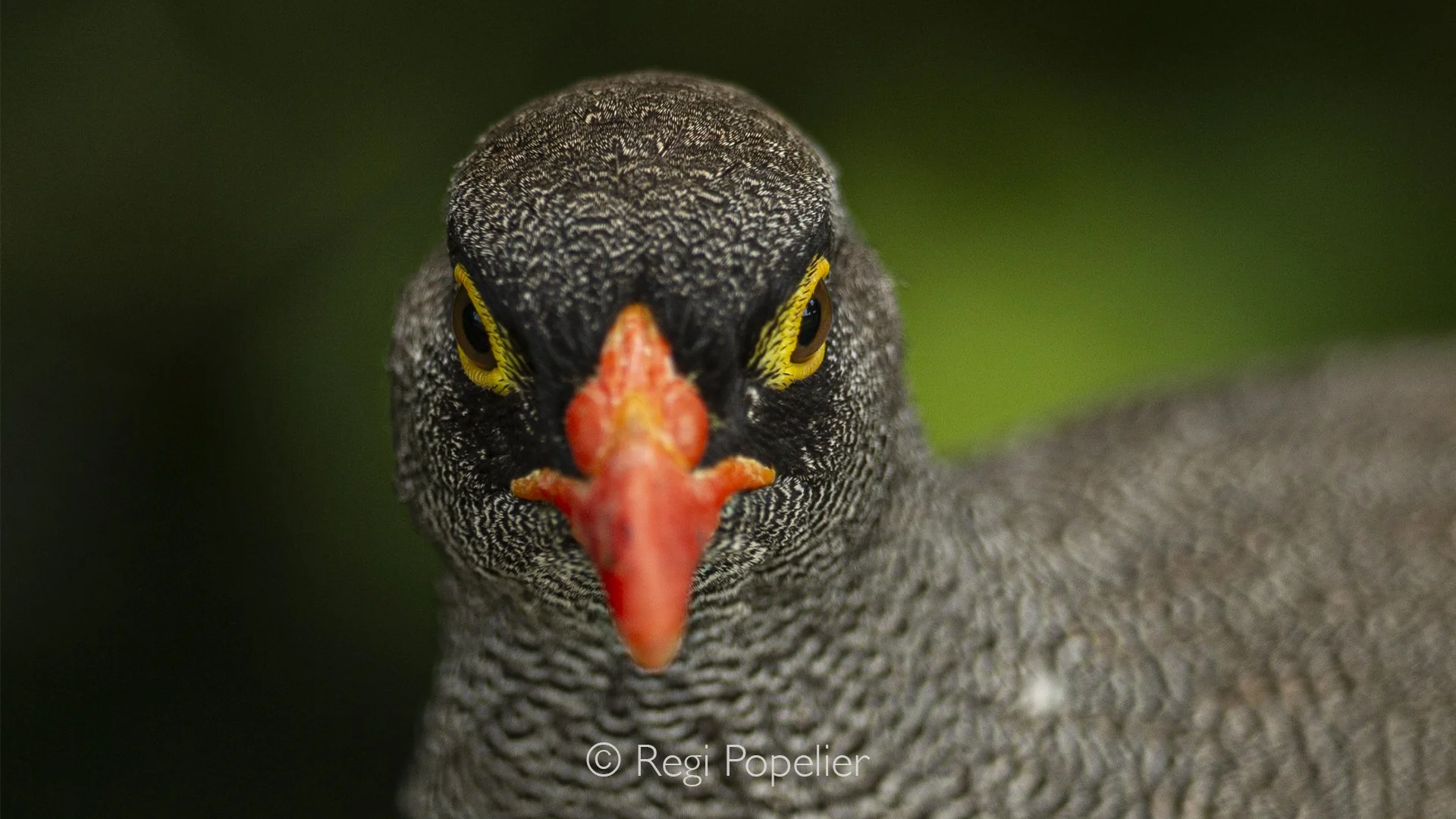
Namibia031 - Red-billed Francolin.
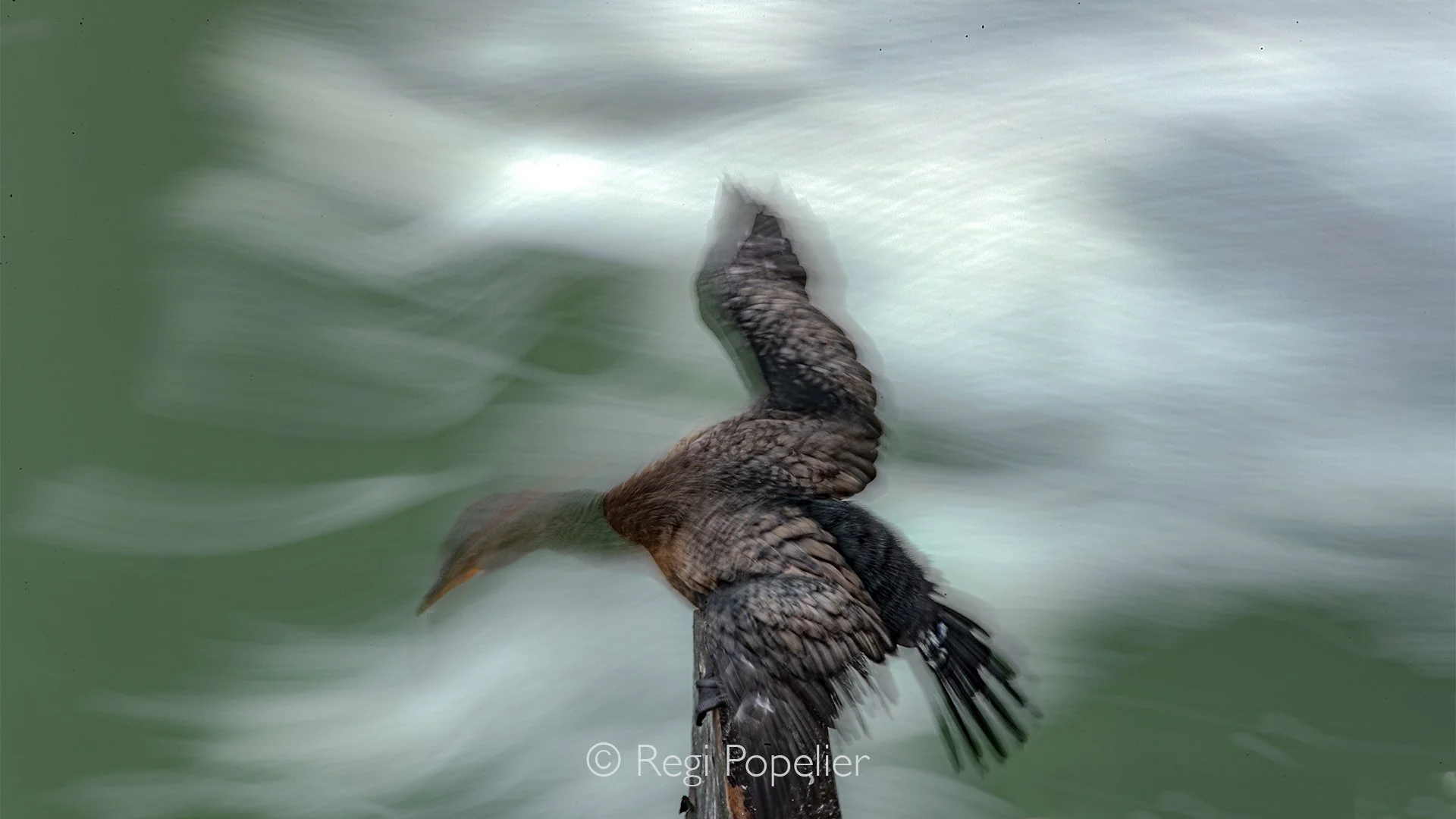
Namibia032 - Anatomy of stability. Photographed with a long exposure, the frame emphasizes the cormorant's incredible physical control. While the river dissolves into a soft motion blur, the bird remains perfectly still, scanning the torrent for fish.
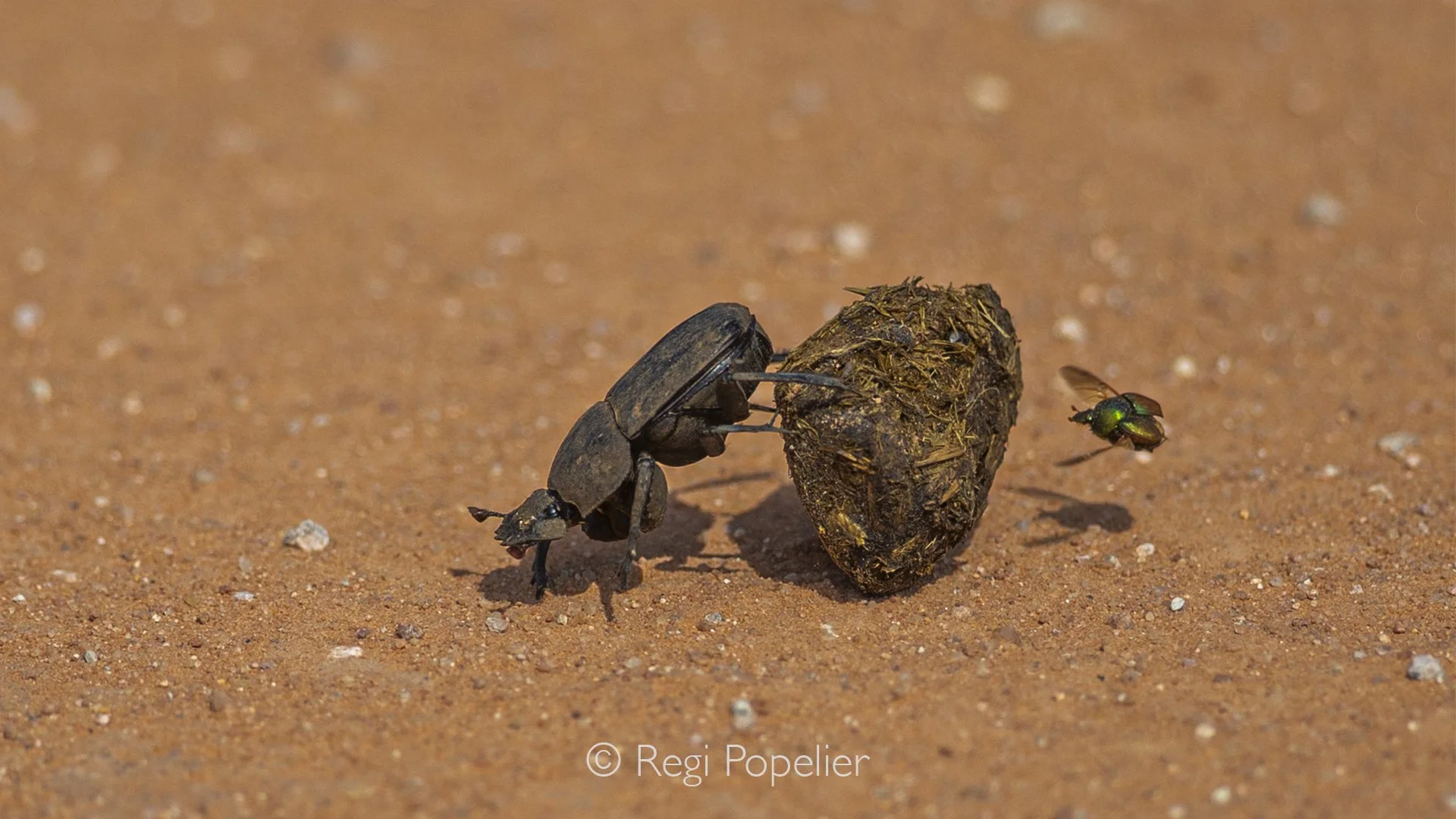
Namibia033 - The dung beetle, the ultimate worker.
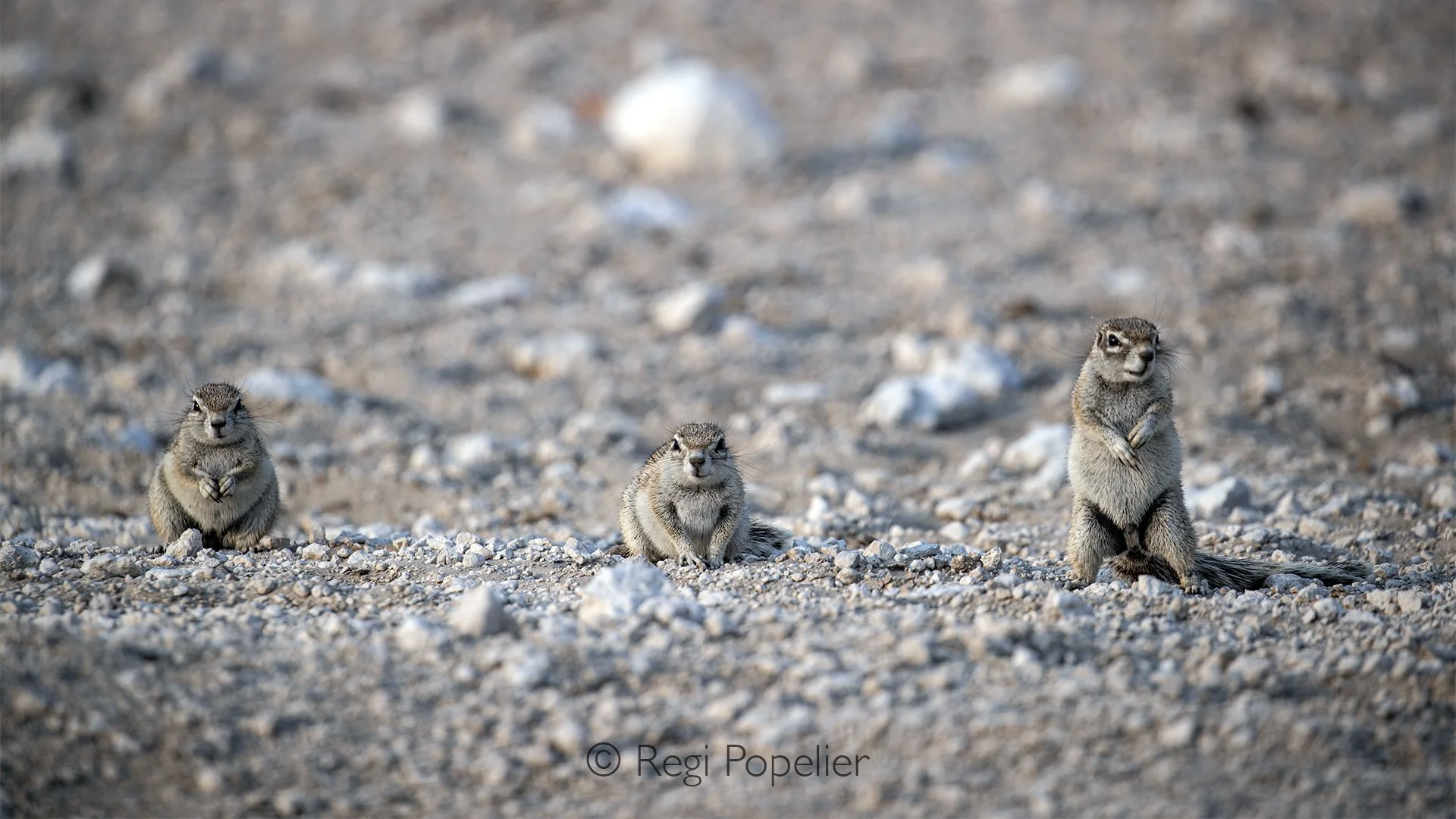
Namibia034 - Cape ground squirrel, Xerus inauris.
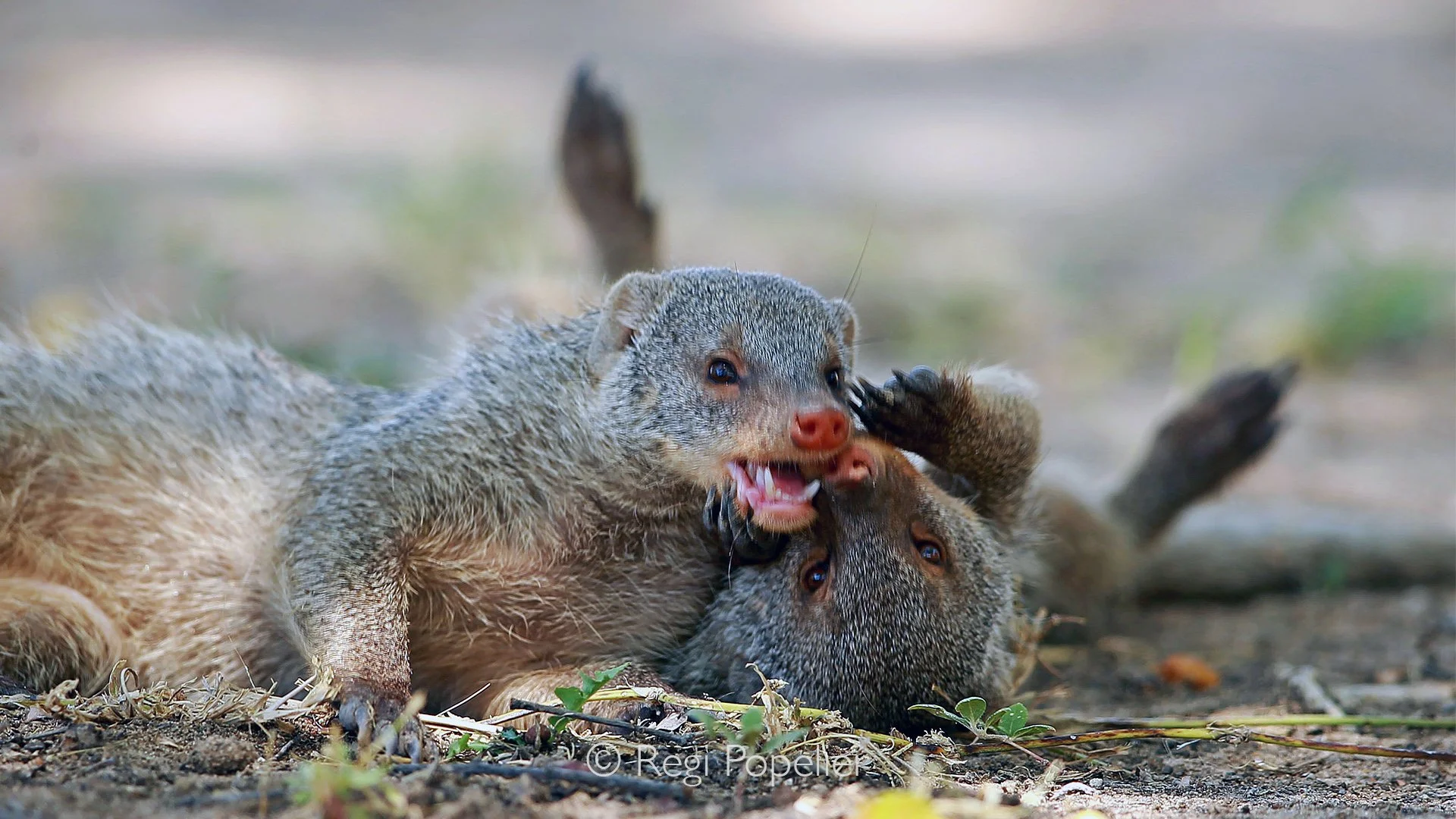
Namibia035 - Banded mongoose (Mungos mungo) in a relaxed playgame.
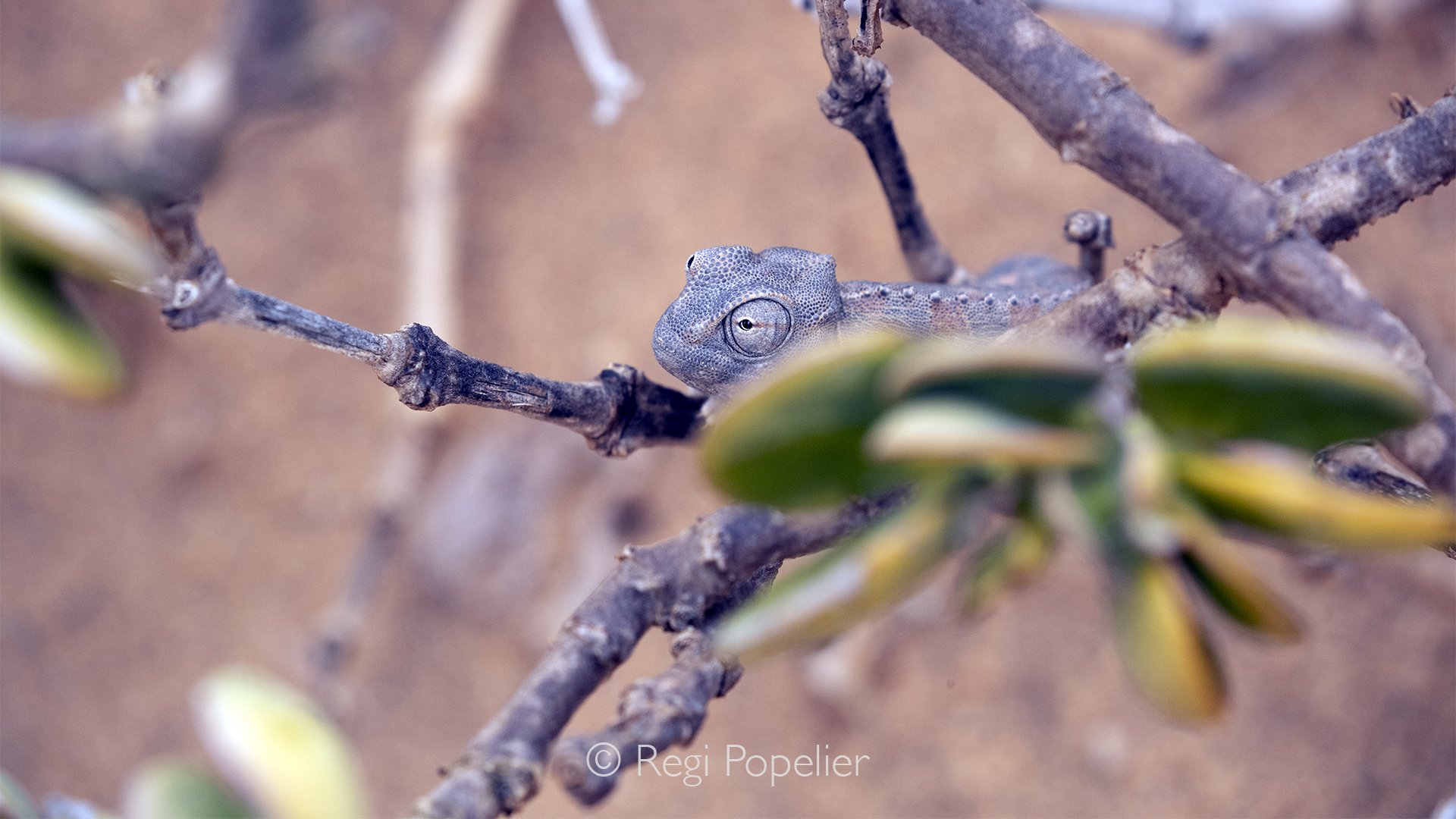
Namibia036 - NAMAQUA CHAMELEON Chamaeleo namaquensis. This chameleon species is the largest in Africa. Occurs through the arid western part of southern Africa, particularly in the Namib Desert.
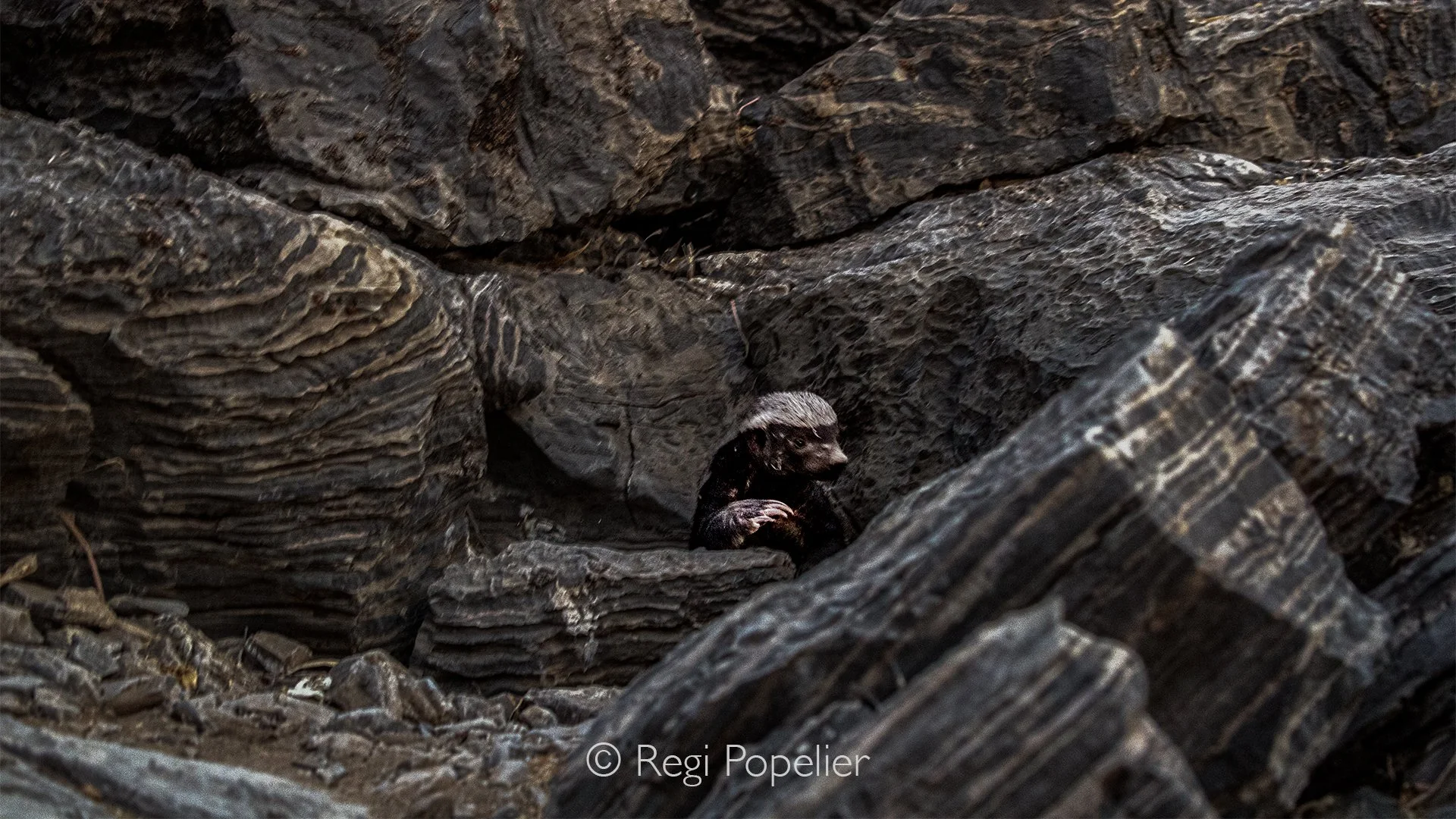
Namibia037 - A breathless moment. Popping out unexpectedly near me, this solitary mammal showcased its typical confident nature. Armed with an immune system resistant to venom, the honey badger fears absolutely nothing.
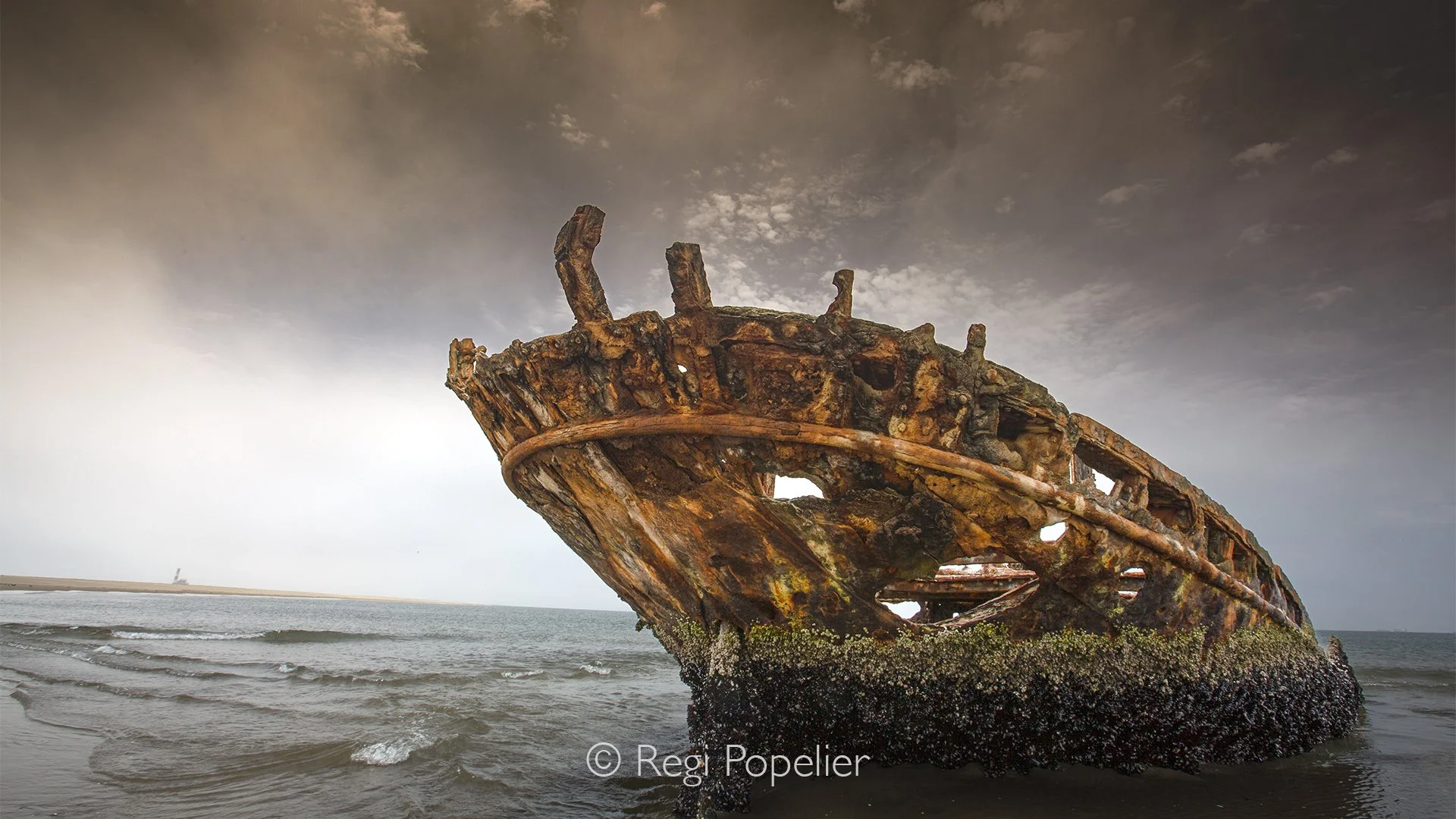
Namibia038 - Shipwreck on Skeleton Coast, Namibia.
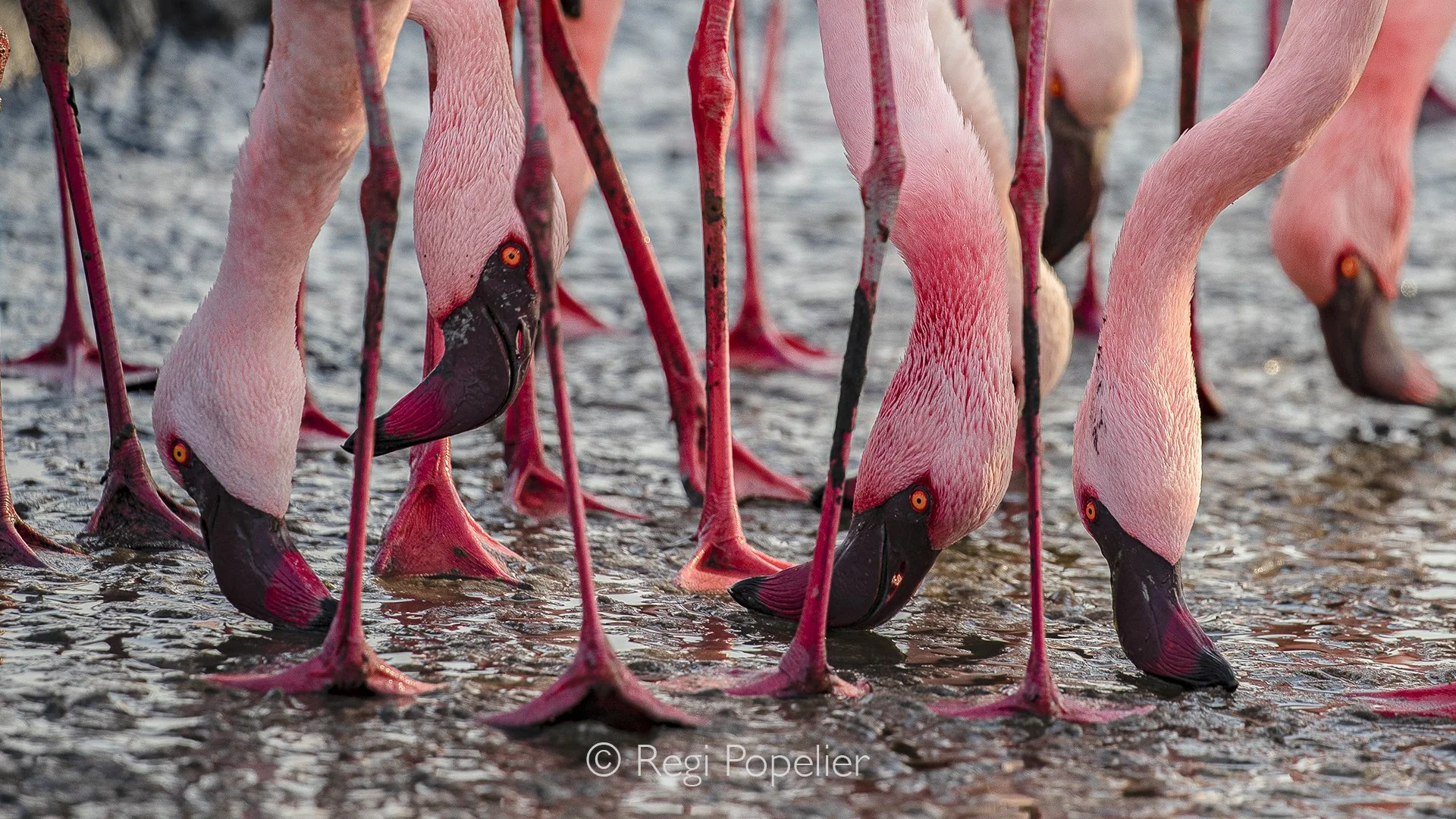
Namibia039 - This expandable pouch of the flamingos isn't for storage, it is a precision tool used to gather, filter out excess fluid, and immediately swallow a whole catch.
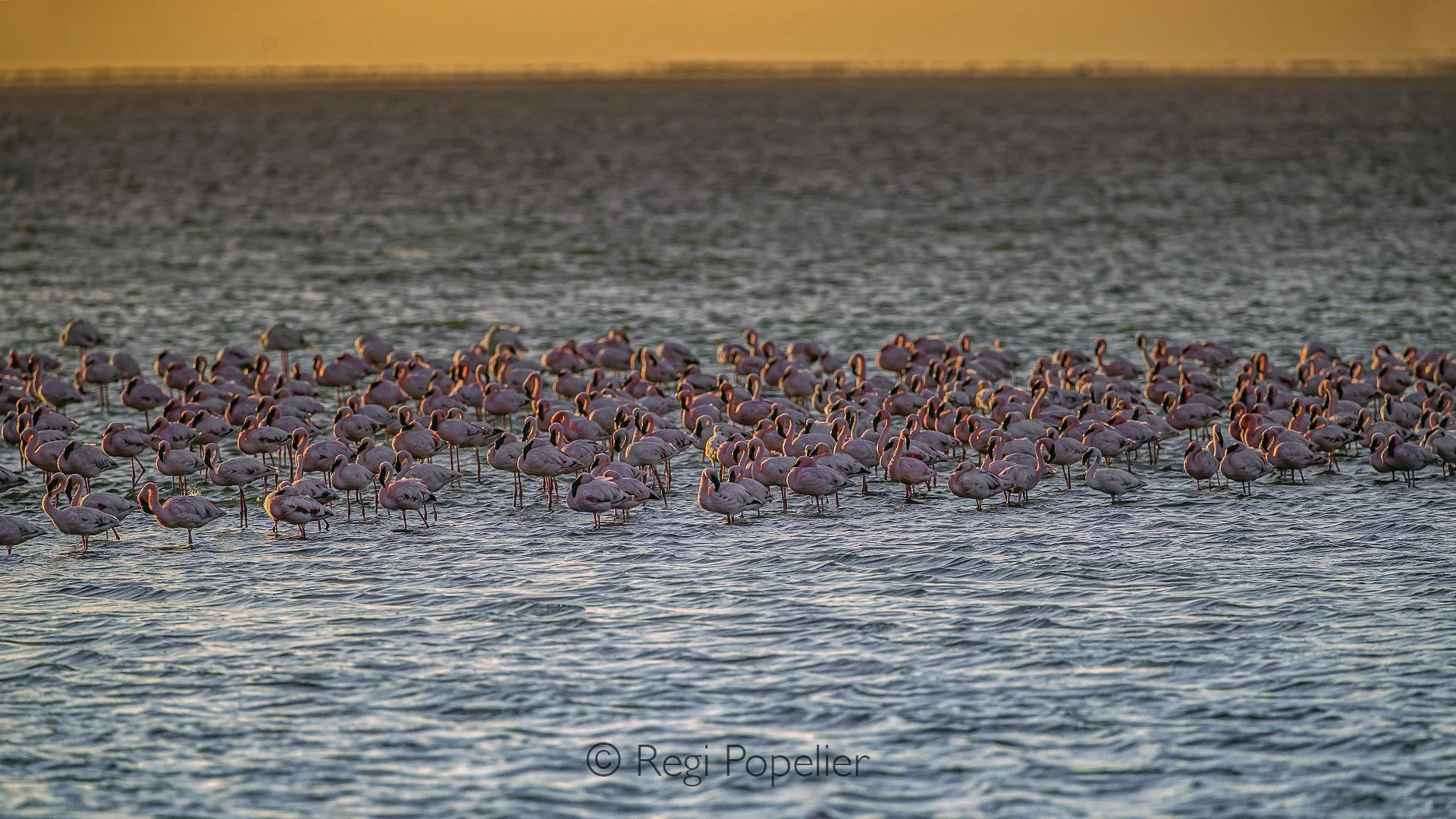
Namibia040 - Flamingos at sunset
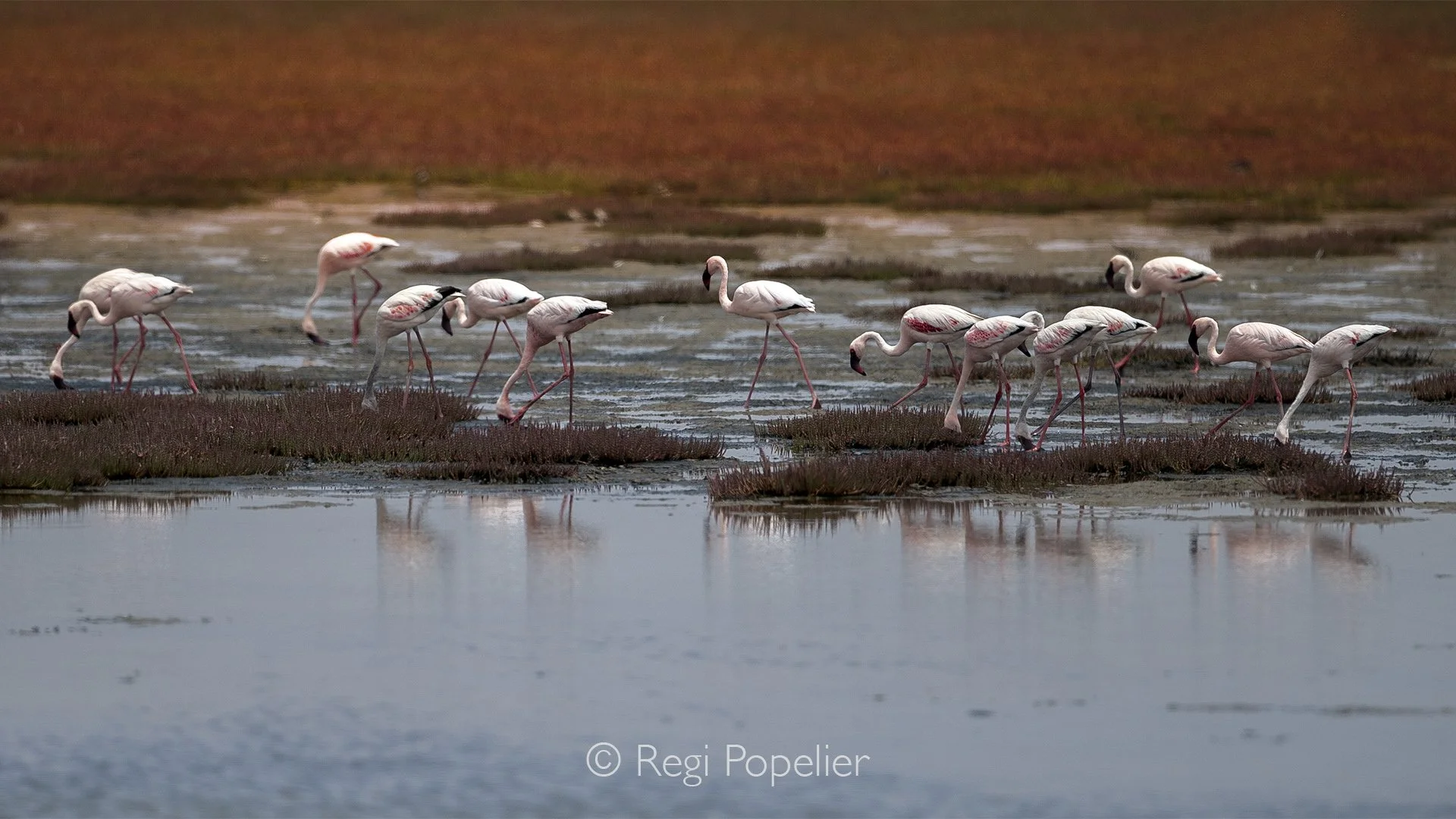
Namibia041 - Behind the lens in a colored desert. Walvis Bay's hypersaline pans create a unique ecosystem where specialized red algae and succulents tint the landscape, offering a photographer a surreal canvas to document these iconic avian waders.
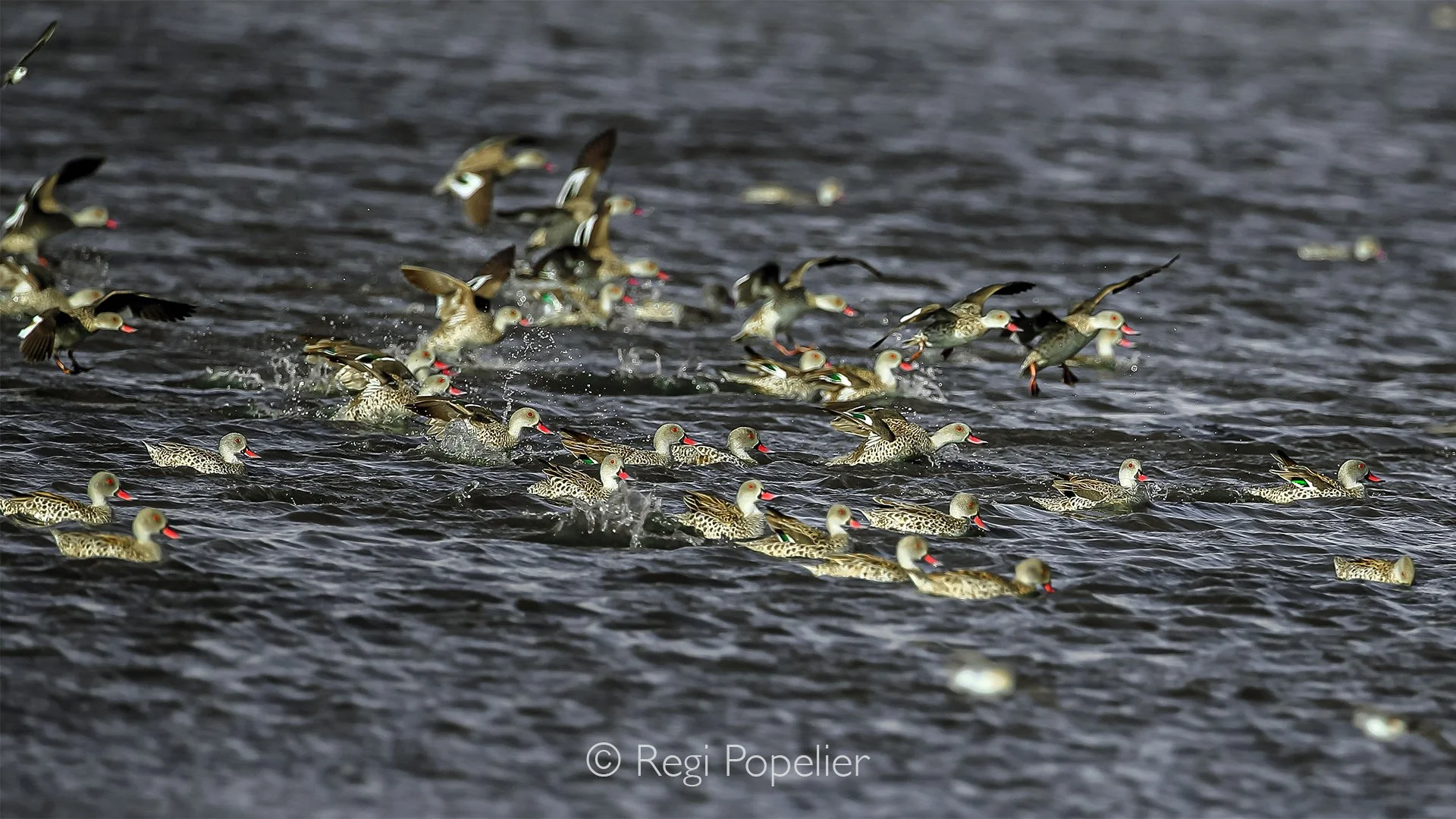
Namibia042 - A study in vigilance. Even while resting as a large group, individual Cape Teals constantly monitor the photographer. Their pale camouflage blends beautifully with the glittering water, allowing them to swim collectively out of range at the slightest sign of danger
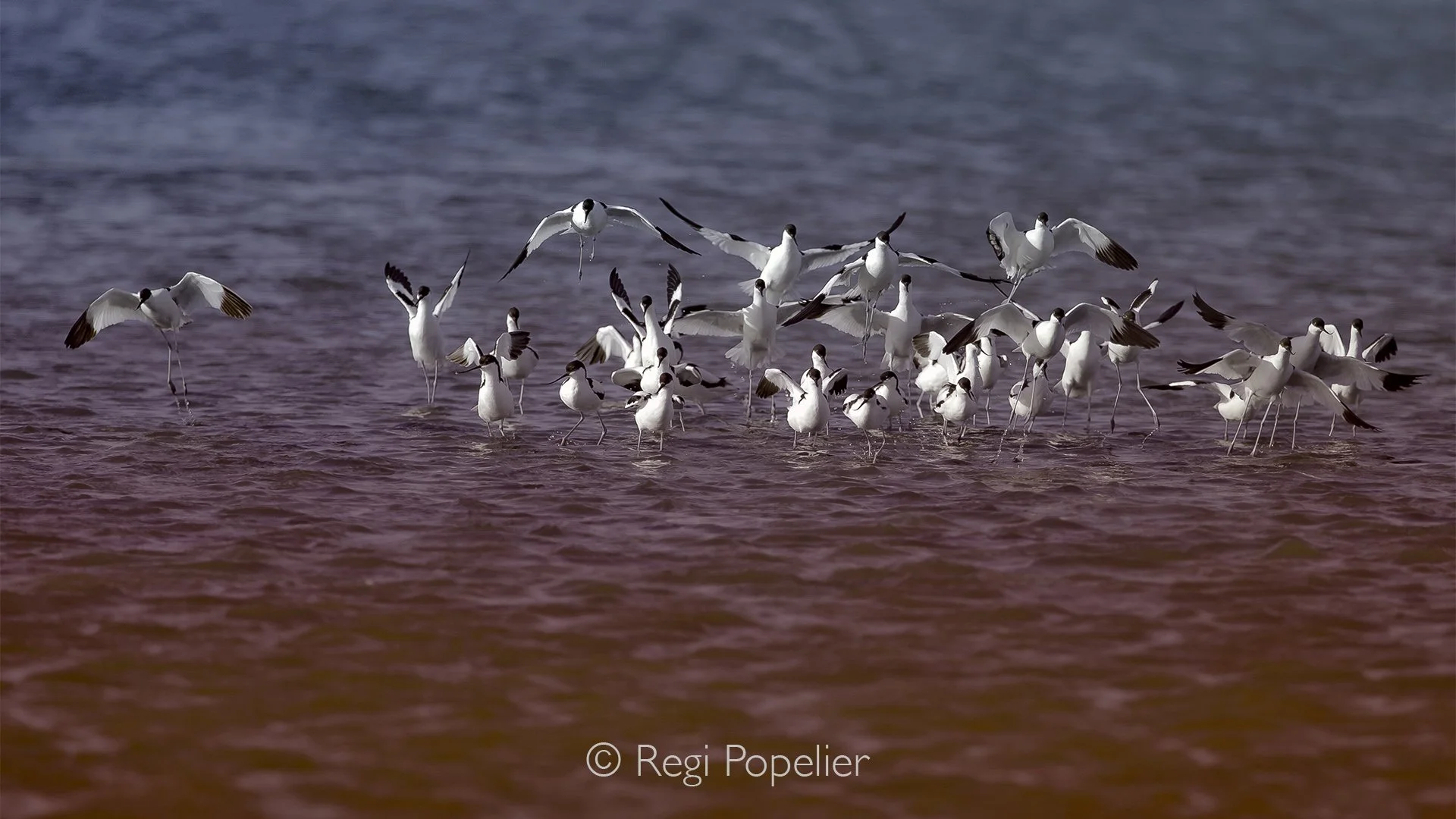
Namibia043 - The geometry of flight. Capturing a sudden takeoff of black-winged stilts reveals a sharp graphic contrast; their stark monochromatic plumage pops dramatically against the blue brine and the deep crimson hues caused by hypersaline Dunaliella salina algae.
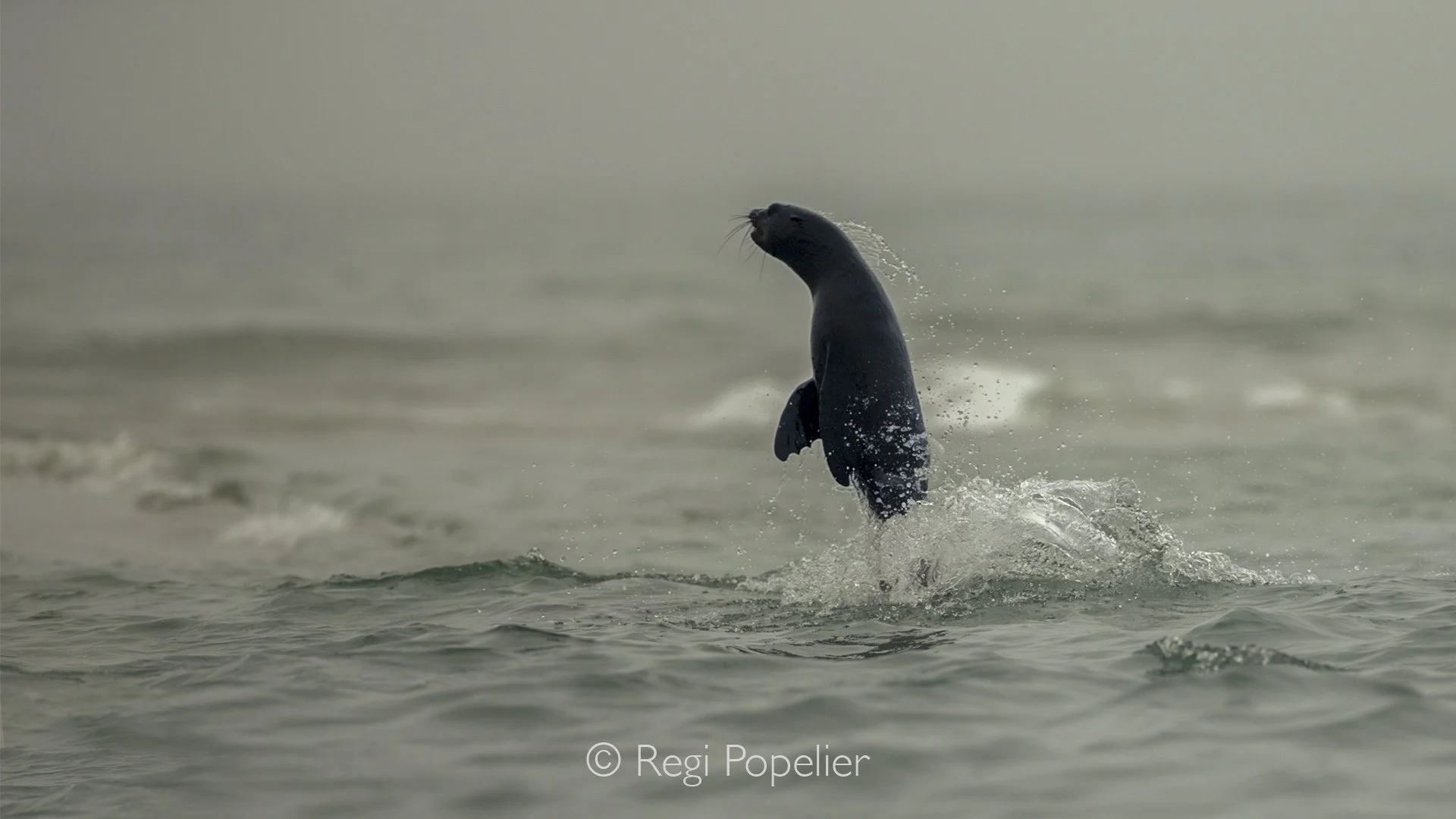
Namibia044 - When you feel like you're being watched...
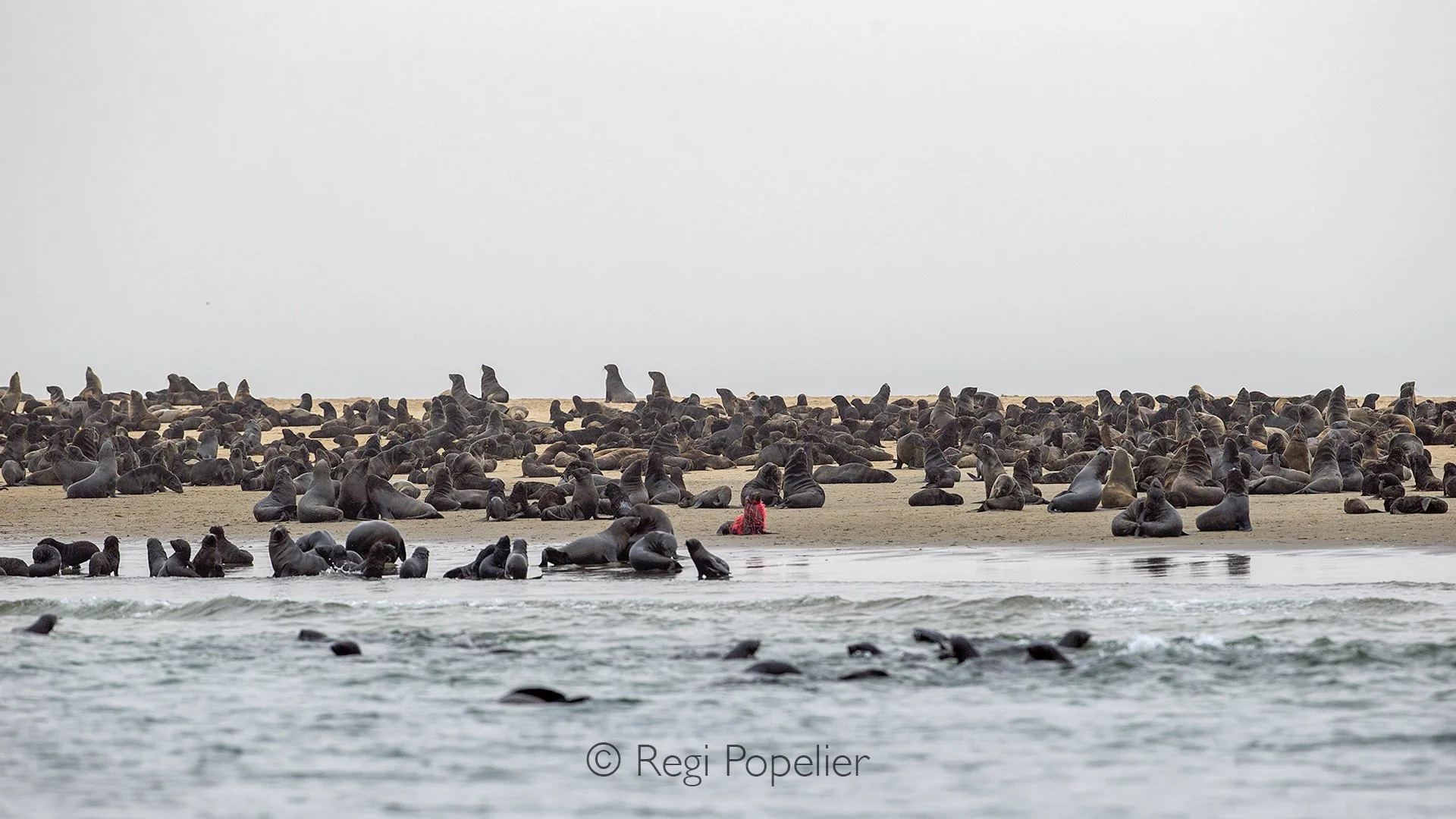
Namibia045 - The tragedy of marine debris. Zooming into the center of this resting colony of Cape fur seals (Arctocephalus pusillus) reveals a heartbreaking truth. The bright red fishing net wrapped tightly around this individual is a slow death sentence from plastic entanglement, unless specialized rescue teams step in to disentangle it.
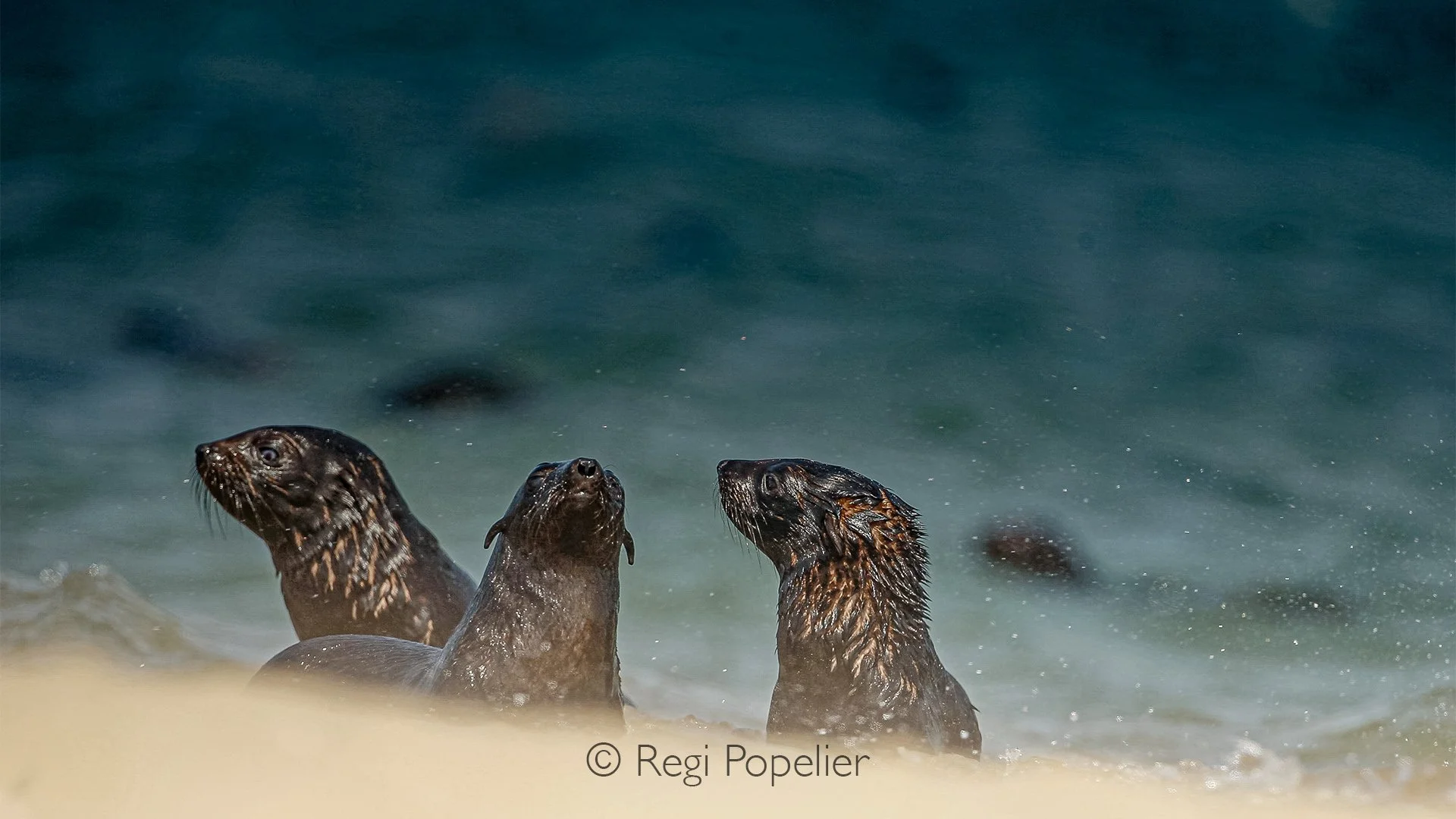
Namibia046 - Tree on a row.
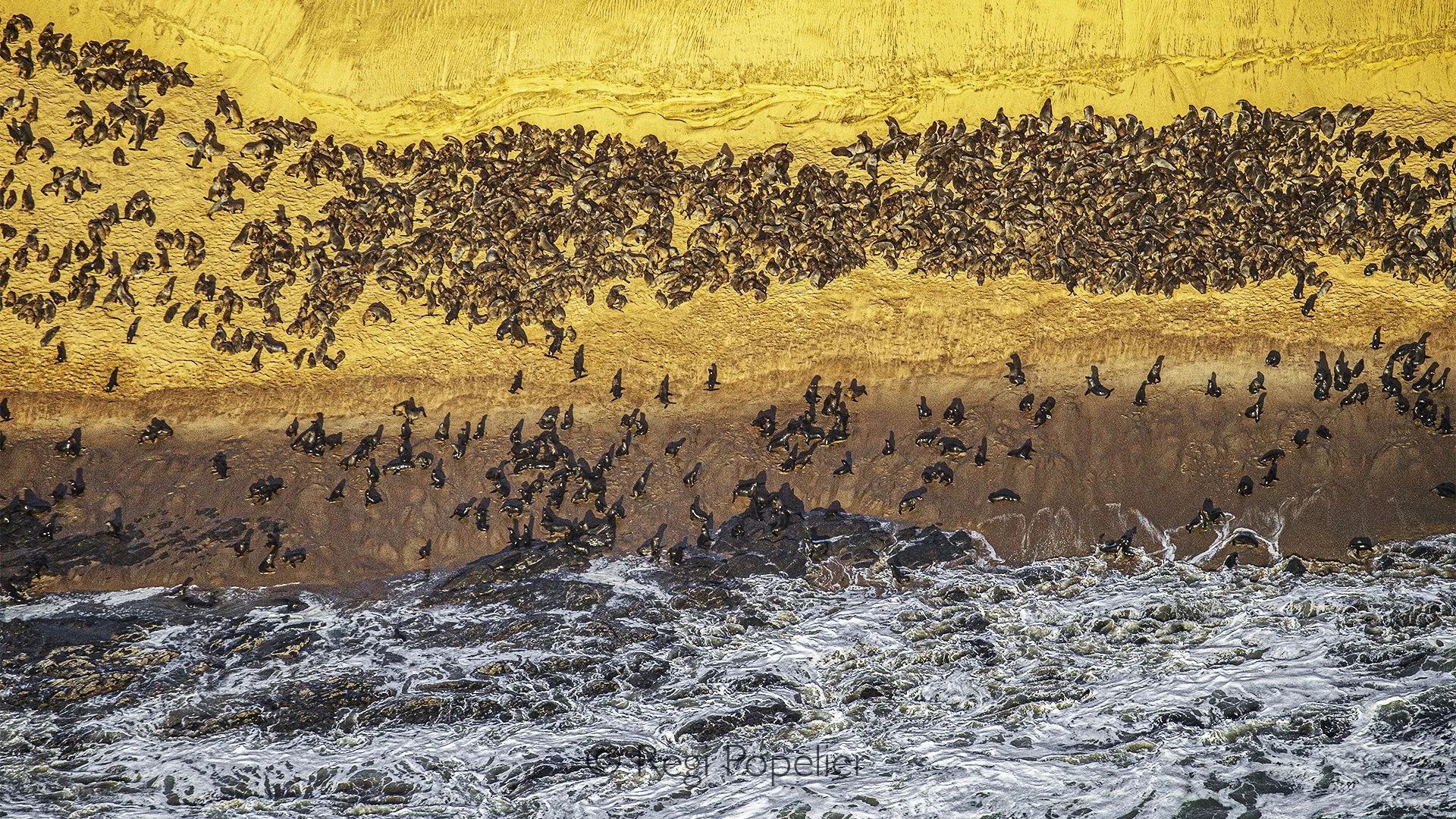
Namibia047 - The physics of a golden coastline. Photographed from above, the unique atmospheric conditions diffused cloud cover paired with a setting sun bathe the arid coast in a warm, yellowish light. This glow, contrasted with the brilliant white of the oxygenated waves, strongly accentuates the vast scale of this remote wildlife gathering.
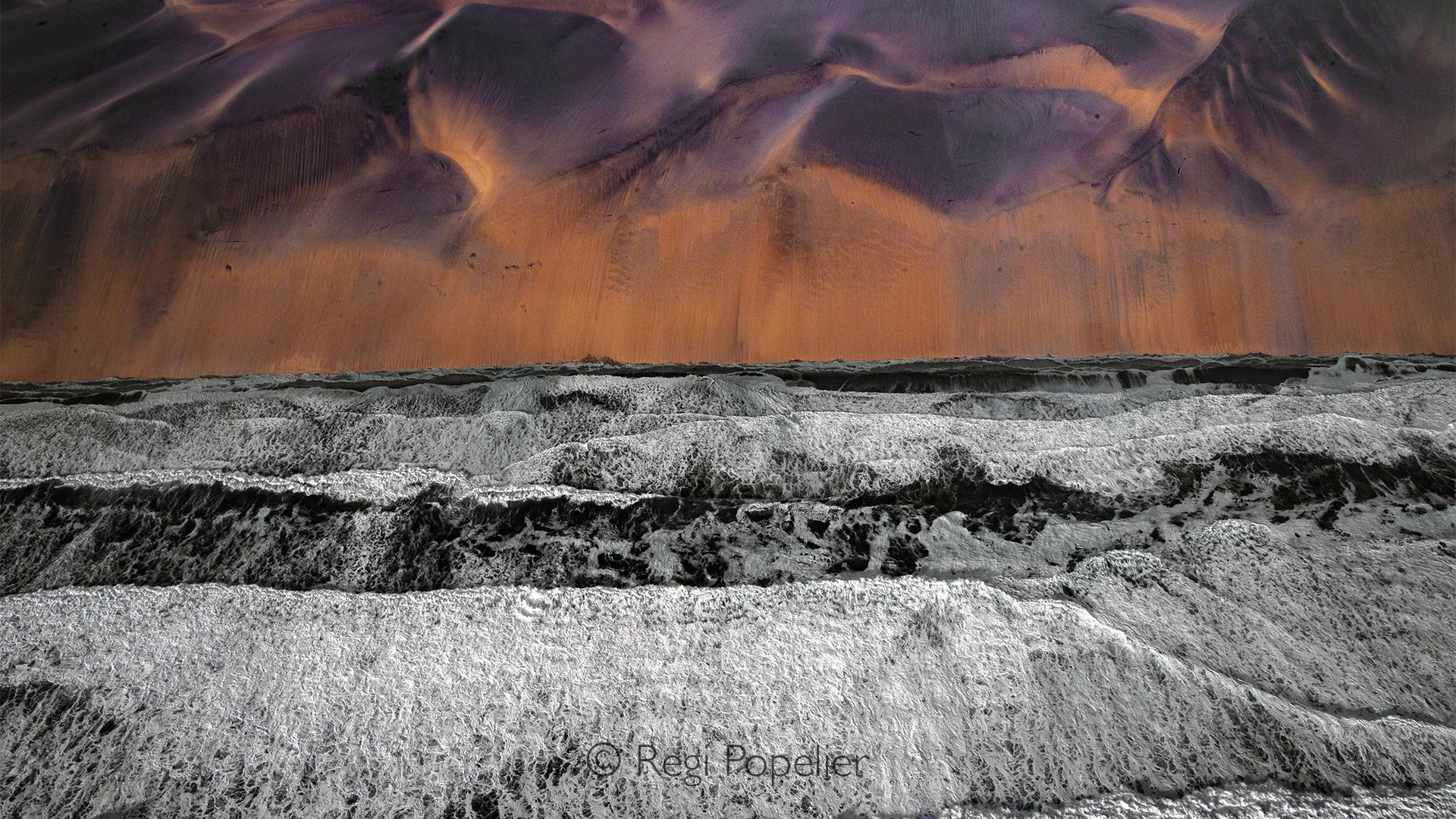
Namibia048 - A study in photographic variance. By altering both the perspective and the time of day, the visual dynamics of the colony are completely transformed. The contrast between yesterday's warm, oxygen rich surf and today’s unique atmospheric conditions offers a fresh, detailed look at the layout of this remote shoreline.
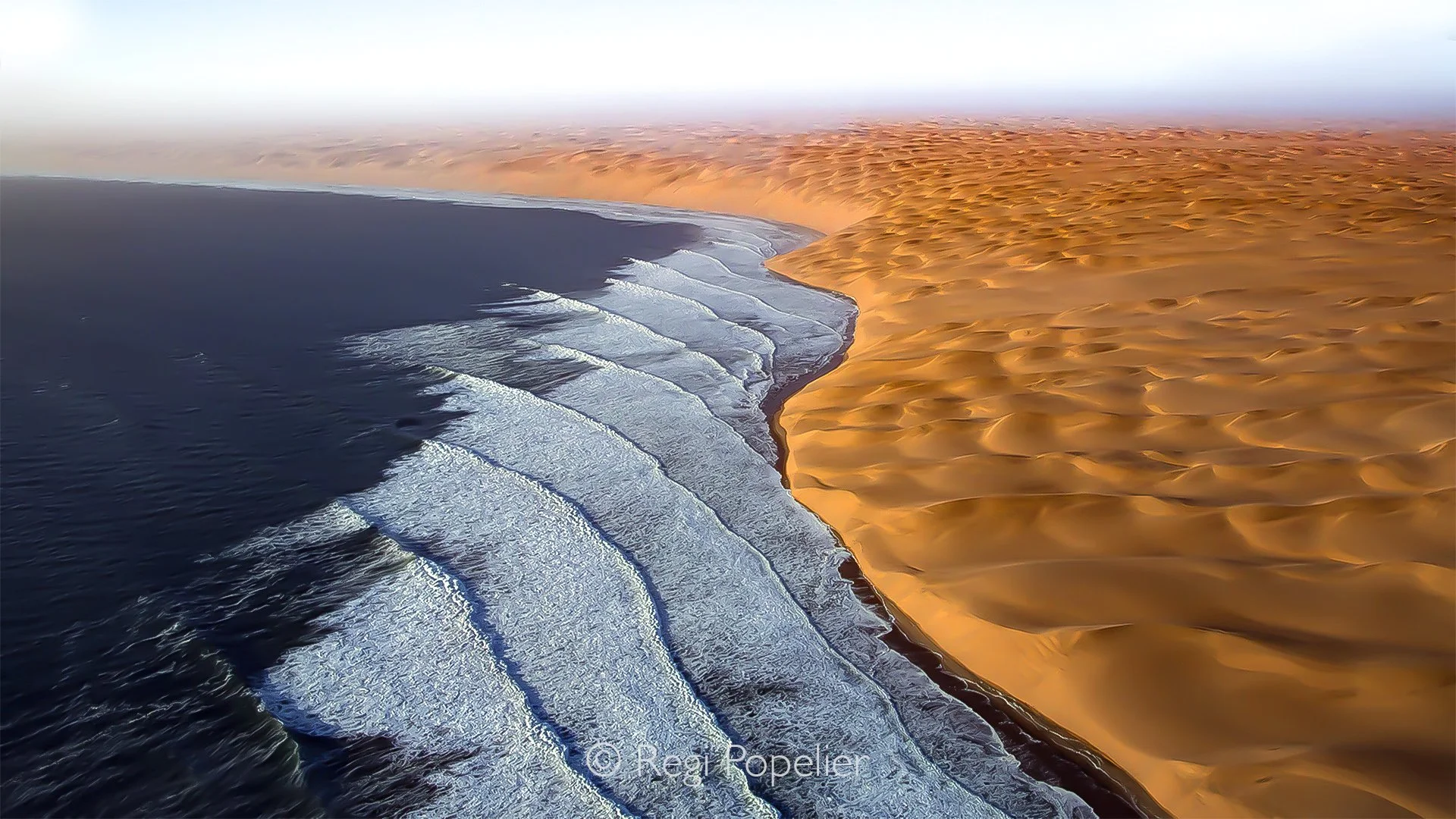
Namibia049 - Behind the lens of a multi-angle study. Photographing the same scene from a completely different altitude offers a crucial lesson in scale. The changing perspective strips away individual details to unveil the massive, swirling patterns of the coastline and the dunes as a joined, living landscape.
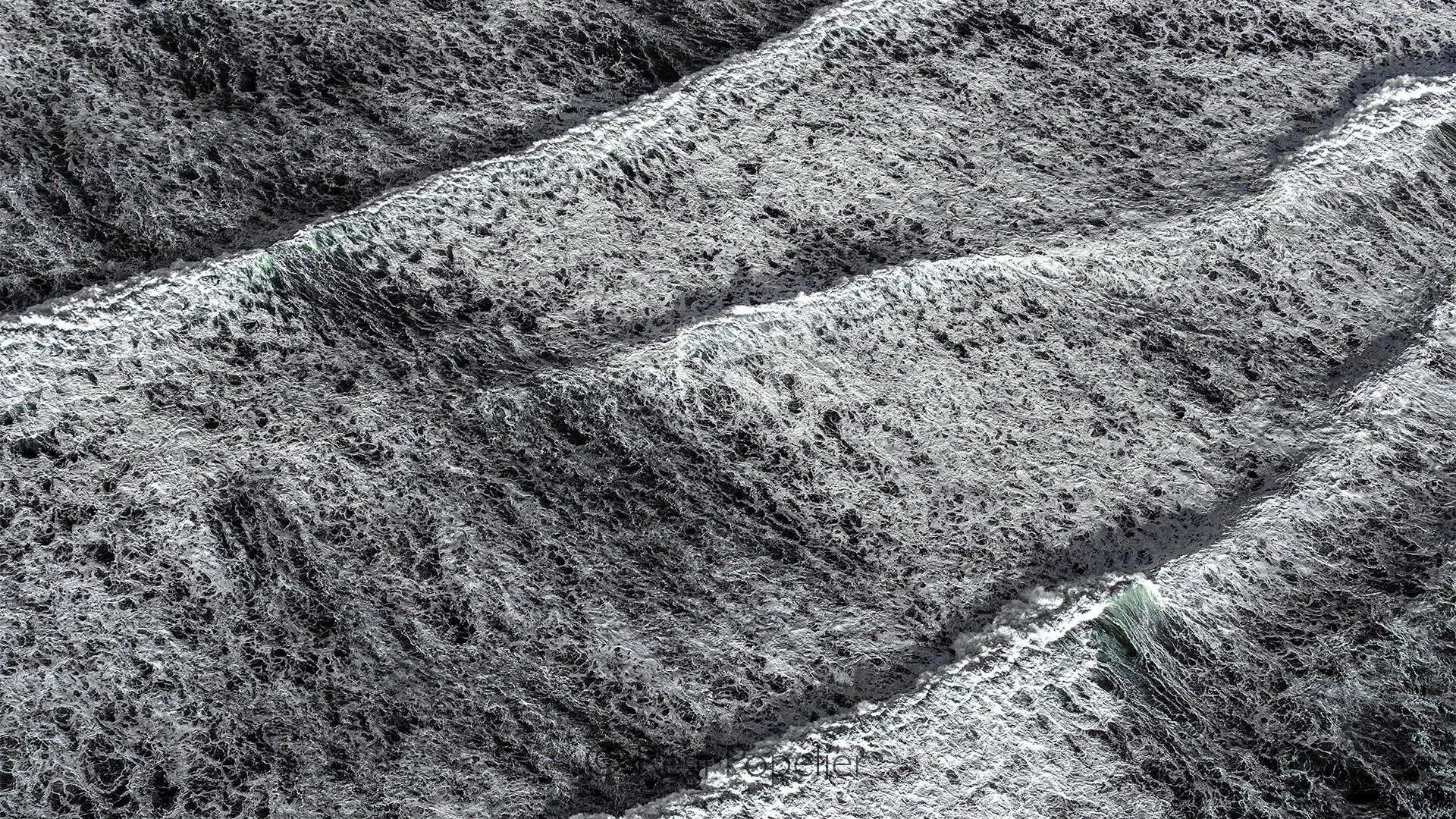
Namibia050 - Image of the oxygenated waves.
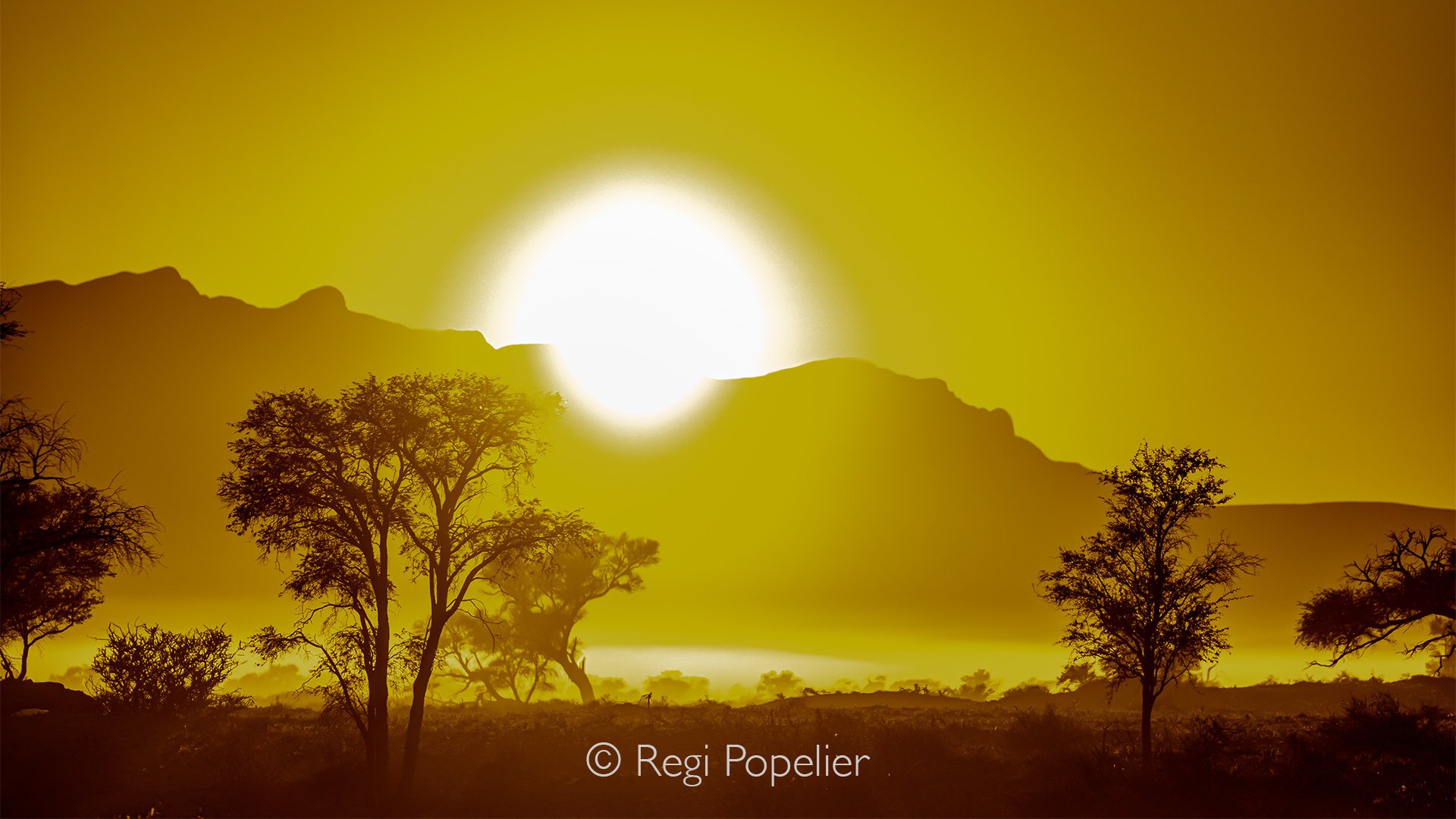
Namibia051 - Sunset on the road to Deadvlei.
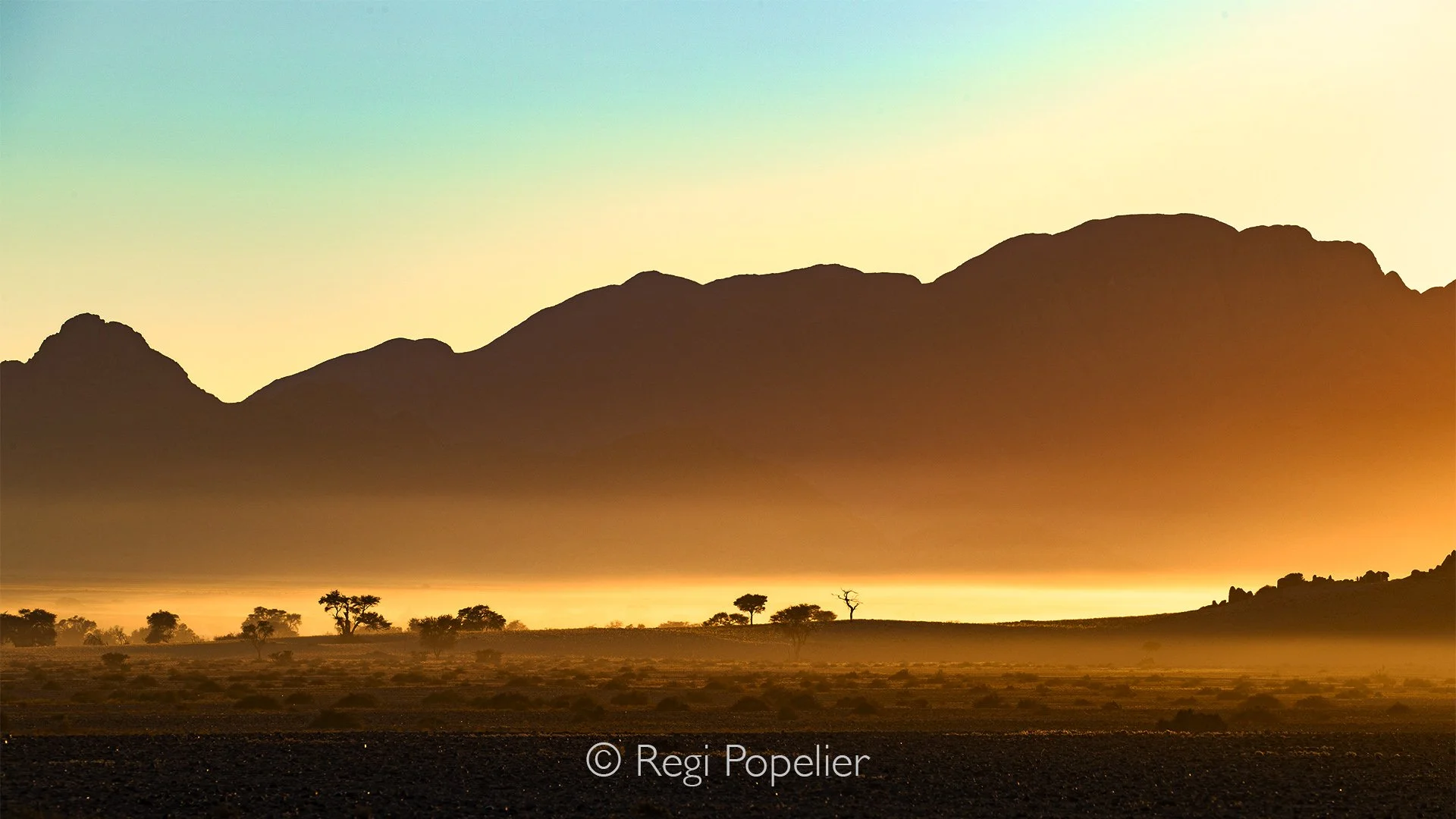
Namibia052 - Behind the lens of a desert awakening. Photographed in the early morning chill, this thin layer of radiation and advection fog hugs the ground before the sun rapidly evaporates it. For a brief moment, it creates a surreal, low contrast landscape that contrasts sharply with the massive dunes waiting ahead.
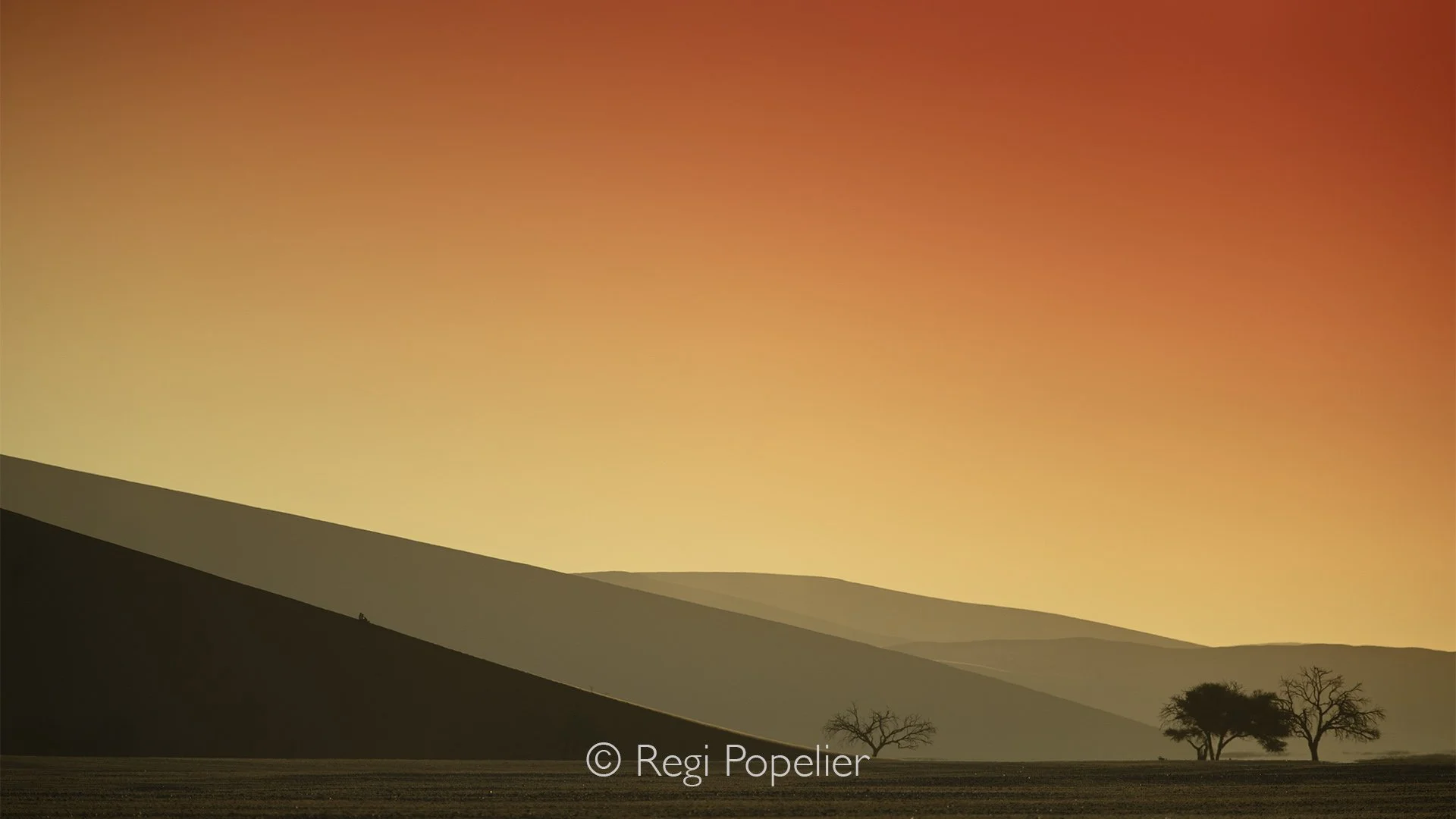
Namibia053 - Sunrise on the road to Deadvlei.
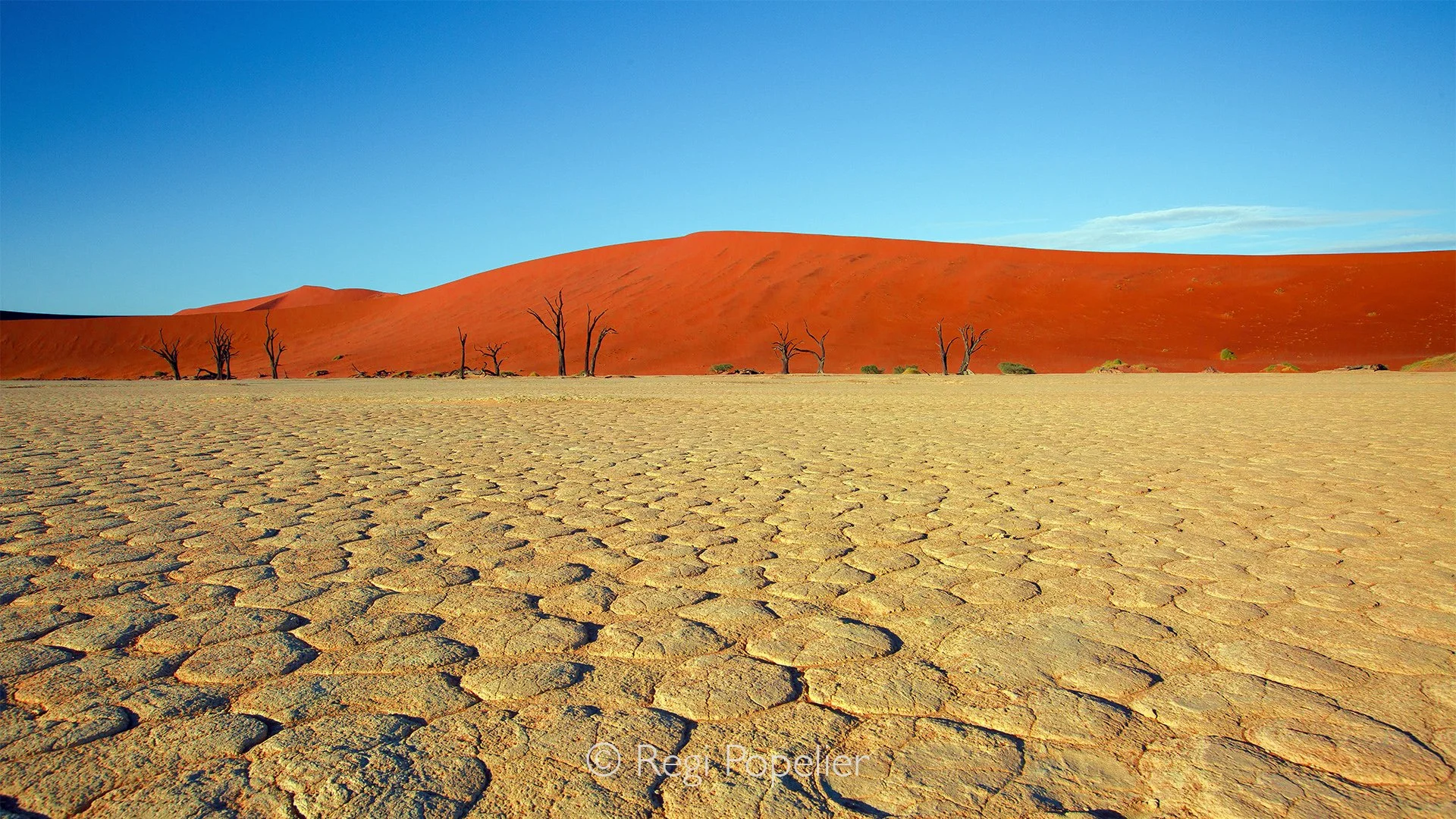
Namibia054 - A study in elemental contrast. Photographing this landscape requires careful exposure control to capture the intense dynamic range. The brilliant yellowish clay, the saturated rust-red sand, and the deep blue sky create a surreal, timeless environment where hundreds of years of desert history are compressed into a single frame.
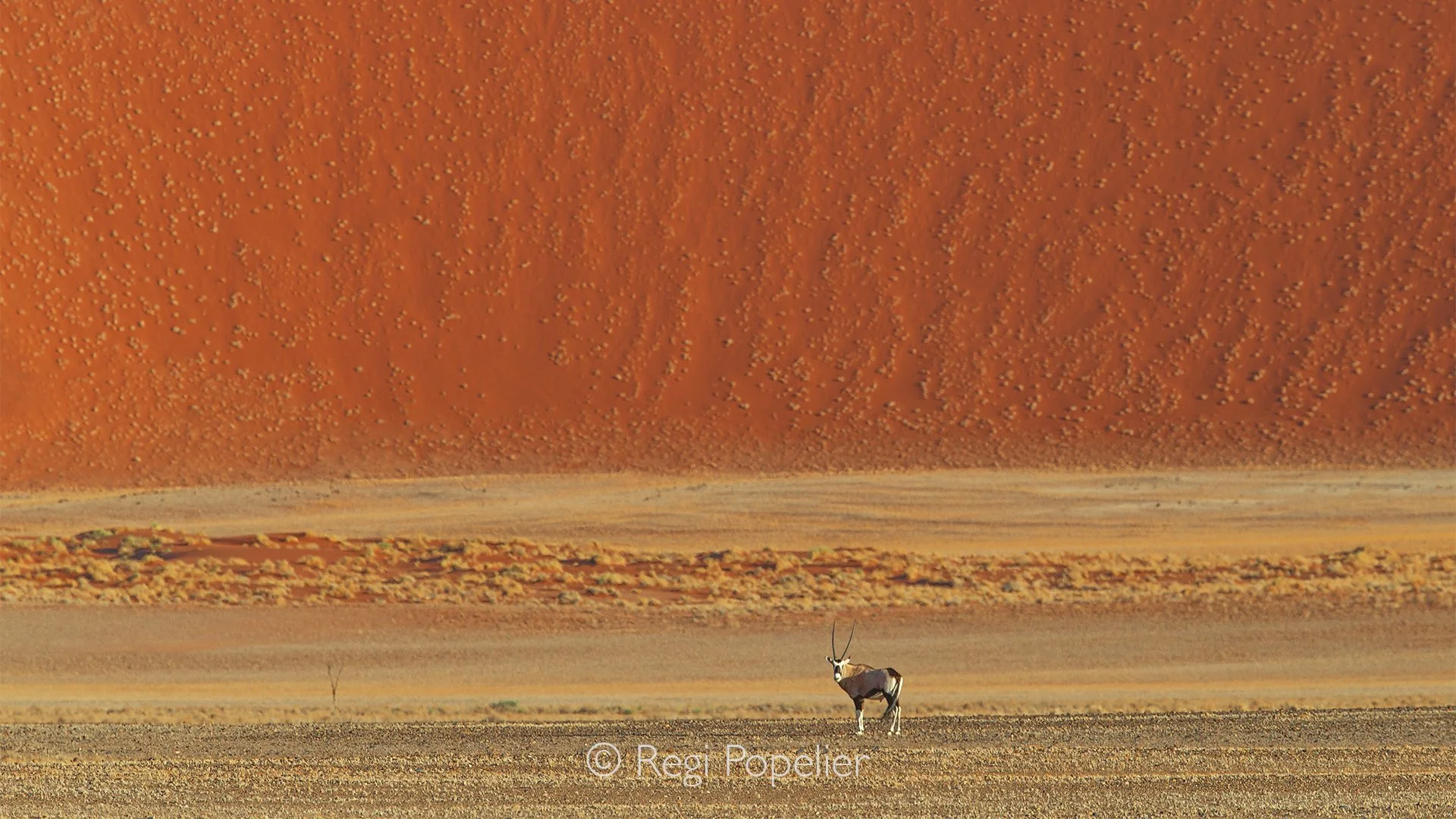
Namibia055 - A study in landscape architecture. Frame filling red dunes dwarf the solitary gemsbok, illustrating the overwhelming scale of Sossusvlei. The animal's positioning highlights its calm confidence in a landscape where it utilizes specialized heat exchange blood vessels in its nose to keep its brain cool.
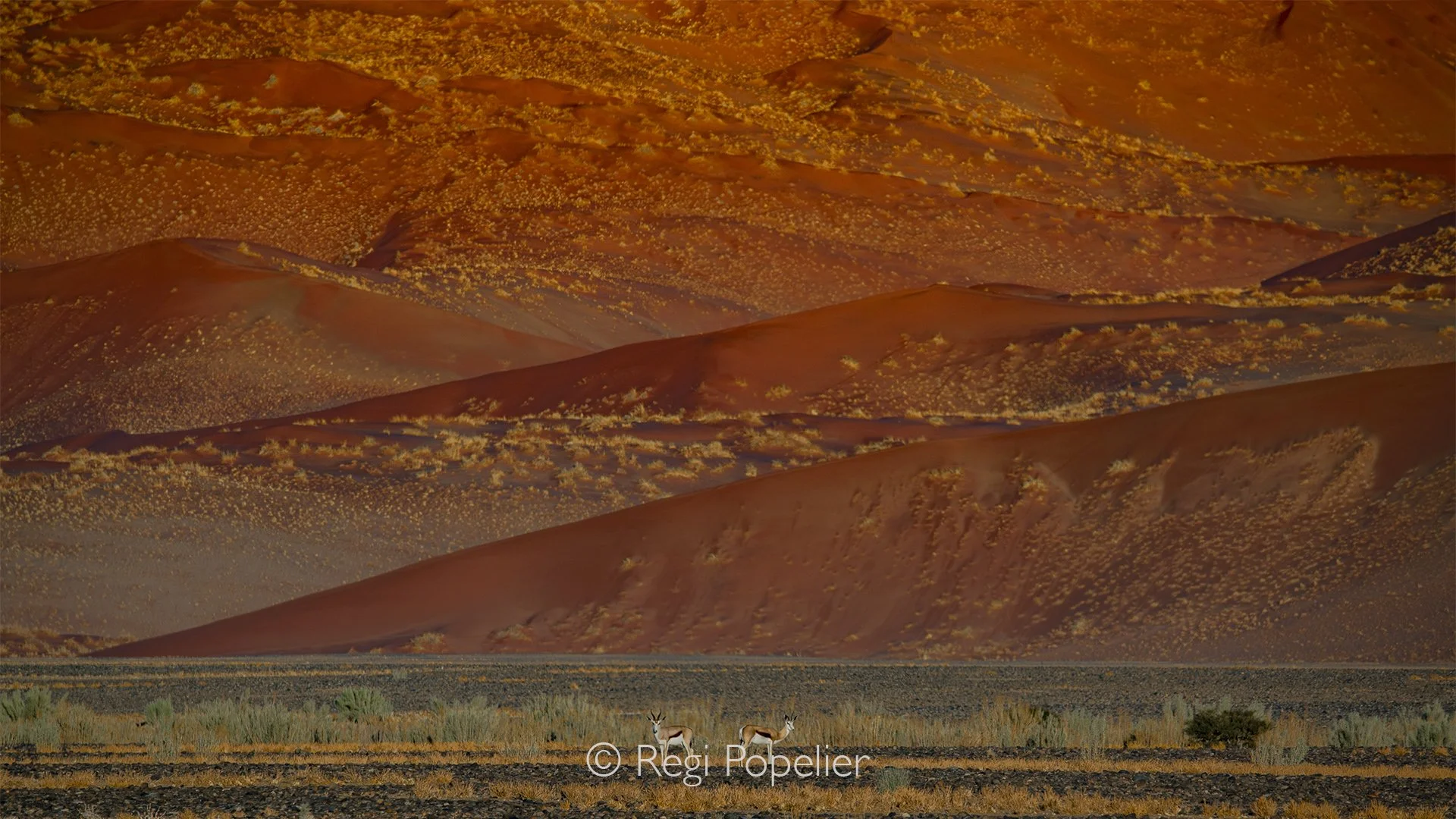
Namibia056 - Here with 2 springbok in the front of the huge sand dunes.
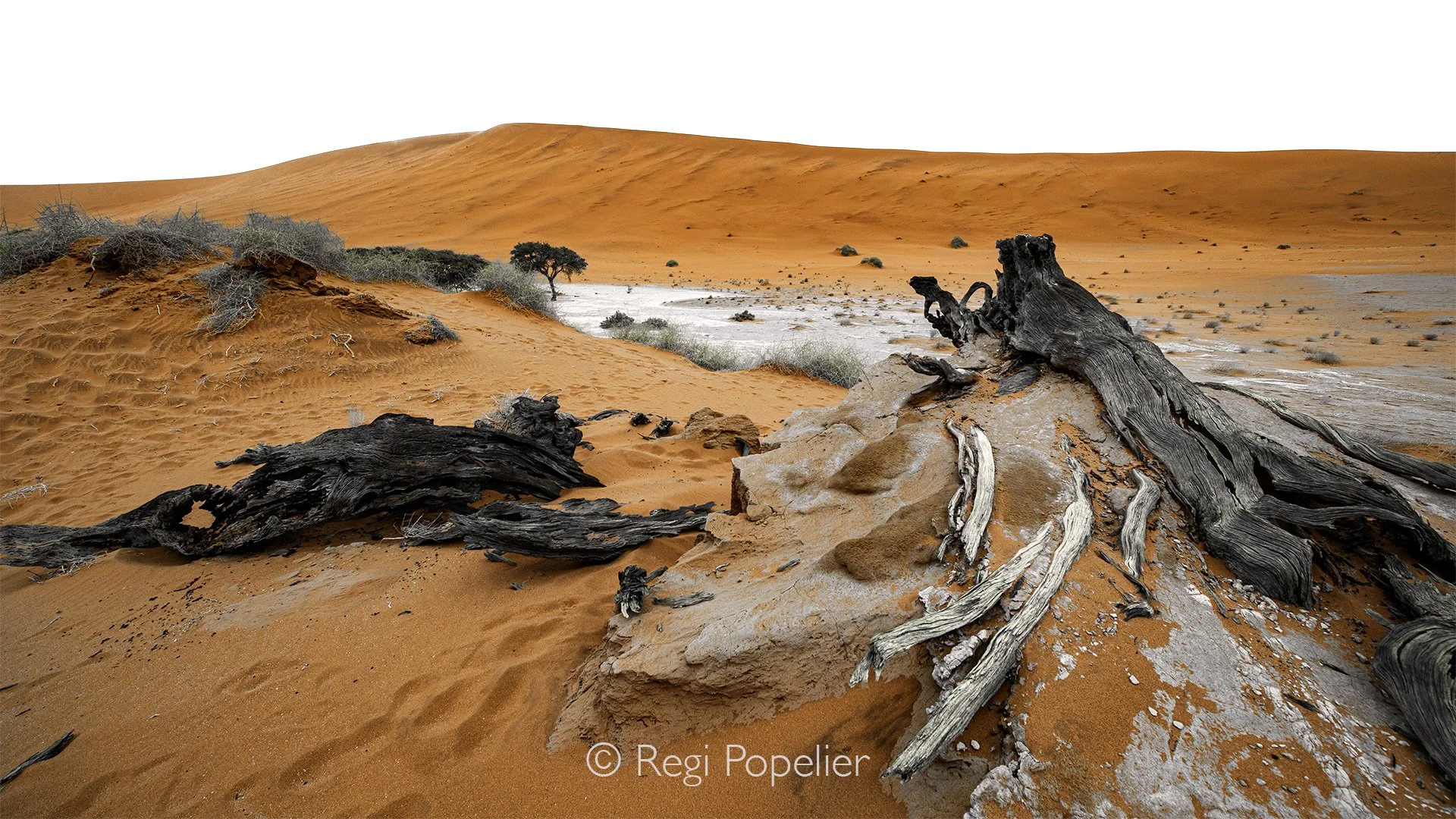
Namibia057 - A study in preservation and color. The stark, twisted branches of the dead forest slice through the intense landscape. For a photographer, the interaction between the dark organic remains, the mineral rich white pan floor, and the intense iron-oxide coloration of the surrounding dunes provides a perfect masterclass in natural geometry.
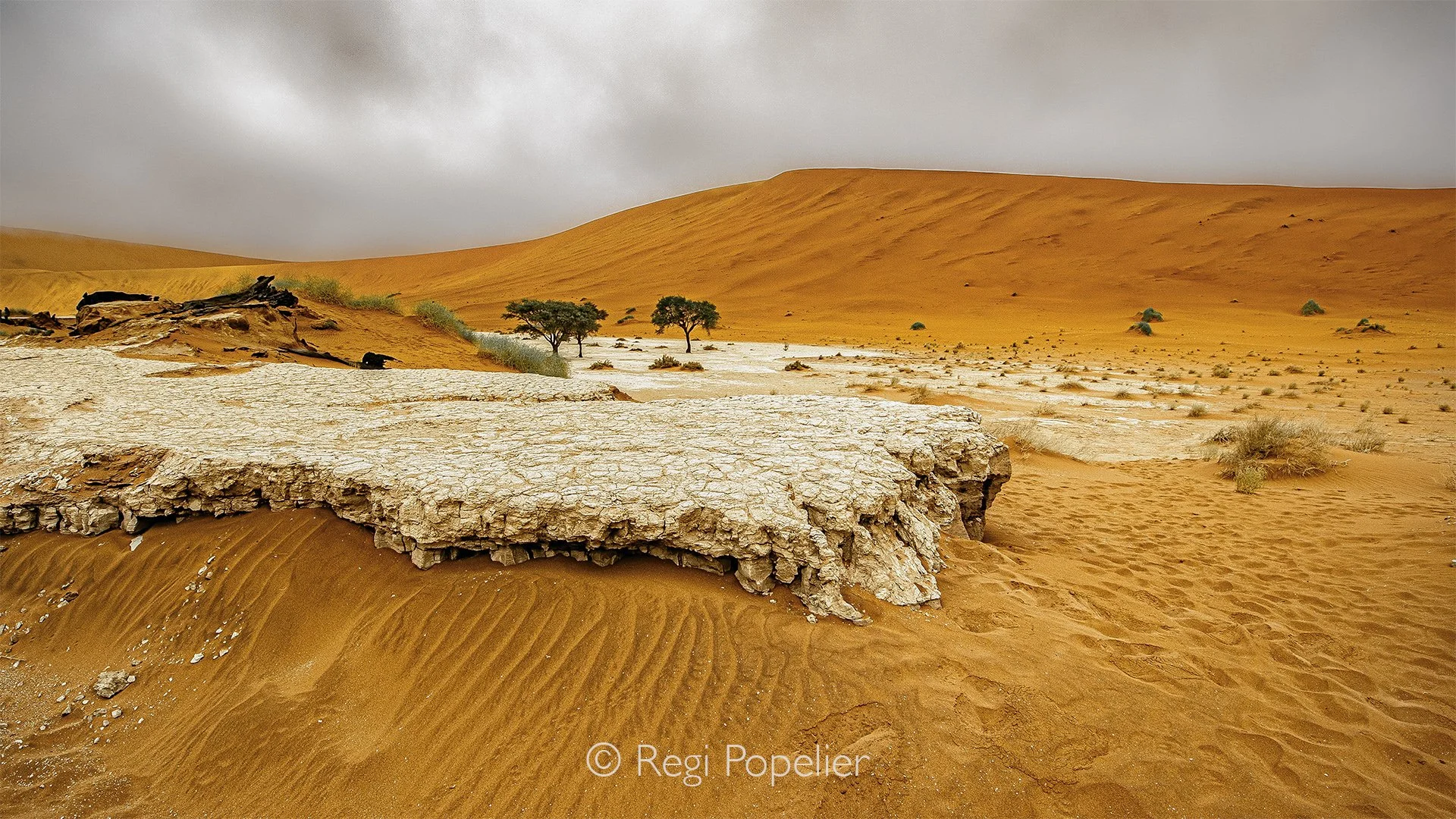
Namibia058 - The haunting beauty of contrast in Deadvlei.
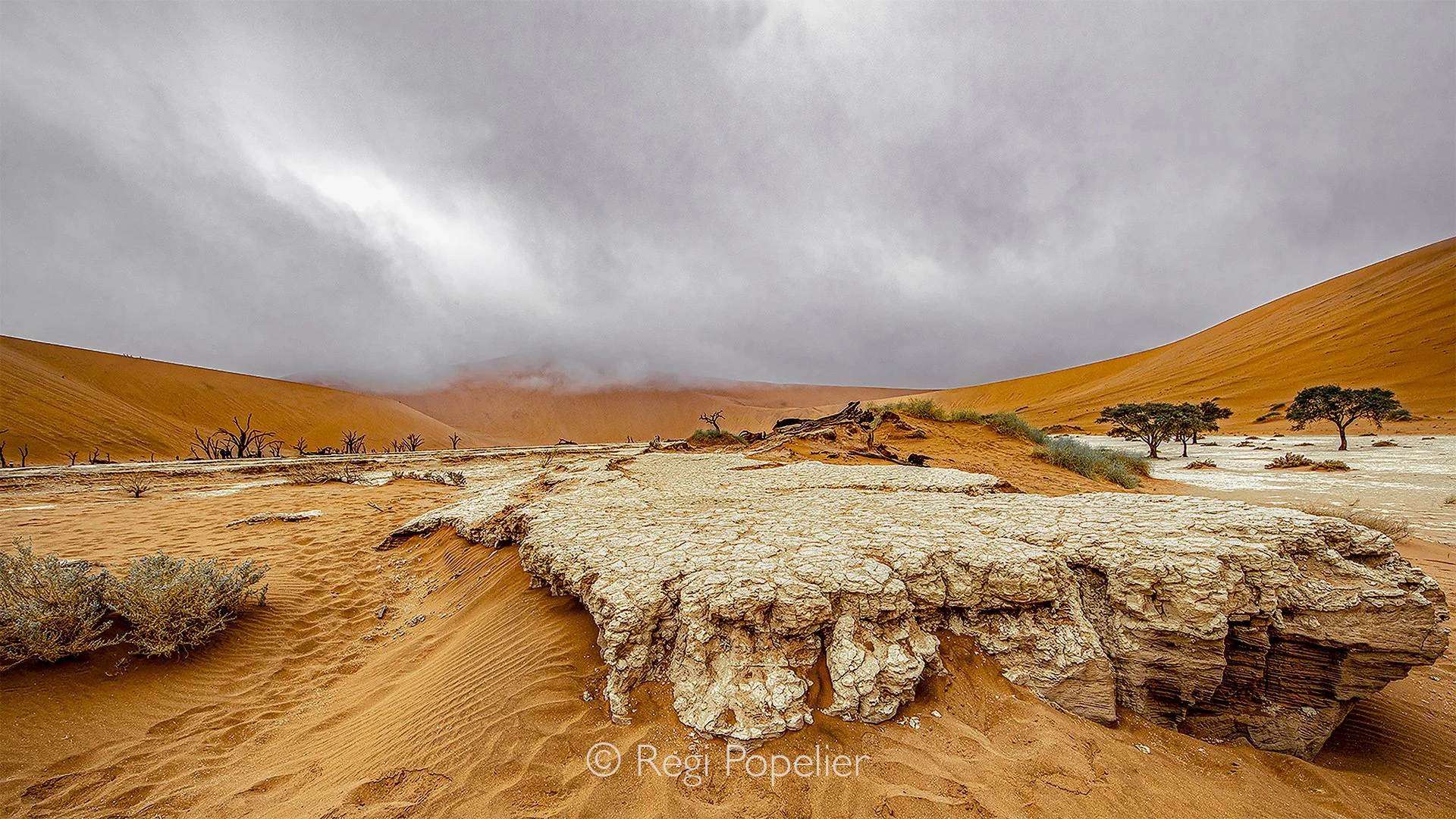
Namibia059 - From another angle.
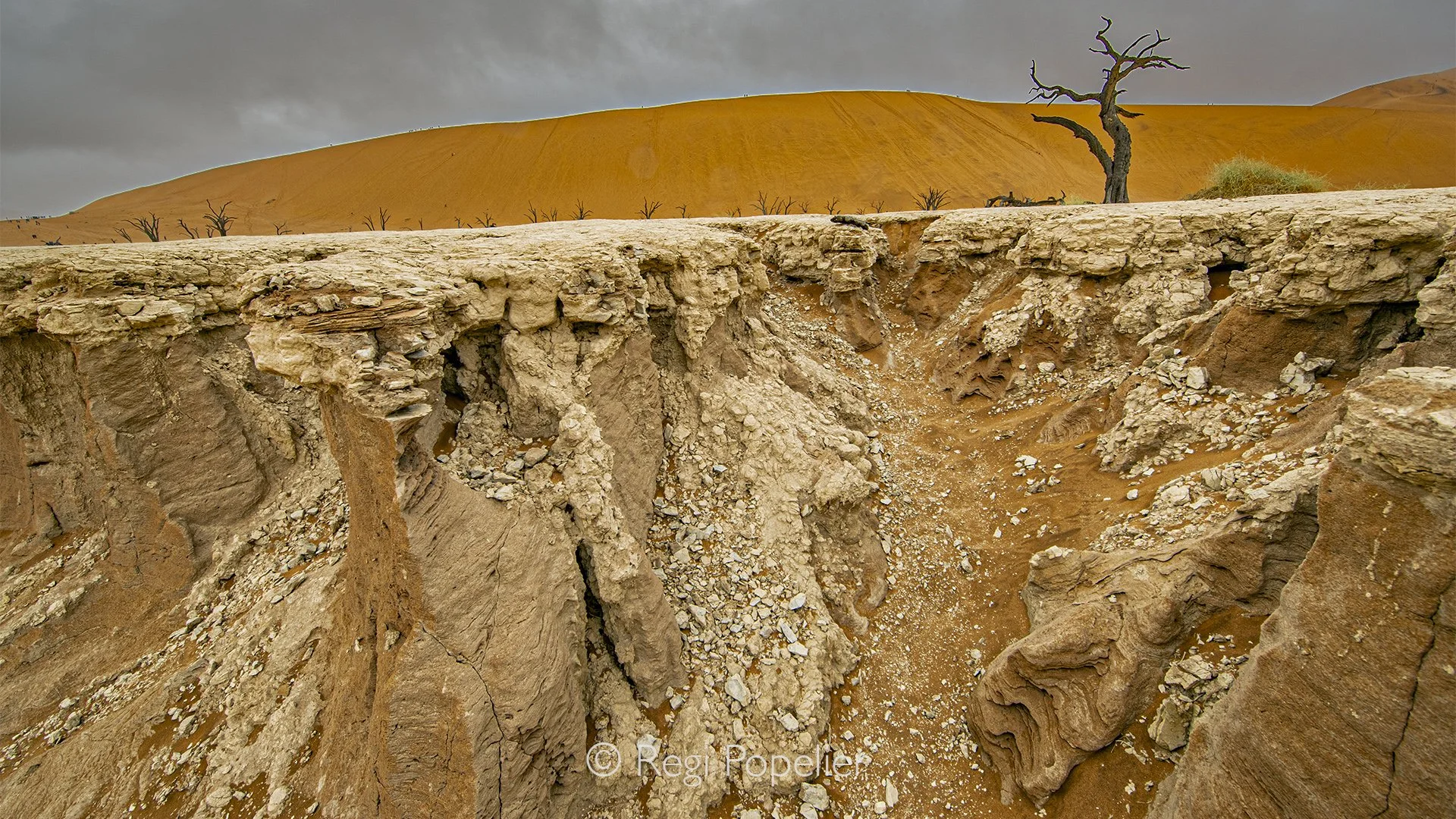
Namibia060 - The monochromatic dead against the vibrant living desert.
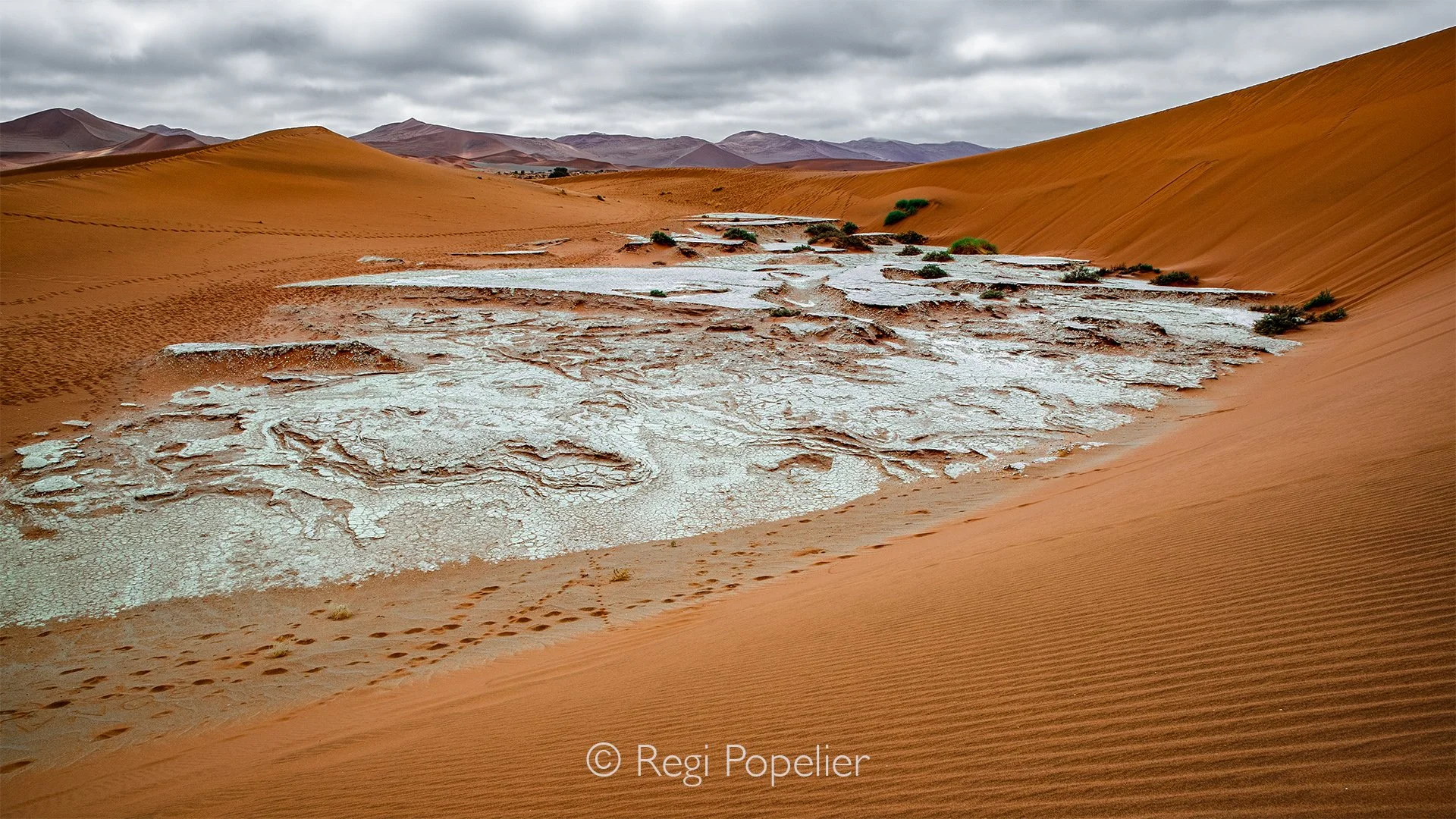
Namibia061 - The survival of the clay pans.
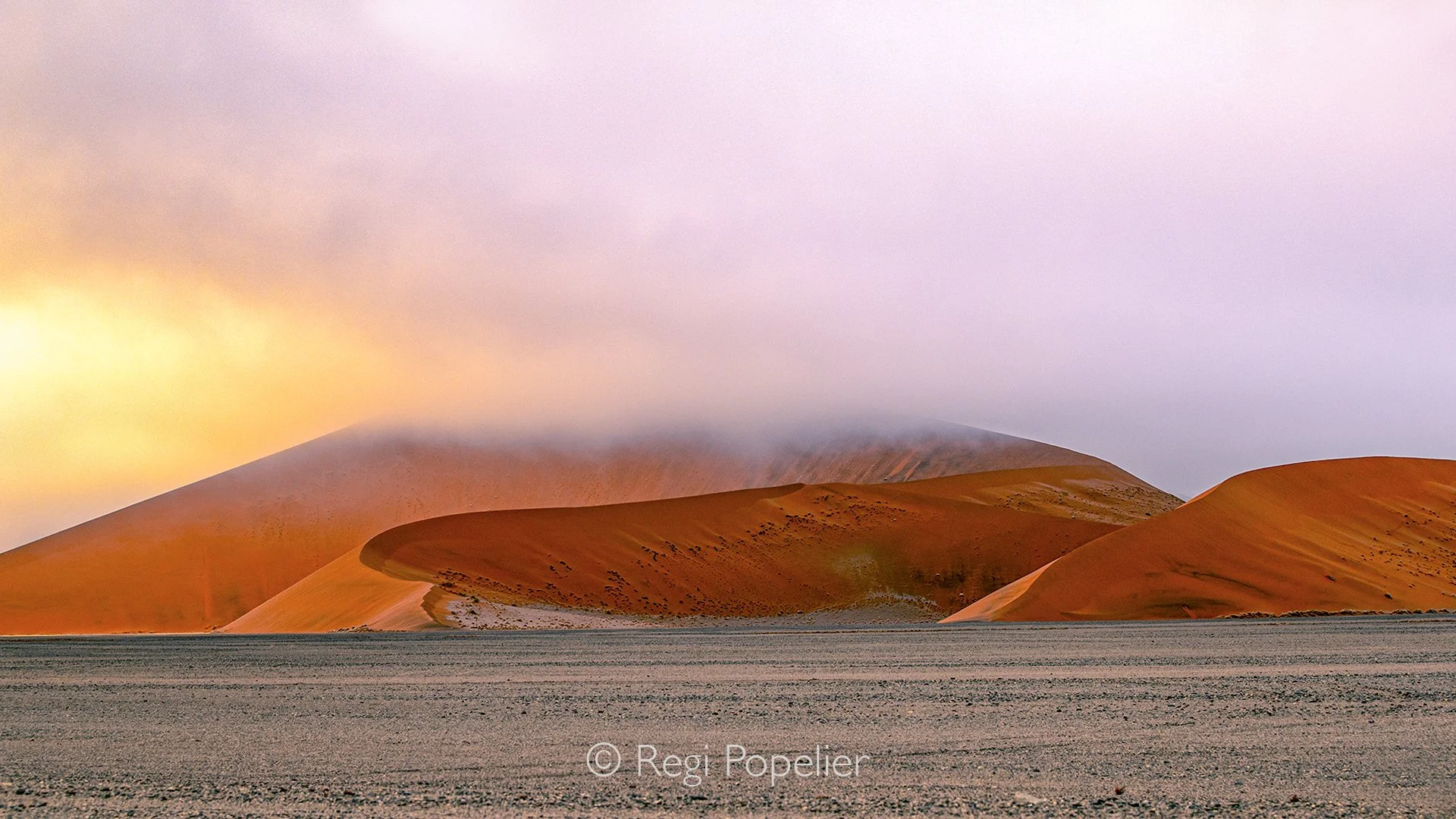
Namibia062 - The lifeline of the Namib. Capturing this low lying morning fog while on the road to Deadvlei documents the desert’s most crucial weather event. This advection fog forms when warm, moist air from the Atlantic Ocean meets the icy Benguela Current and is blown inland, providing vital moisture to an otherwise hyper arid ecosystem.
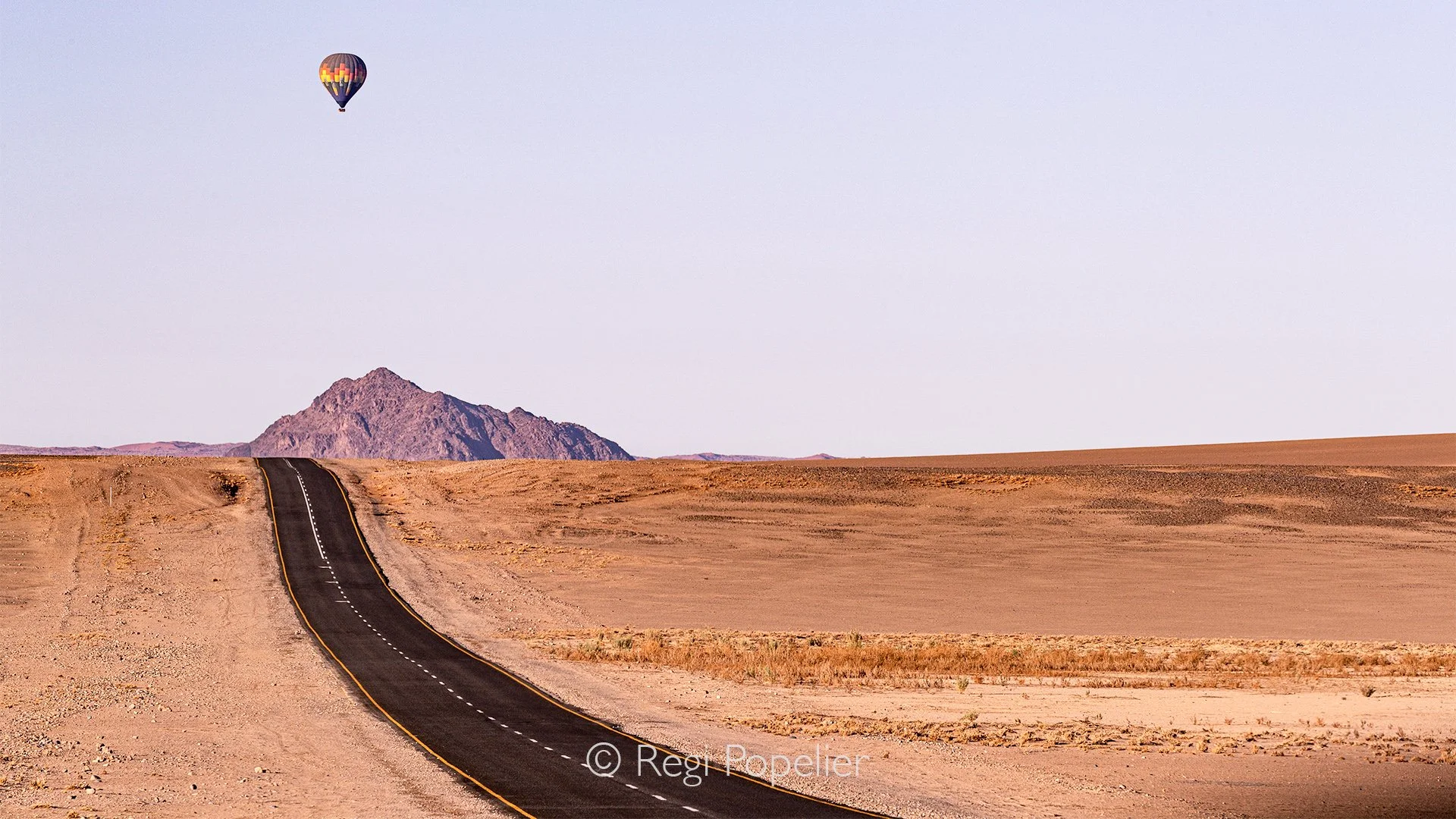
Namibia063 - A study in landscape contrast. The sleek, dark texture of the asphalt road provides a perfect visual anchor for the photographer. It highlights the vast scale of the hyper arid landscape, showing how modern engineering carves a path through one of the most inhospitable yet breathtaking environments on Earth.
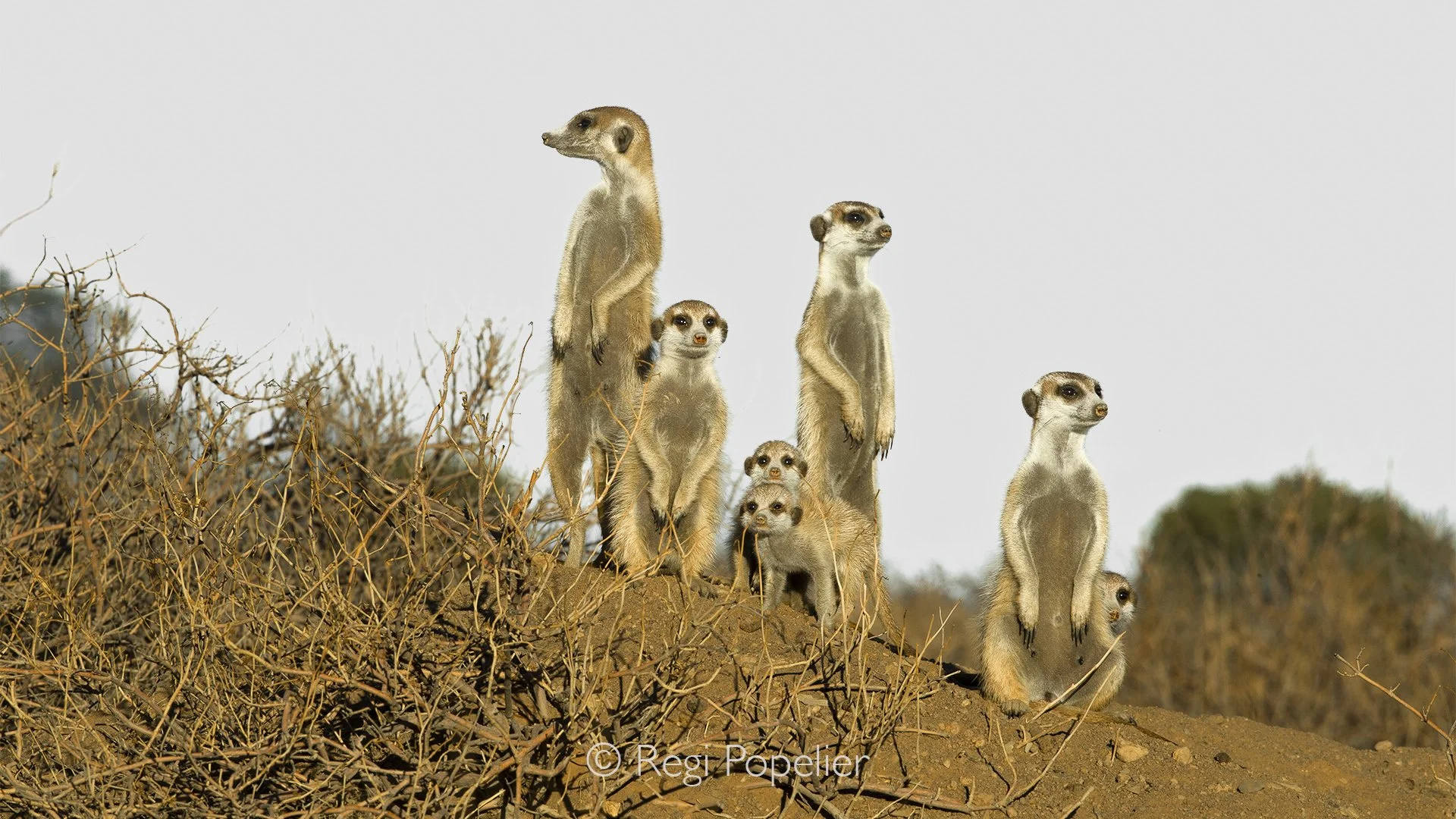
Namibia064 - Eyes on the horizon, paws on the chest.
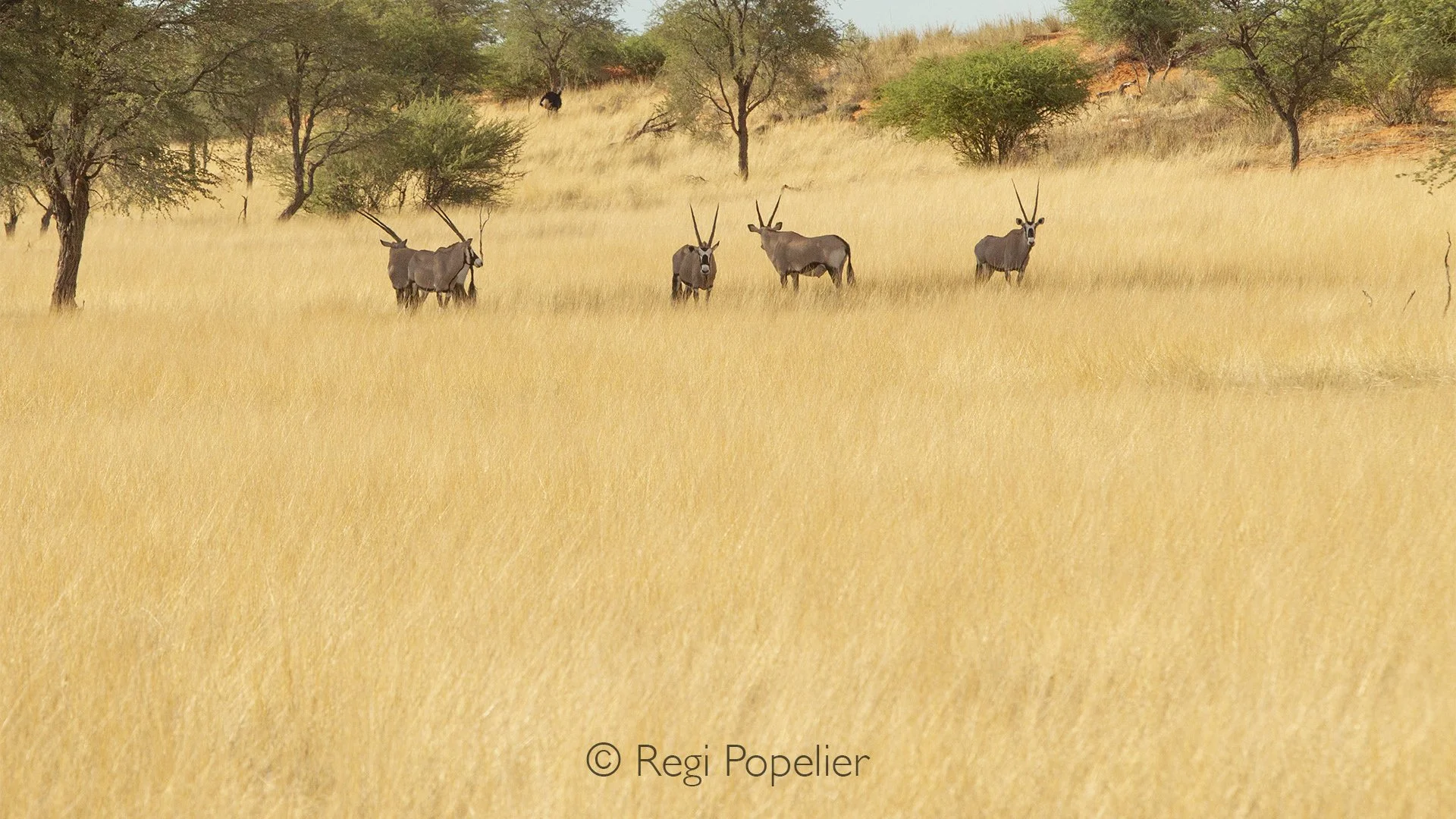
Namibia065 - Trying to creep closer through the tall, yellow grass highlights the incredible situational awareness of the gemsbok. Their large ears and sharp vision easily detect the subtle movement of a photographer, causing the animal to lock its eyes on the threat while calculating its escape route.
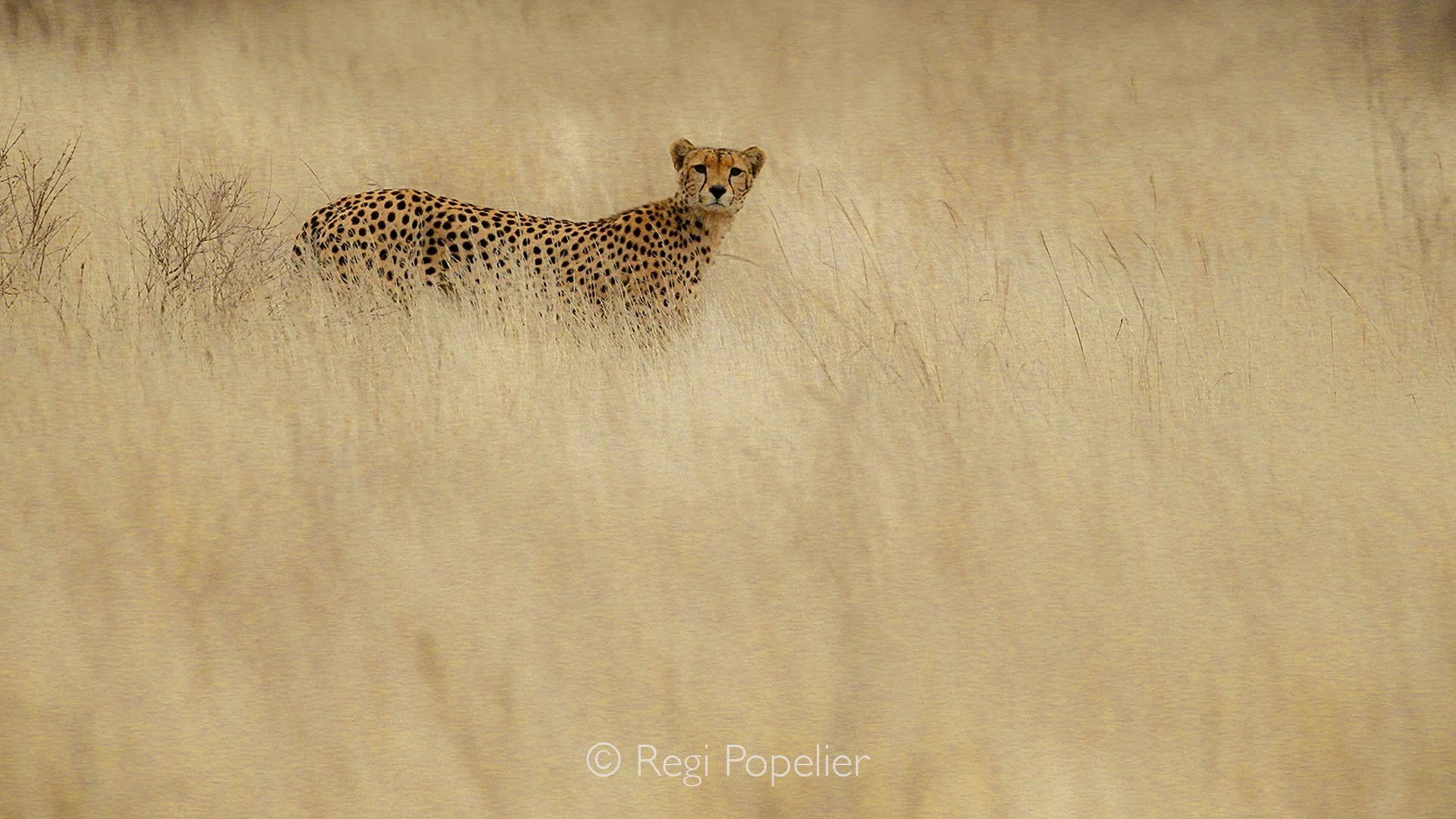
Namibia066 - To capture this cheetah in its perfect, alert posture, intentionally overexposing the frame (+1 or +2 EV) was essential. This technique burns out the harsh reflections of the high, golden grass, preventing the cheetah's beautifully spotted coat from dissolving into the bright background.
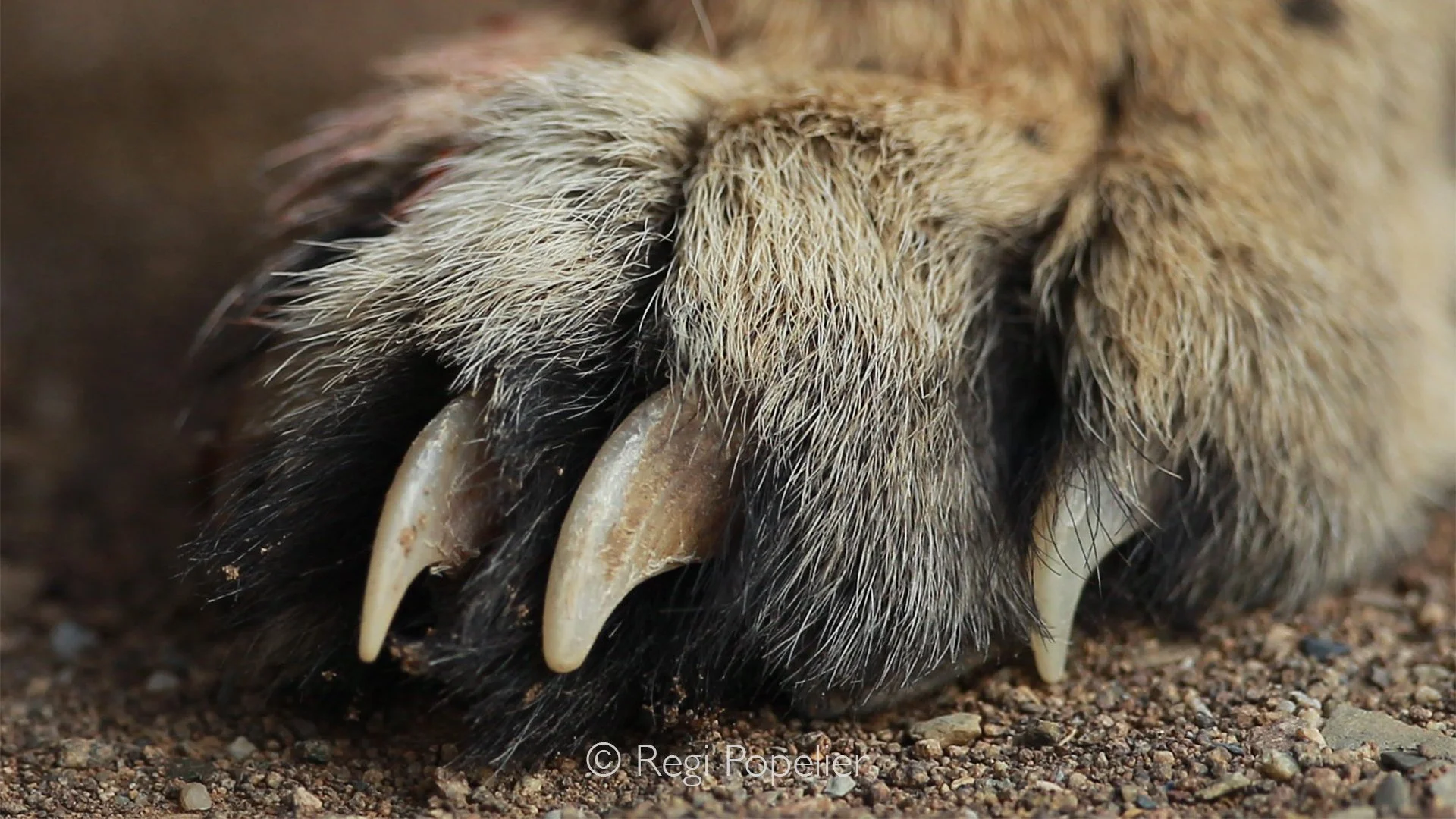
Namibia067 - A close-up with the fast lane.
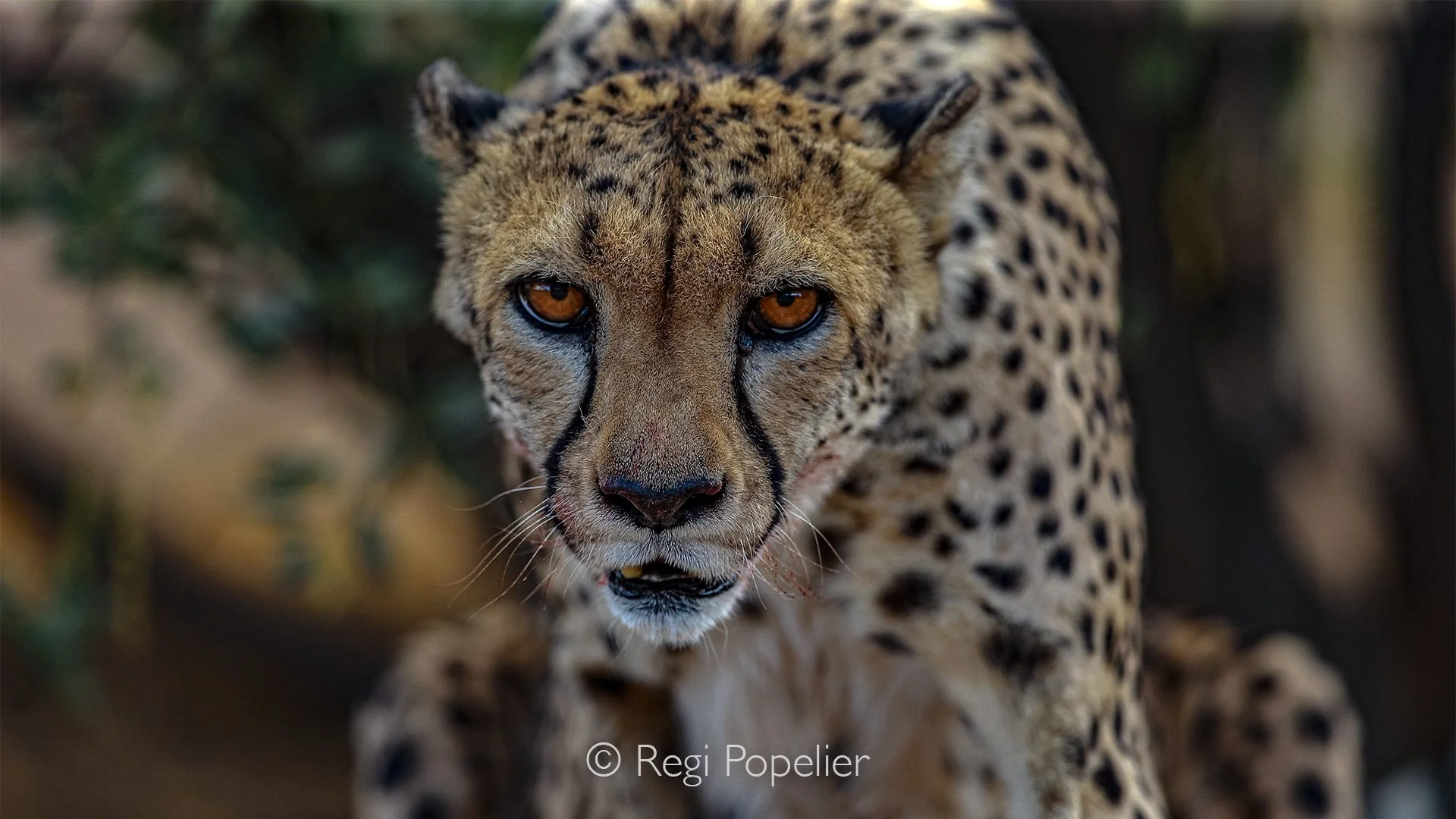
Namibia068 - Zooming into the face of a cheetah reveals the iconic black 'tear tracks' running from the inside corners of the eyes down to the mouth.
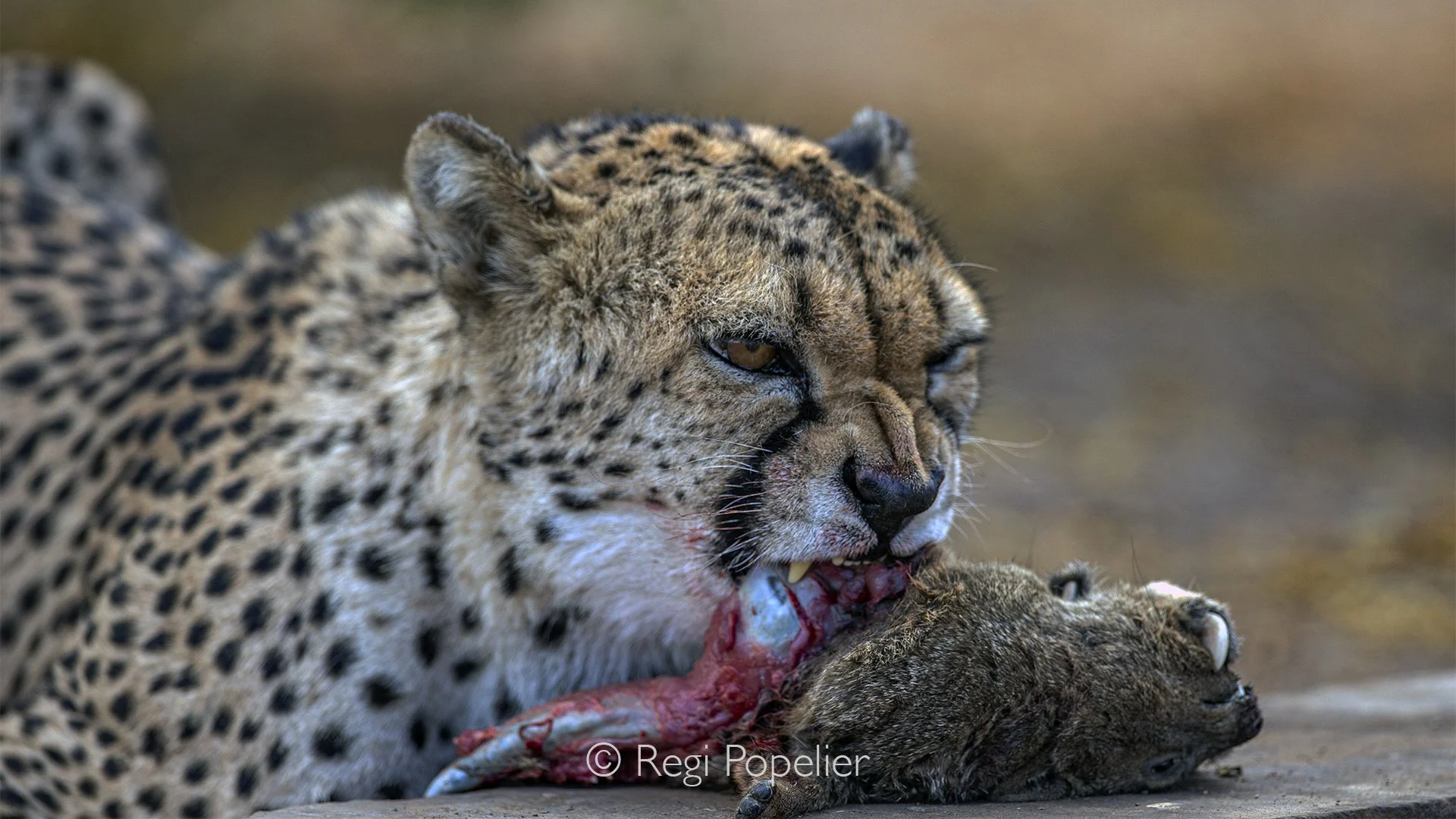
Namibia069 - The raw reality of the African food chain.
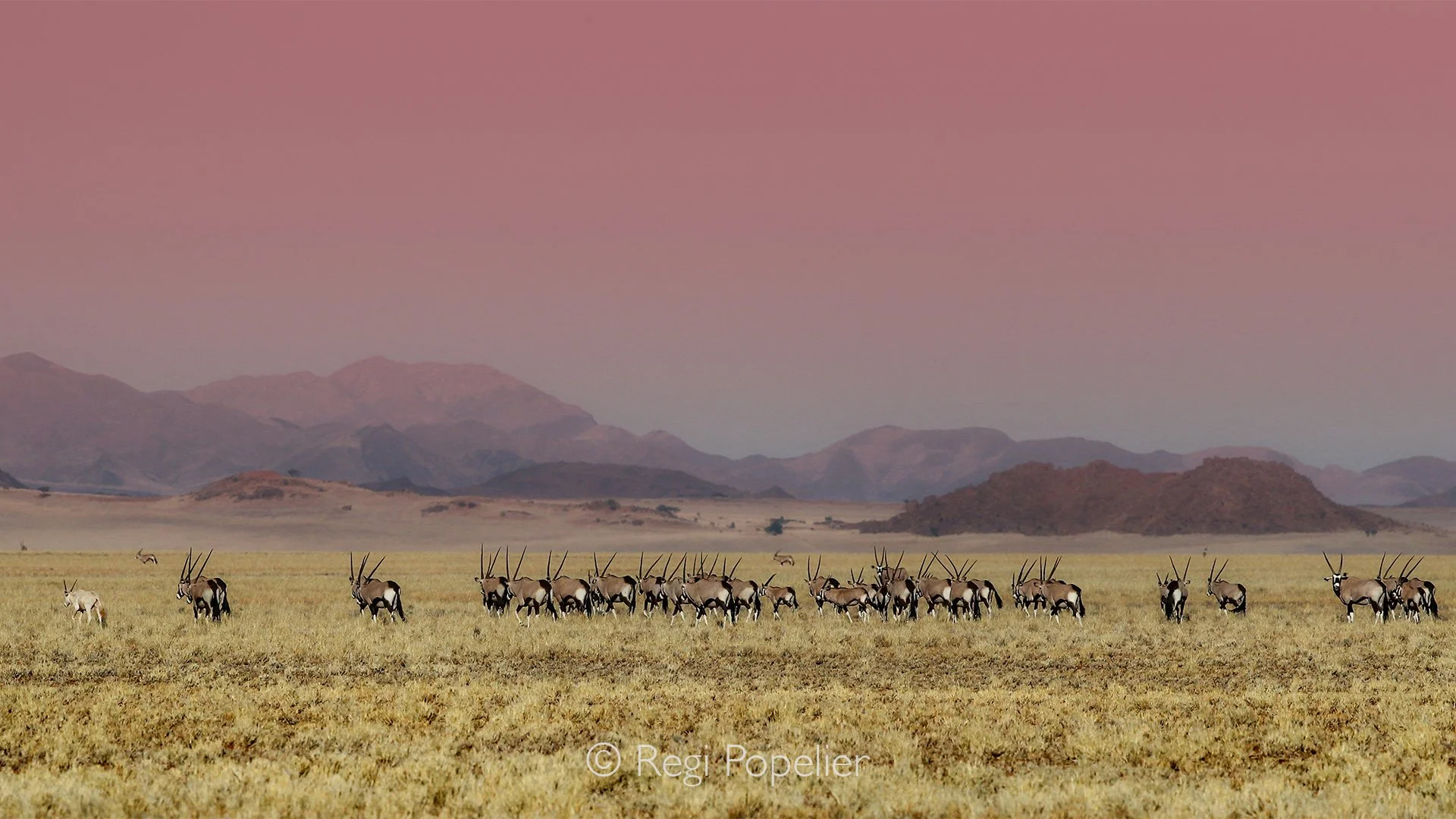
Namibia070 - Behind the lens of a landscape transformed. This striking composition captures how a beautiful, seemingly empty Namibian landscape can instantly transform into a living tapestry. The uniform alignment of their long, rapier-like horns creates a powerful graphic repetition against the mountain backdrop, showcasing their strength in numbers.
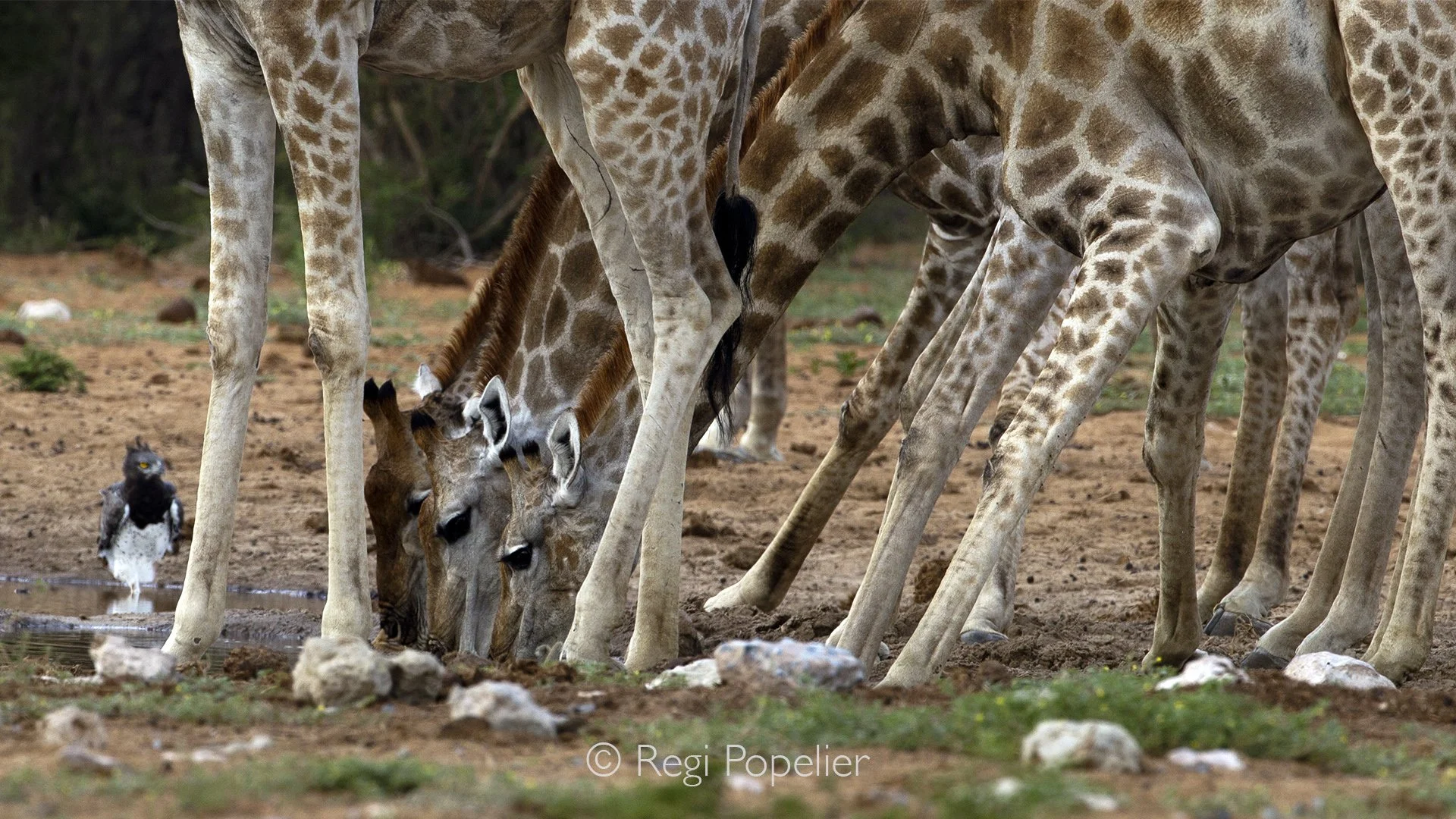
Namibia071 - The anatomy of vulnerability. Capturing multiple giraffes drinking simultaneously is a massive win for a photographer, as splaying their front legs wide to reach the water column forces them into their most vulnerable position against apex predators, making them highly alert to the movements of nearby raptors like the Black-chested Snake-Eagle.
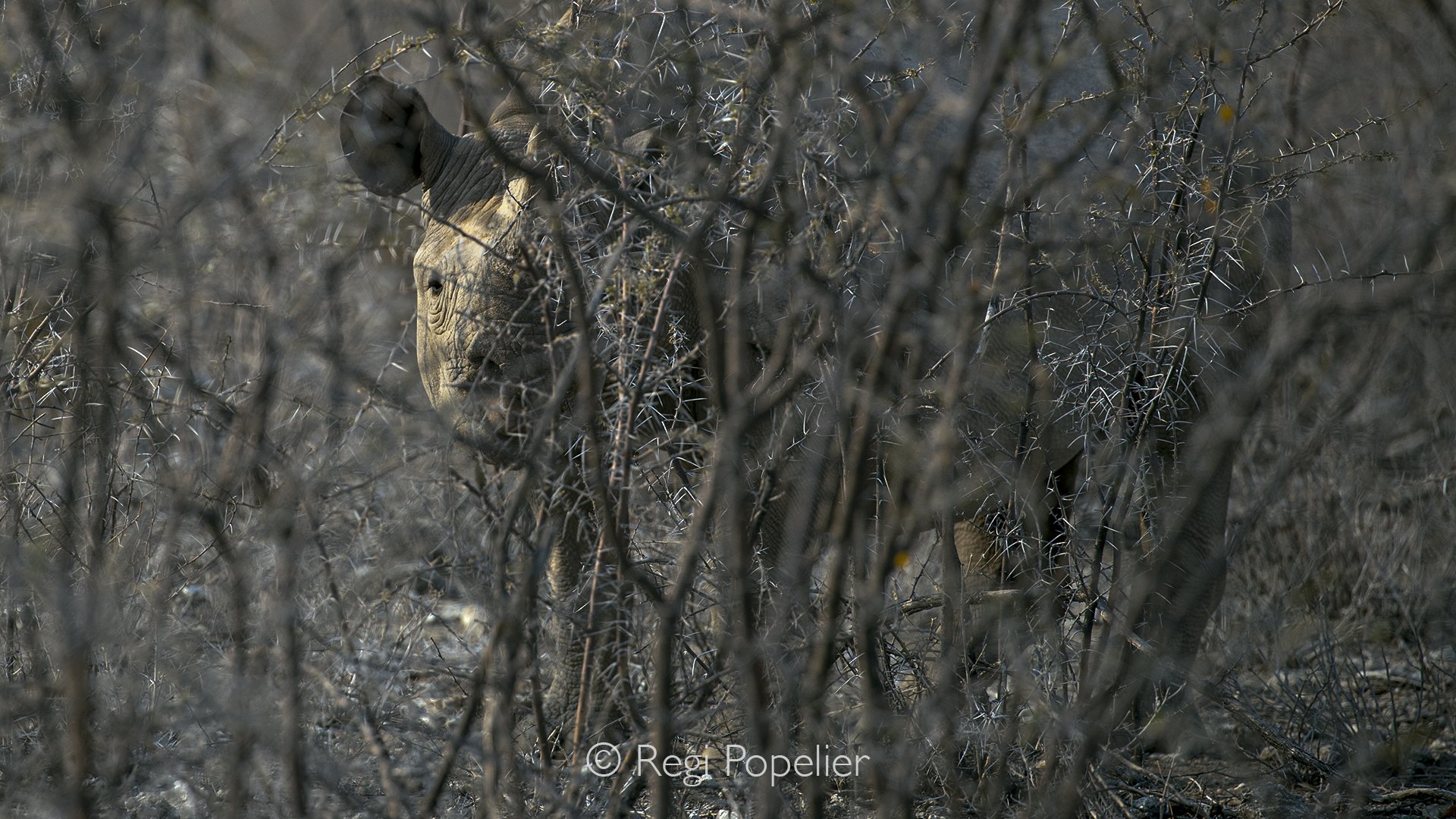
Namibia072 - Limiting the focus to the rhino’s rugged head draws immediate attention to the sheer density of Etosha's acacia defenses. This composition mirrors the elusive nature of the black rhino, which uses the thick, prickly undergrowth as both a primary food source and a strategic shield from sight.
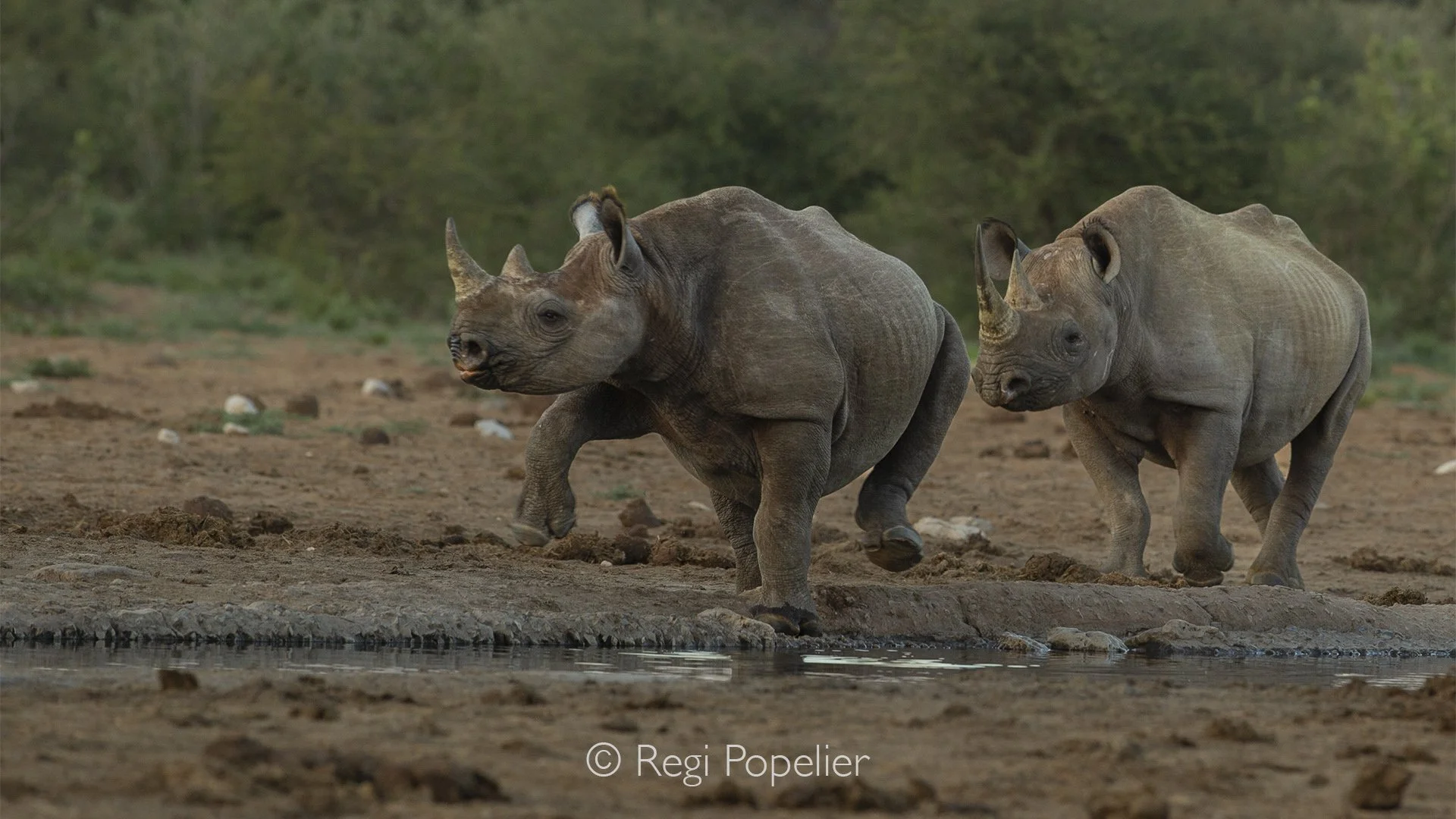
Namibia073 - Black rhinos arriving at the waterhole.
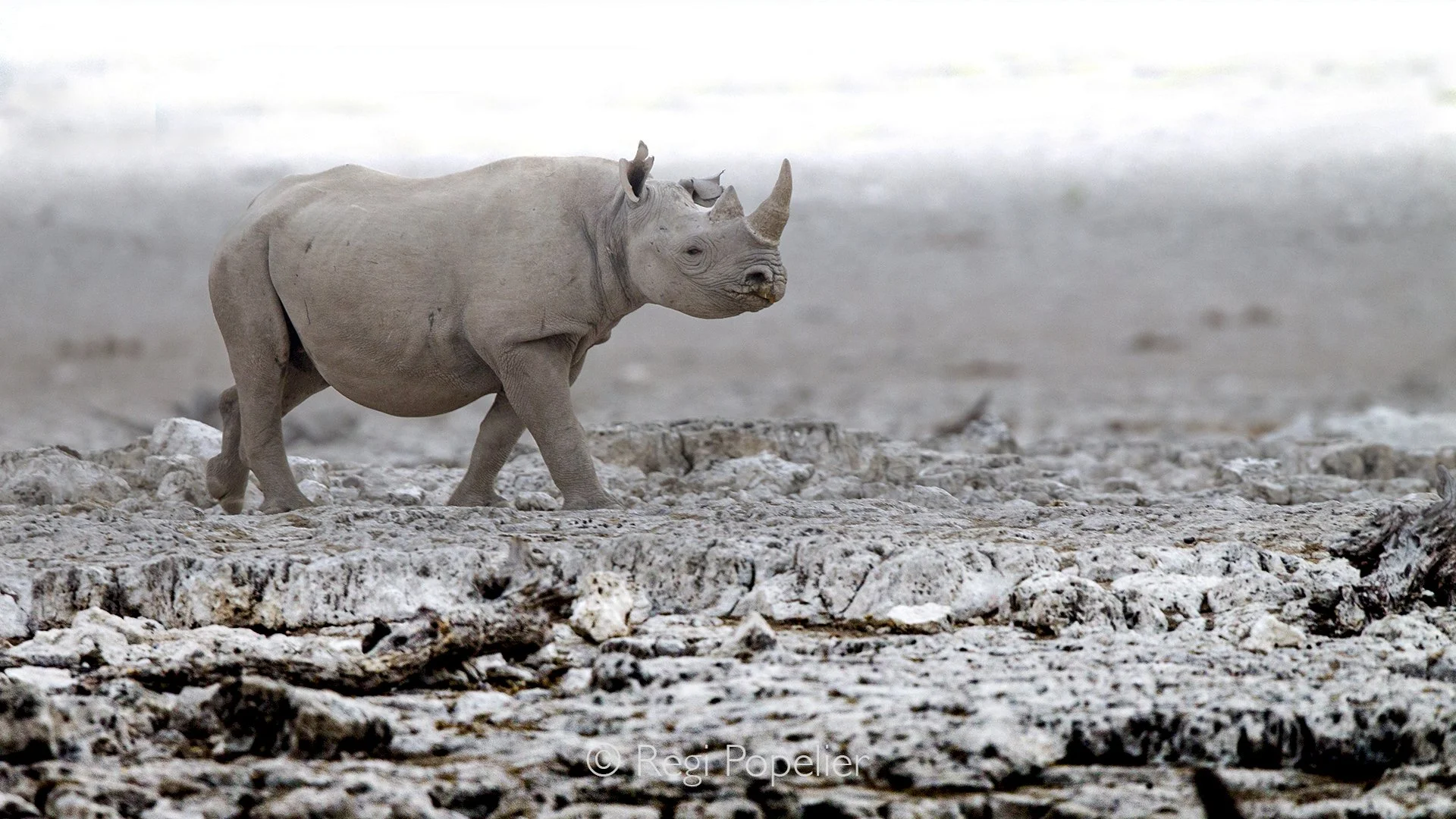
Namibia074 - The interaction between the dense limestone terrain, the ephemeral morning mist, and the powerful frame of the rhino provides a stunning dynamic range for the photographer. This limestone rich habitat is vital, as its minerals enrich the waterholes that these solitary mammals frequent under the cover of dawn
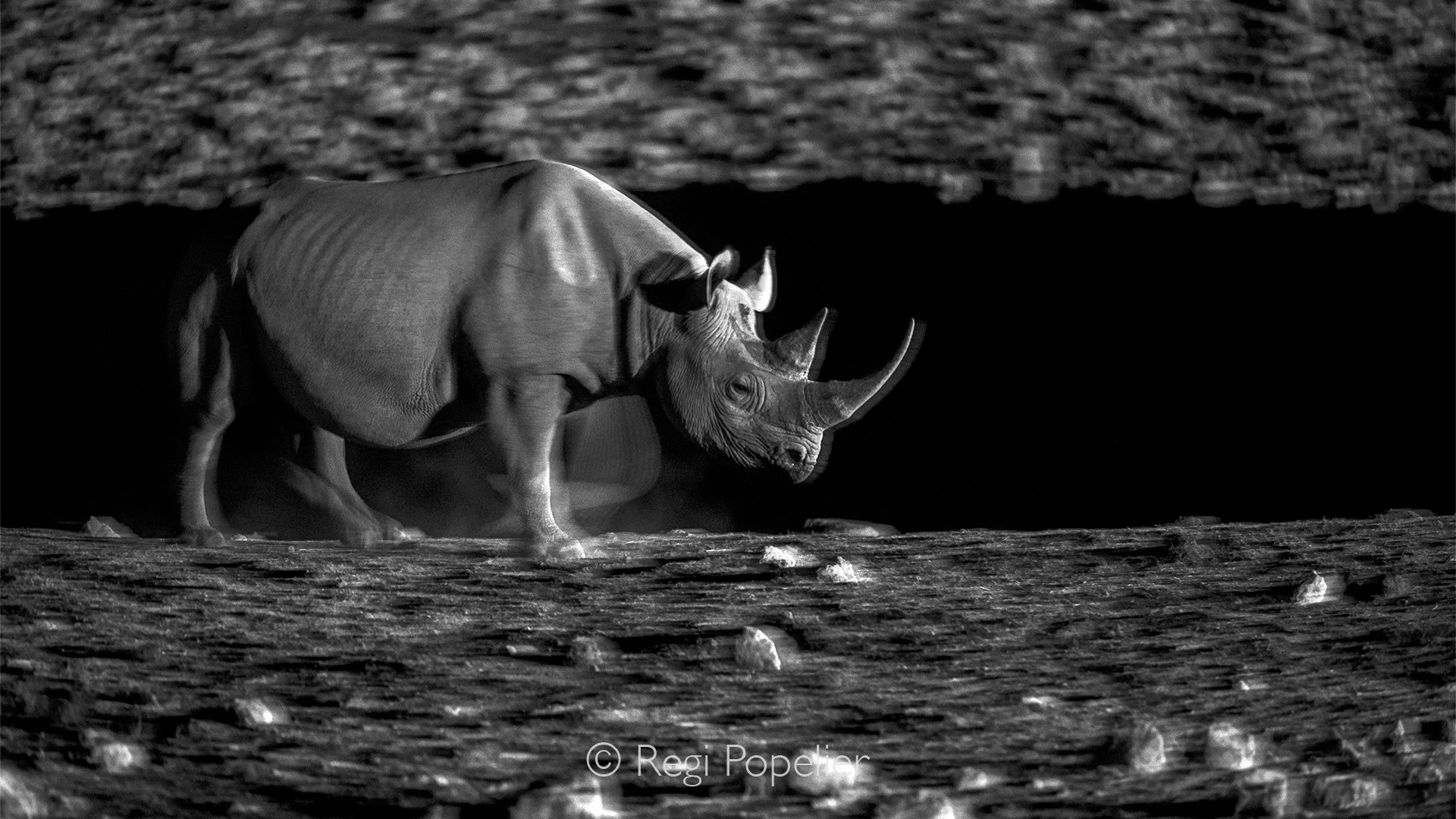
Namibia075 - Utilizing a slow shutter speed behind the safety fence at Okaukuejo waterhole creates a striking visual effect. While the environment remains locked in sharp focus, the gentle movement of the black rhino dissolves into a velvety blur, perfectly capturing the quiet, spectral way these solitary giants navigate the African night.
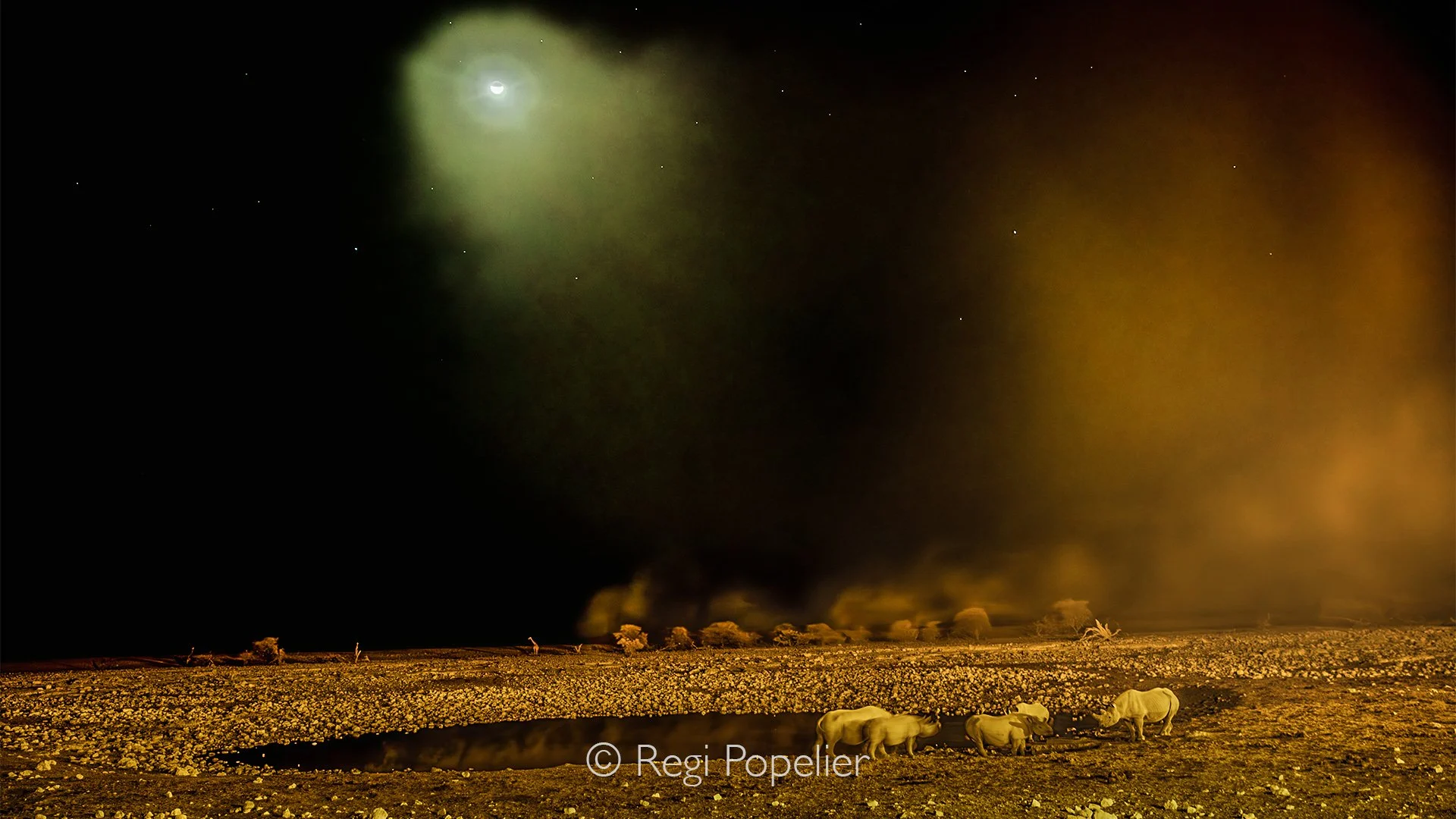
Namibia076 - By pulling back with a wide lens, the frame balances three distinct light sources: the natural moon, the golden waterhole lamps, and the glowing dust. This swirling, illuminated atmosphere emphasizes the raw, chaotic energy of multiple rhinos interacting at the water's edge long after midnight.
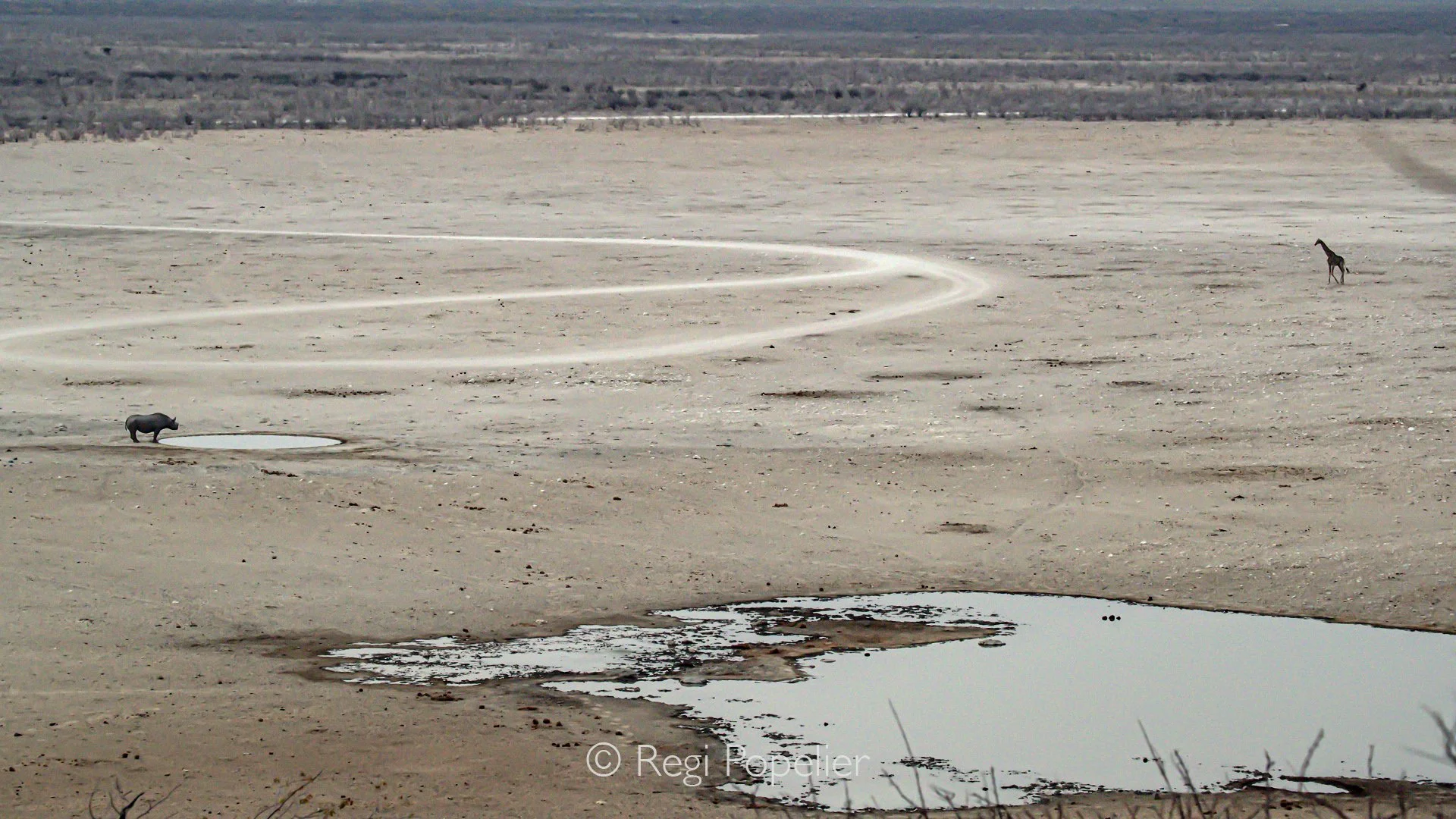
Namibia077 - The vast, empty horizon of the Etosha pan emphasizes the dramatic tension between these two giants. For a photographer, the synchronized movement from opposite sides of the frame creates a perfect visual balance, capturing the quiet standoff before either animal commits to lowering its guard to drink.
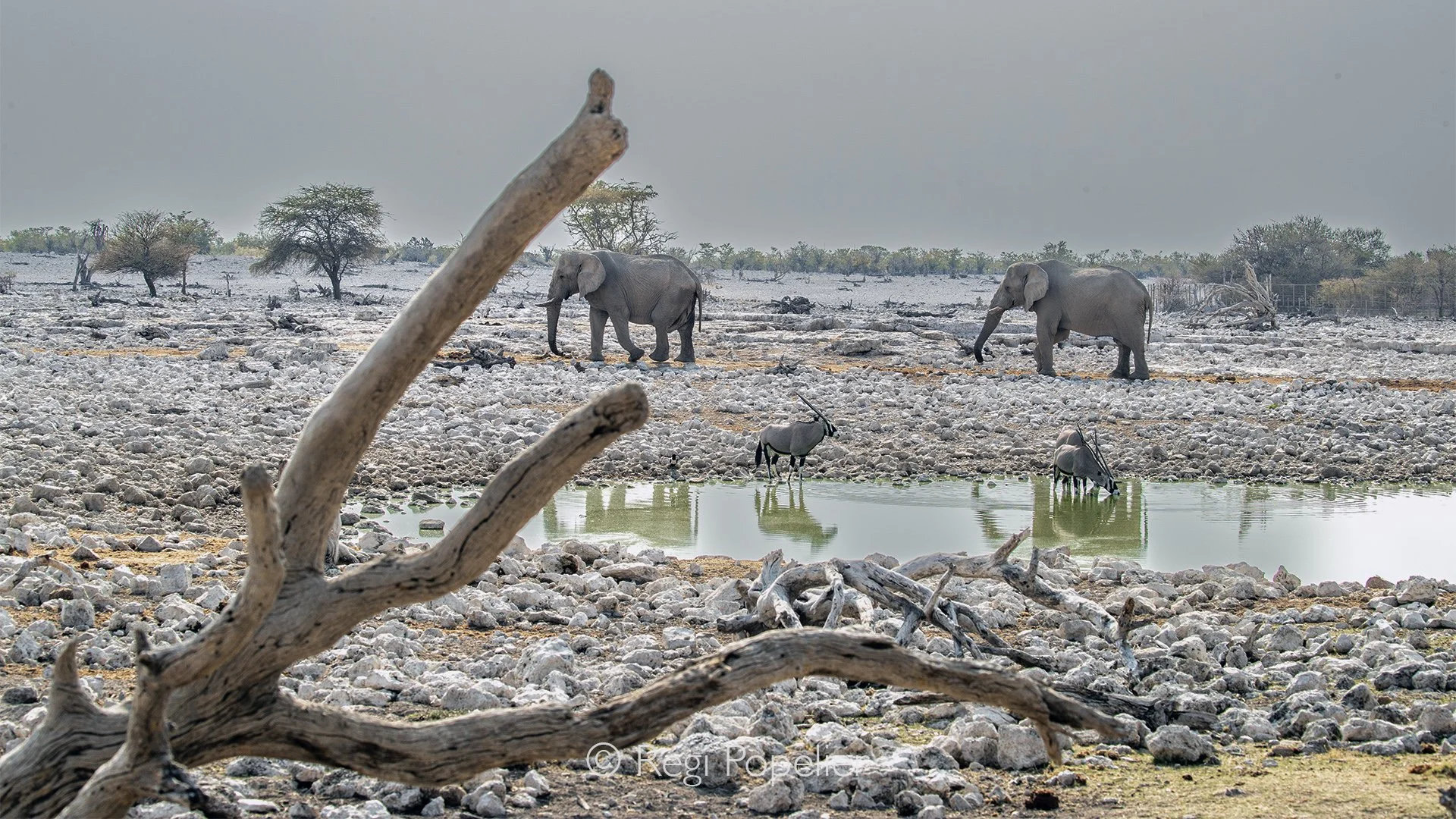
Namibia078 - Etosha never ceases to amaze because its waterholes are dynamic hubs of wildlife communication. Watching the horizon constantly change teaches a photographer that stillness is a tool; by remaining parked for hours, you blend into the landscape, allowing animals to approach without fear.
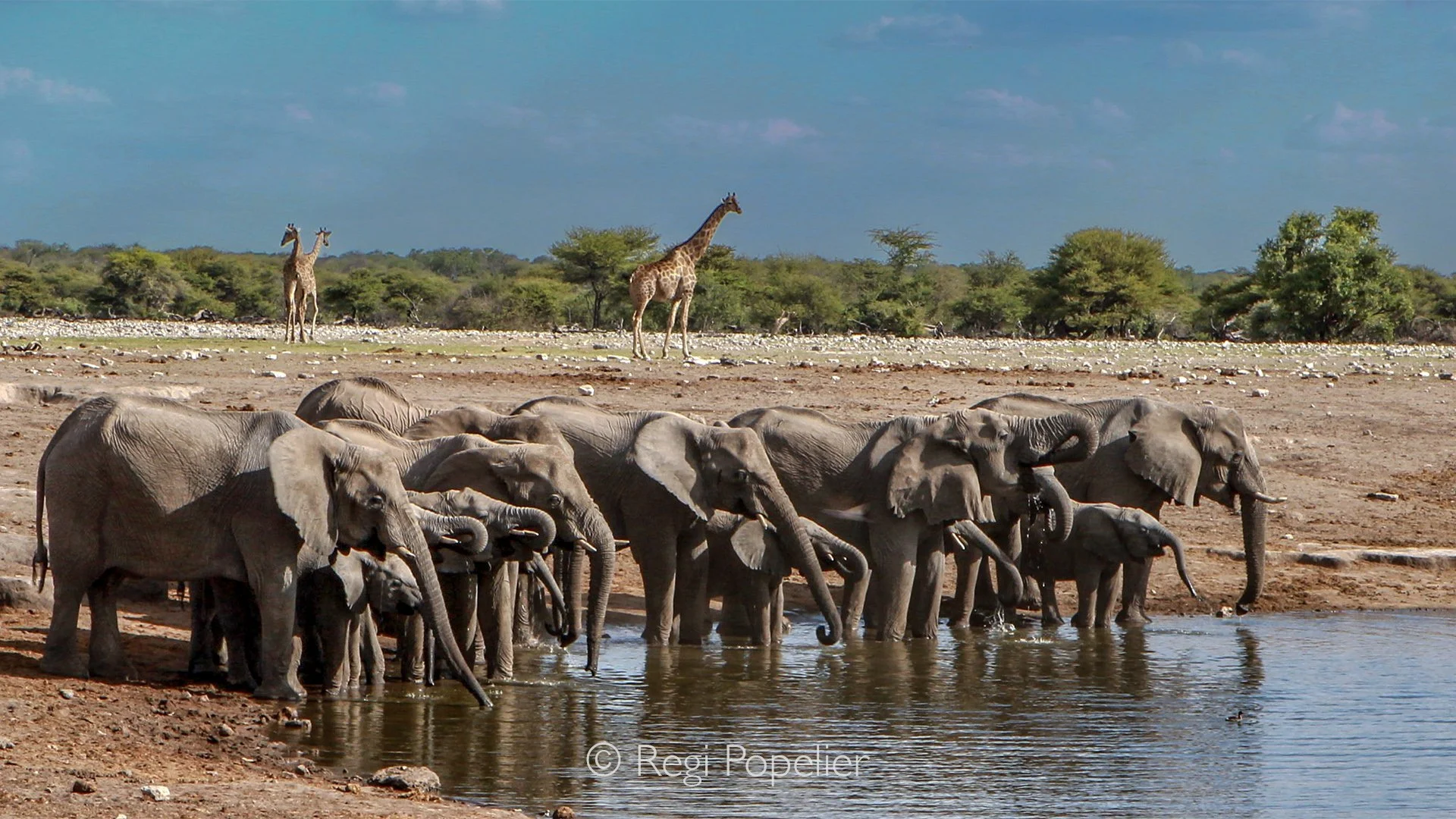
Namibia079 - The true magic of Etosha lies in its unpredictability. As the sun rises higher, the shifting light transforms the flat, dusty landscape into a revolving door of biodiversity, proving that the best wildlife photography isn't about chasing the animals, but letting the wilderness come to you.
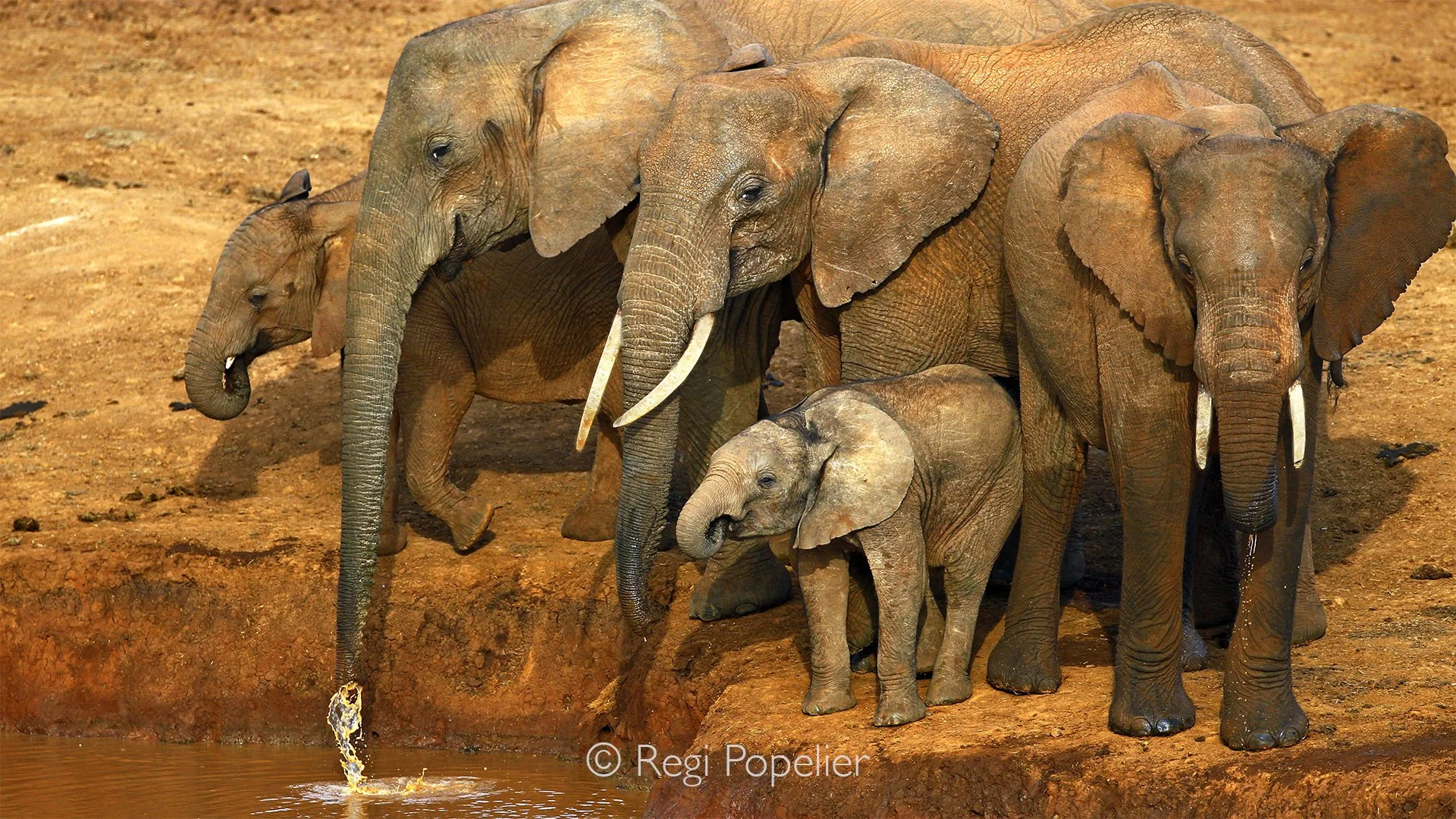
Namibia080 - Spending hours at a single waterhole reveals the intricate social fabric of Etosha. During the harsh dry season, these life giving oases act as a grand stage where a nature lover can observe a shifting calendar of species from cautious antelopes to dominant giants all bound by the shared necessity of hydration.
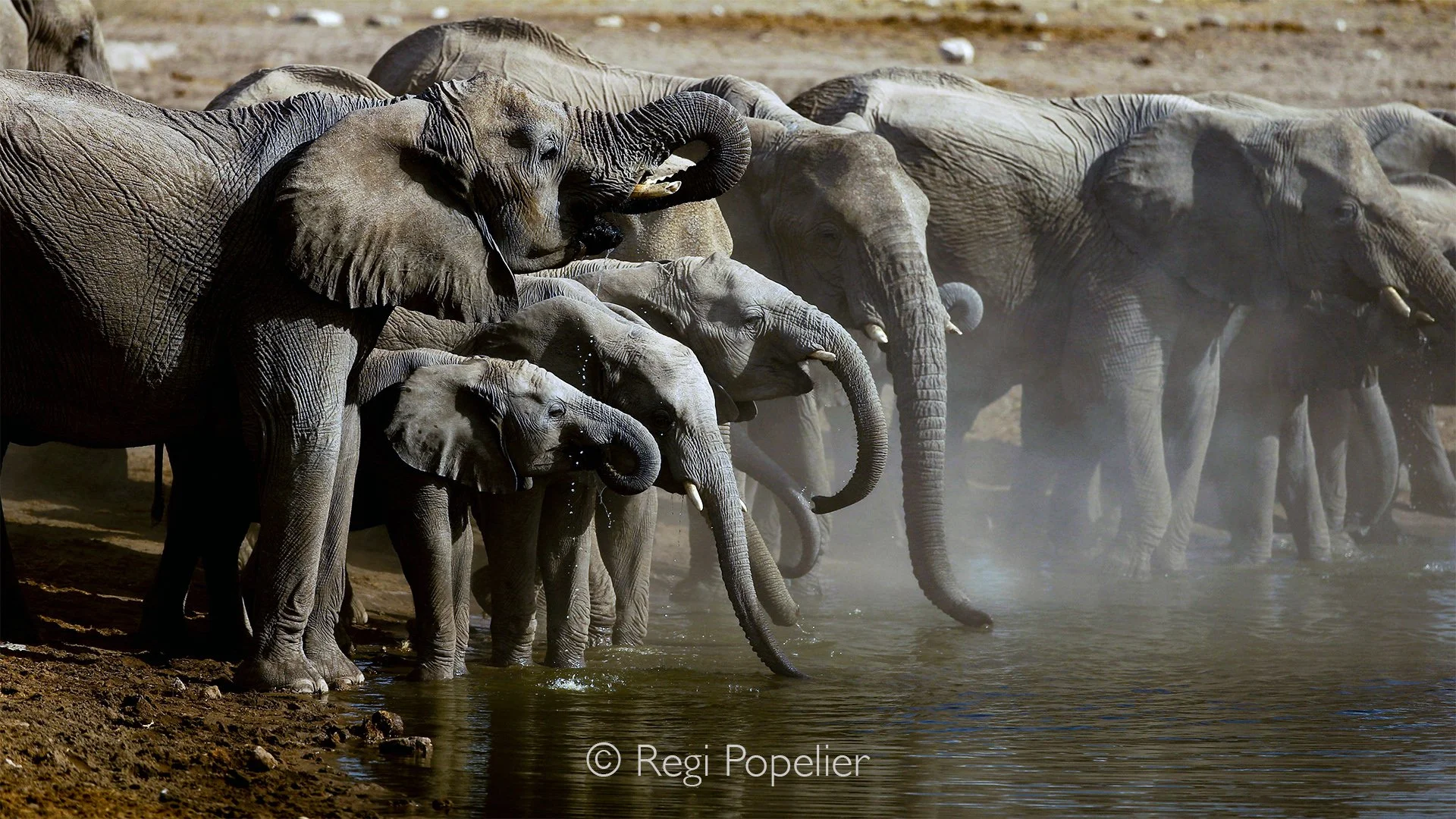
Namibia081 - The art of waiting, rewarded by nature.
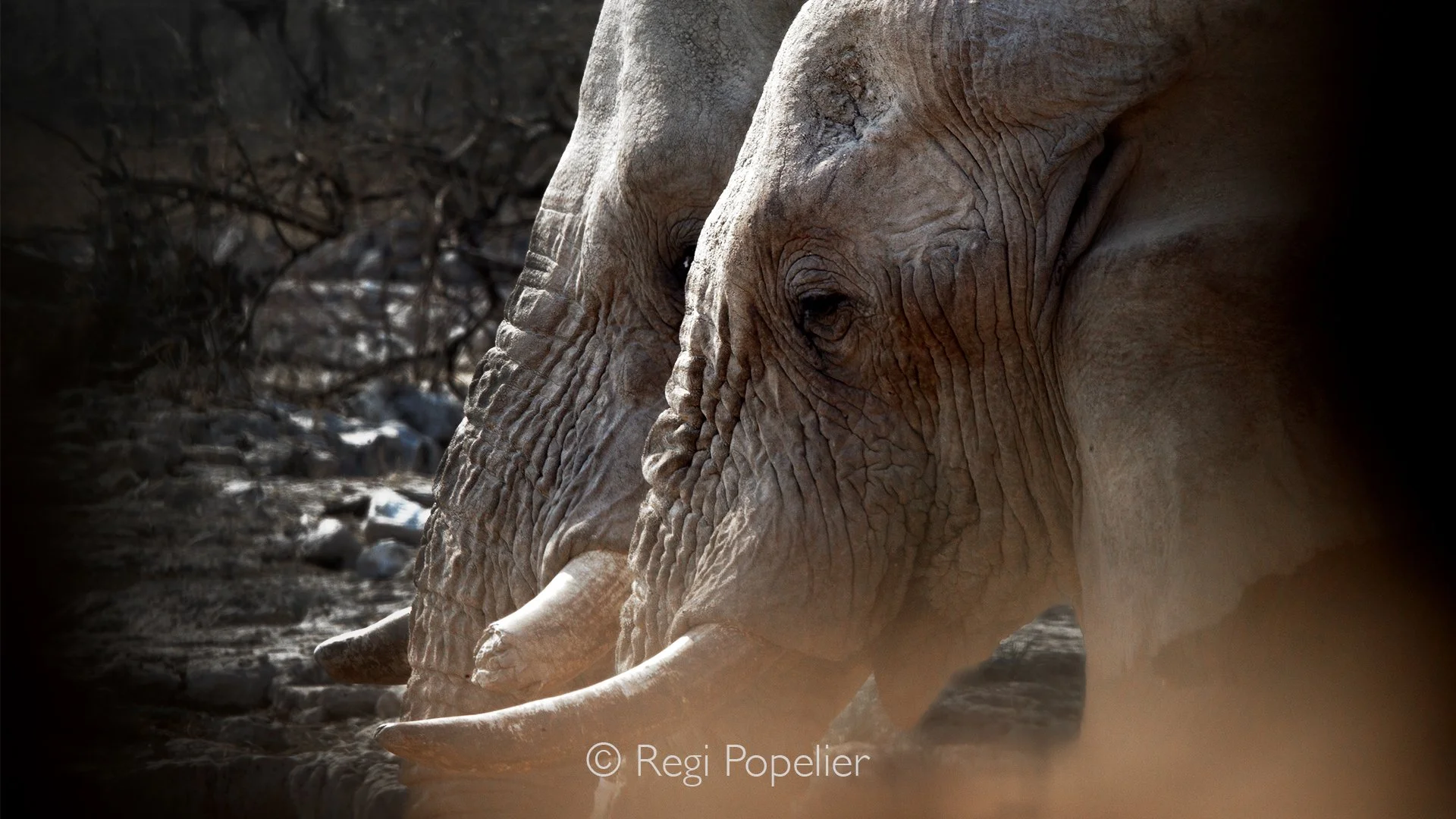
Namibia082 - This composition uses extreme depth of field to create depth in a flat landscape. Pressing the heavy lens directly against the bark allowed the split branches to act as a natural vignette, drawing all visual attention to the coarse skin, amber eyes, and heavy tusks of the oncoming giants.
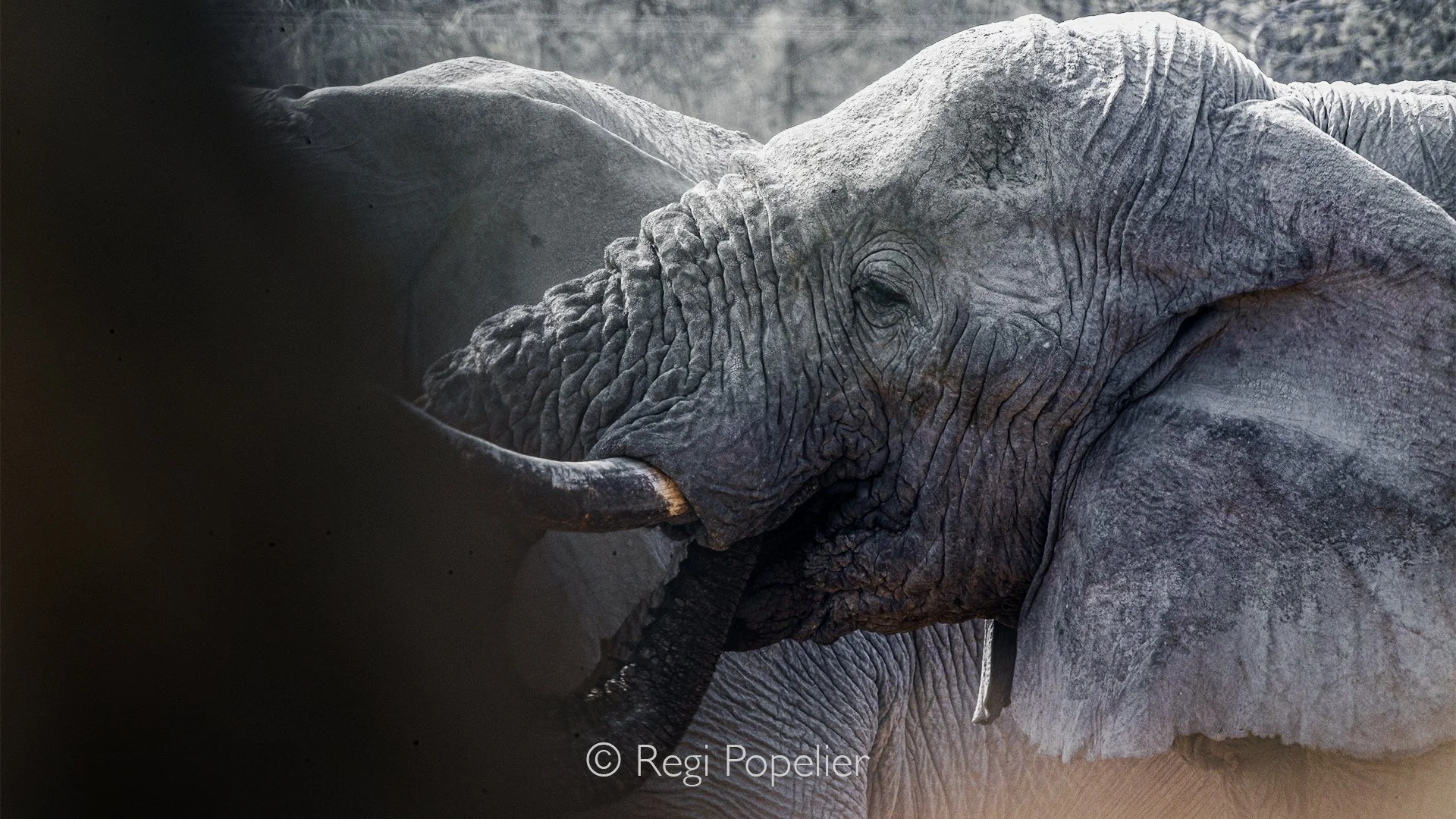
Namibia083 - Midday is often ignored by photographers due to overhead shadows, but this shot proves that creative positioning changes everything. The blurred organic borders mask the surroundings, giving these advancing bull elephants an intimidating, frame filling presence before they even reached the water's edge.
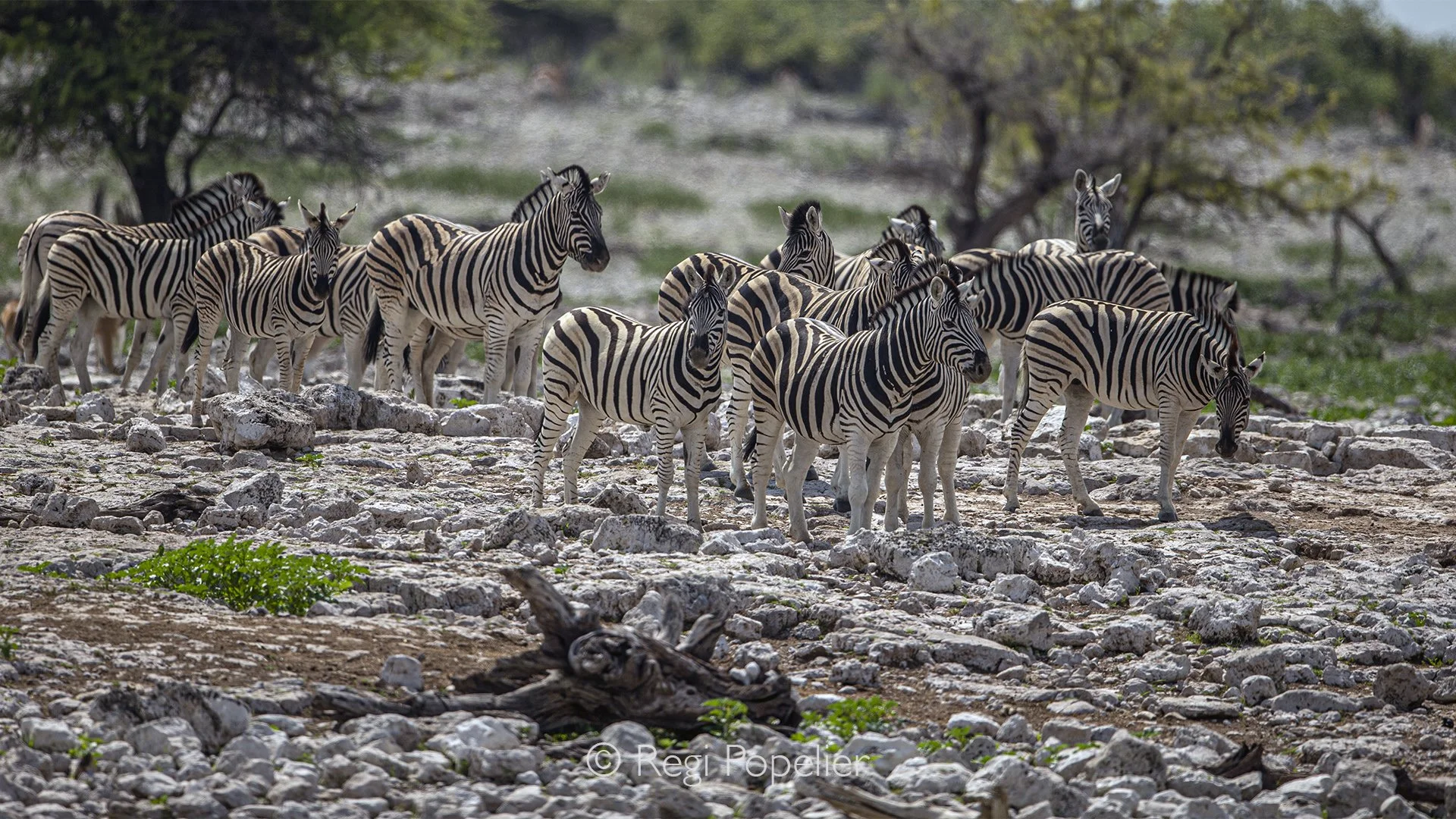
Namibia084 - Never a dull moment in the heart of the pan.
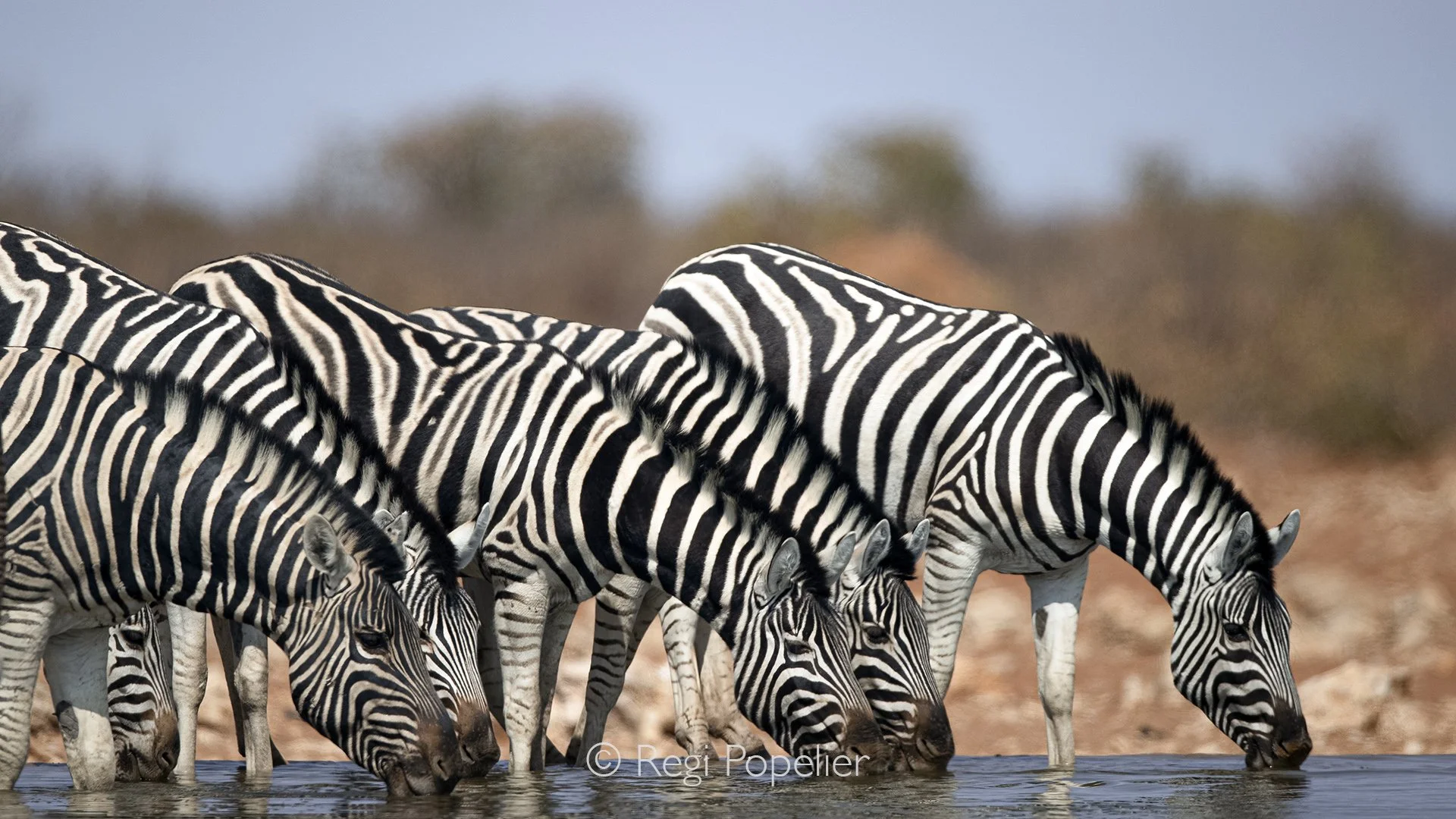
Namibia085 - By eliminating the full body, the frame draws immediate attention to the fine, individual details of the zebras' coats and muzzle textures. The high-contrast black and white stripes generate a dazzling motion blur effect for onlookers, making this intimate drinking lineup an eternal favorite for nature lovers.
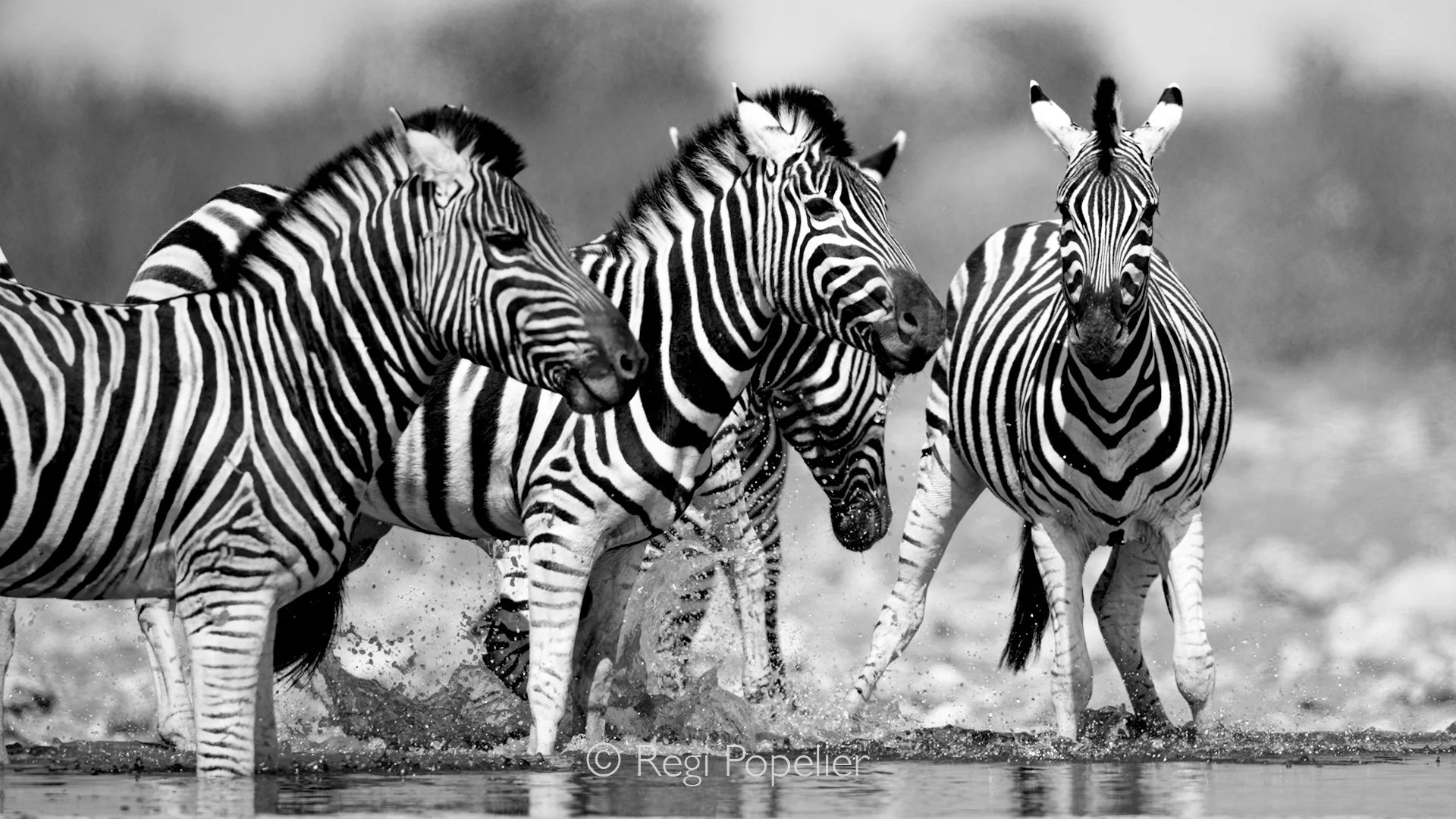
Namibia086 - The ultimate barcode at the waterhole.
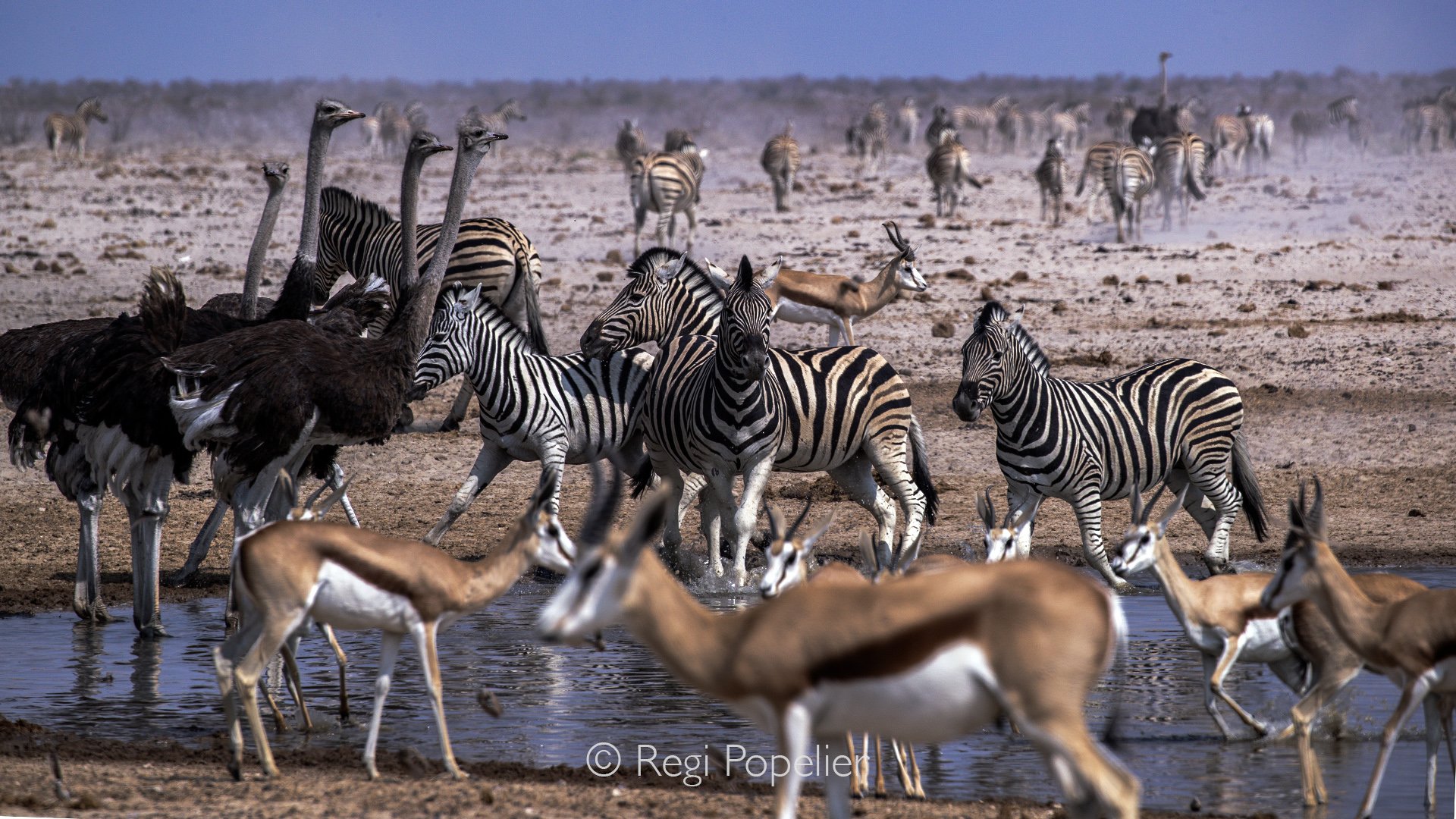
Namibia087 - The greatest live theater on Earth requires no tickets.
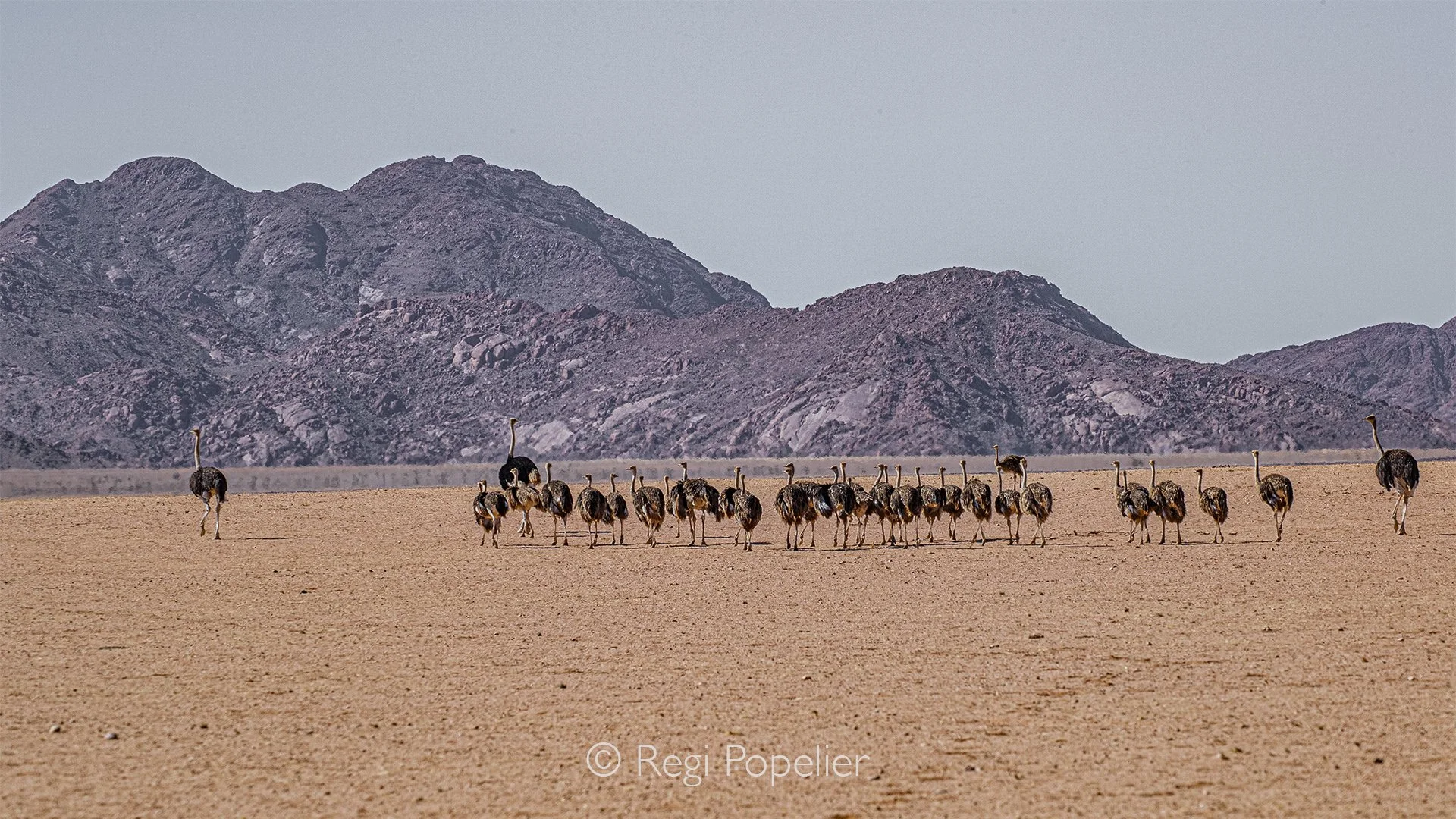
Namibia088 - Capturing a line of approximately 20 sub-adult ostriches escorted by an adult pair documents a crucial survival strategy. Ostrich families often merge their broods into large collective groups called crèches, managed by a dominant pair to maximize protection against opportunistic predators across open plains.
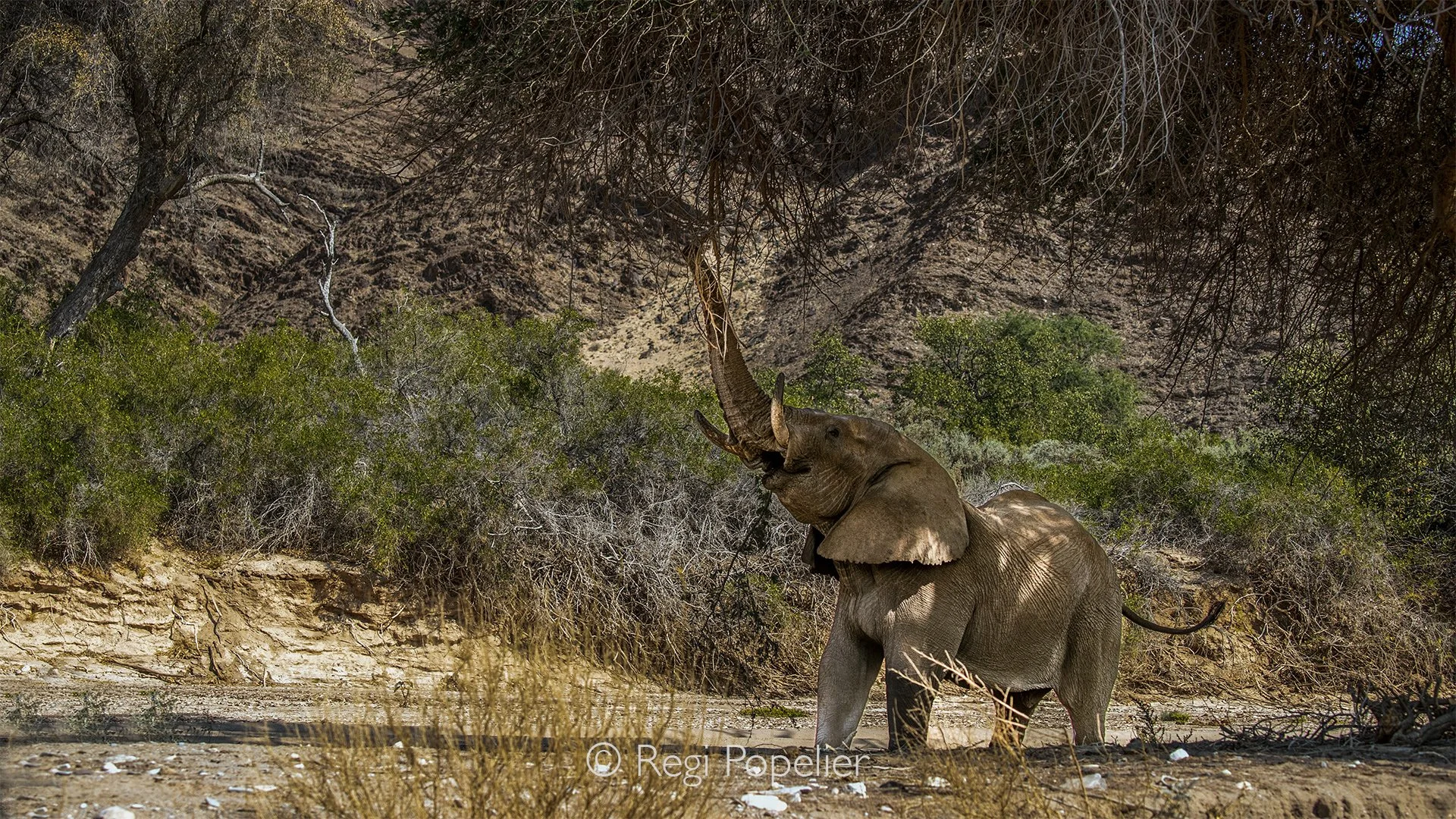
Namibia089 - This raw action shot highlights the intense relationship between the desert bull and the heavily armed acacia. Watching the elephant casually bypass the tree's vicious, bone-hard thorns using its thick, calloused trunk skin is a testament to their evolutionary adaptation to one of the harshest environments on Earth.
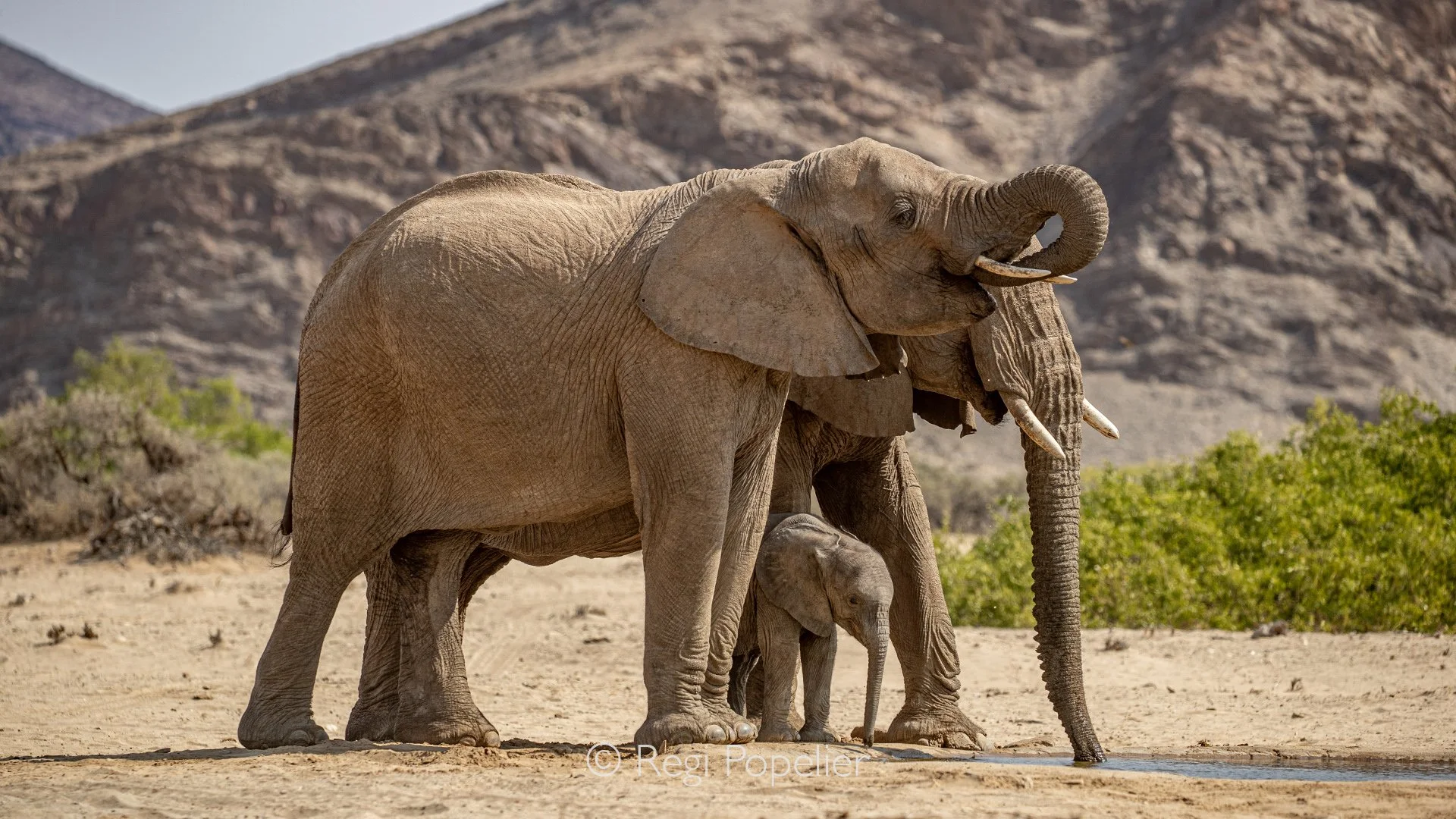
Namibia090 -Capturing a matriarch alongside her daughter and calf drinking together perfectly visualizes the complex social framework of Damaraland’s desert elephants. In this hyper arid environment, the matriarch’s long term memory is the herd's ultimate lifeline, as she passes down vital knowledge of hidden, waterholes to the next generation.
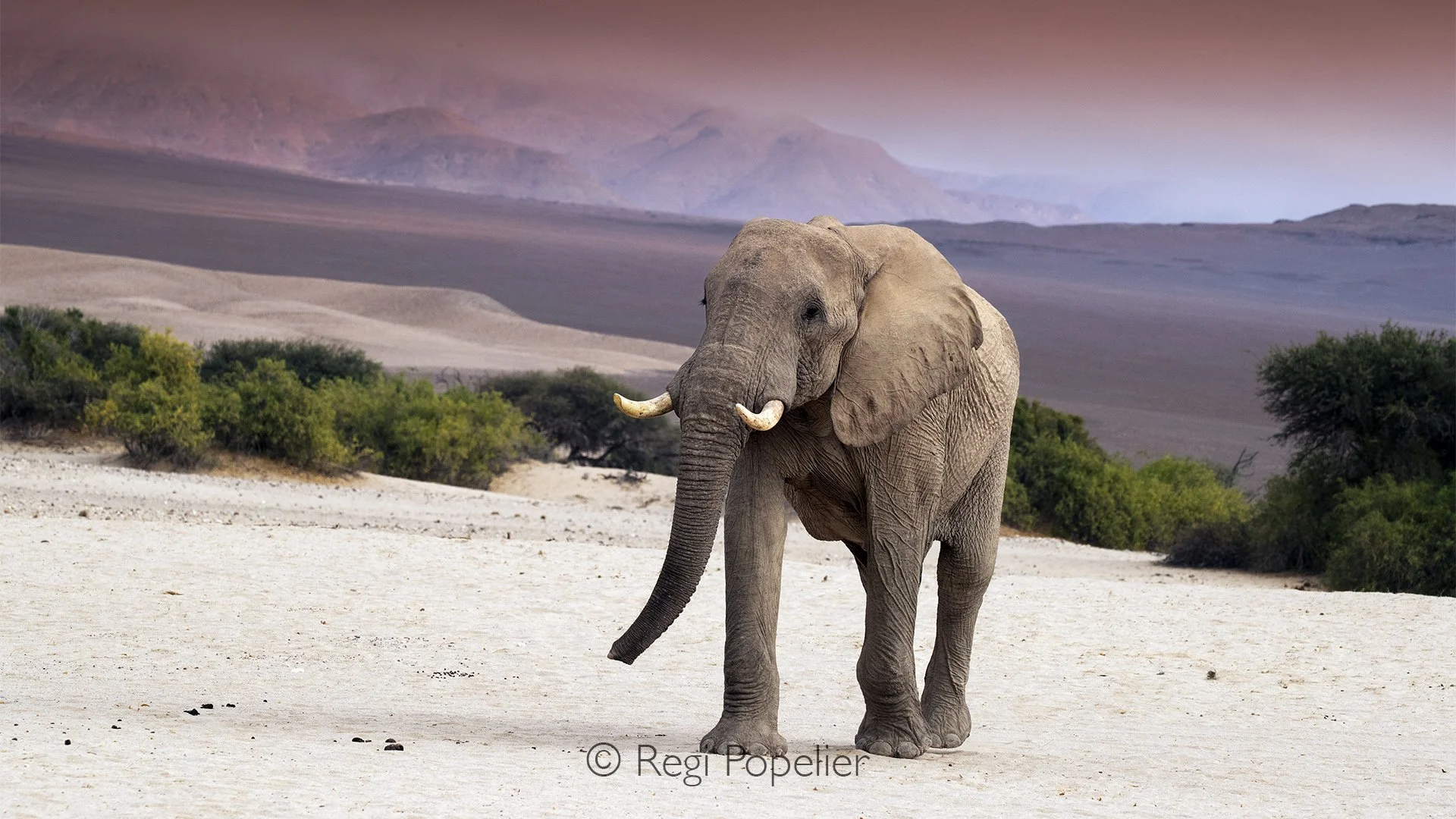
Namibia091 - This striking composition emphasizes the solitude of the bull. The contrast between the animal’s massive, textured silhouette and the sweeping, geometric lines of the distant mountain ranges highlights its position as the ultimate master of this harsh, beautiful territory.
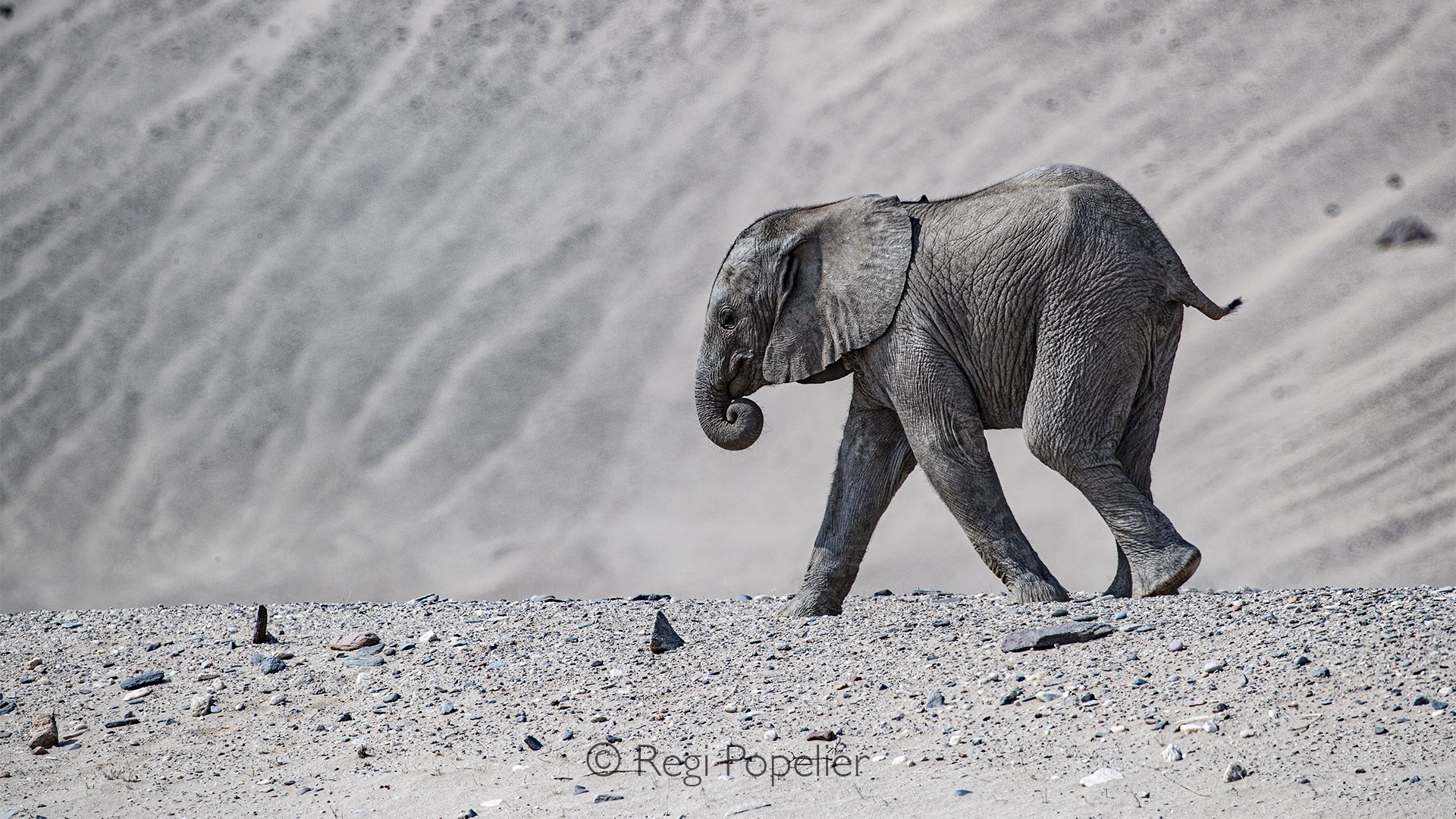
Namibia092 - A solitary youngster marching through a monumental world.
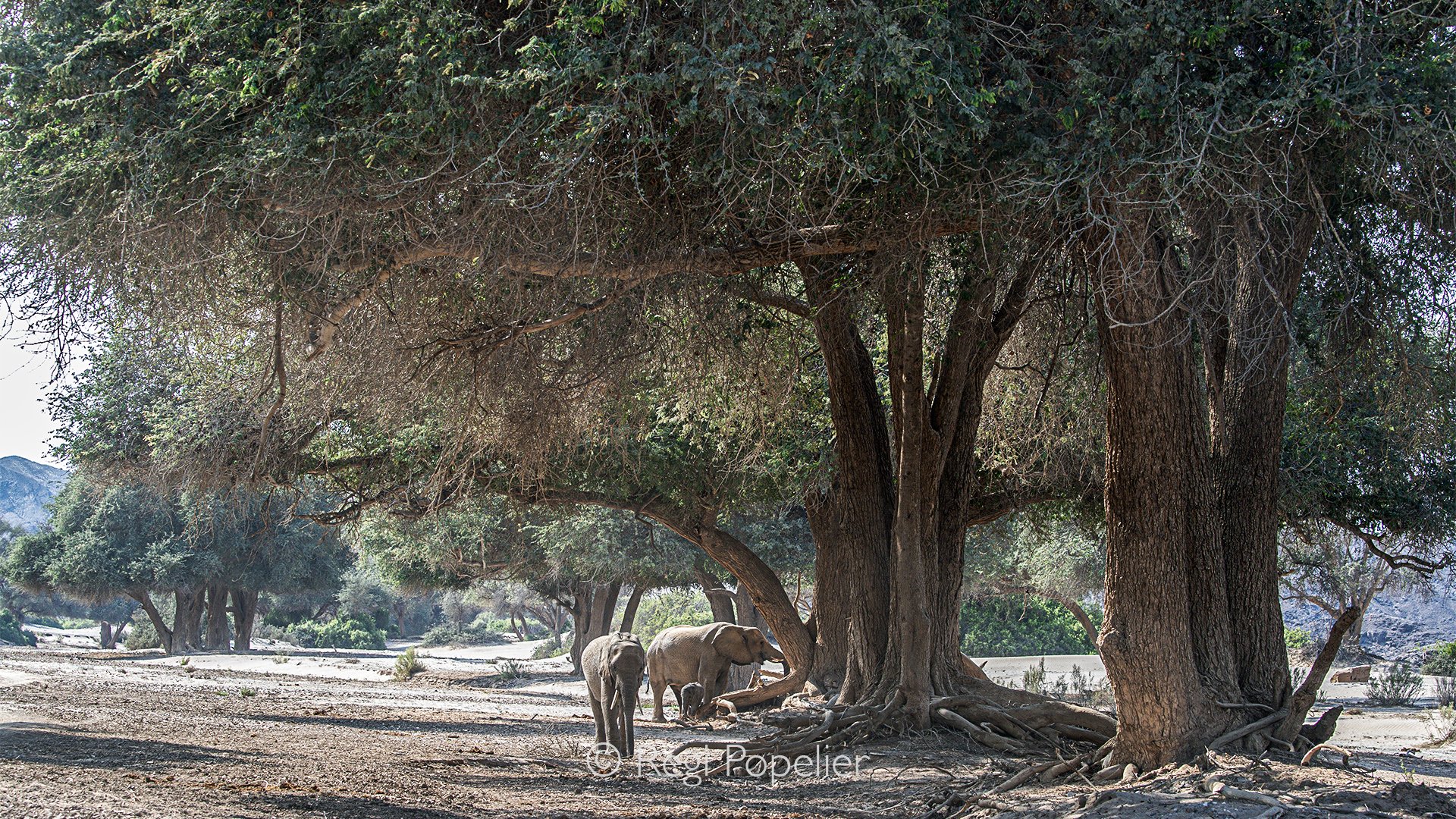
Namibia093 - Capturing this majestic creatures in their natural, arid habitat fulfills a photographer's ultimate goal.
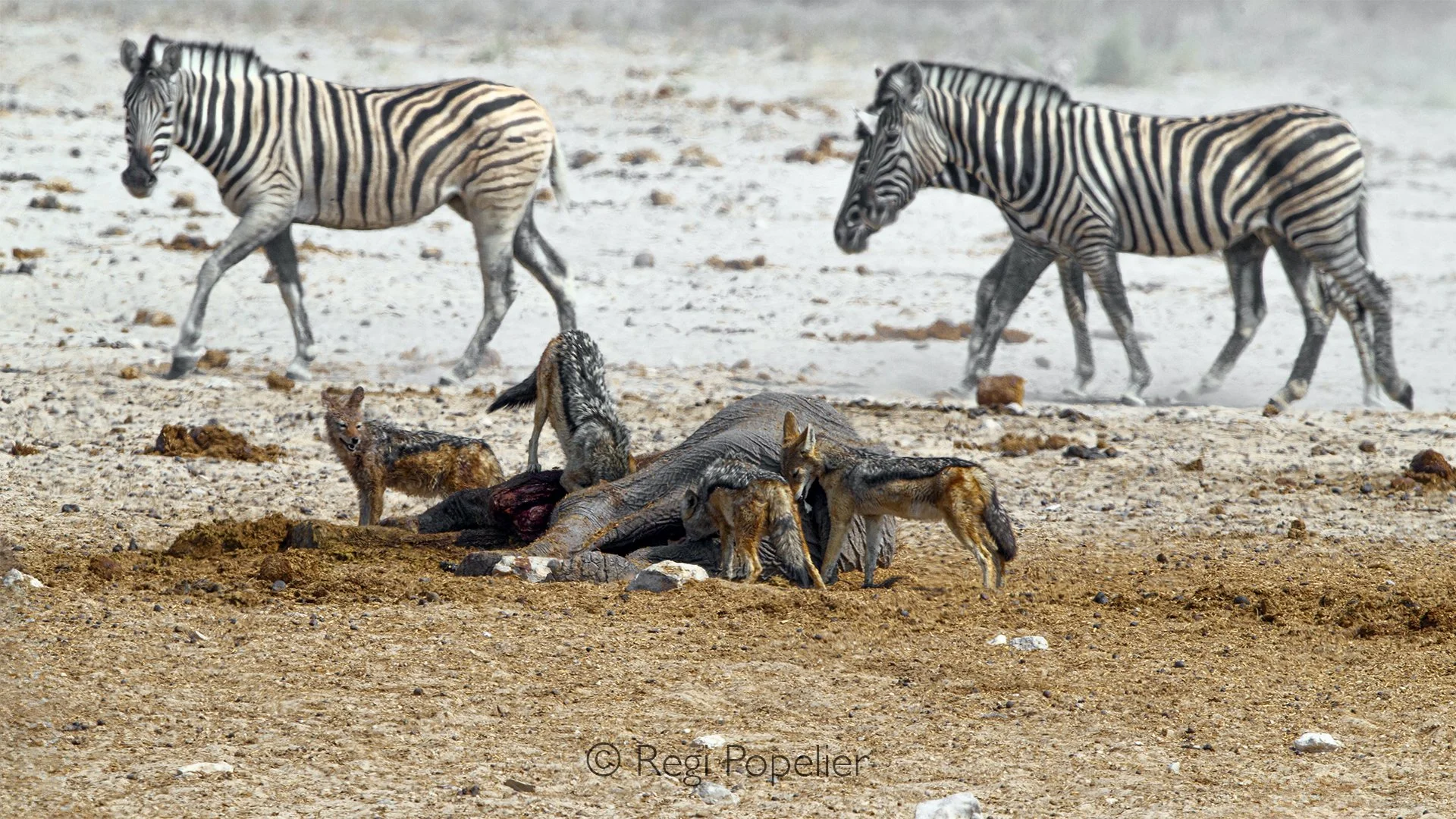
Namibia094 -The uneasy glances of the passing zebras strongly contrast with the bold opportunism of the jackals. For a photographer, capturing this interaction highlights the silent tension of the Namibian bush, where the death of one animal serves as a stark survival lesson for every creature traveling the path.
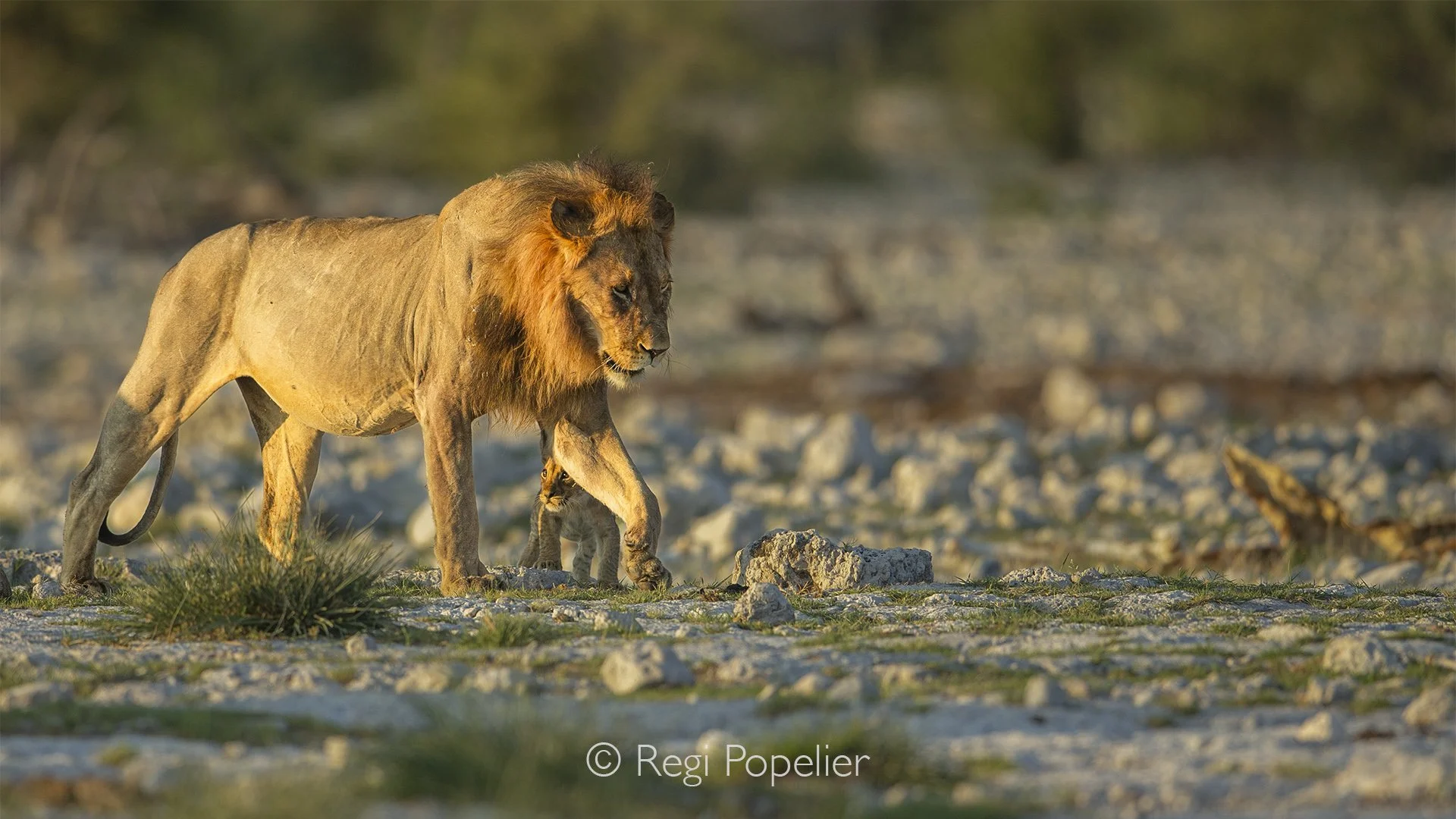
Namibia095 - Under the shadow of a giant.
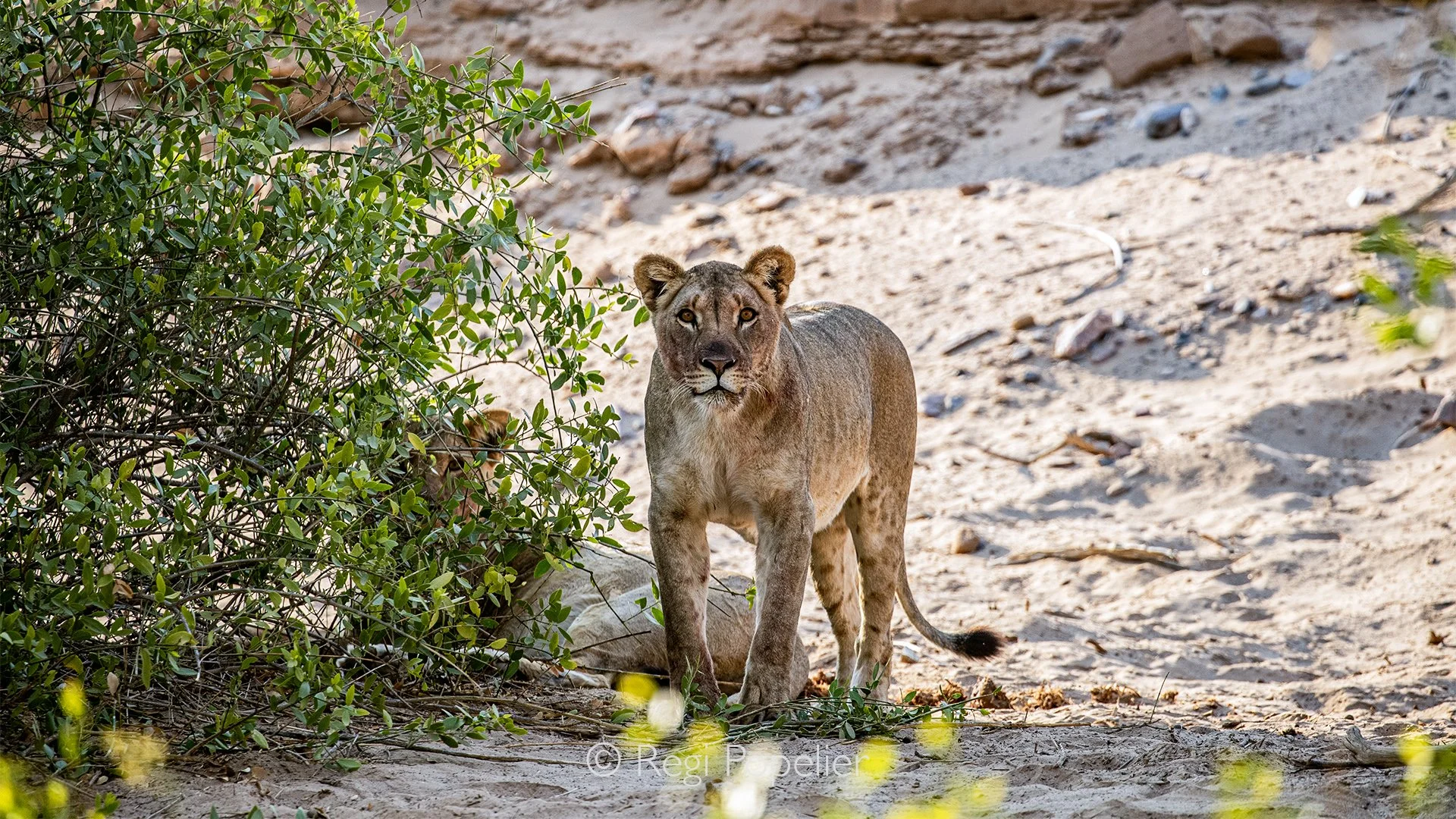
Namibia096 - desert lionesses the second is to find behind the bush.
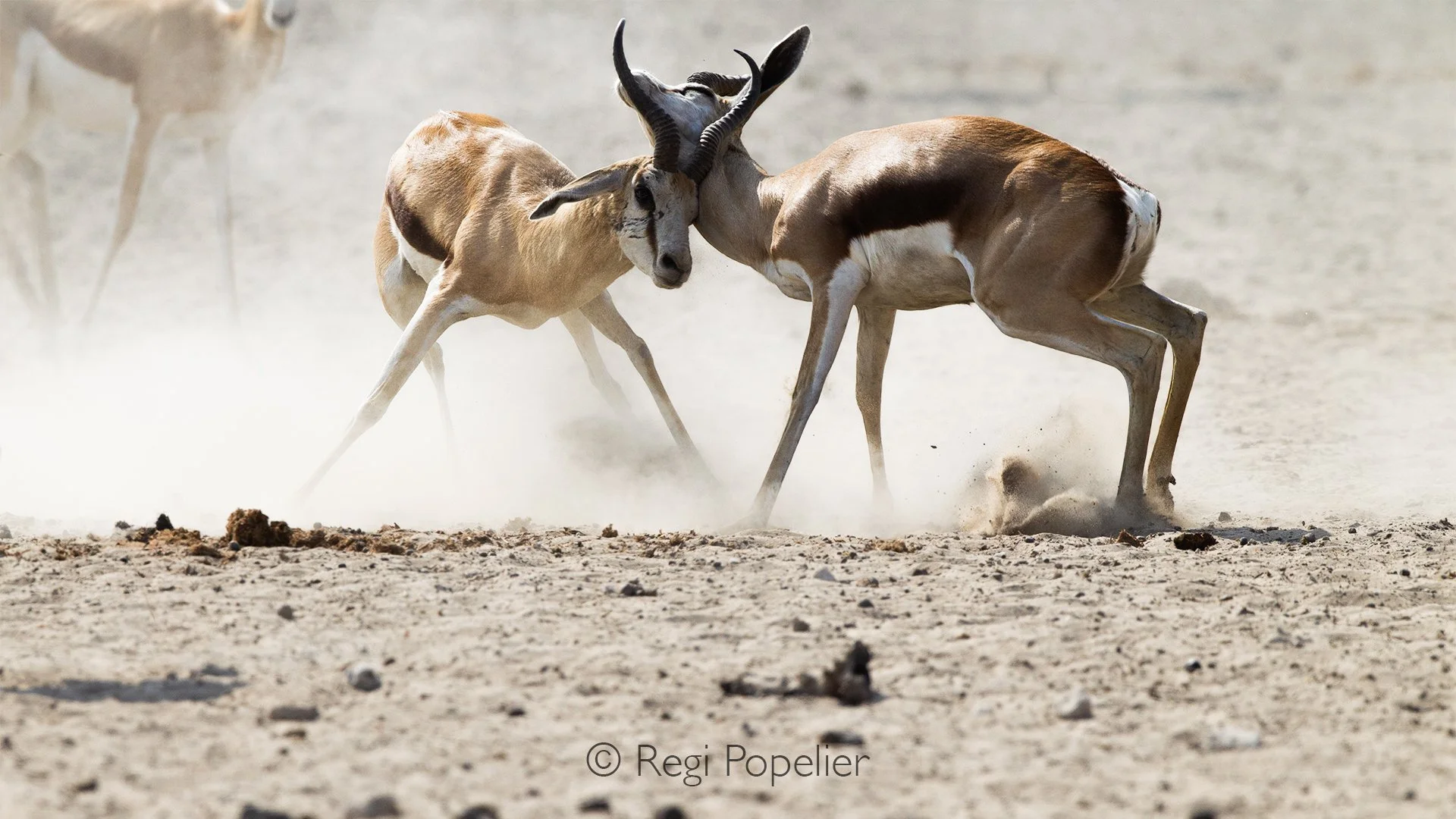
Namibia097 - This high speed action shot highlights how localized territory disputes erupt in seconds. The swirling desert dust, illuminated by the bright sun, acts as a natural visual diffuser. It isolates the locked, curved horns and muscular necks while completely masking the ground beneath their hooves.
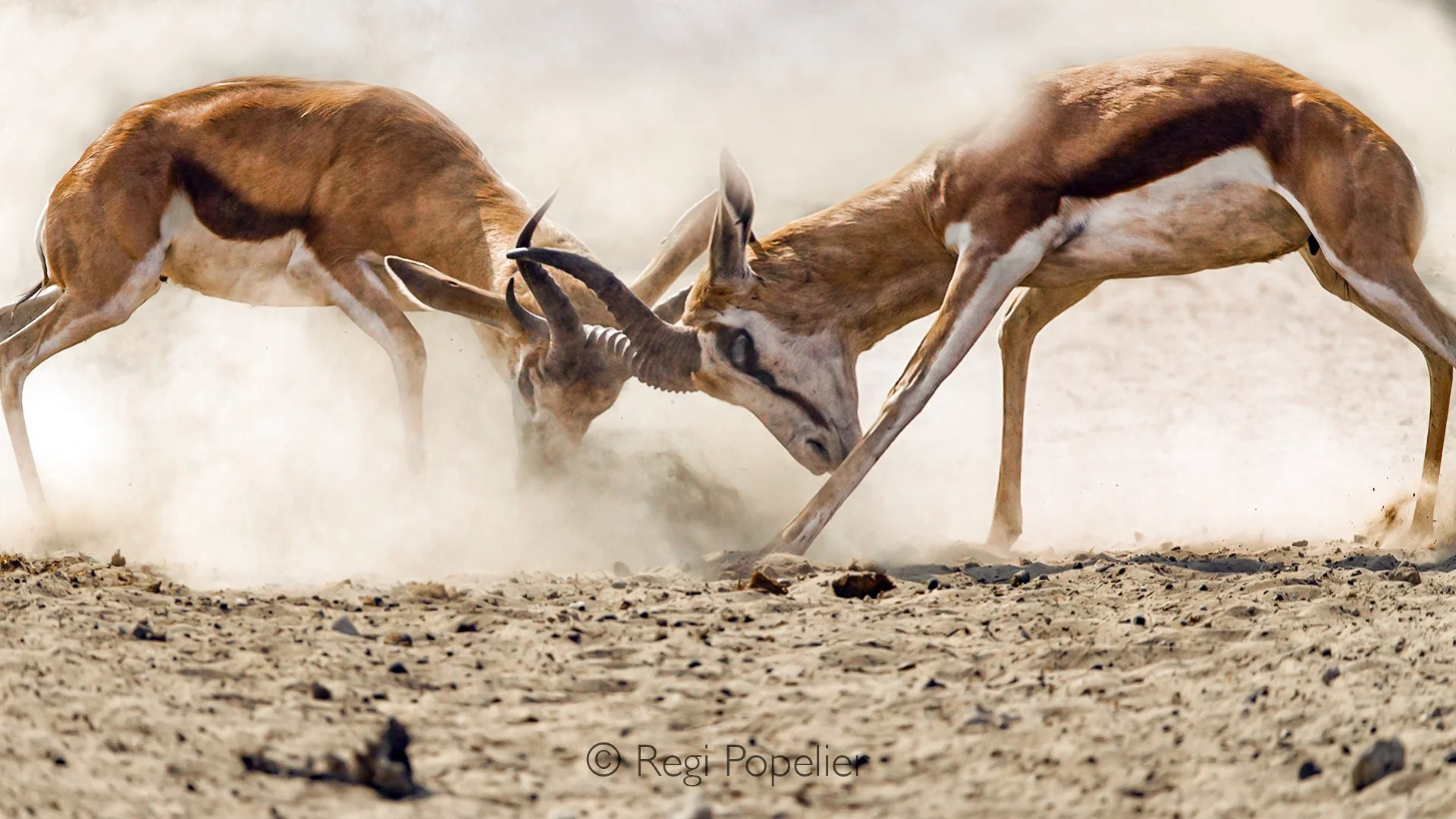
Namibia098 - A heavyweight clash in a lightweight division.
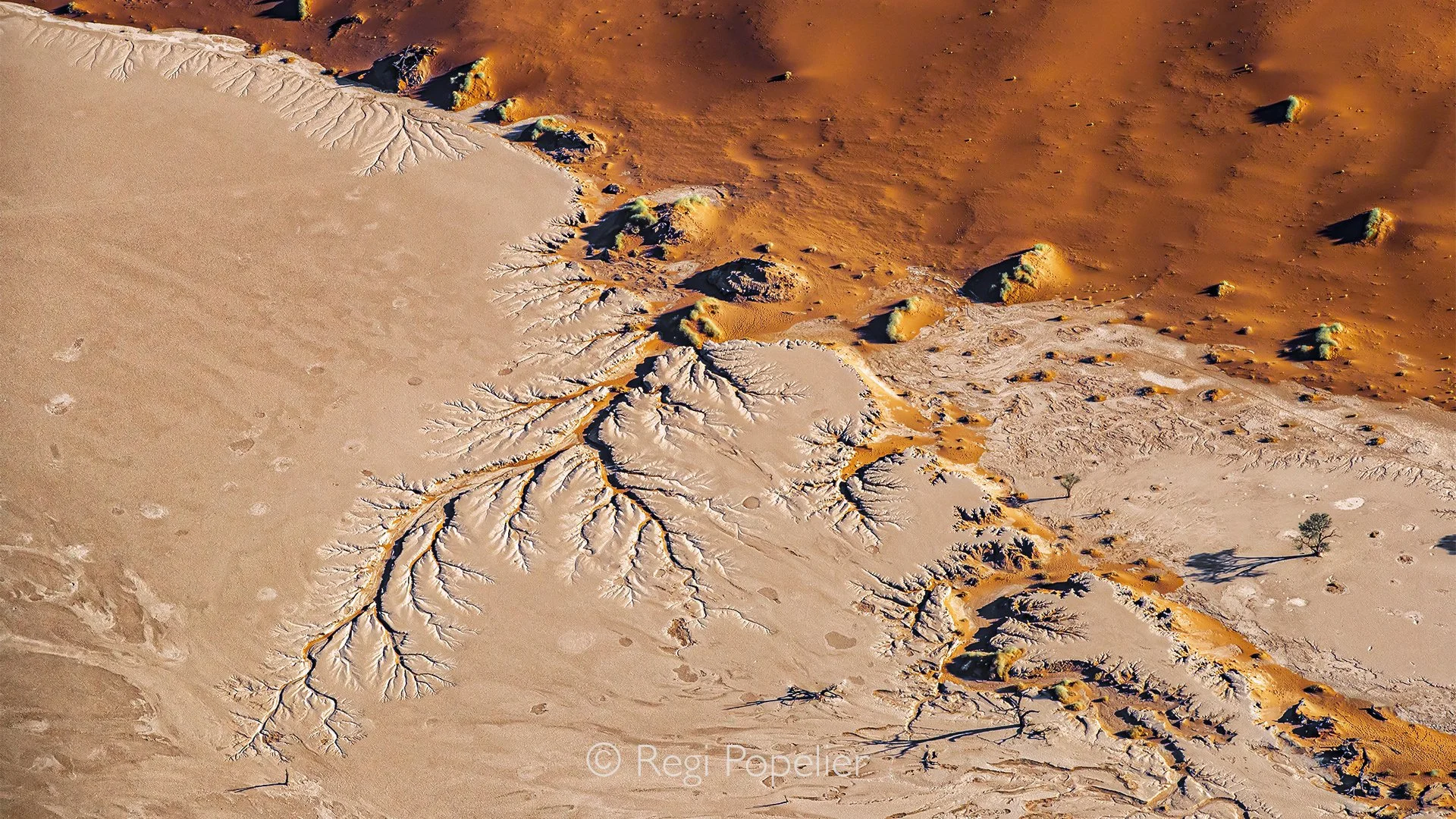
Namibia099 - From the air, the true geometry of Deadvlei becomes clear. The branching extensions of the clay floor serve as a geological record of old riverbeds. This unique layout provides a spectacular high-contrast matrix for a photographer, proving that even centuries of dry wind cannot erase the structural blueprint of water.
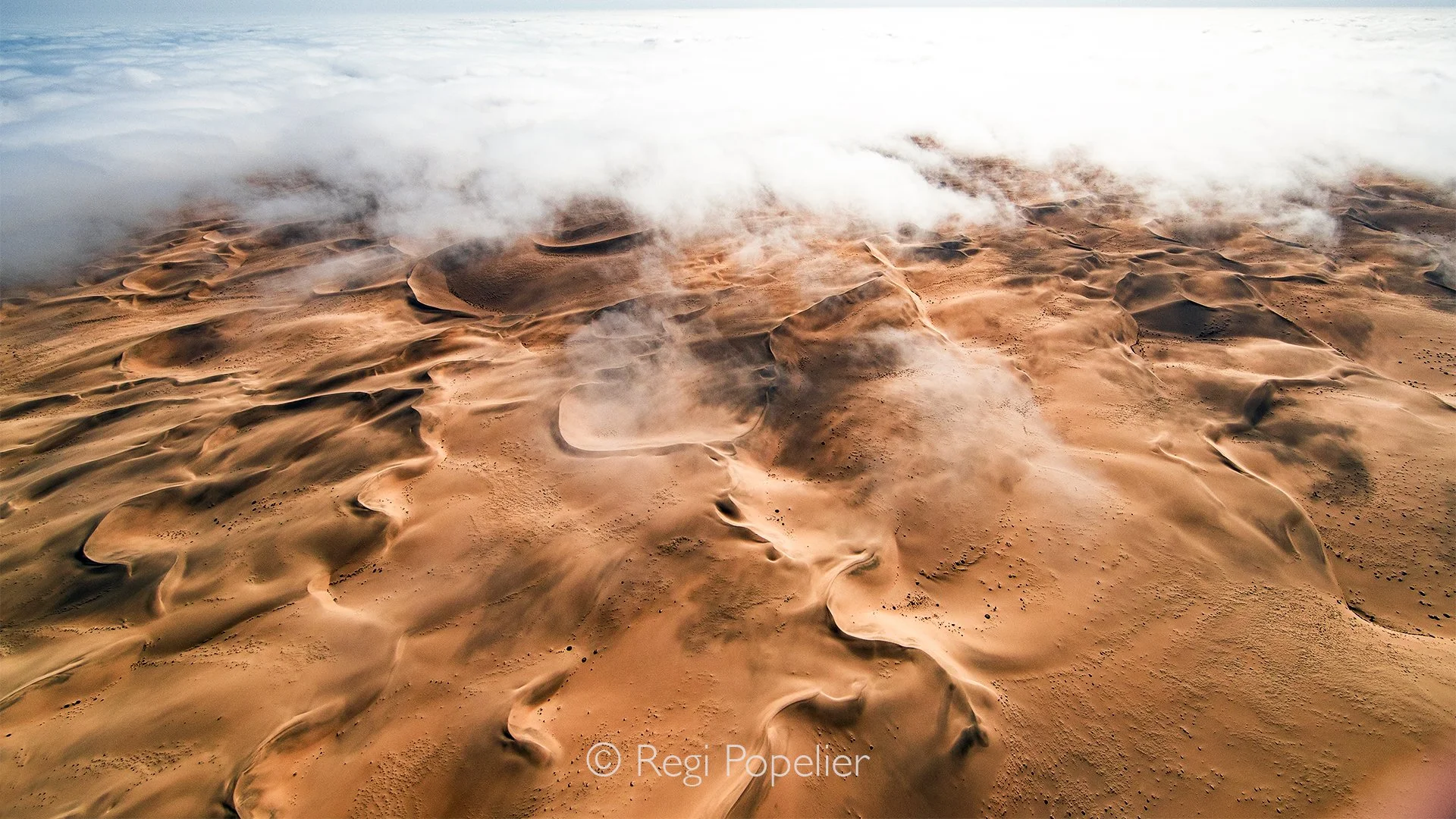
Namibia100 - Looking out as we flew through the morning clouds reveals the unique atmospheric boundary layer of the Namib. The interaction between the cold Atlantic air and the intense heat radiating from the massive sand structures creates a turbulent cloud canvas, transforming a standard landscape shot into an epic story of aviation and geography.
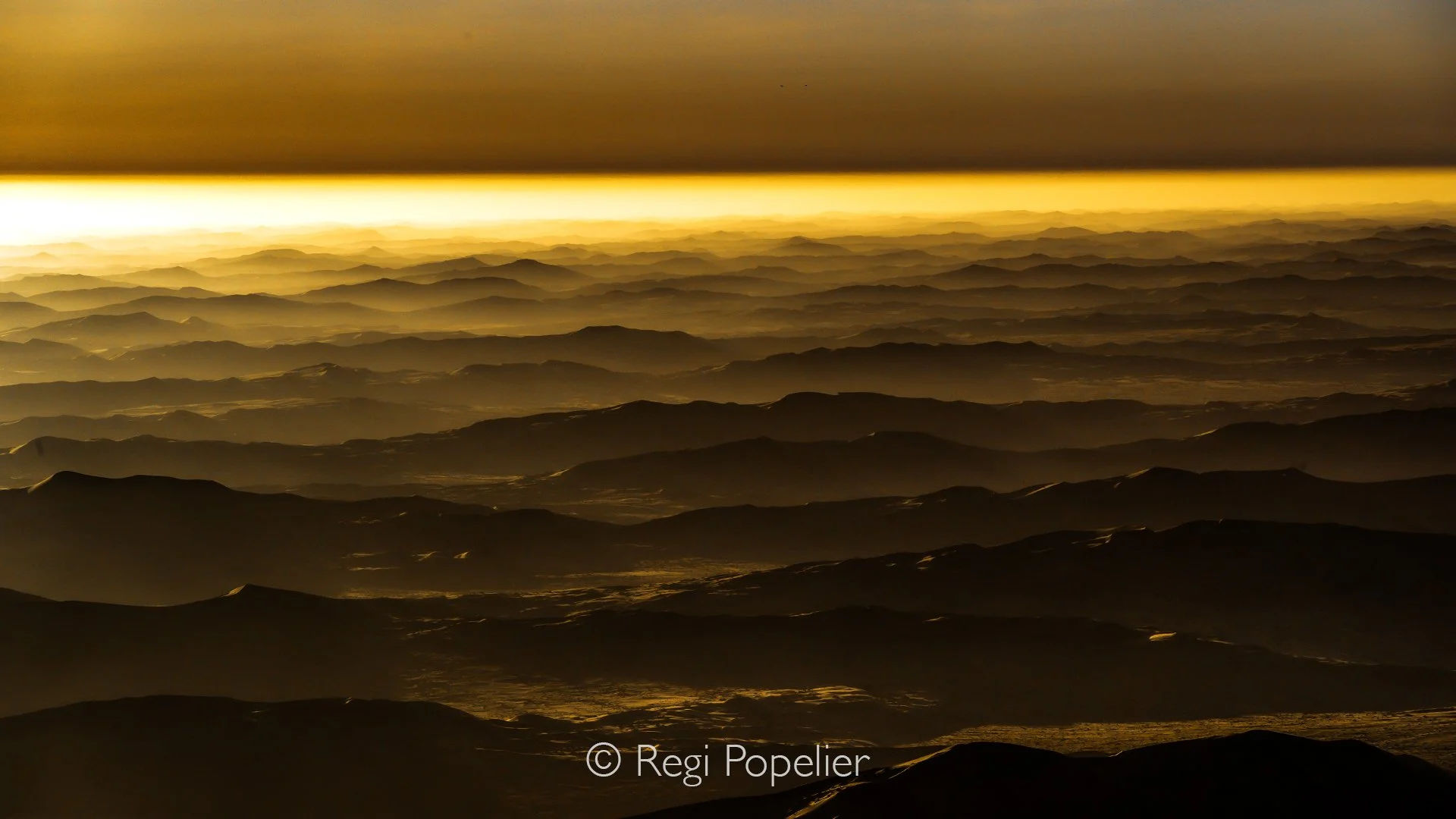
Namibia101 - The ultimate view from a shifting cockpit window.
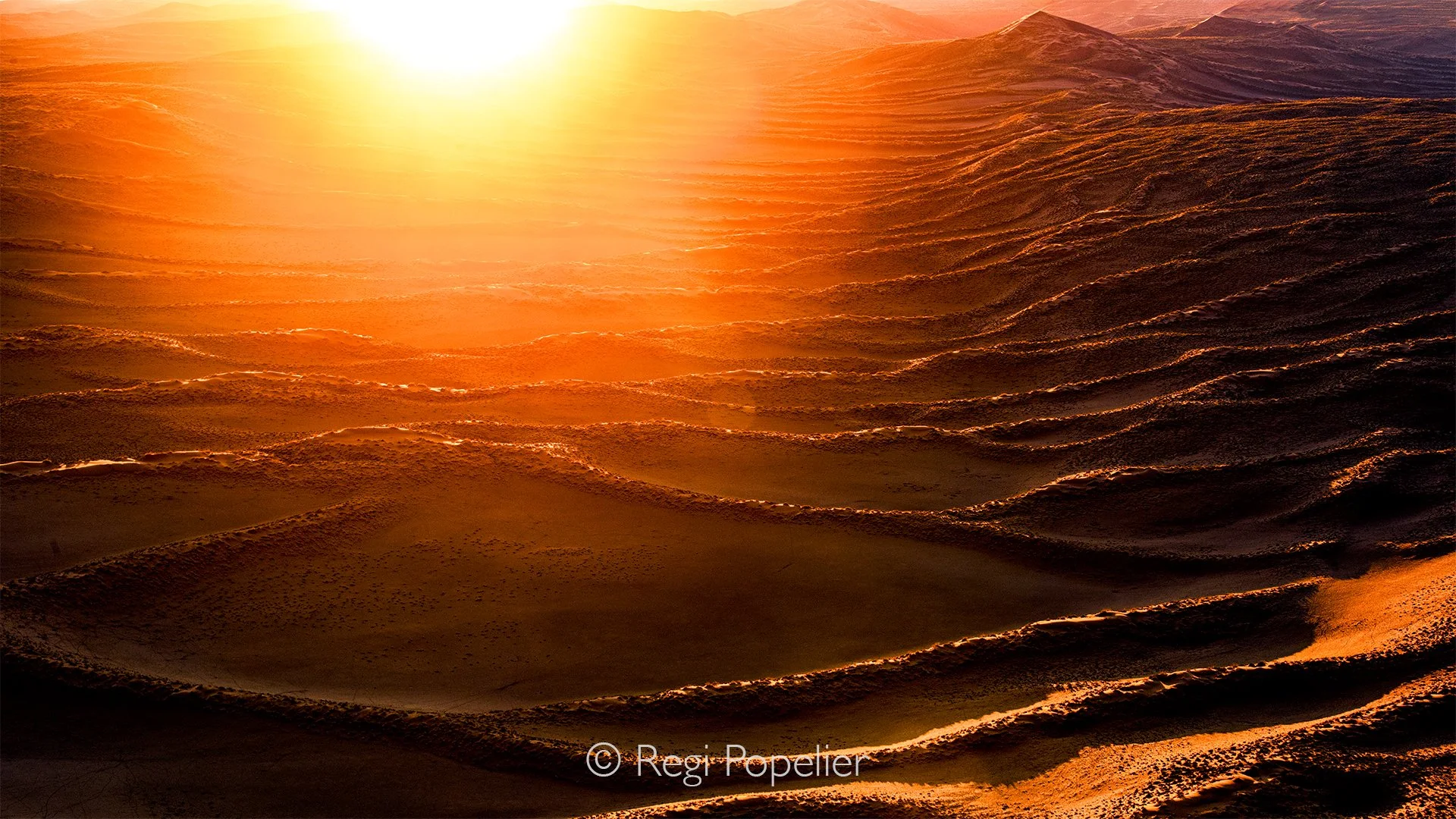
Namibia102 - Where the oldest desert meets the sky.
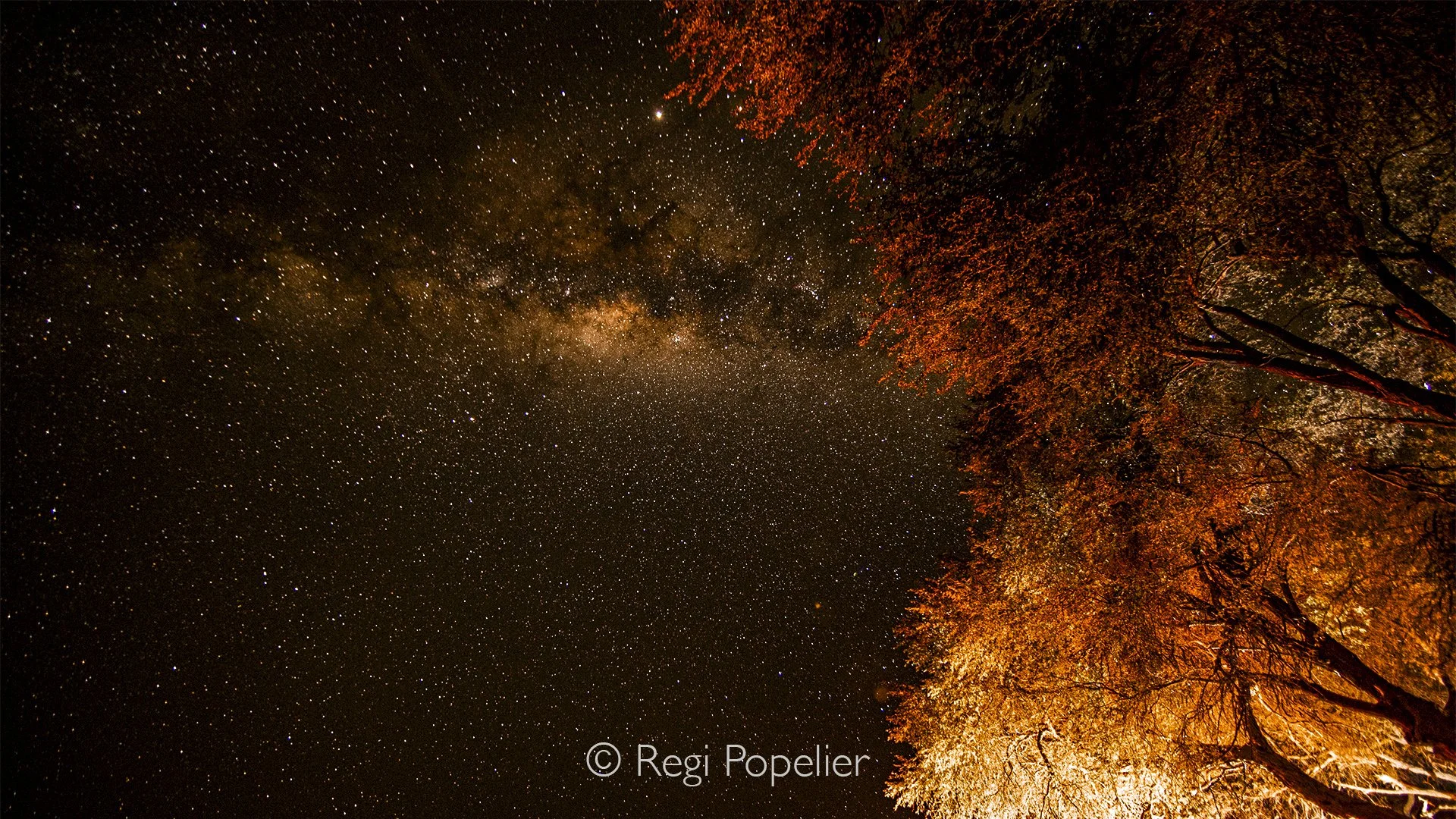
Namibia103 - Night in Damaraland.