Eight weeks at the edge of the extraordinary
I spent eight weeks travelling through Ethiopia, a country of extraordinary contrasts where dramatic landscapes, wildlife, ancient cultures and difficult journeys constantly challenged my expectations.
The journey began with the wildlife of Awash National Park and the flamingos of Lake Abijatta, before taking me into the Bale Mountains for a demanding 126-kilometre trek. Ethiopia quickly showed me that photographing this country would require much more than carrying a camera. It required endurance, patience and a willingness to leave my comfort zone.
In the Danakil Depression, one of the most extreme environments I have ever experienced, the adventure became considerably more serious. The year before my visit, five tourists had been killed in the region. During my journey I was accompanied by four armed soldiers, positioned around us as we travelled through the area. It was impossible to ignore the reality of where we were.
I later climbed Erta Ale, the active volcano, and spent the night on its rim. On the descent, walking across the hard lava, I fell and damaged my camera. It was an expensive reminder of an important lesson: on demanding photographic journeys, always carry at least two camera bodies. Not only as insurance against equipment failure, but also because changing lenses in dusty environments can expose valuable equipment unnecessarily.
Ethiopia also brought me into contact with some of its extraordinary cultural traditions. In the Omo Valley, I spent time with several indigenous communities, including the Hamer, Karo, Dassanech and Mursi. With the Hamer people I witnessed preparations for a traditional wedding ceremony, including the remarkable bull-jumping tradition.
These encounters required a different kind of observation from wildlife photography. I was entering someone else's world, and respect, patience and sensitivity were essential. I photographed only a selection of these encounters; many more images remain in my archive and could eventually form a separate story about the people of the Omo Valley.
Beyond the landscapes, wildlife and extraordinary traditions, one of the things that has stayed with me most strongly is the hospitality of the Ethiopian people. In many of the villages I passed through, people lived in circumstances that were, by our standards, extremely basic and sometimes genuinely harsh. Yet I was repeatedly greeted with warmth and a smile.
There was an openness and generosity that I encountered again and again, even where daily life was clearly difficult. It made me reflect on how little material wealth is sometimes needed to show dignity, generosity and happiness. These encounters became part of what I carried home from Ethiopia, just as much as the photographs did.
The journey also took me through Lalibela, Tigray and the Blue Nile, revealing yet another side of Ethiopia's history and landscape. At times the conditions were extremely basic. One night I slept outside on a bench without covers, and another night underneath the car. These were not experiences I had planned, but they became part of the reality of travelling through such remote areas.
The journey ended in the Simien Mountains, one of Africa's most spectacular settings. Here I spent several days among large troops of gelada baboons. Their social behaviour, expressions and extraordinary proximity made them fascinating photographic subjects, while simply sitting among them provided some of the most peaceful moments of the entire journey.
Throughout this extraordinary adventure I was accompanied by my guide, Wegderes. Of all the guides I have travelled with over the years, he remains one of the most memorable. Curious, attentive and immensely proud to share his country with me, he seemed genuinely happy to see Ethiopia through the eyes of a photographer. His knowledge, dedication and warmth made an enormous difference to the journey.
Wegderes Degu was not simply my guide. He became part of the experience itself. His heart was enormous, and I could not have asked for more from someone accompanying me through such a demanding and extraordinary country.
Ethiopia revealed itself to me as a land of extremes, wild, authentic, demanding and deeply human.
The photographs that follow are only fragments of those eight weeks, moments that remained with me long after I left Ethiopia. The rest lives in the memories of the landscapes, the people, the risks, the exhaustion, the unexpected encounters and the extraordinary privilege of having been there.
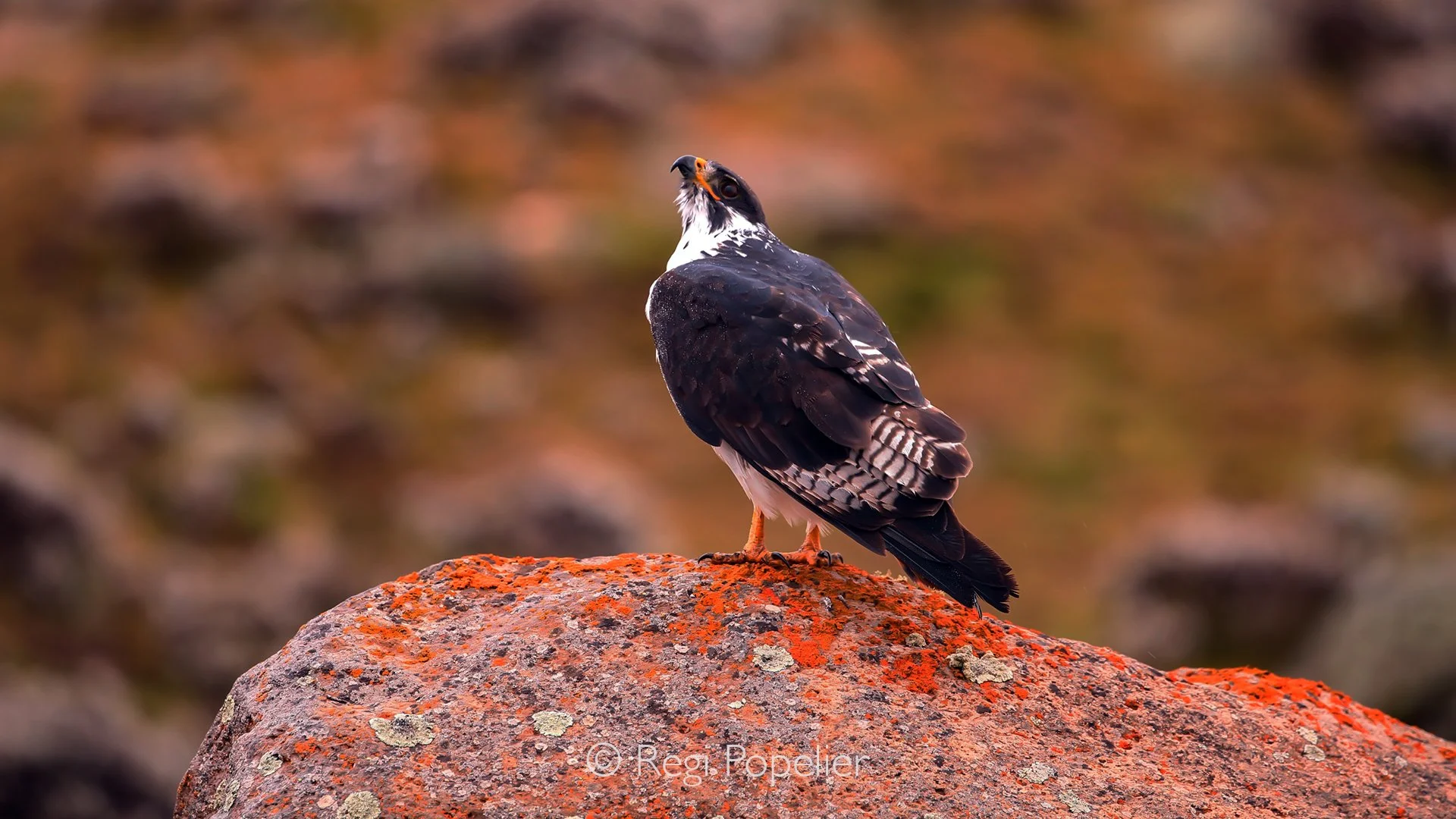
ETH001 - Augur Buzzard perched on a rock at bale mountains.
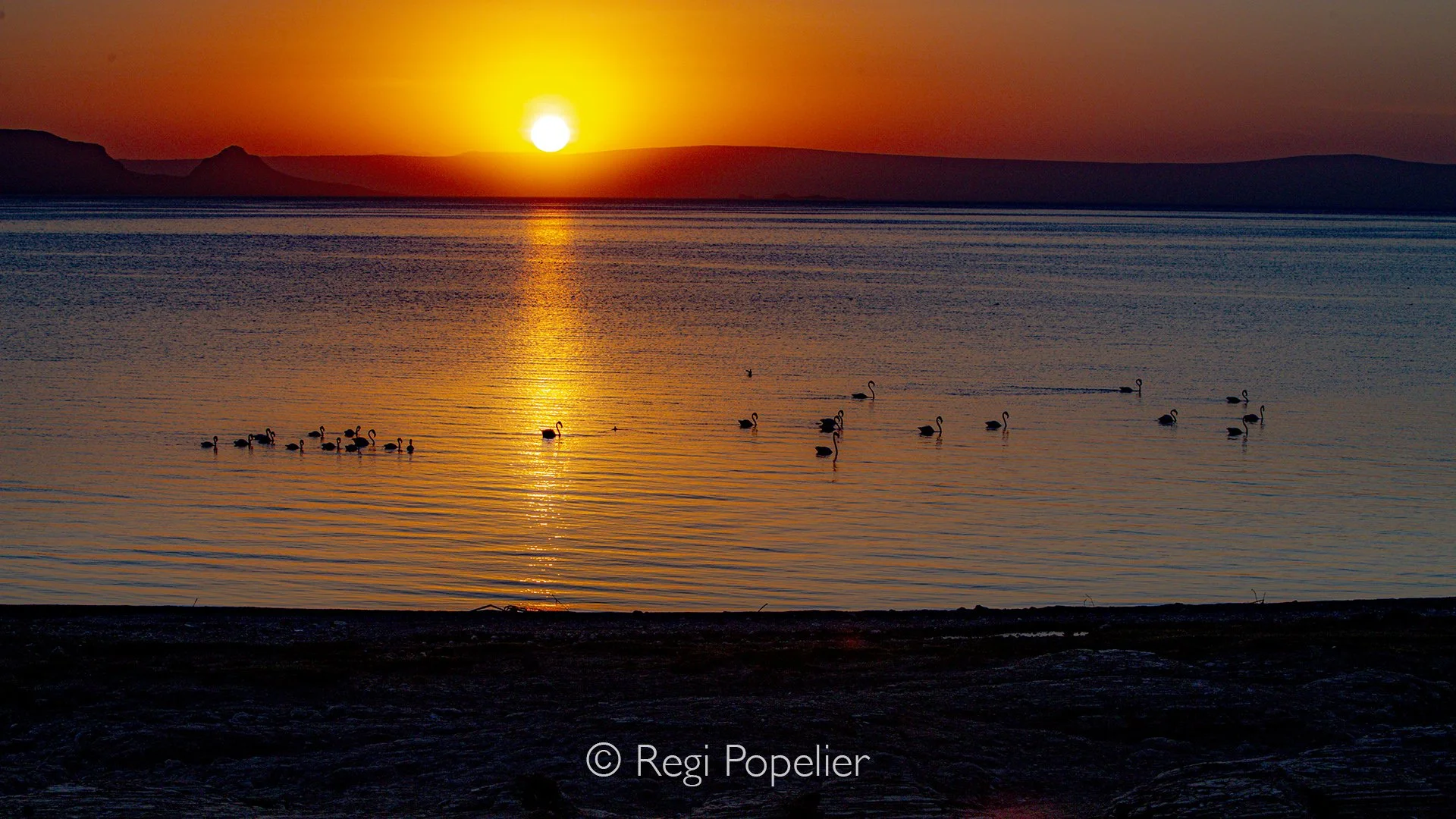
ETH002 - Lake Awassa at sunset.
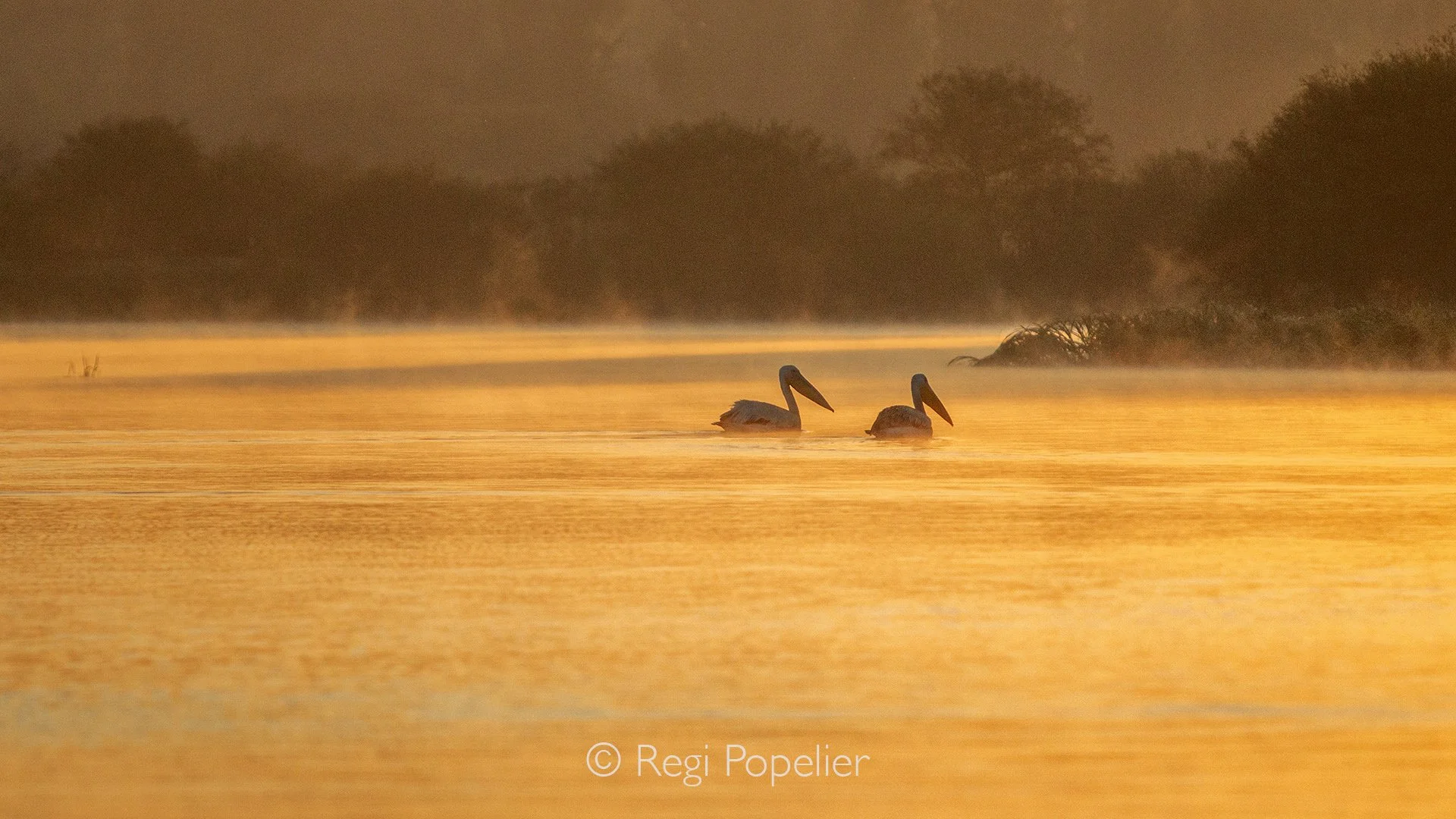
ETH003 - During morning at sunrise, pelicans are passing by in the foggy area.
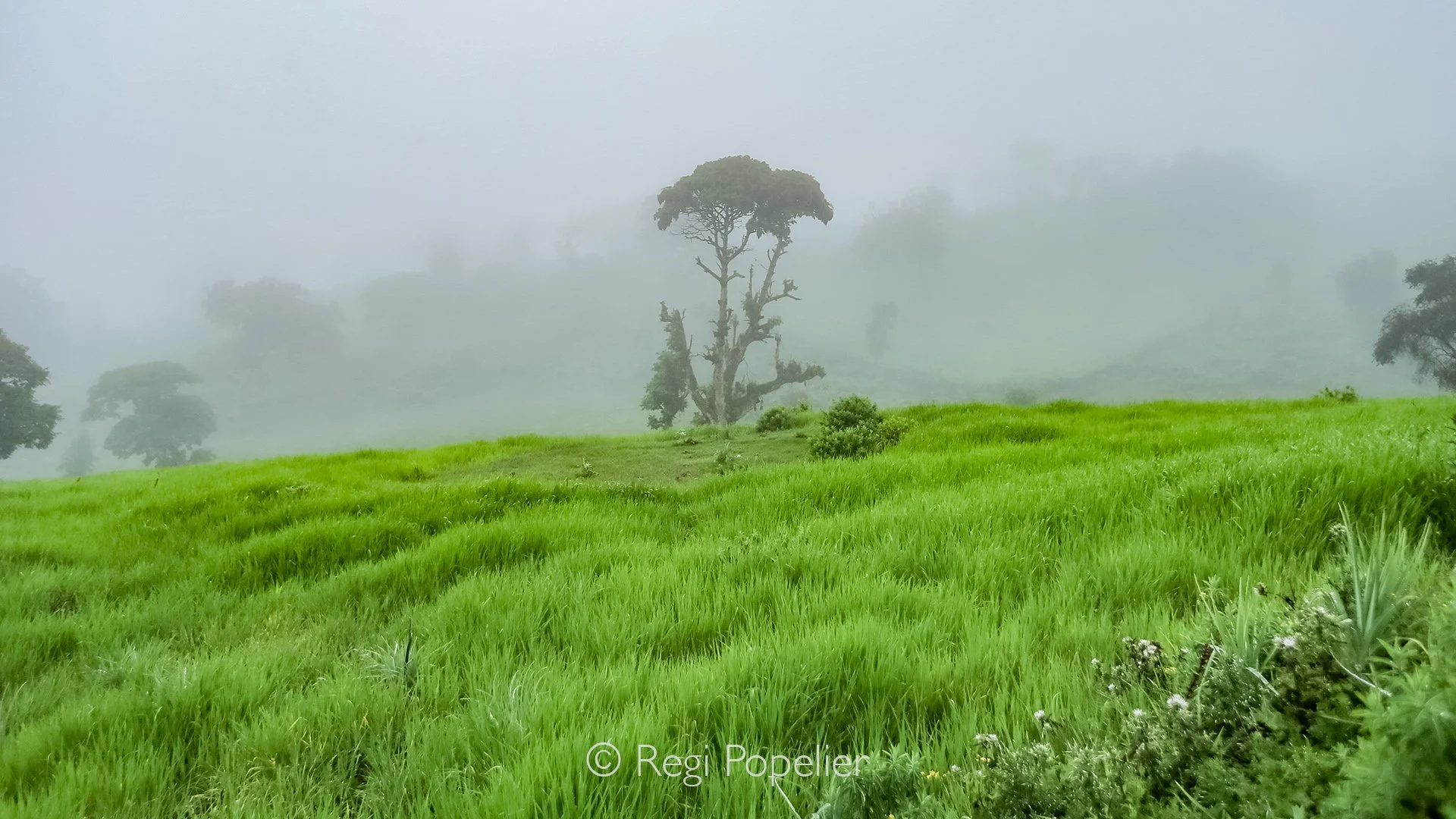
ETH004 - Landscape in the brume while starting the 8 day and 128 km mountain walk at Bale NP.
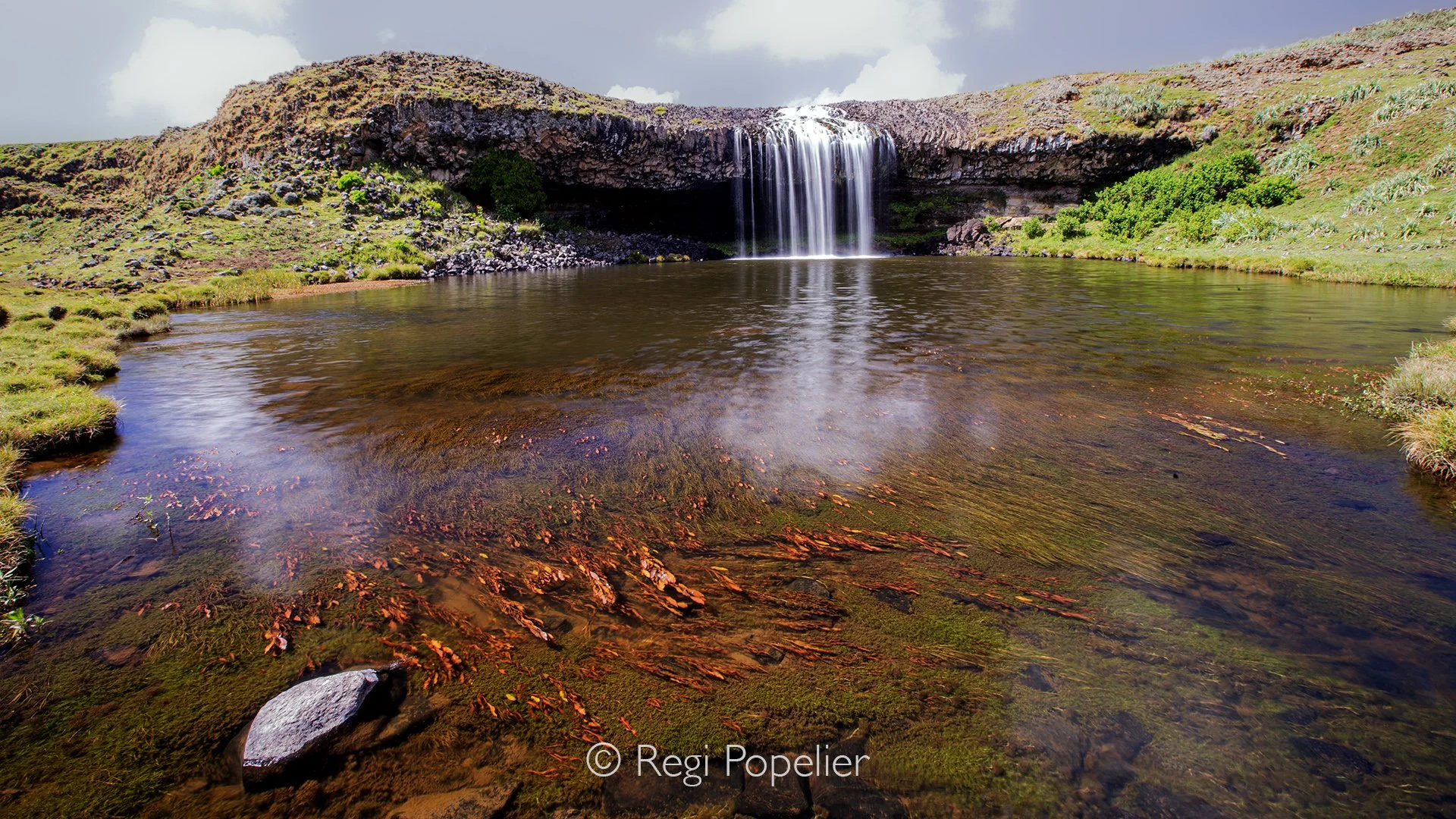
ETH005 - On the road in Bale NP.
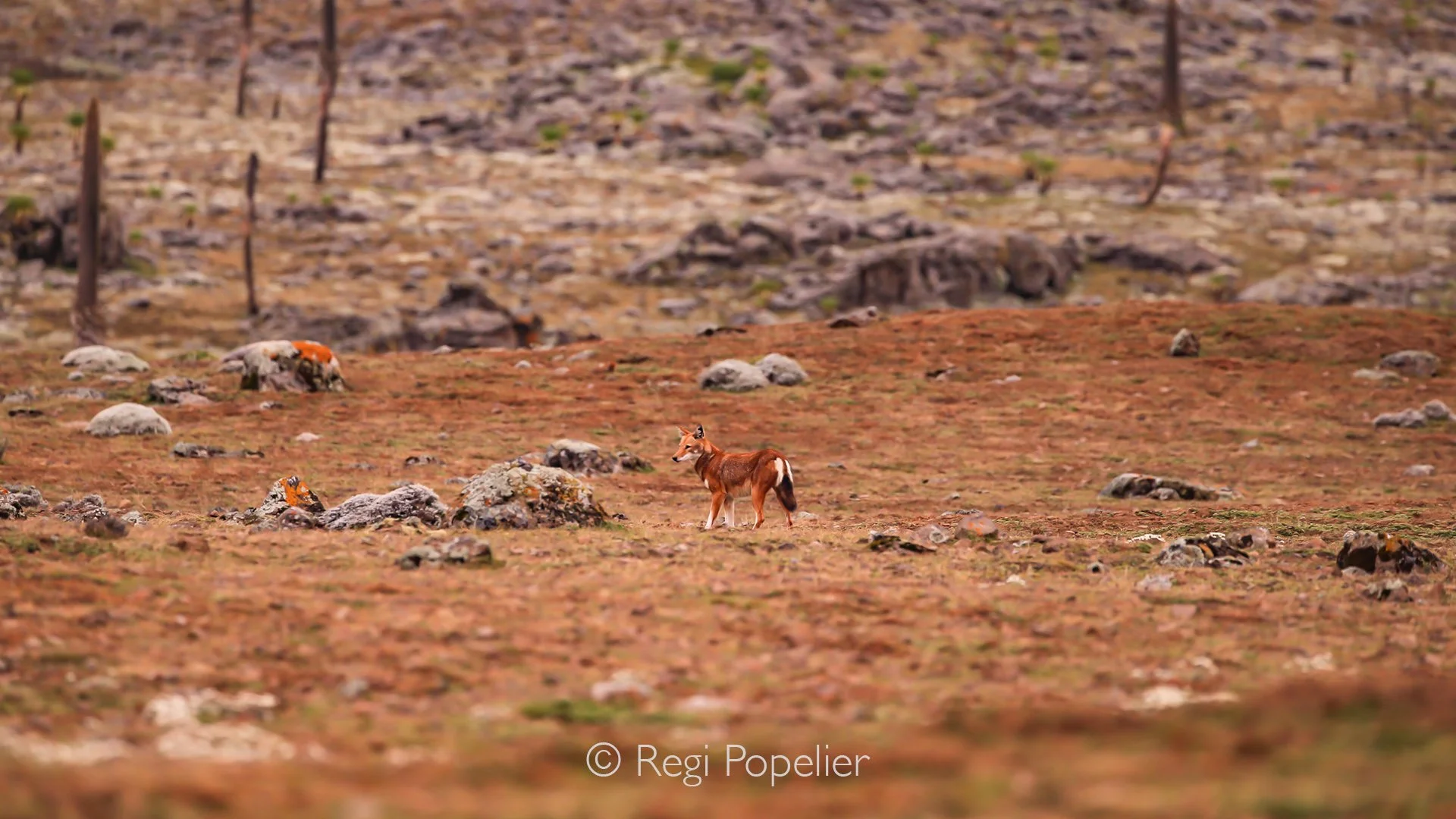
ETH006 - The enigmatic Ethiopian wolf in Bale NP, luck was not on my side, although we saw quite some of them, but they are very shy in their natural habitat and never stayed long before the lens.
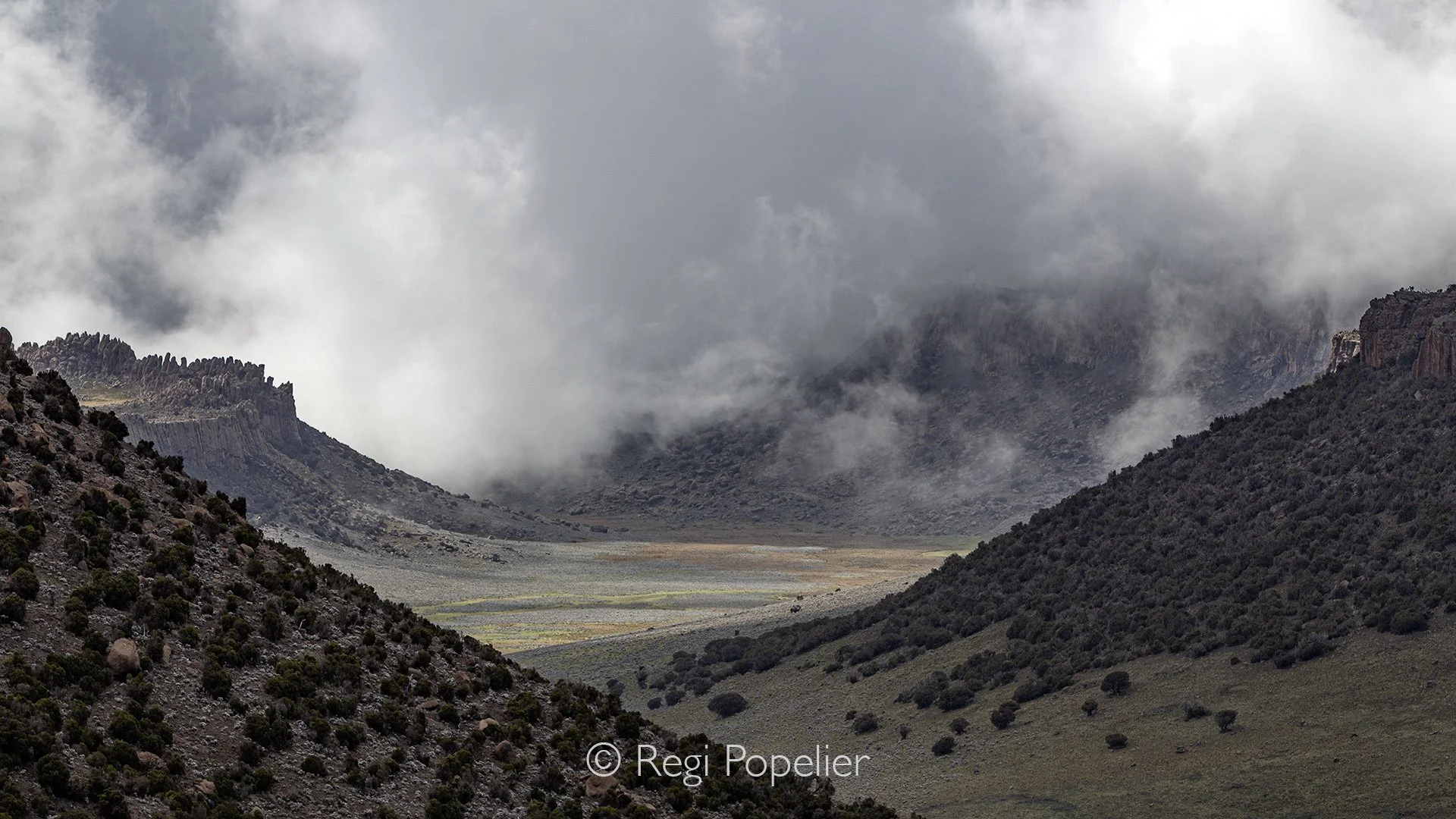
ETH007 - Foggy morning Bale NP.
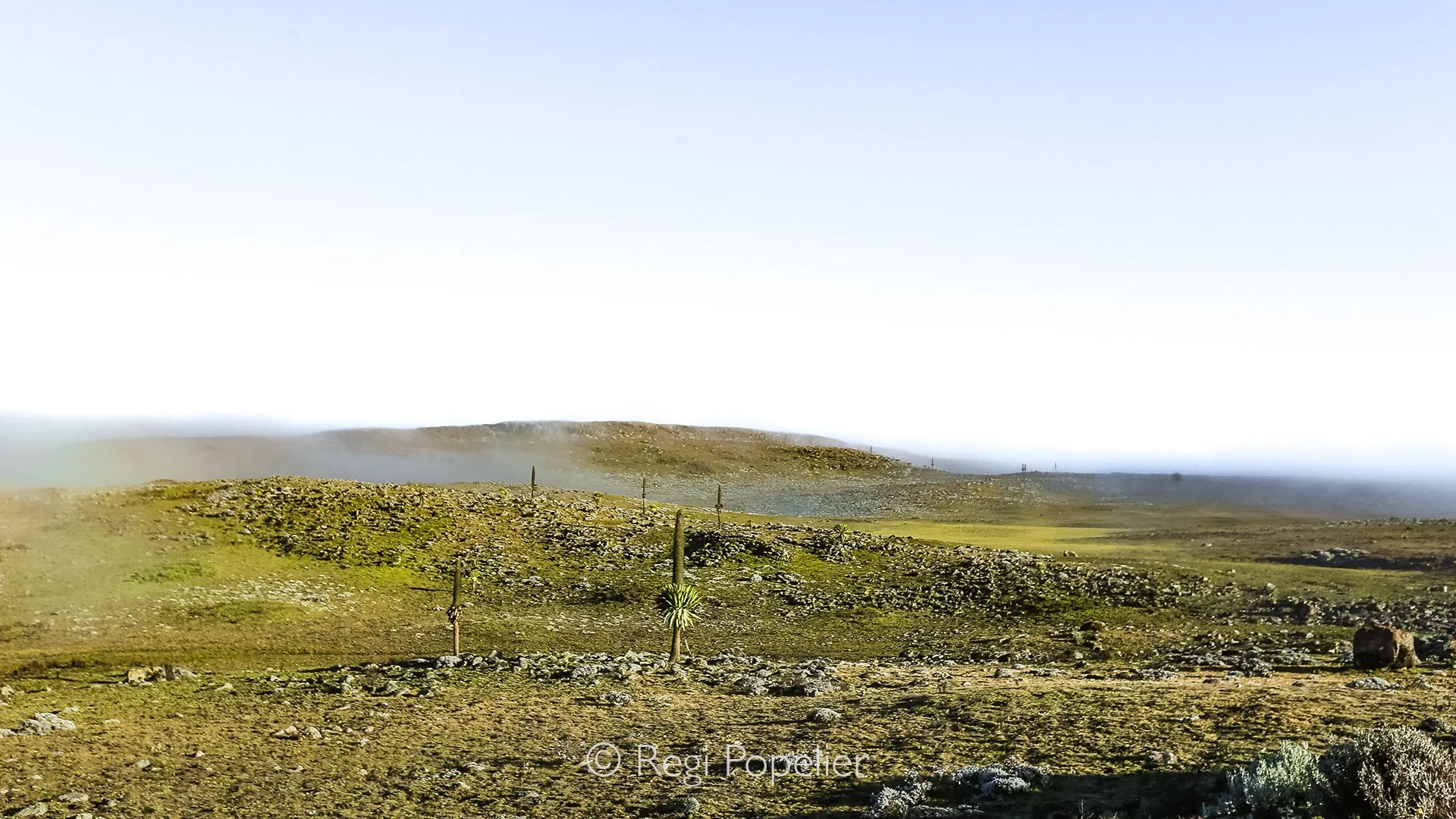
ETH008 - Bale NP at morning, always mazing sightings and a fast changing nature.
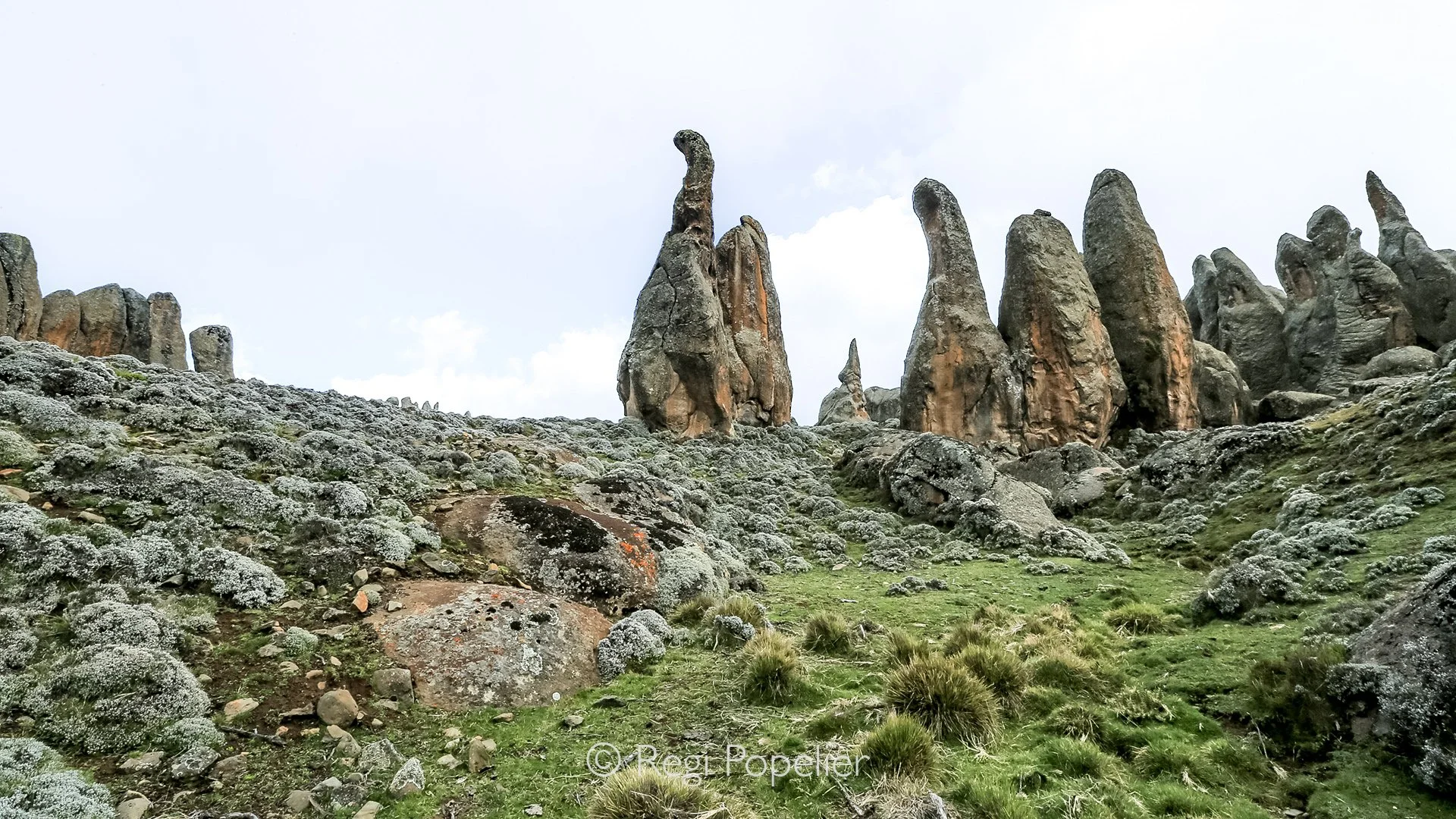
ETH009 - During the trekking in Bale NP the raft lave rocks.
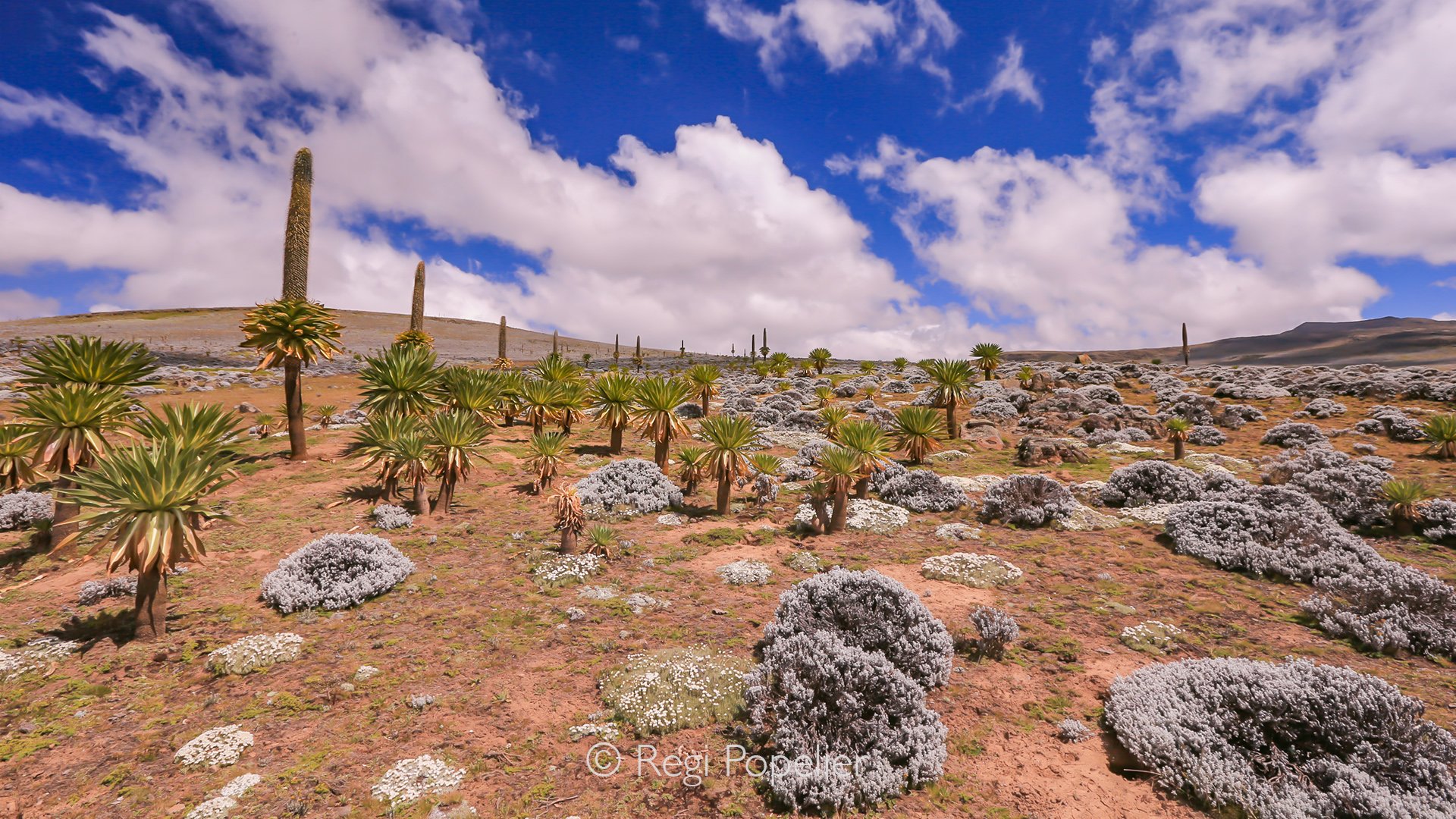
ETH010 - Giant lobelias at an altitude of 4000 m in Bale NP.
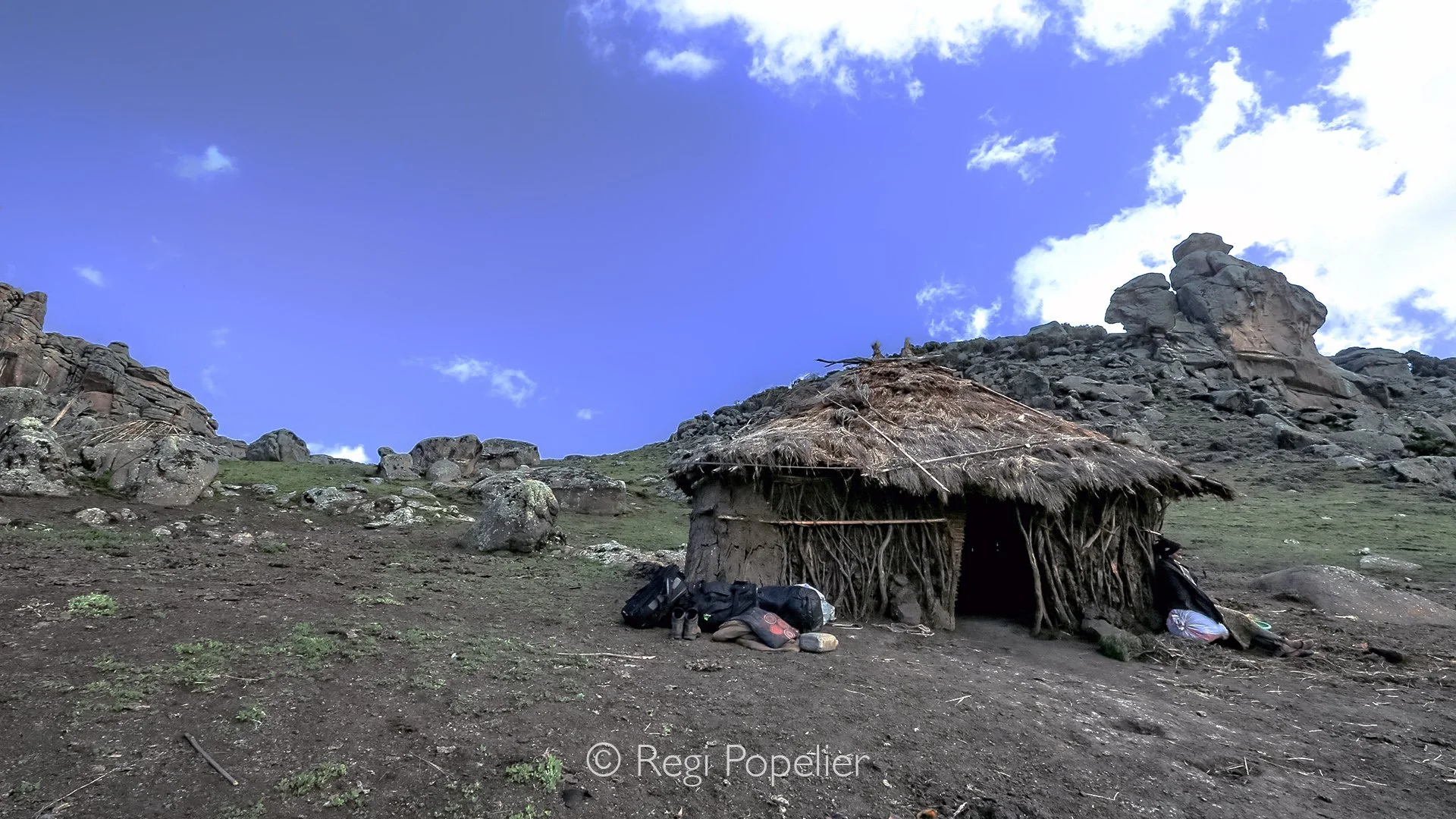
ETH011 - Our hotel at Bale NP, this is out of the comfort zone.
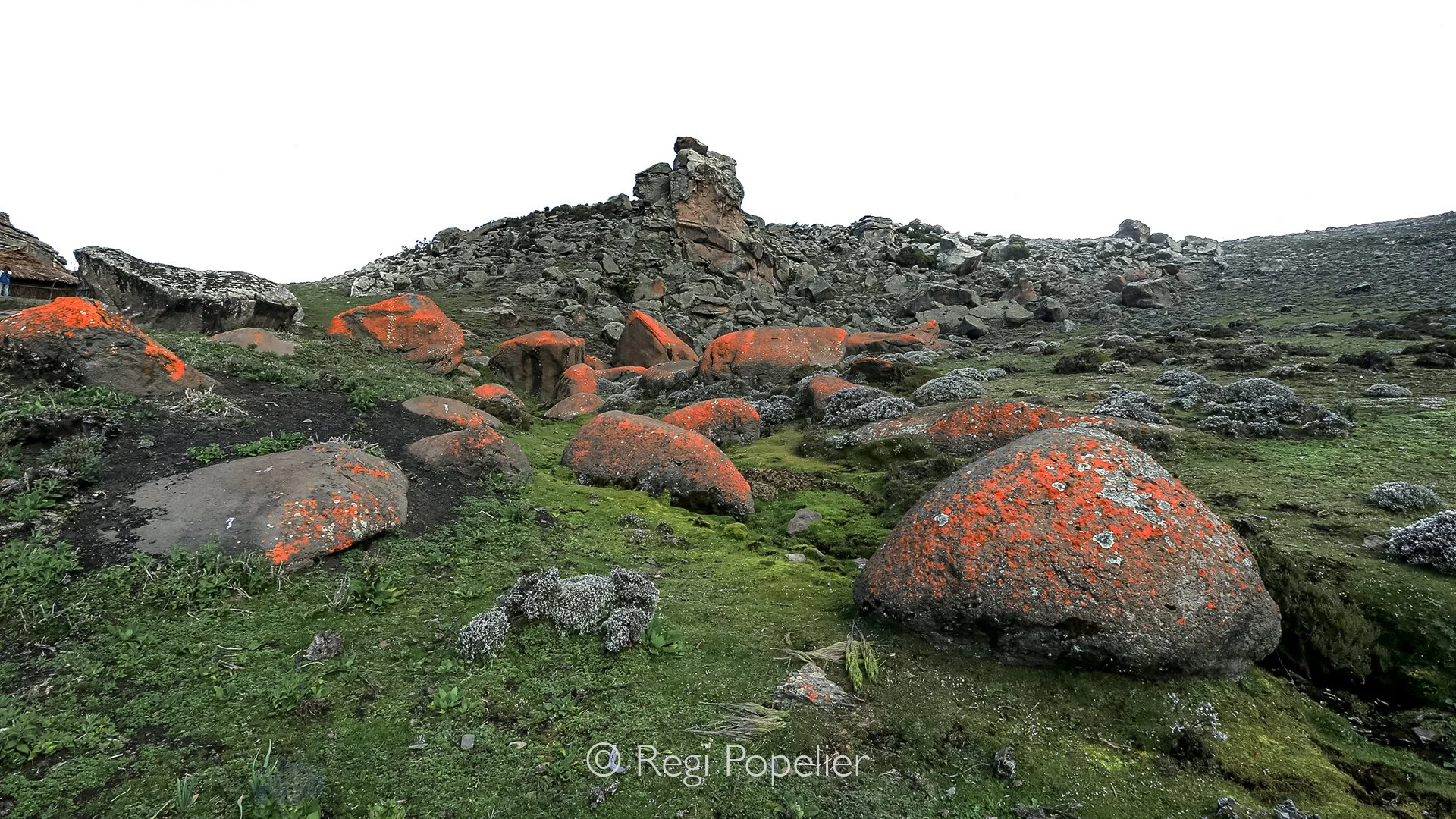
ETH012 - The Saneti Plateau-Bale NP.
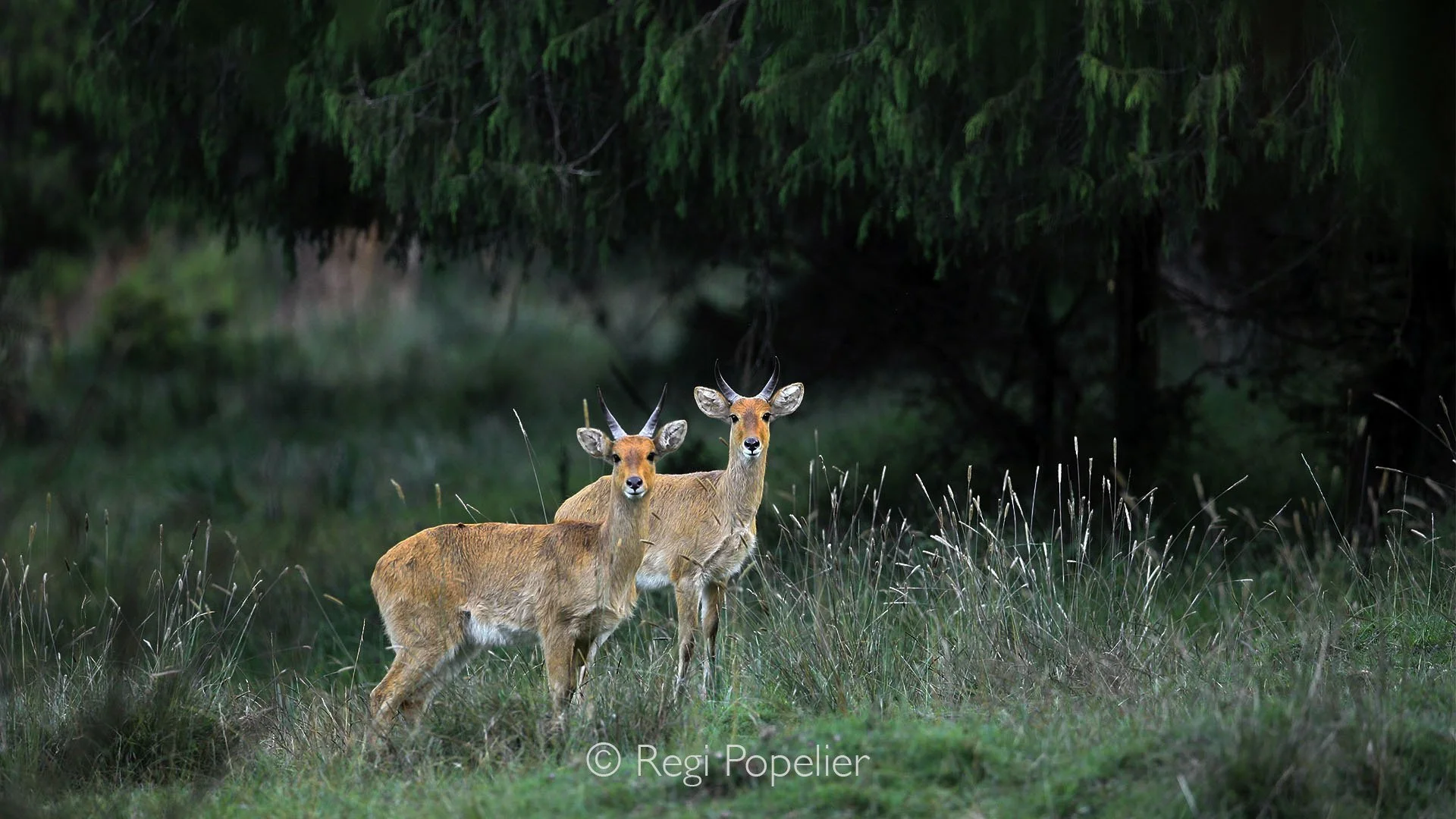
ETH013 - Bohor redbuck, Bale mountains national park.
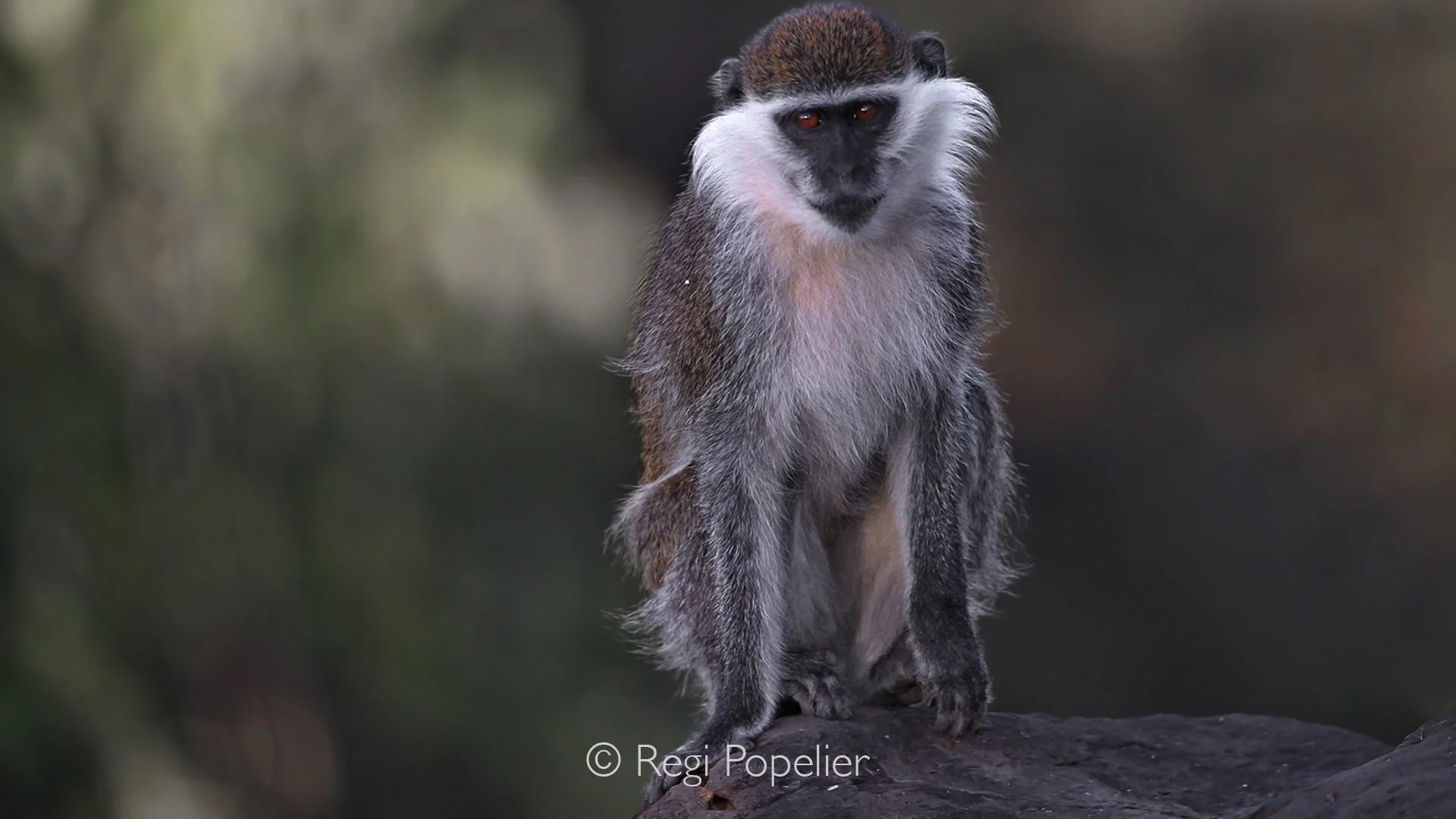
ETH014 - Close- up encounter with the Bale Monkey at the Harenna Forest Bale Mountains.
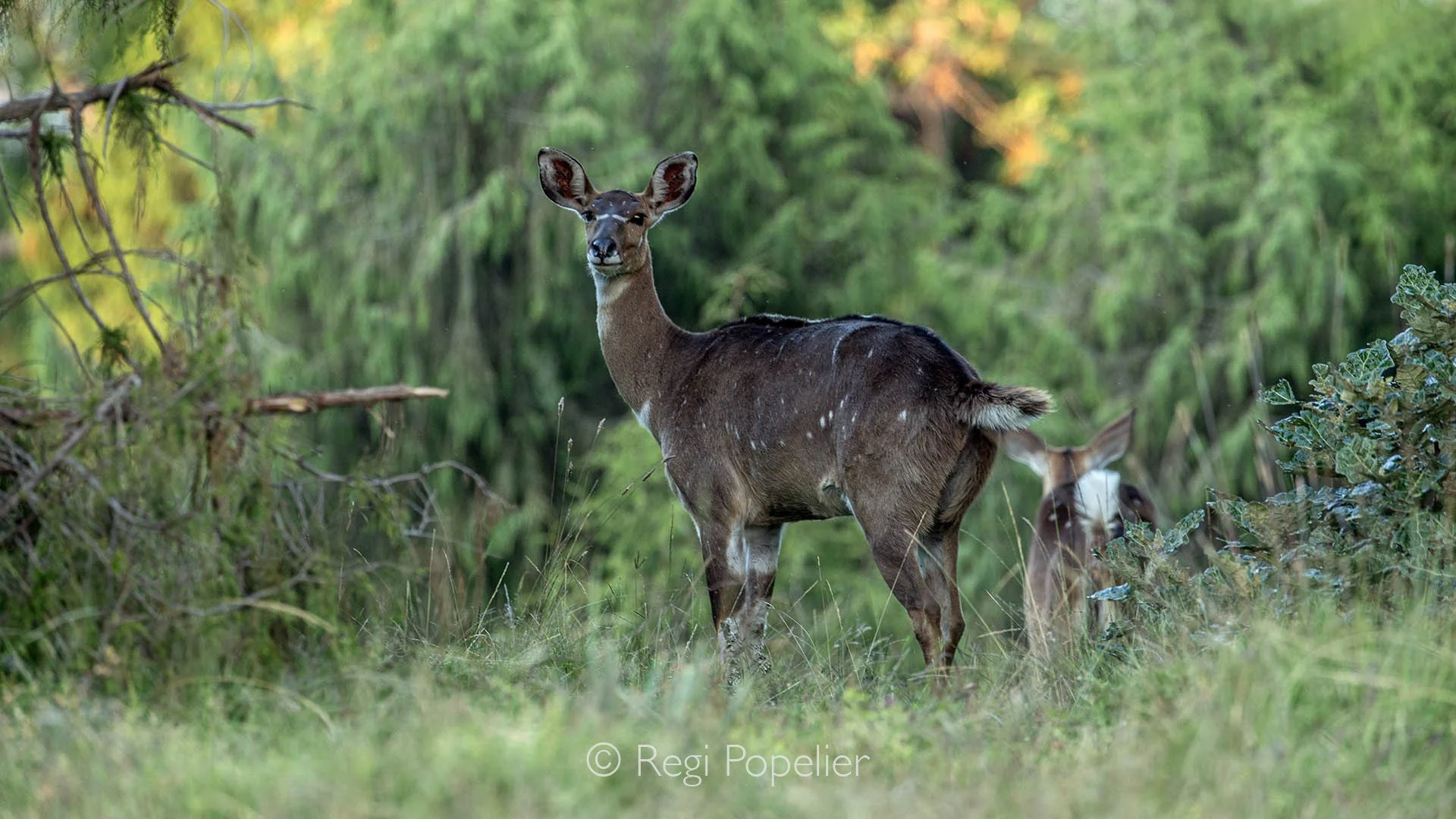
ETH015 - Image of The Mountain Nyala (Tragelaphus buxtoni) in this case a female. This endangered antelope is endemic to the Ethiopian highlands.
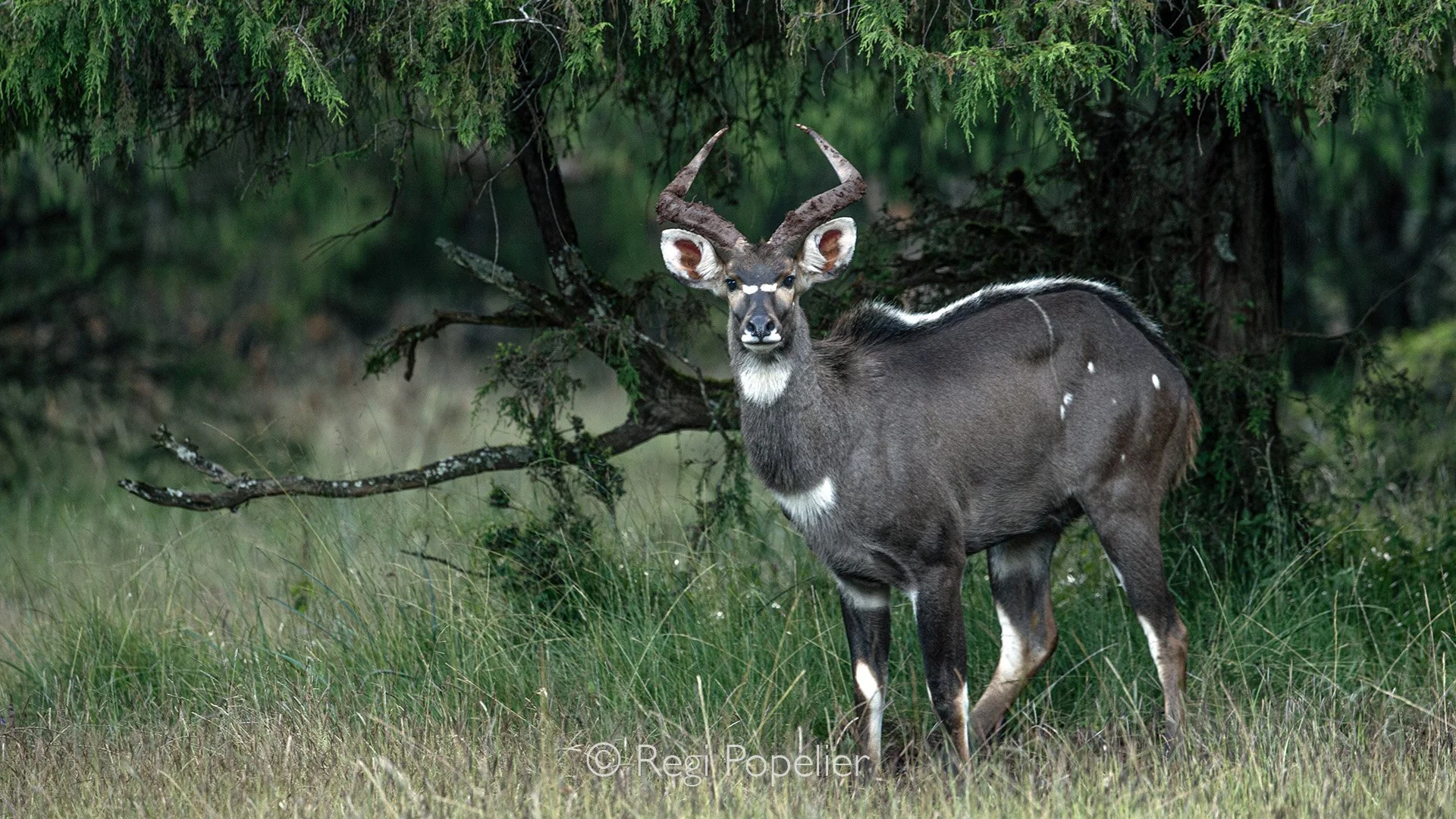
ETH016 - Male of the mountain nyala.
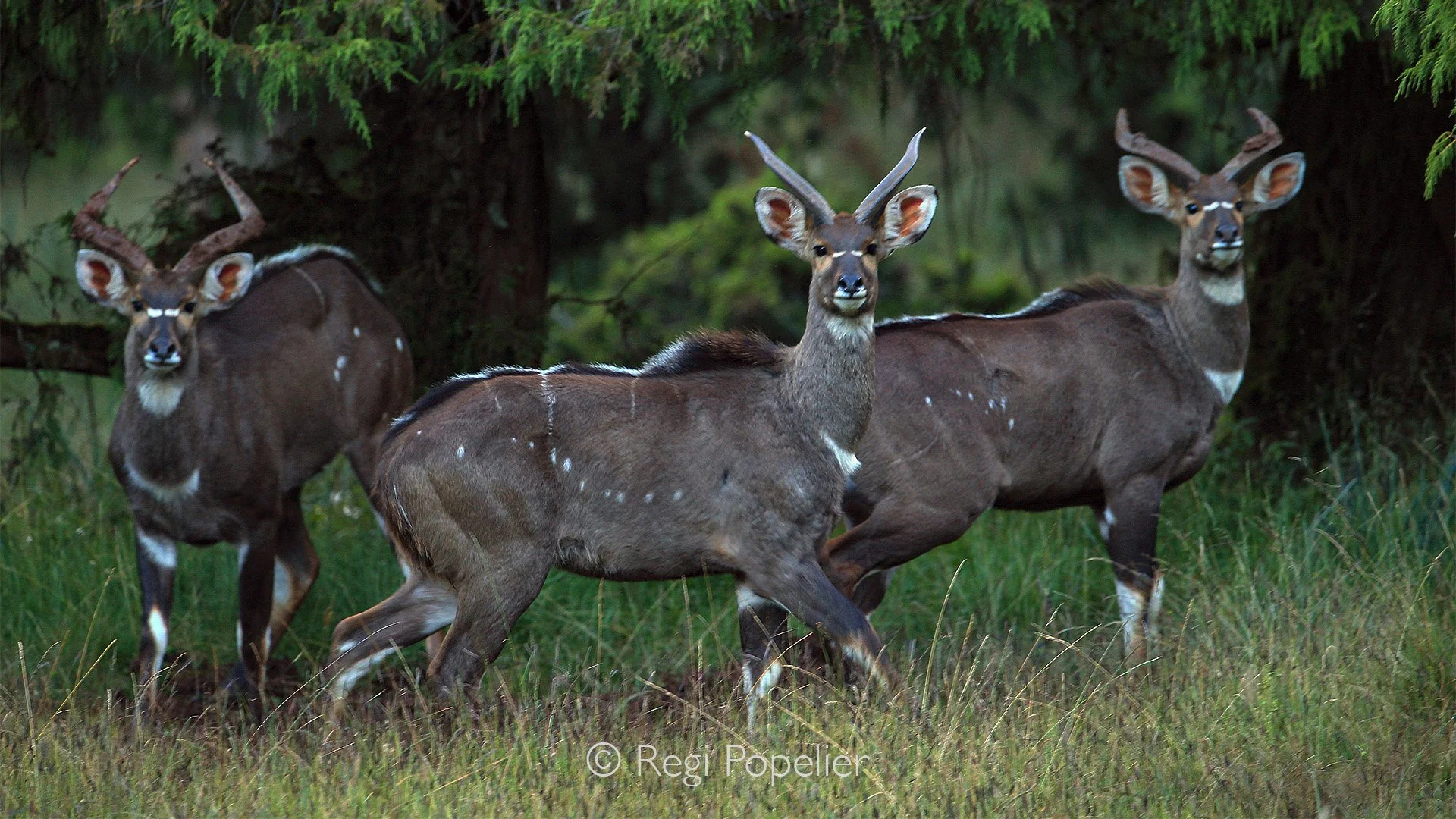
ETH017 - Beautiful pause of 3 males at the forest of bale.
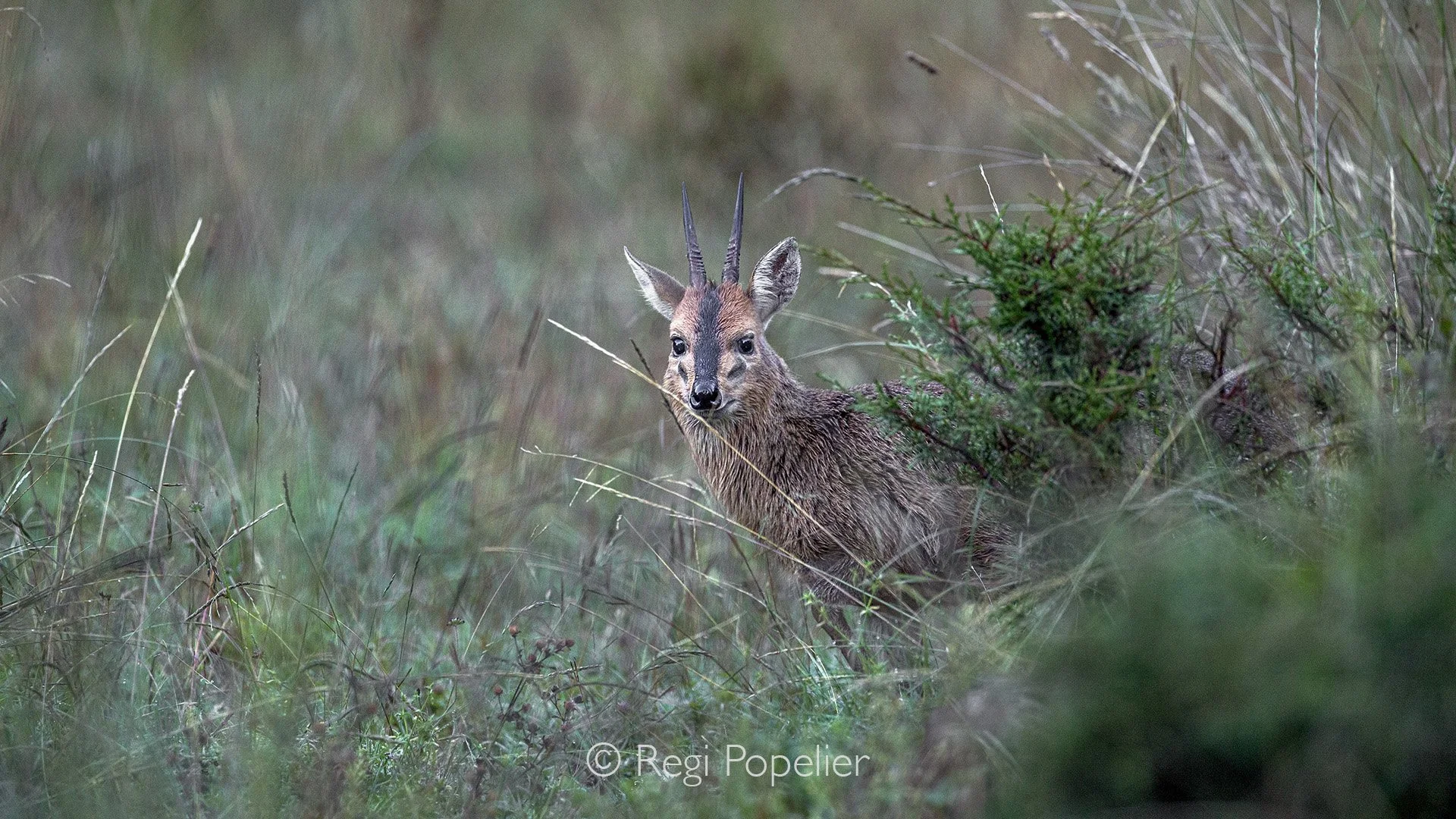
ETH018 - Menelik's bushbuck.
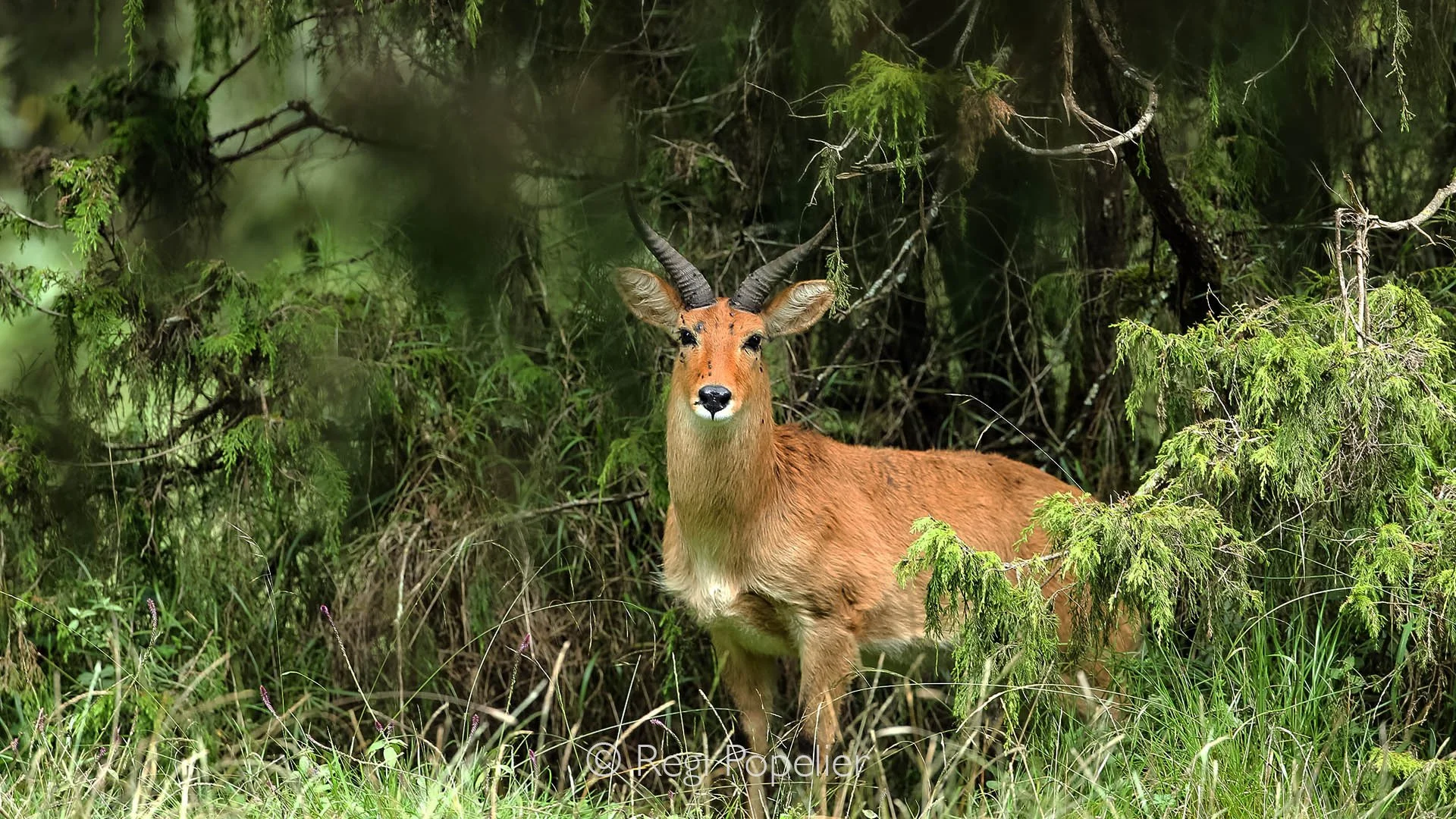
ETH019 - Beautiful Male Bohor Redbuck deer .
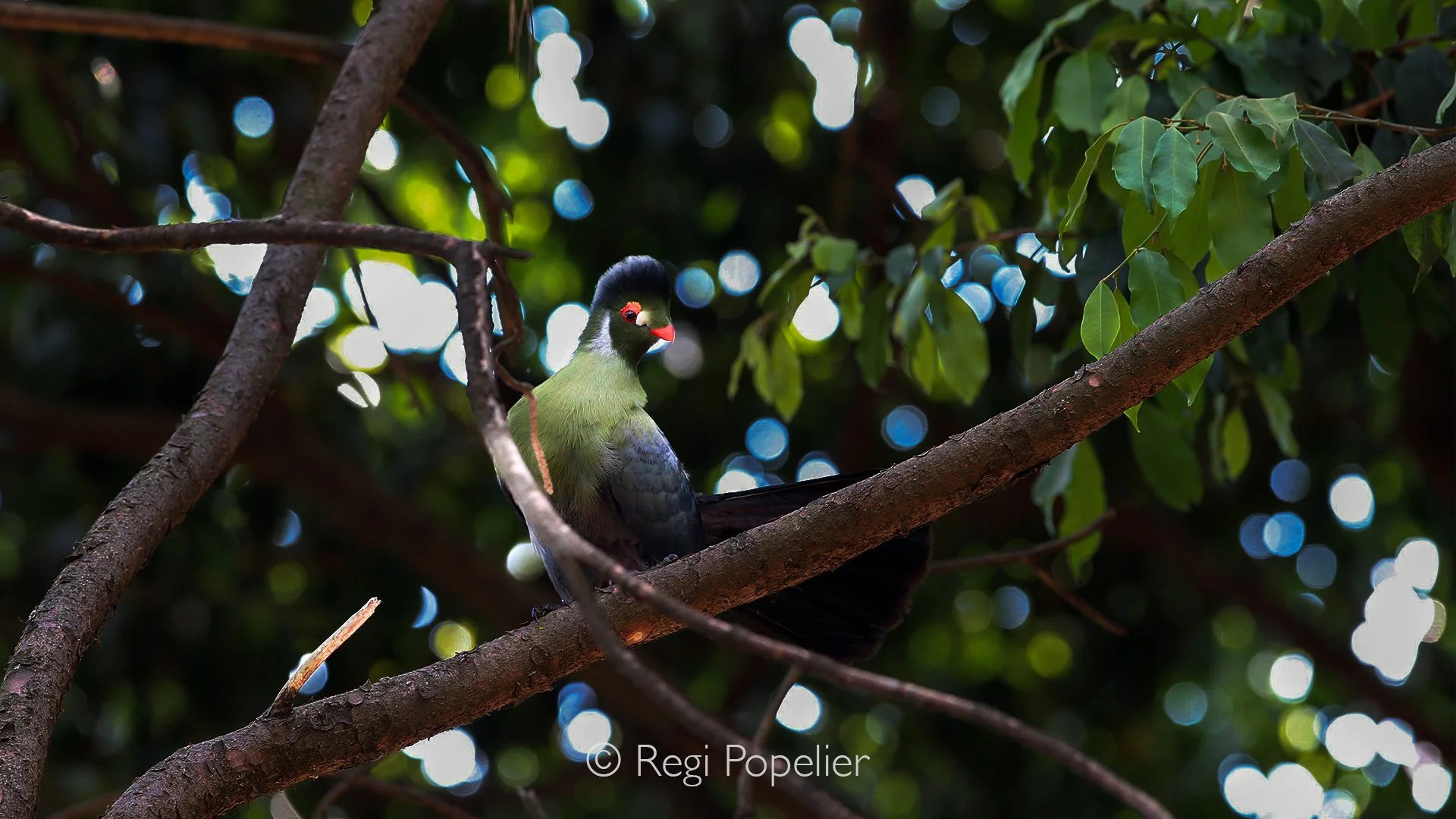
ETH020 - White-cheeked turaco.
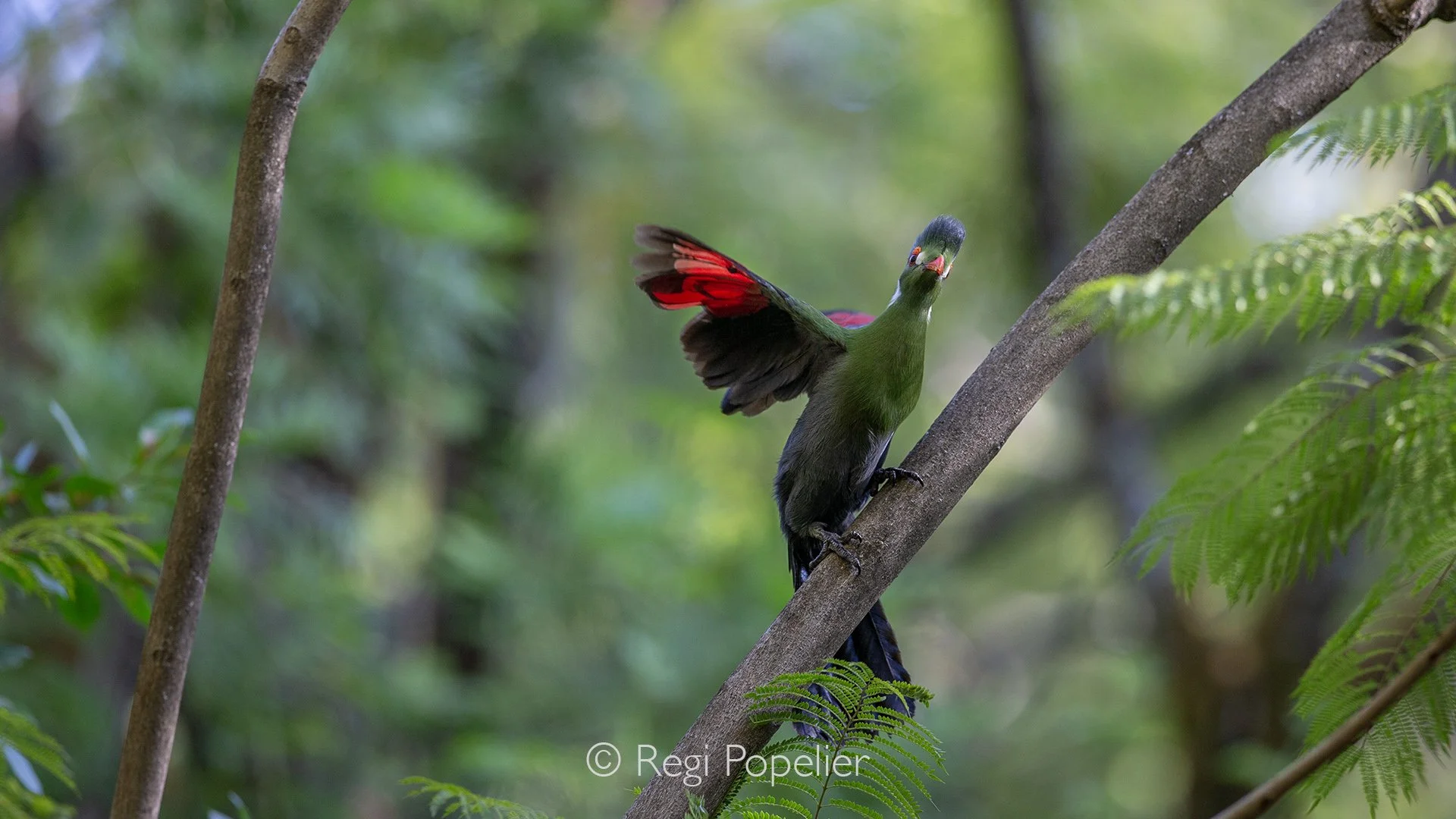
ETH021 - White-cheeked turaco while balancing.
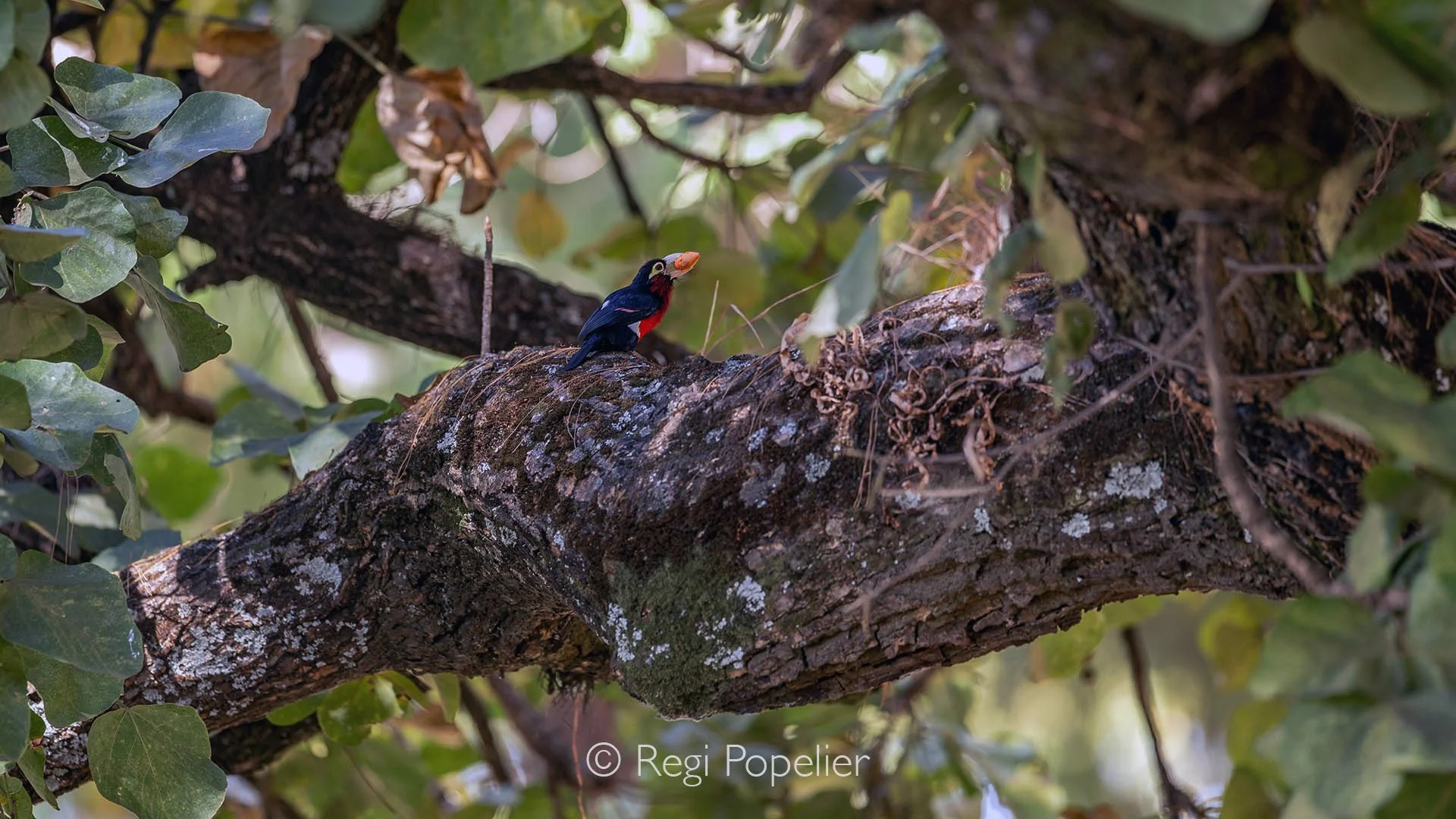
ETH022 - Black and red broadbill in contrast with the broad branch of a tree.
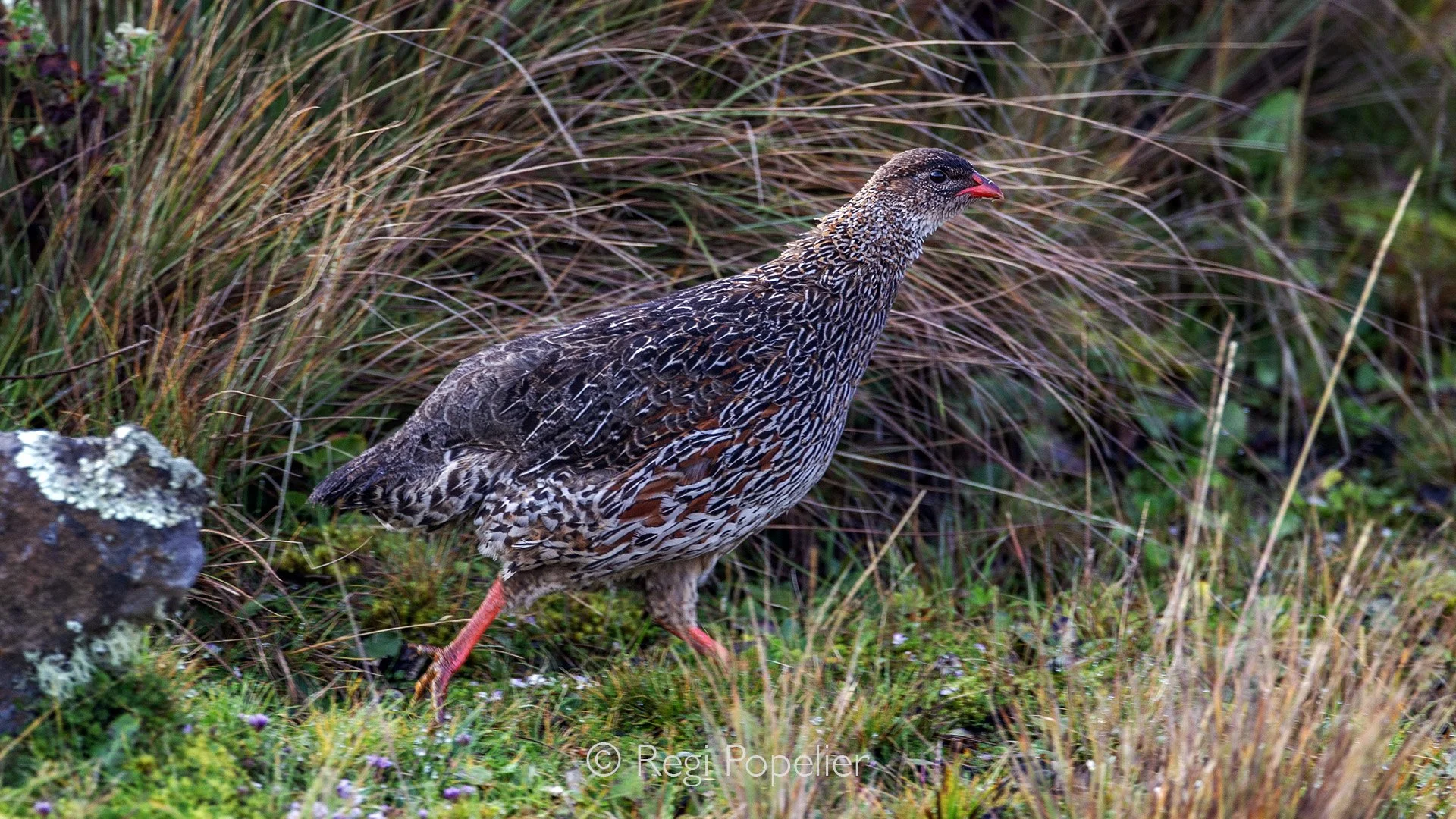
ETH023 - Harwood's Spurfowl.
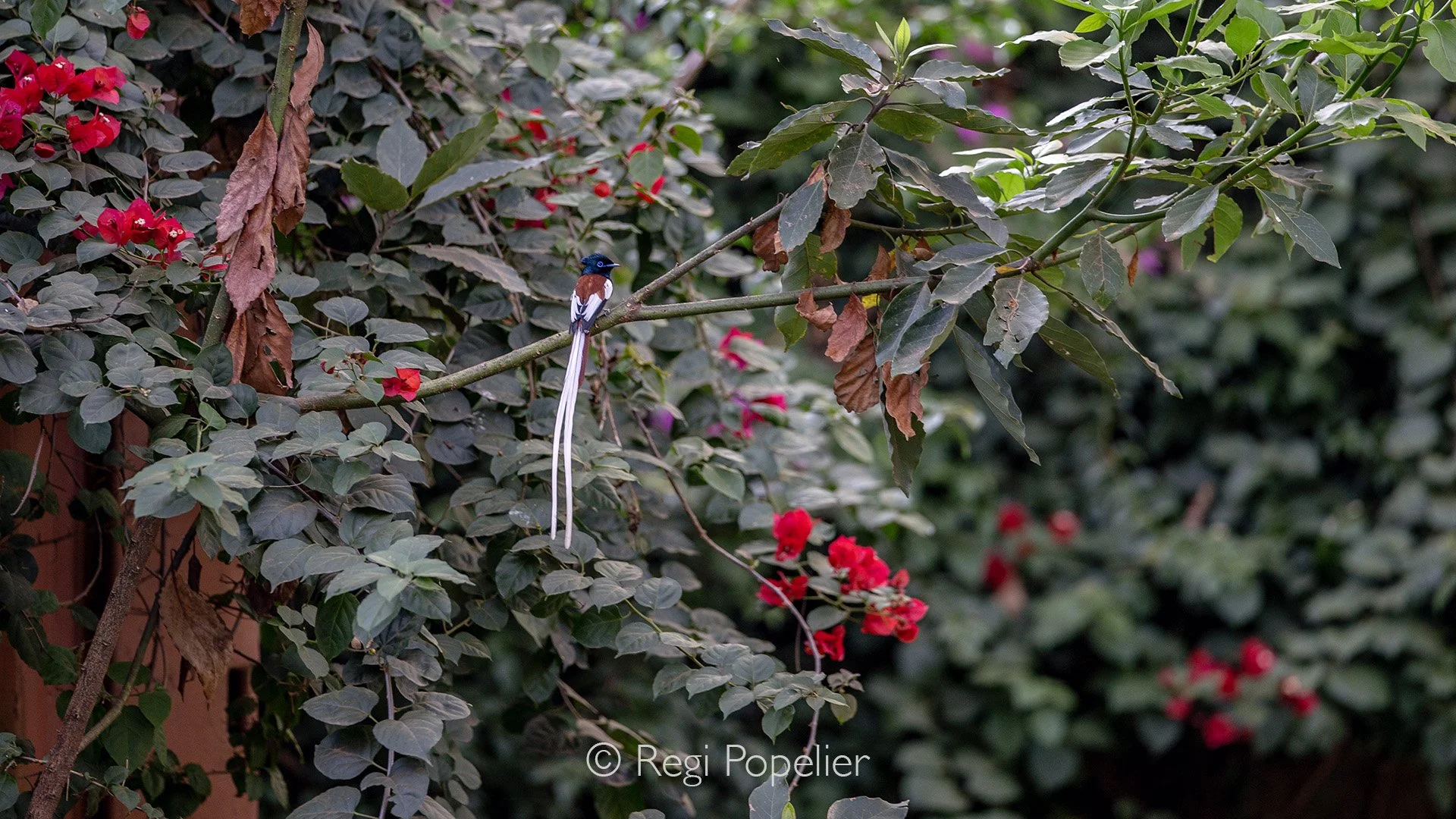
ETH024 - Paradise fly-catcher.
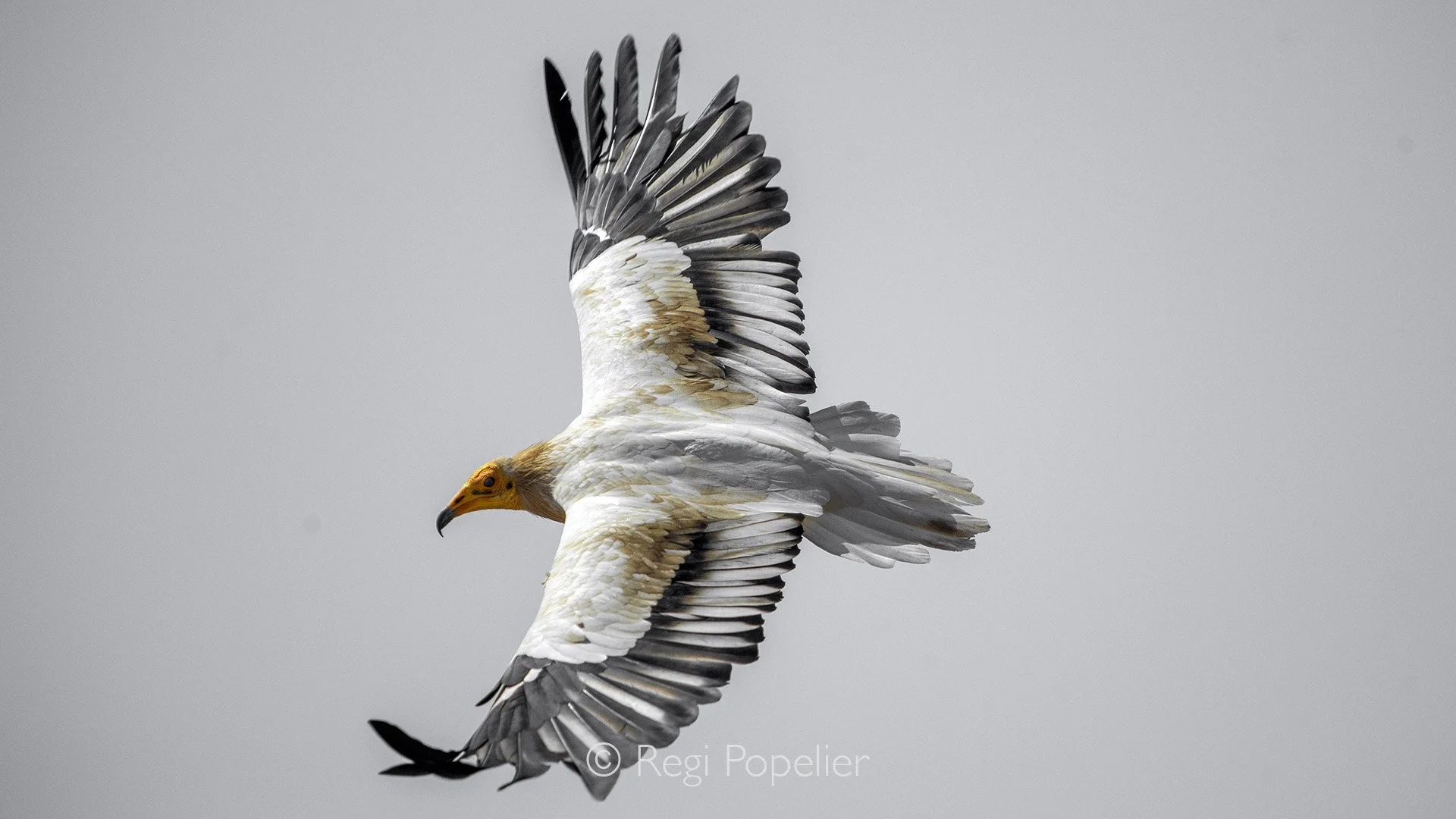
ETH025 - Egyptian vulture in flight , frequently seen bird.
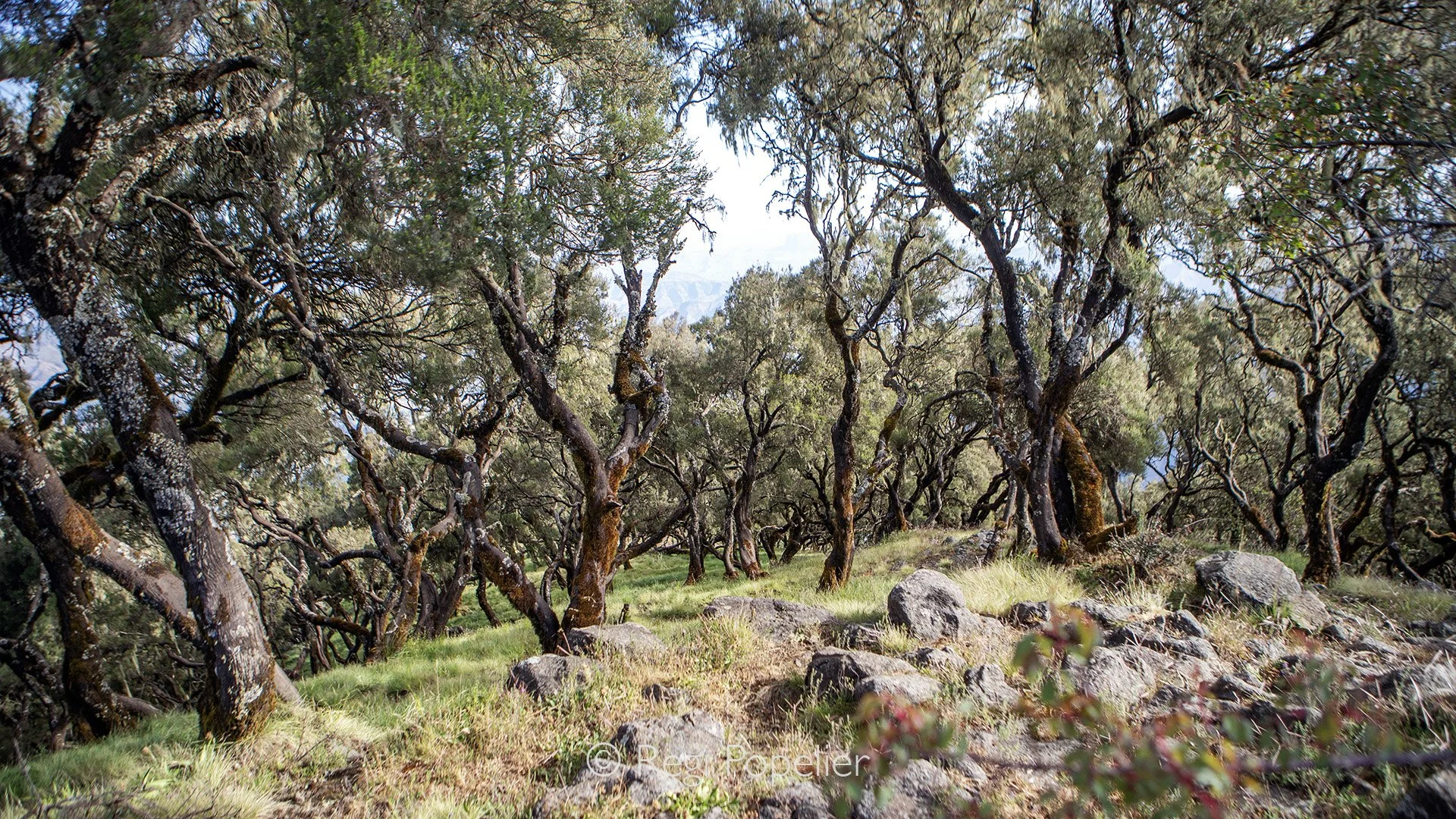
ETH026 - Tree sightings at high altitude.
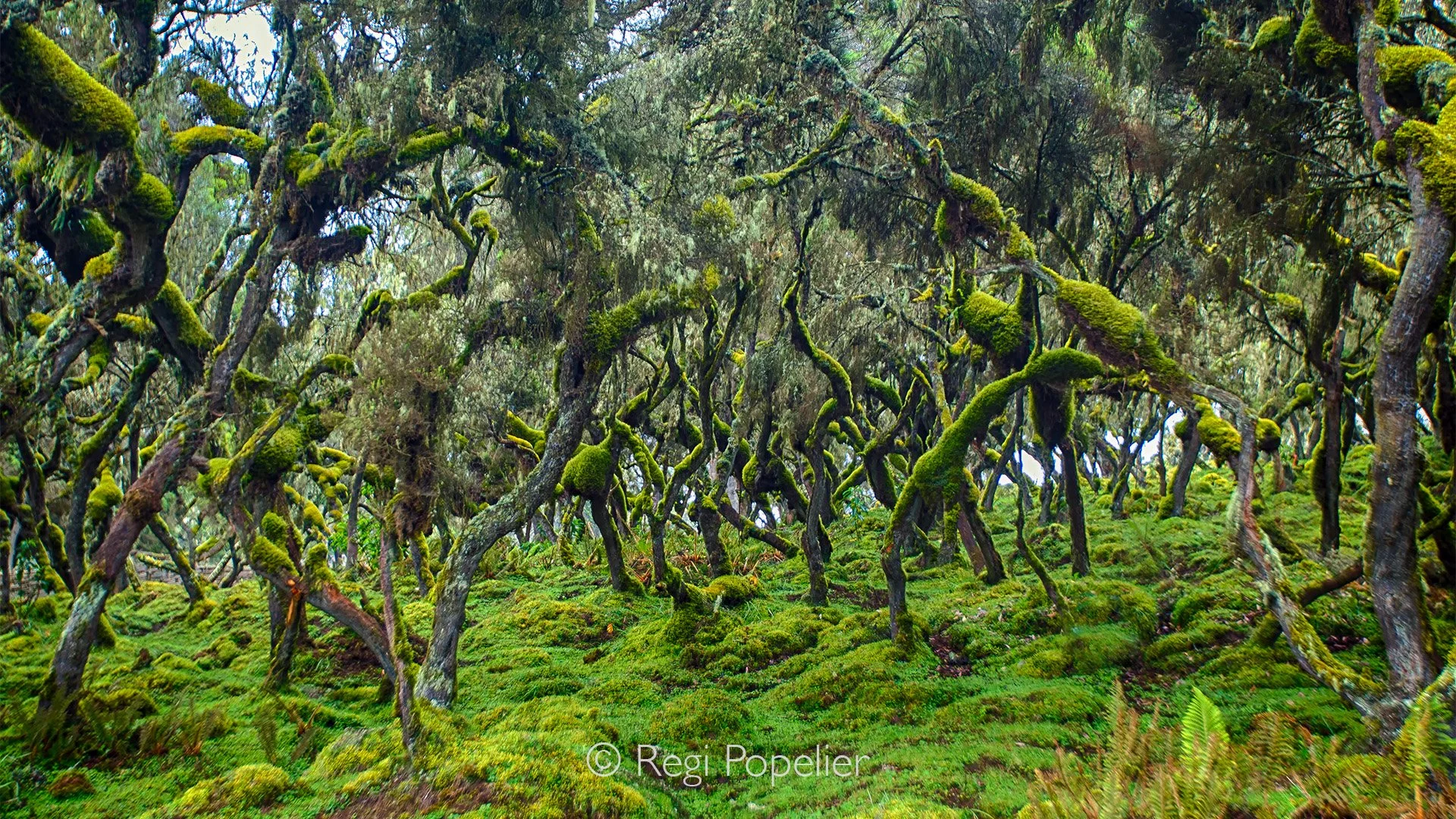
ETH027 - Moss sightings at high altitude , always interesting how nature transforms at altitude.
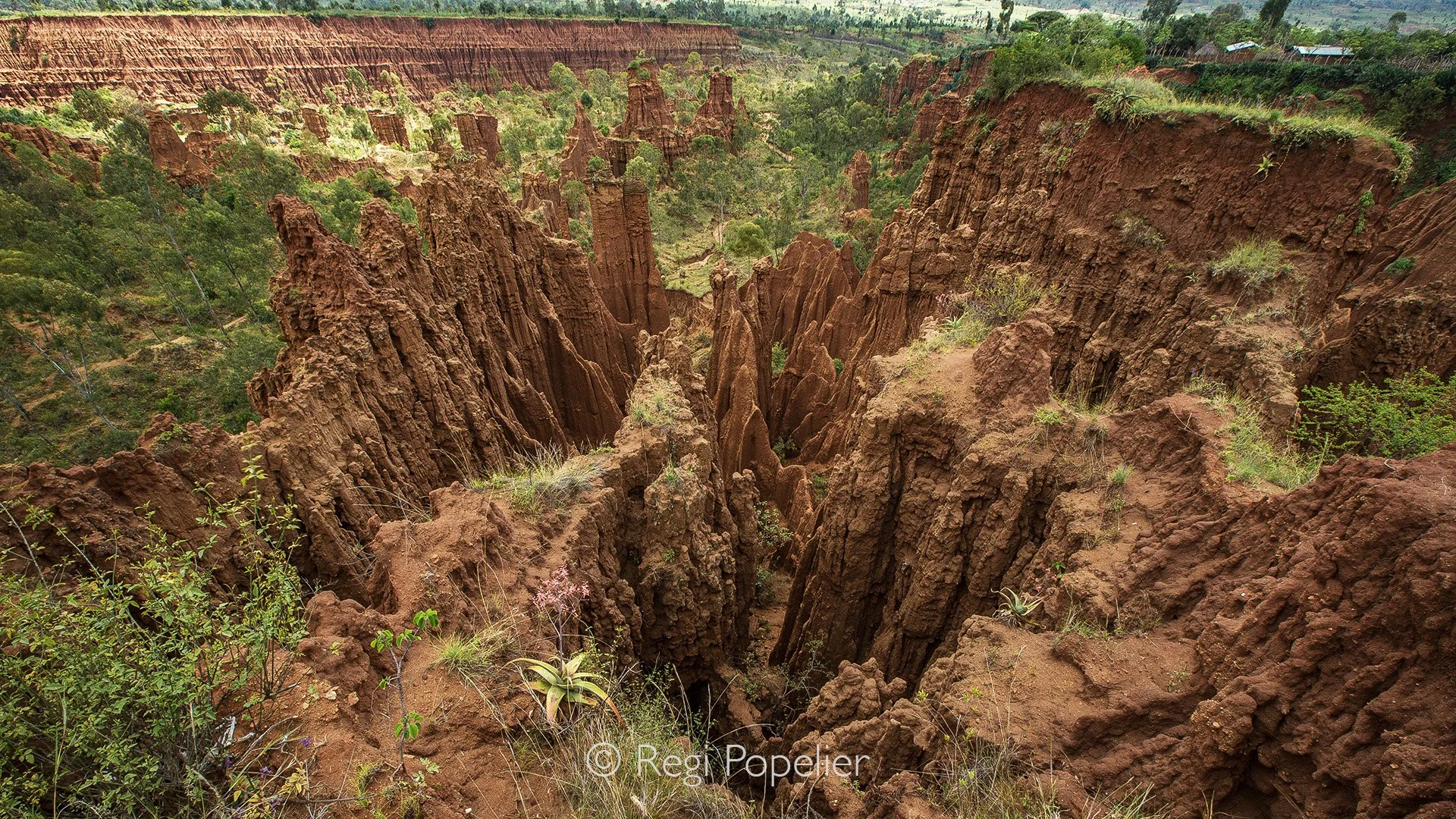
ETH028 - Bizar landscape at the Konso area.
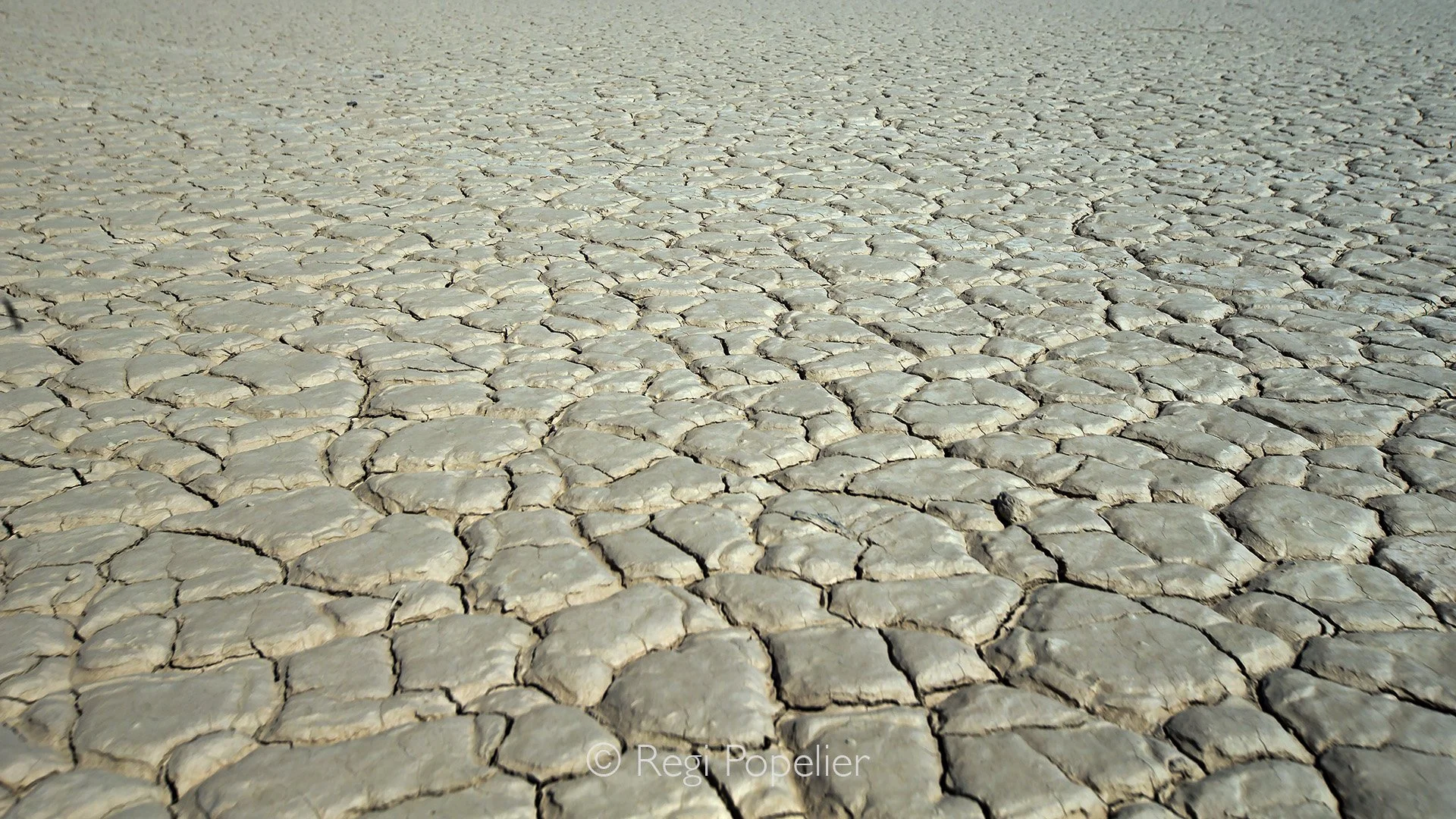
ETH029 - Part of the salt planes at Danakill depression.
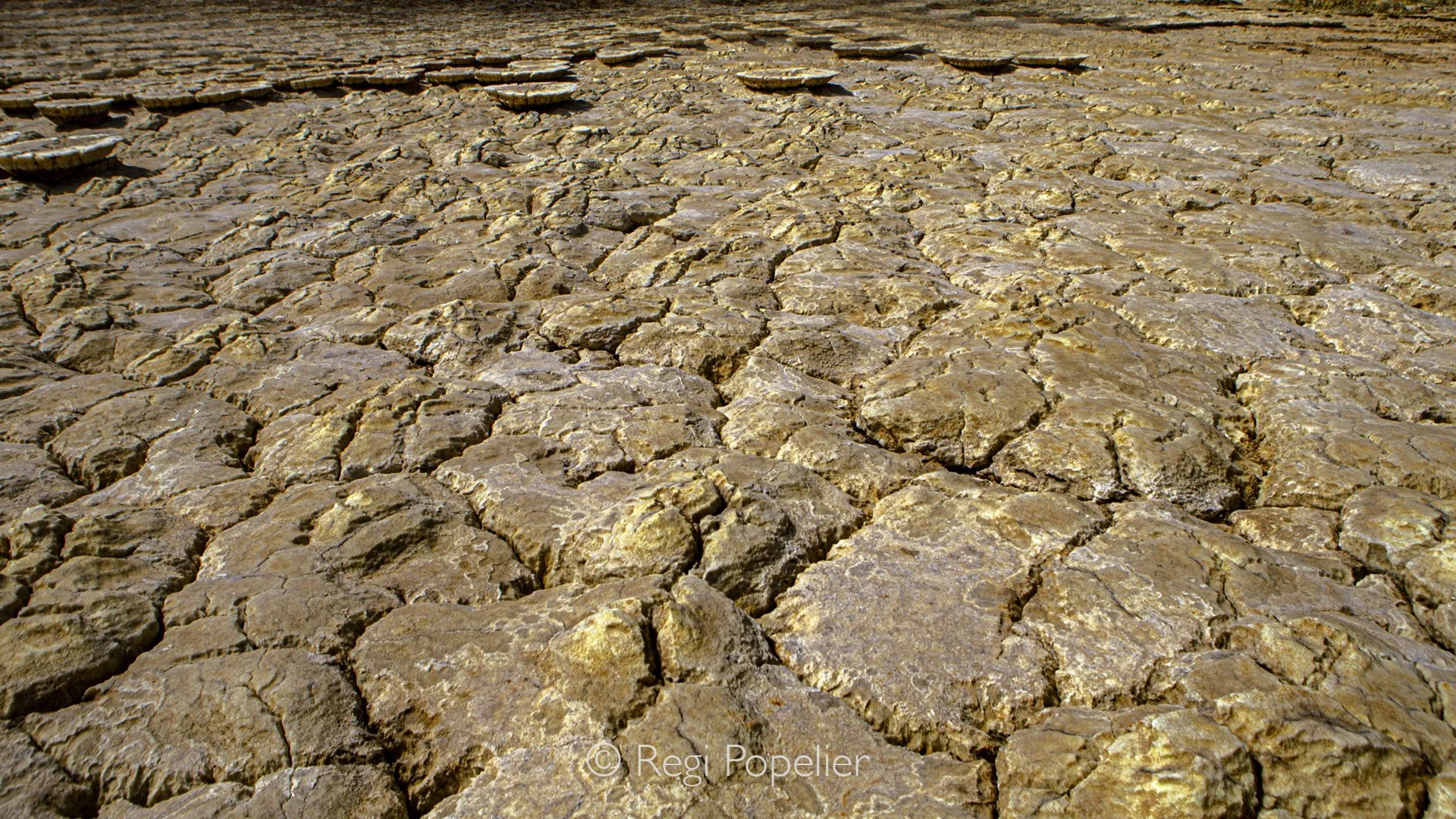
ETH030 - Area between the salt lake and Danakil depression.
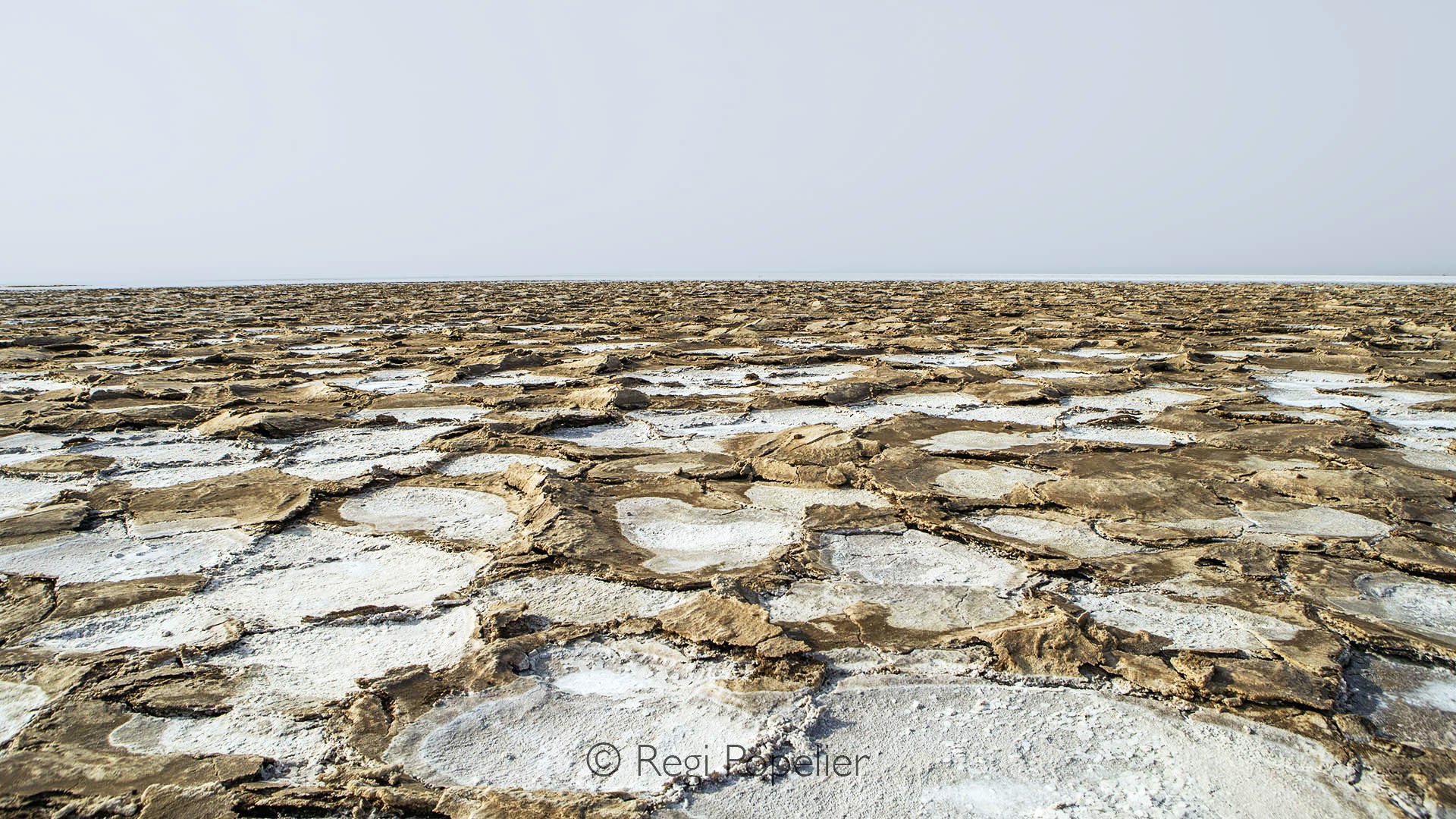
ETH031 - Strange patterns at the salt planes.
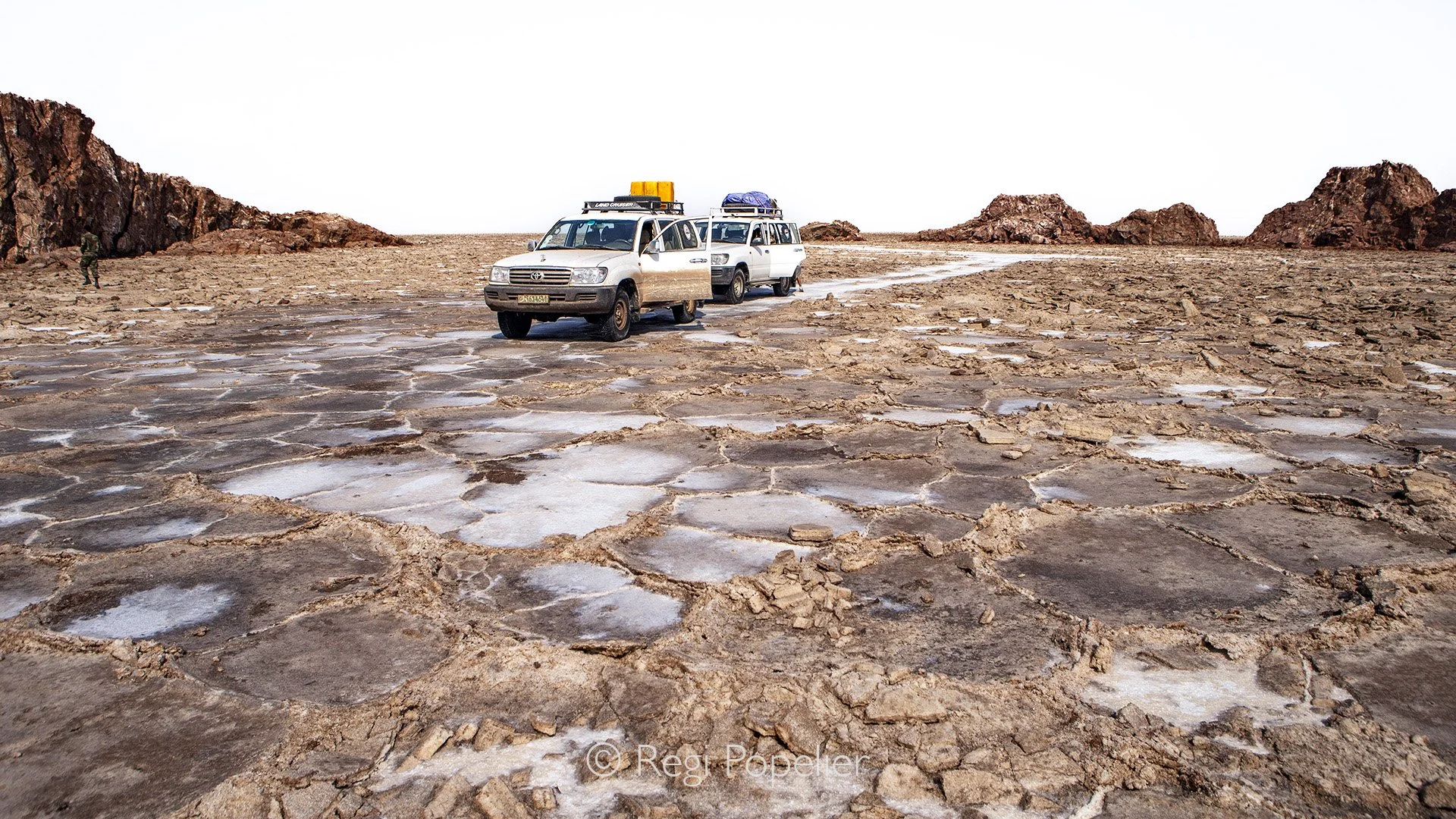
ETH032 - Enterance of the Salt planes by car.
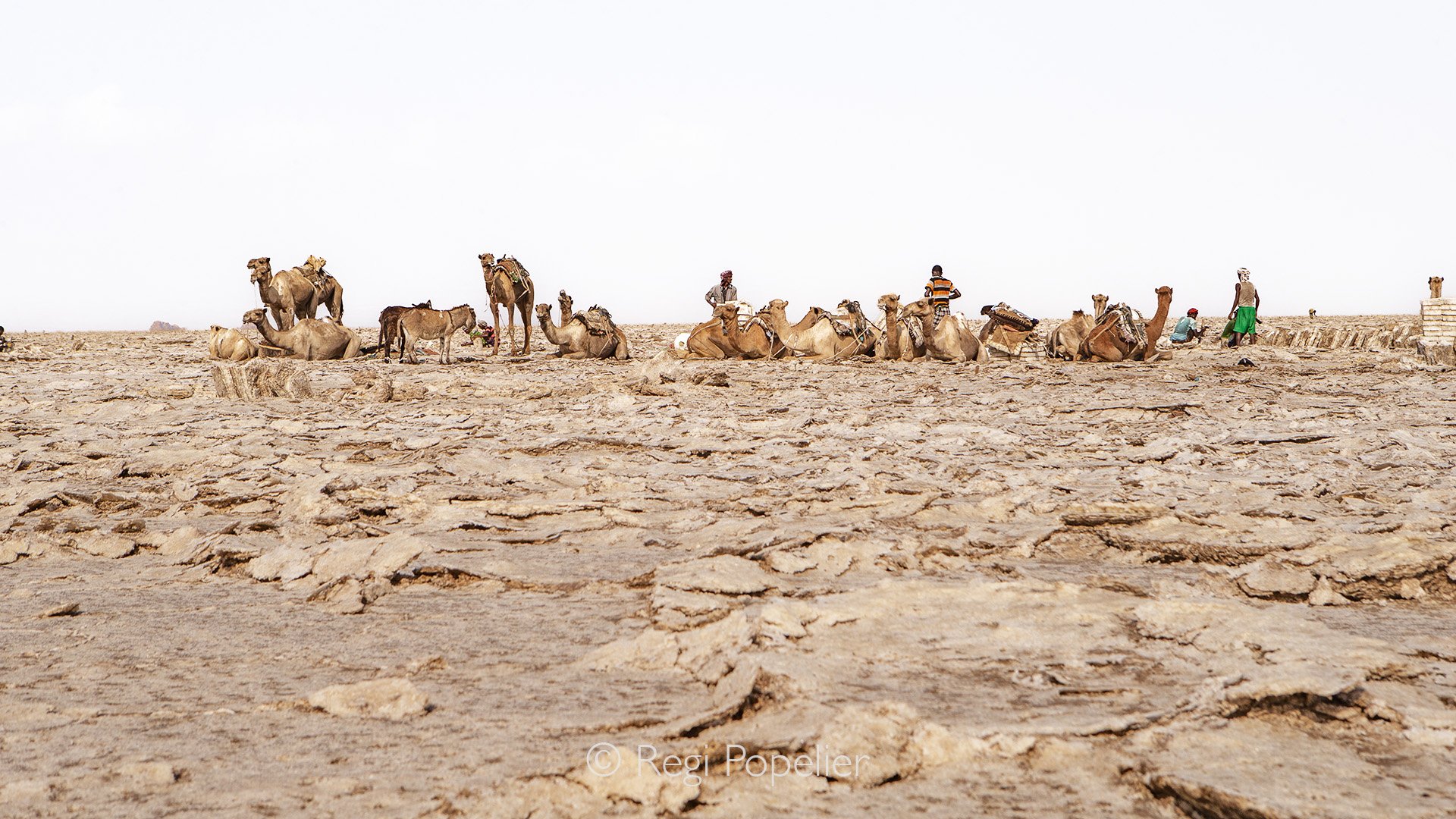
ETH033 - People start at 5 am the hard labor to avoid high temperatures who could easily raise above 50 ° celsius during the day.
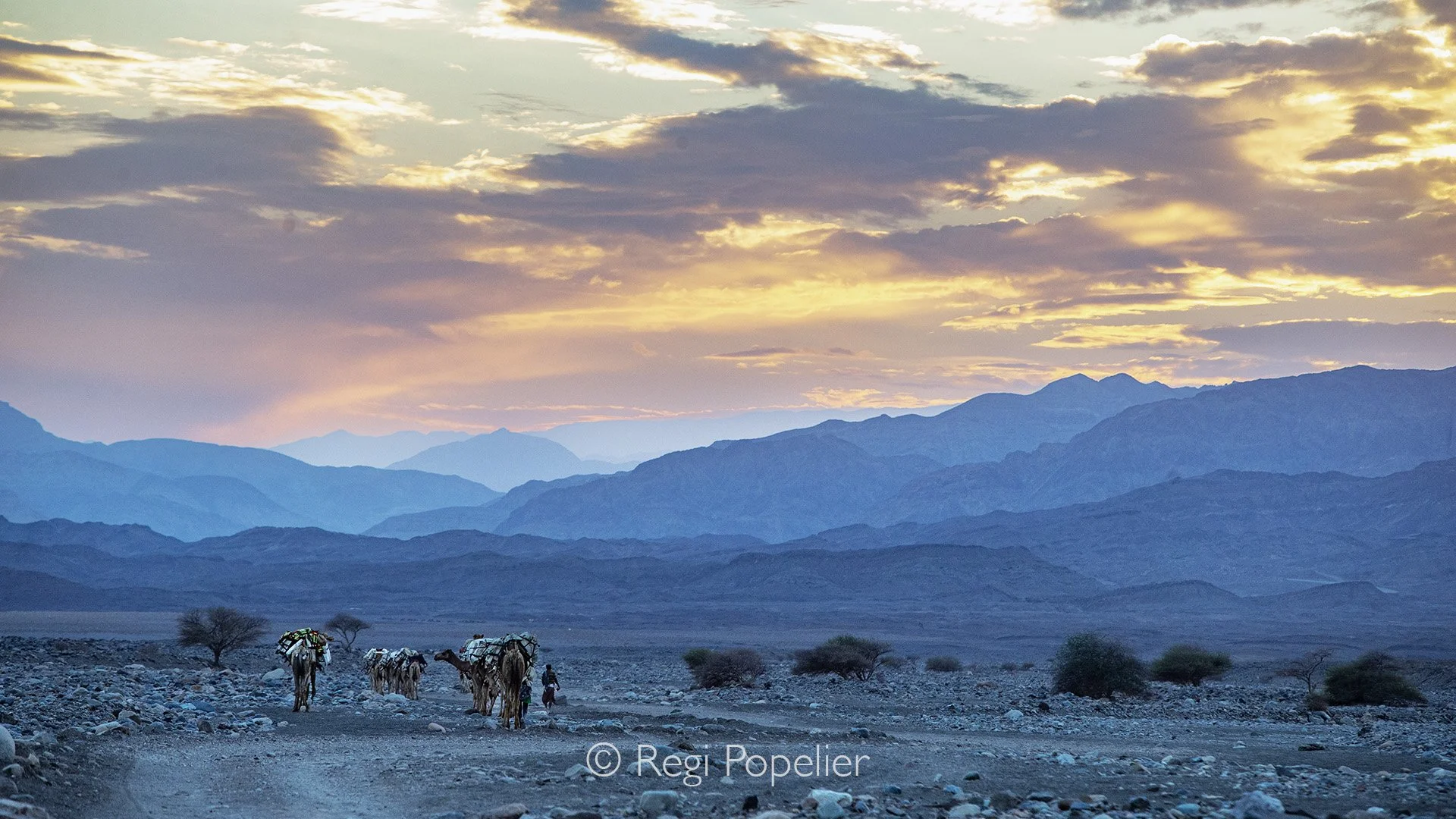
ETH034 - The long journey starts once the salt is sized and shaped in to blocks of about 30 kg.
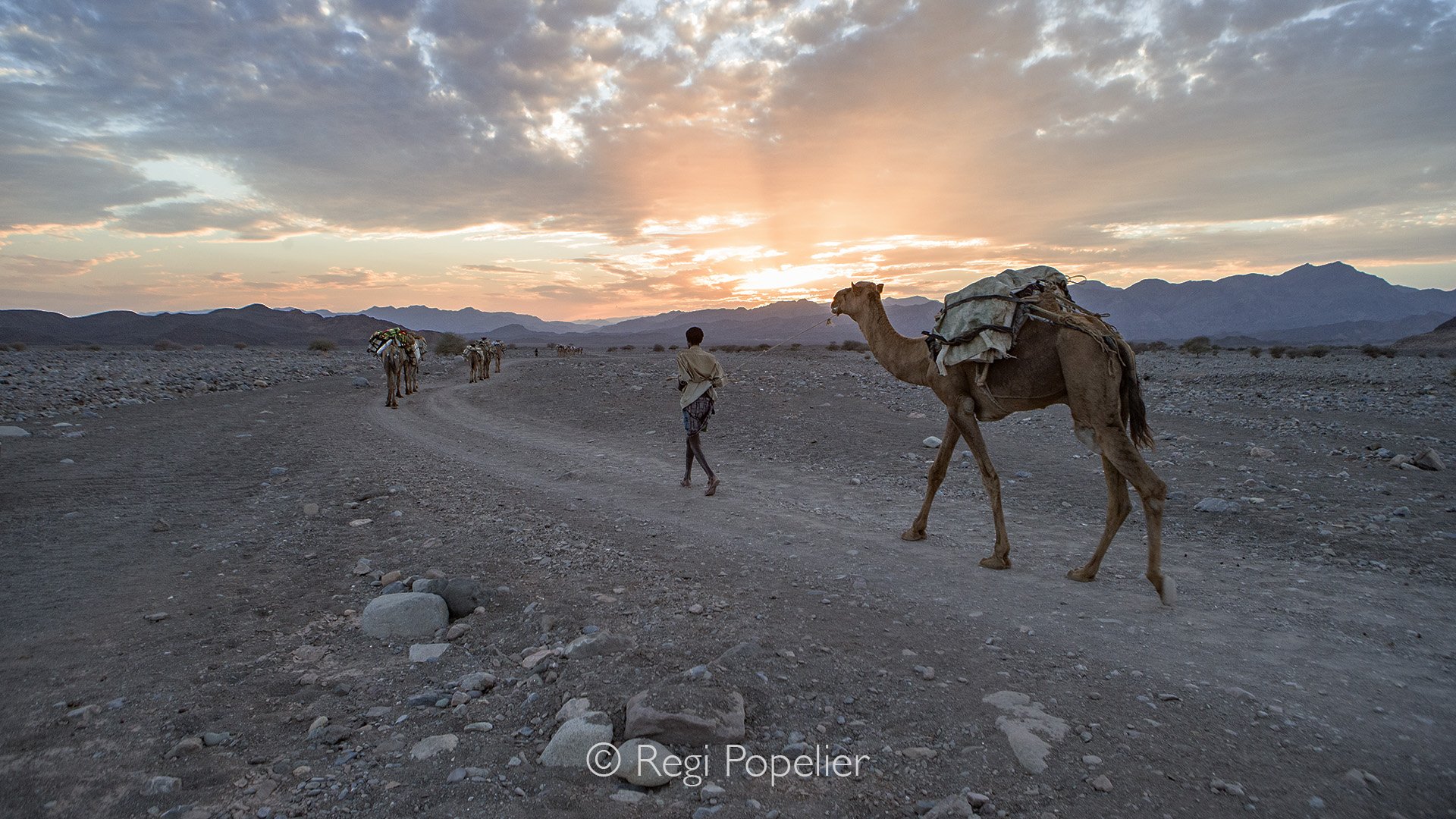
ETH035 -Caravans of camels transport salt from Dallol’s salt pans toward Mekele, enduring grueling multi day journeys across lava fields and salt flats. Battling extreme heat, each camel makes only about three round trips per season, traversing up to hundreds of kilometers before reaching destination.
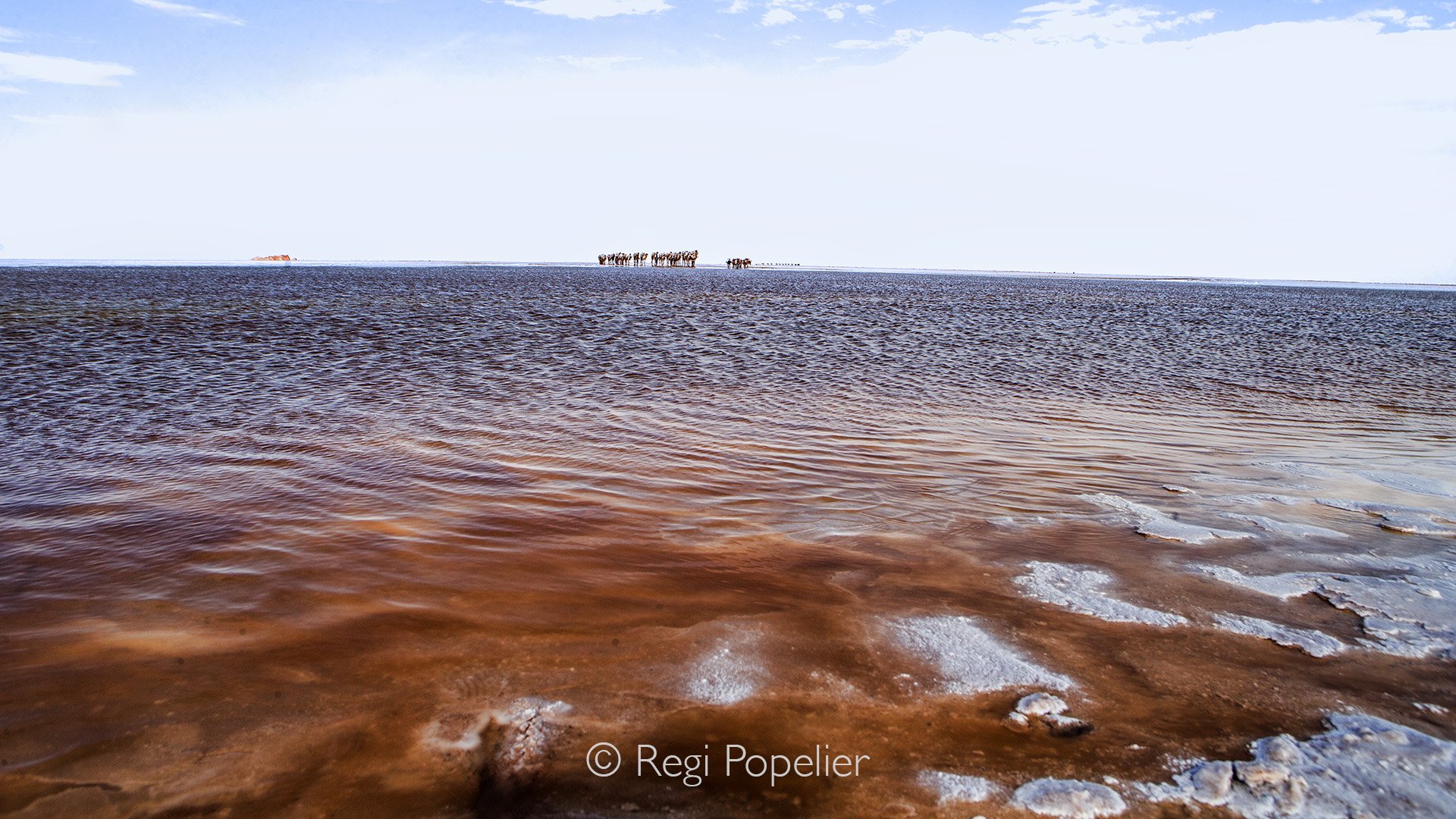
ETH036 - Contrast with the red algae and the upcoming convoy.
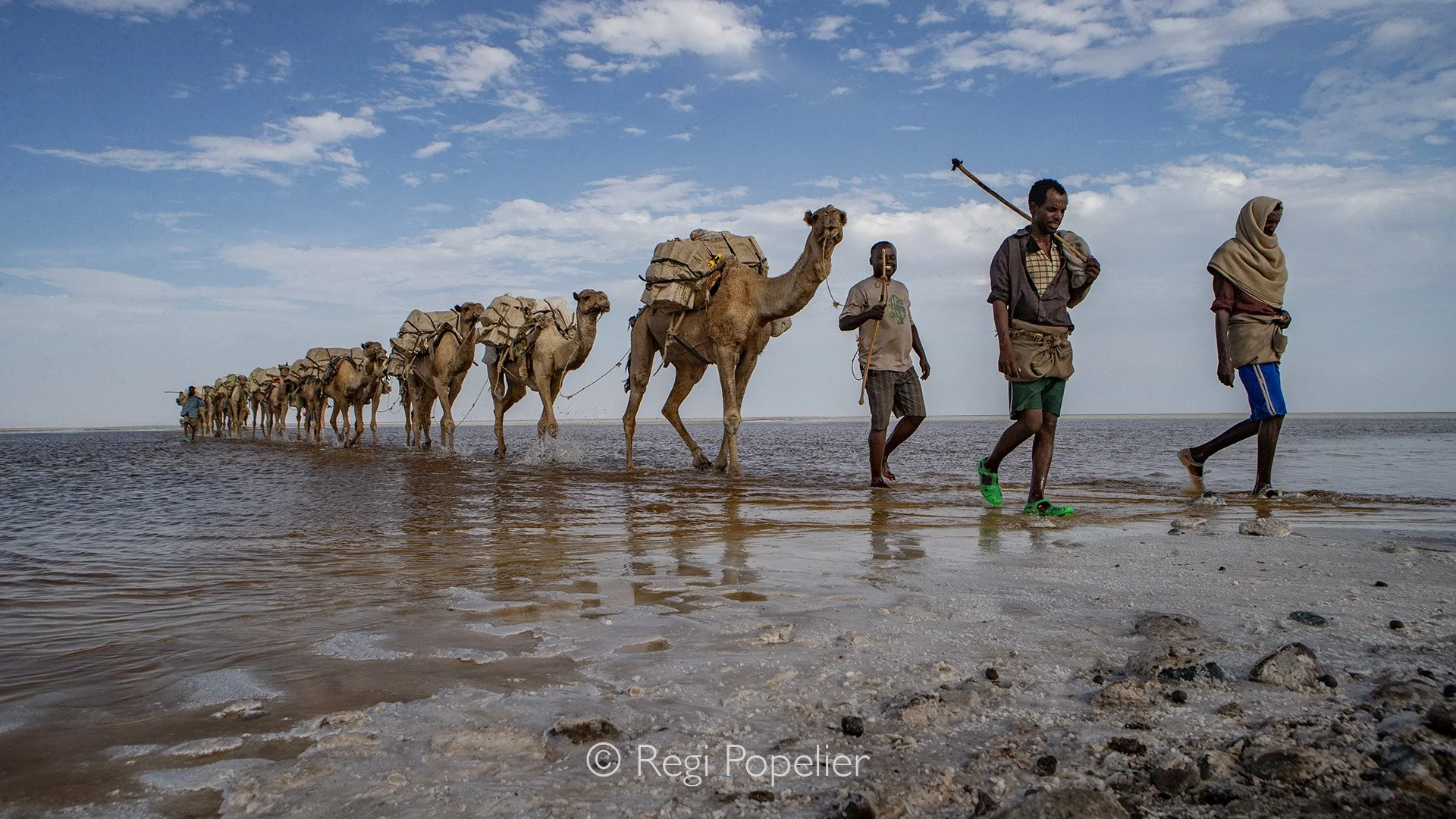
ETH037 - Although a long way to cover, the smile is ever present on the face of the people.
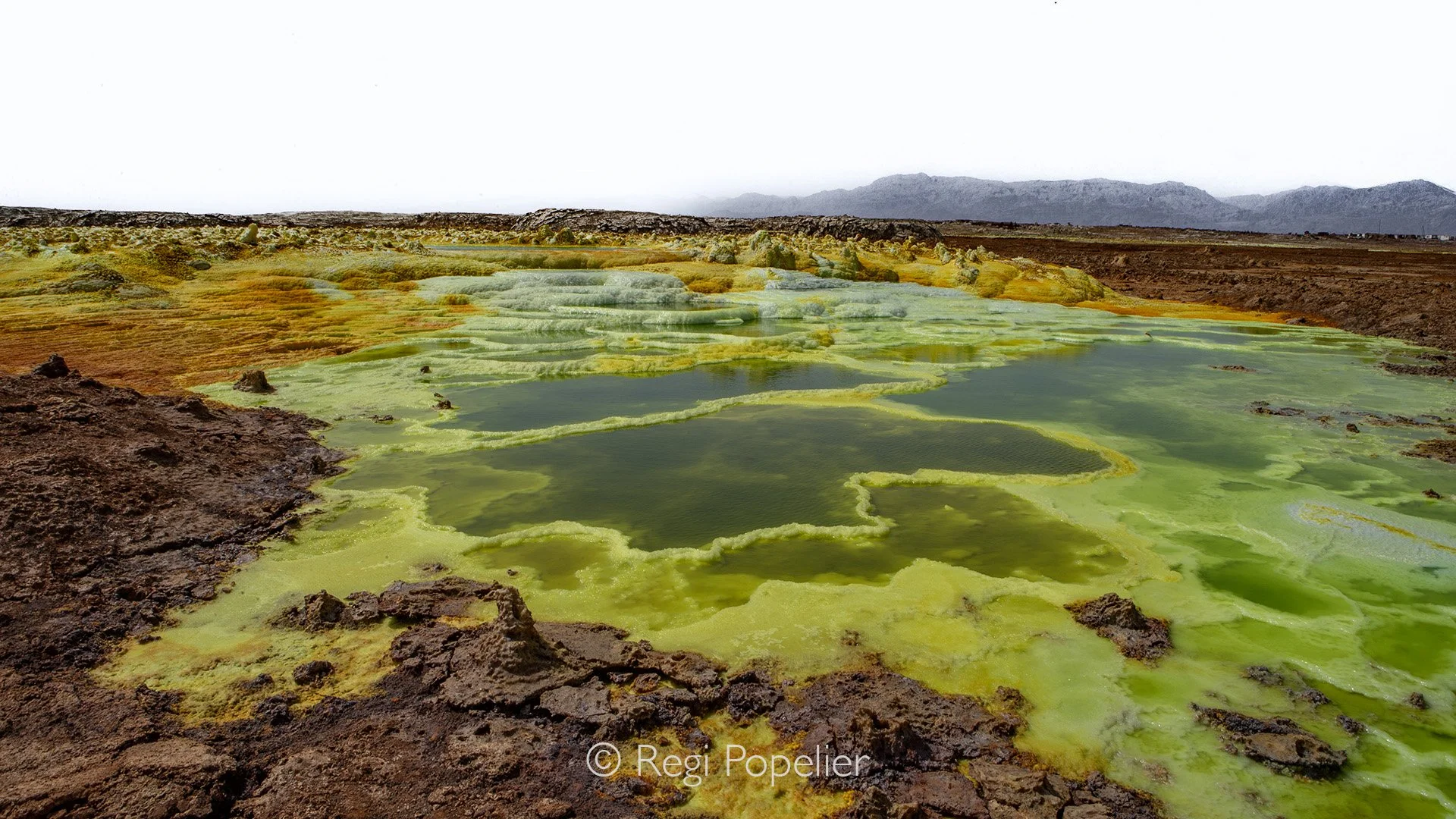
ETH038 - The Danakil Depression one of the harshest and most dangerous places on Earth. The year previous to my visit five tourists had been killed there. A permit was required and I had four armed soldiers as security, I was allowed only two hours in this extreme but amazing landscape.
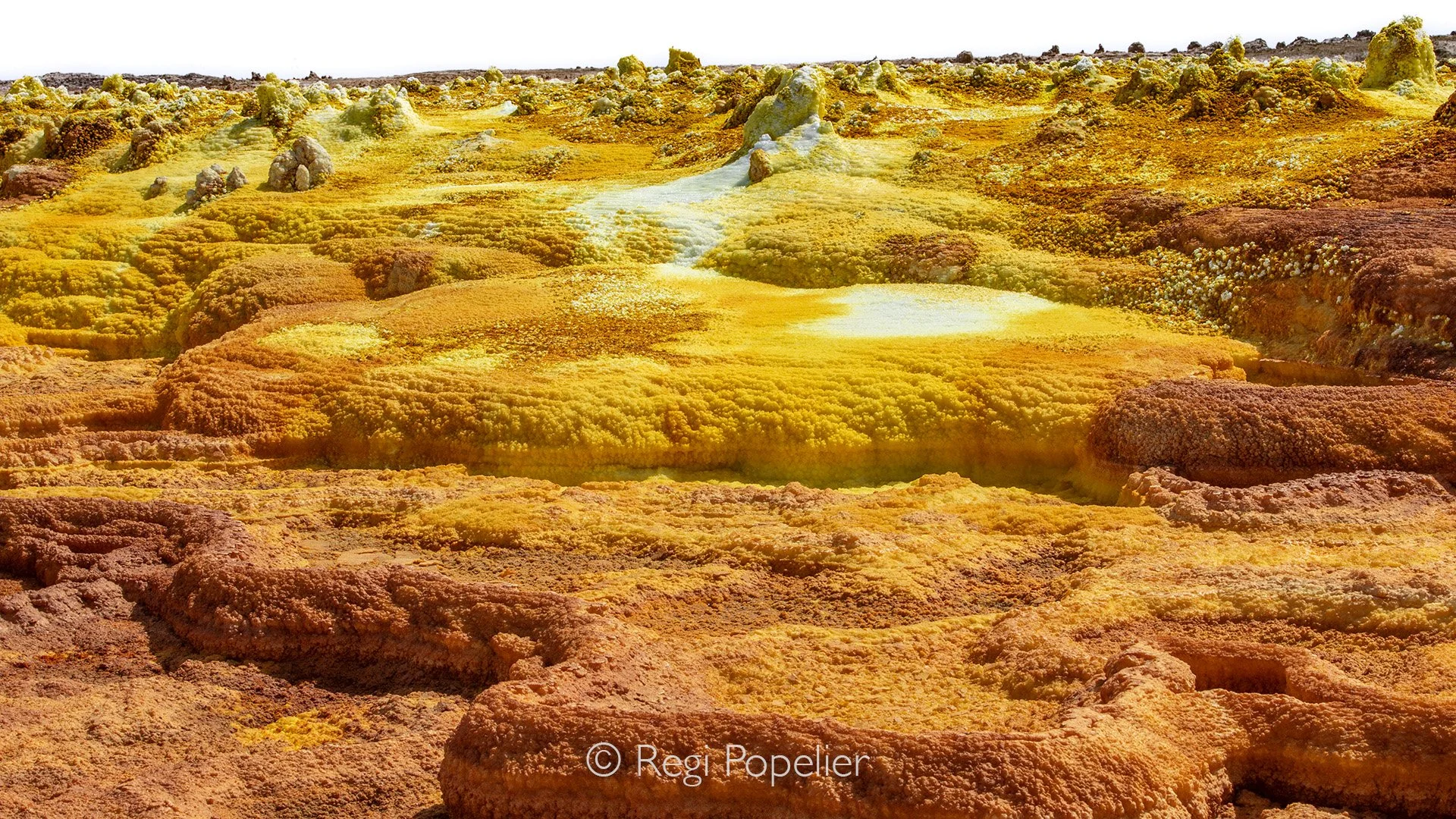
ETH039 - Not only one of the hottest (when I was there temp went to 54° celsius). It is also one of the lowest places on earth 125 m below sea level.
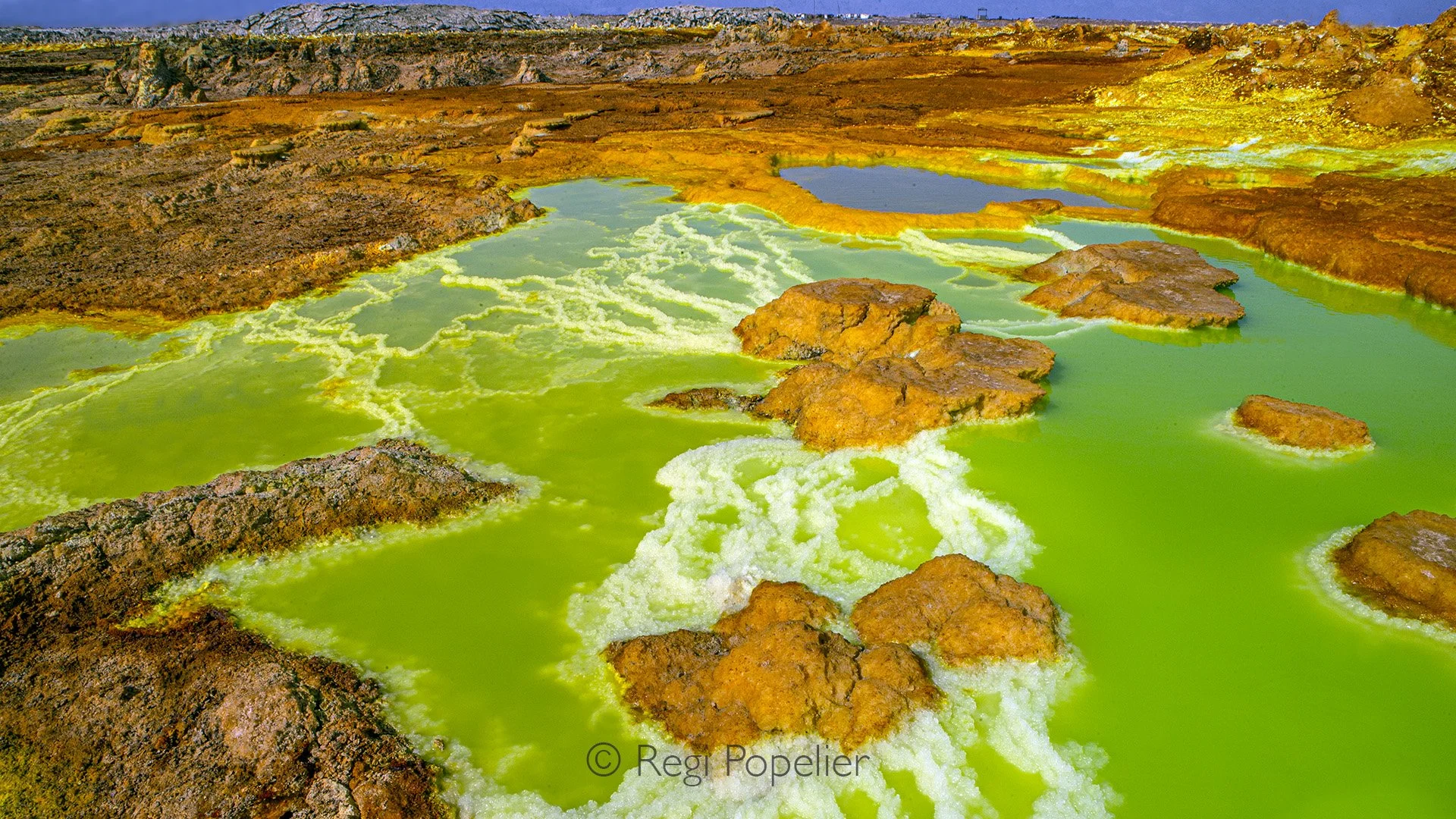
ETH040 - The remarkable colors of the salt minerals.
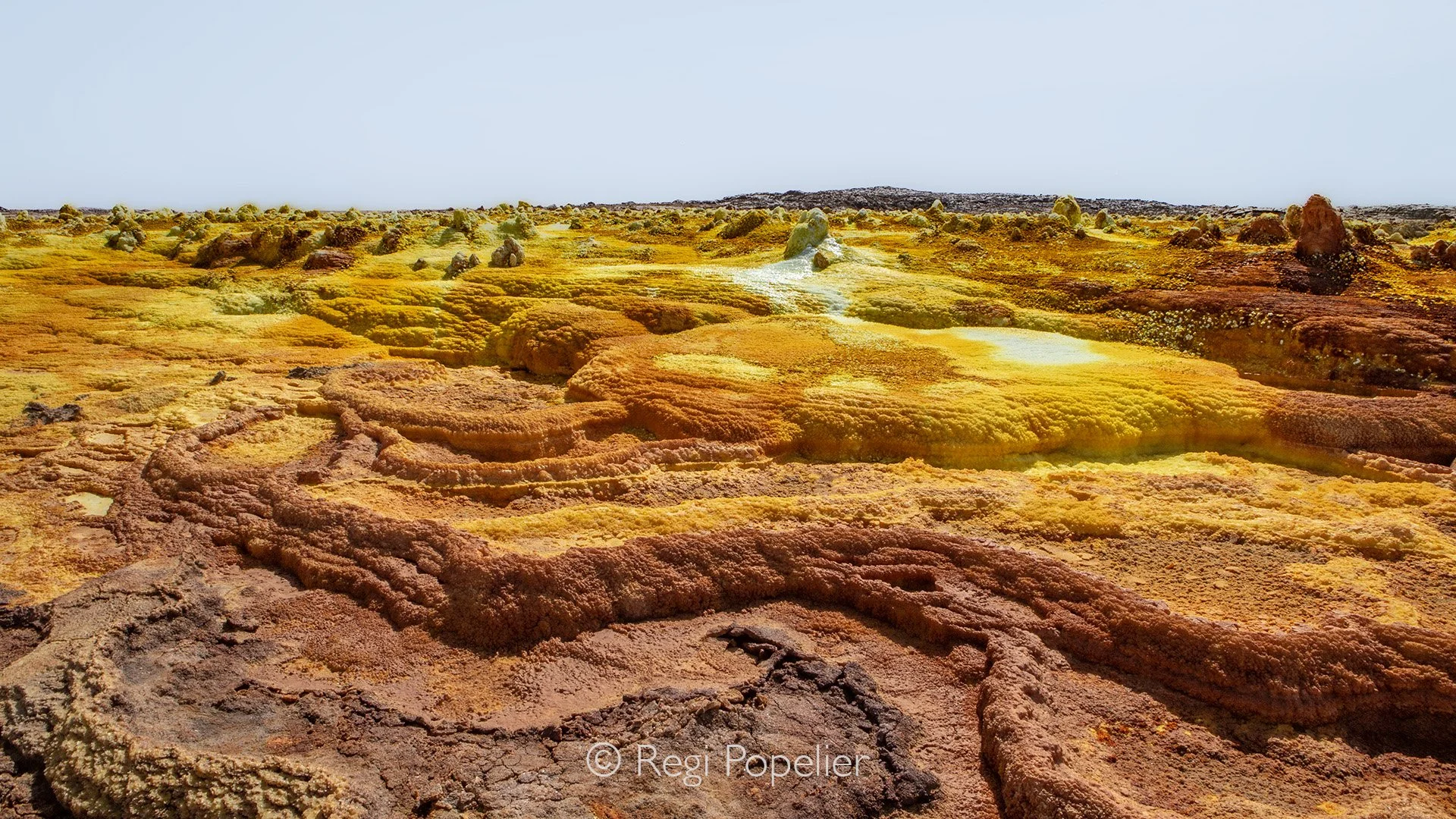
ETH041 - Beautiful winding shapes.
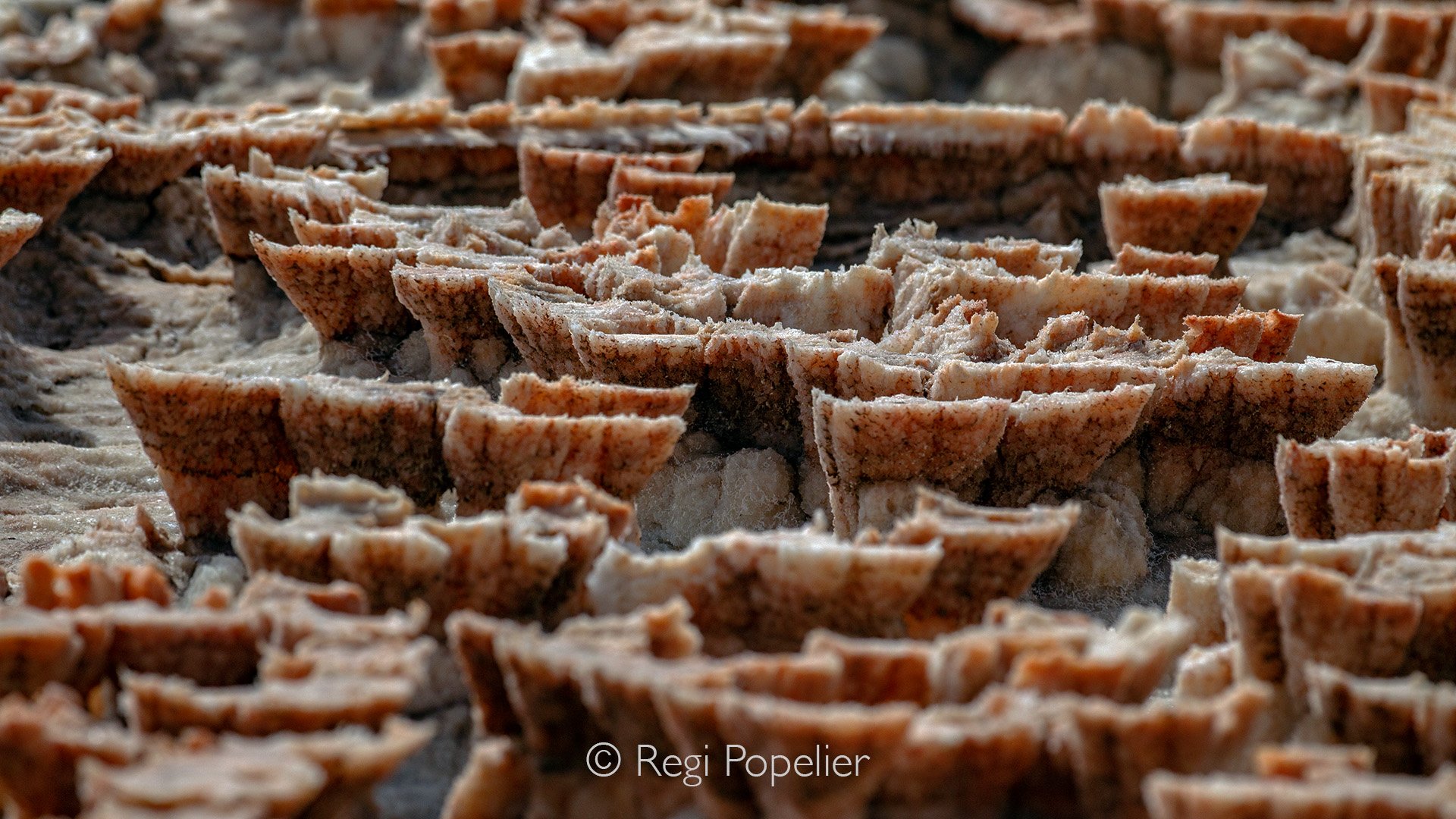
ETH042 - Detail of the salt layers , as if it were corals.
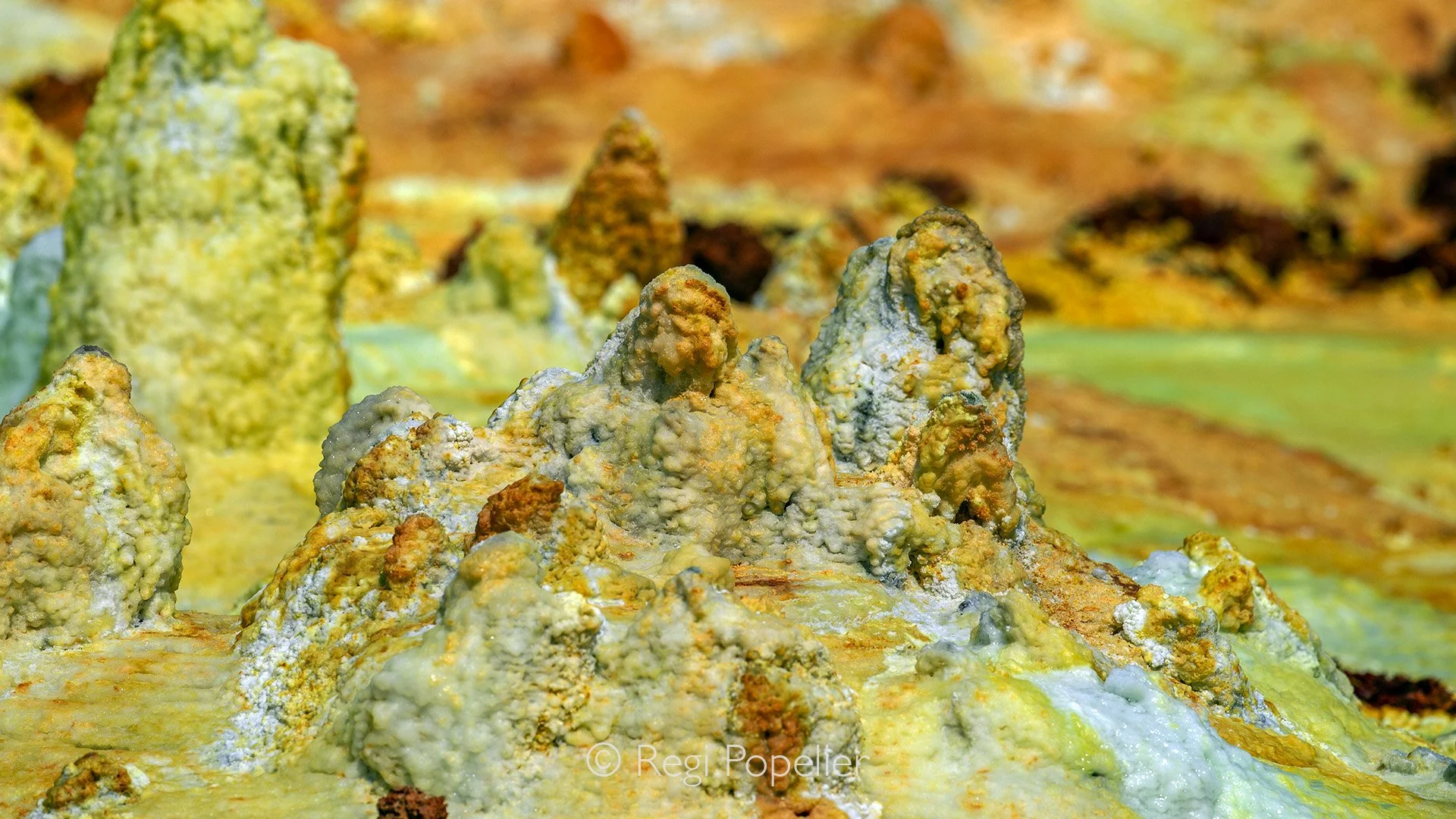
ETH043 - A symphony of colors In a toxic environment.
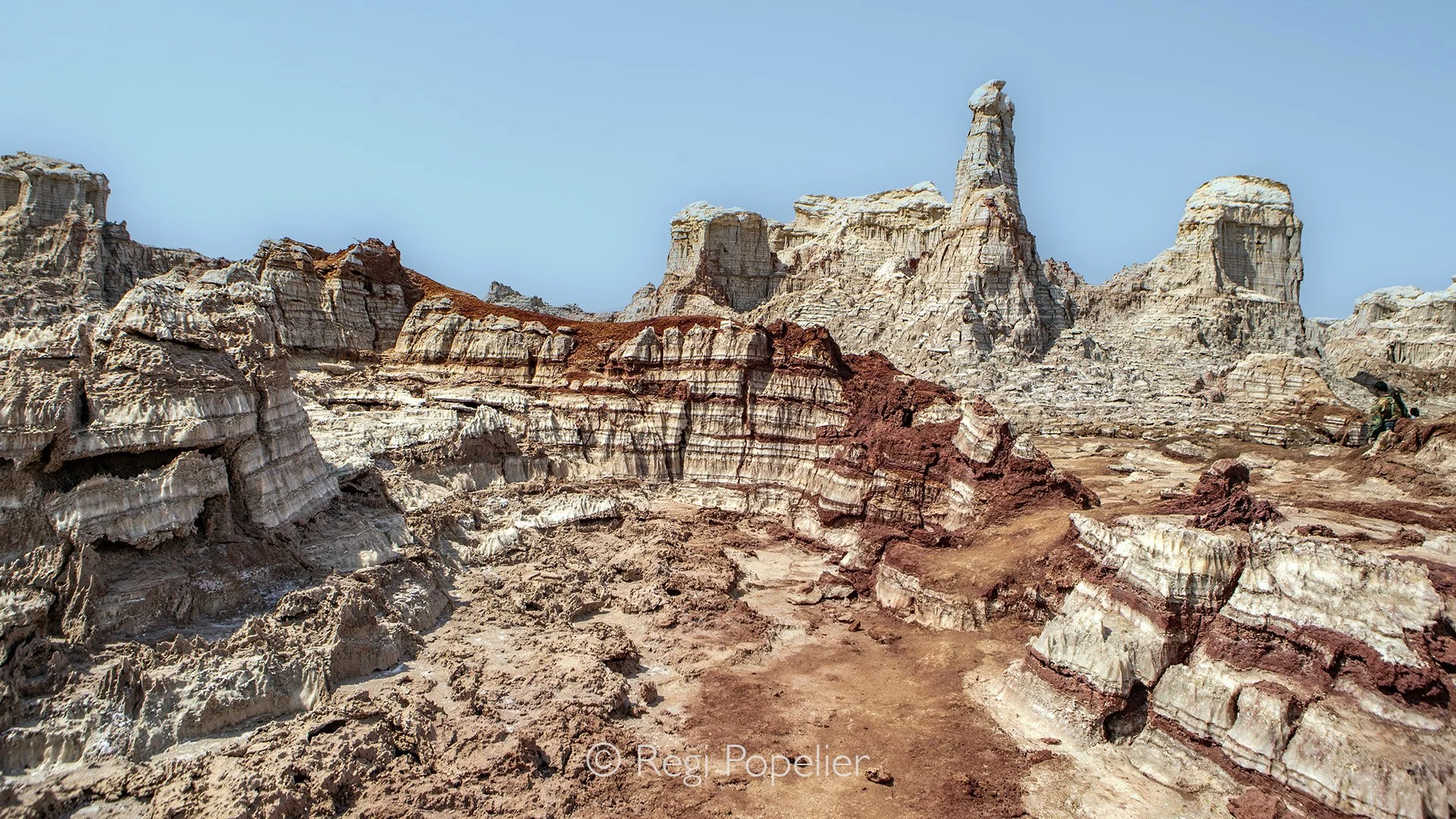
ETH044 - Bizarre rocky landscape with petrified salt layers at the edge of the Lake Karum, Danakil Valley.
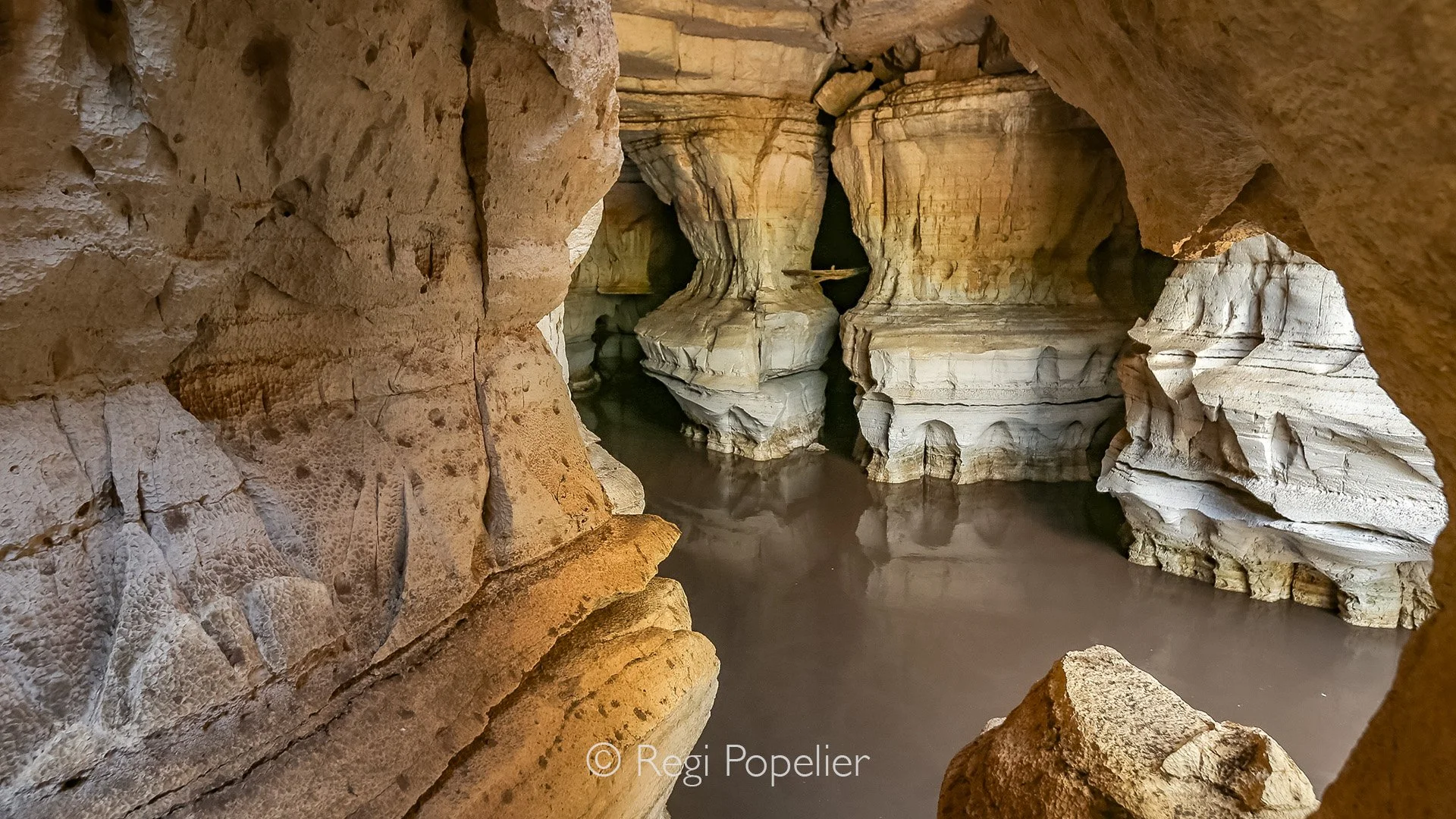
ETH045 - Caves of Sof Omar.
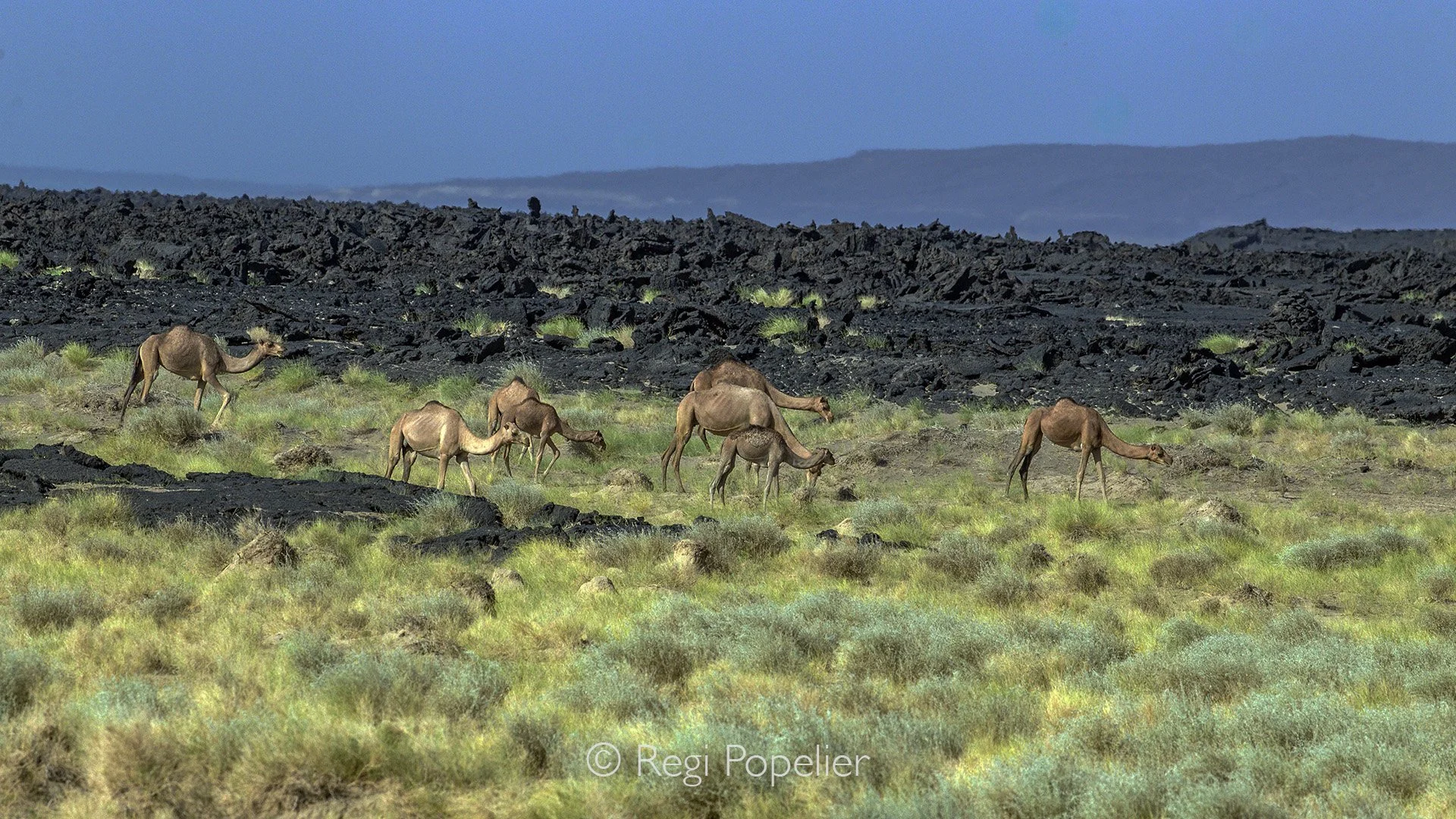
ETH046 - On the walk to Erta Ale lots of camels feed on the fertile grounds.
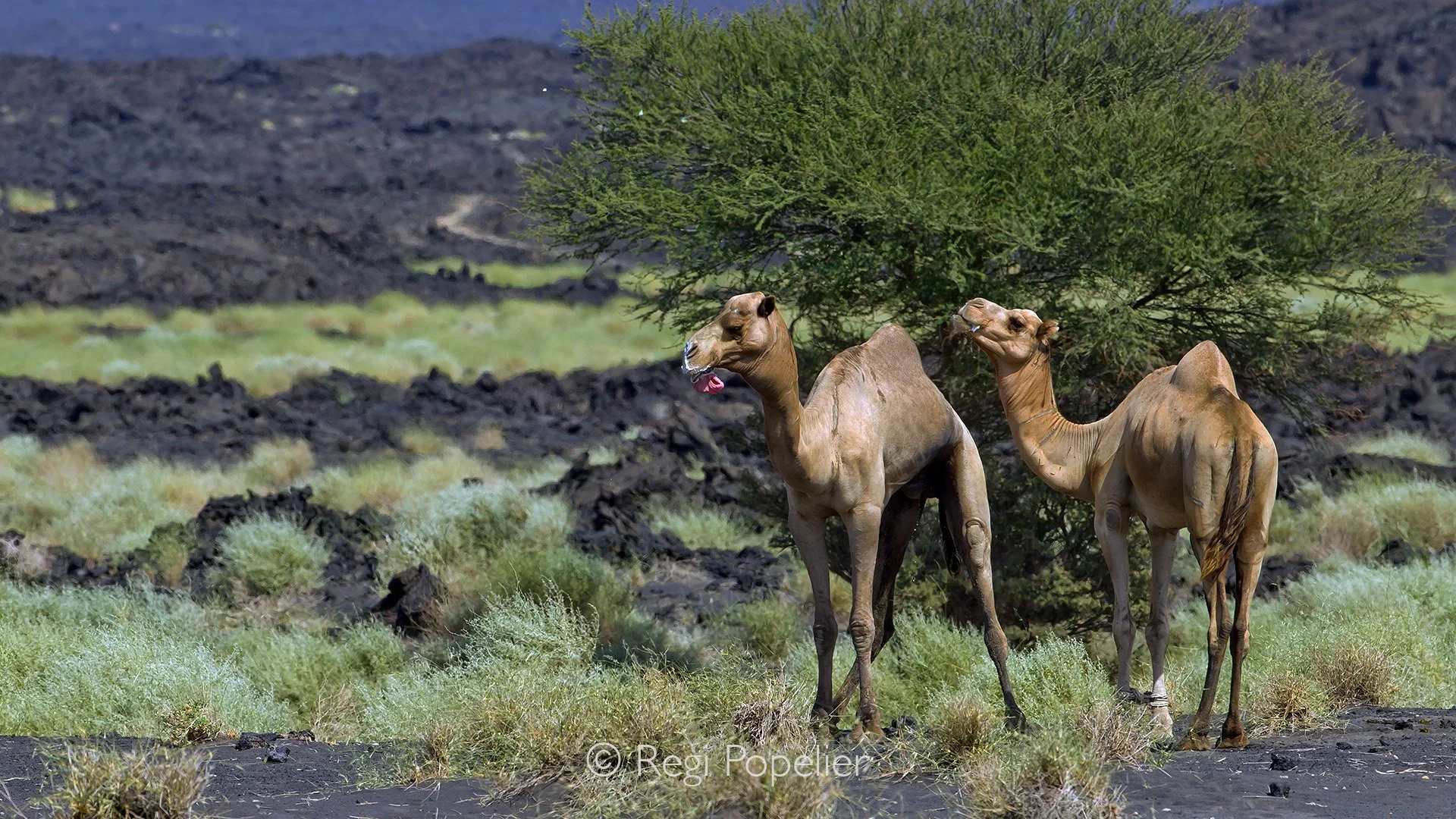
ETH047 - The love play of camels.
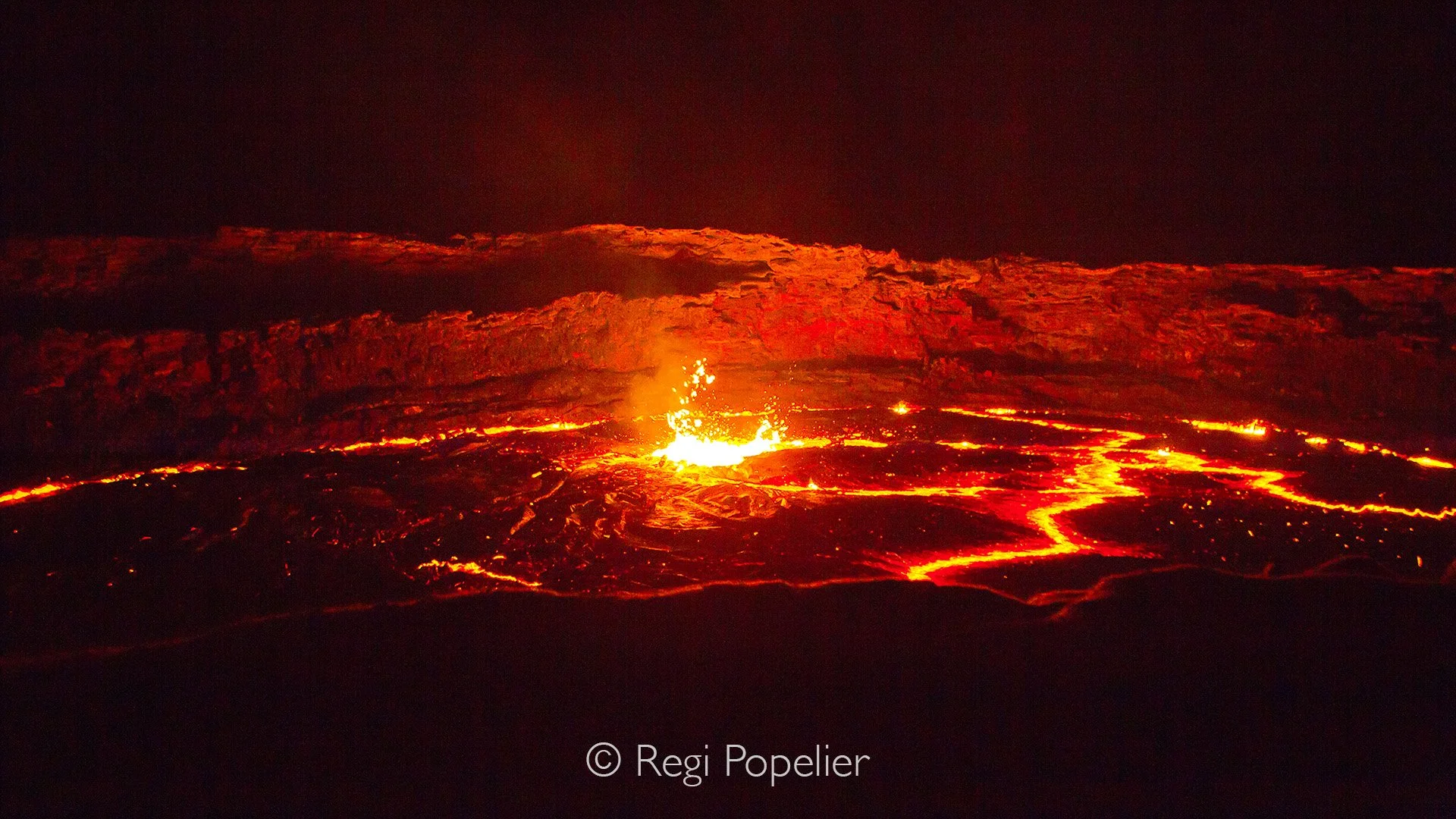
ETH048 - Active Erta Ale at midnight.
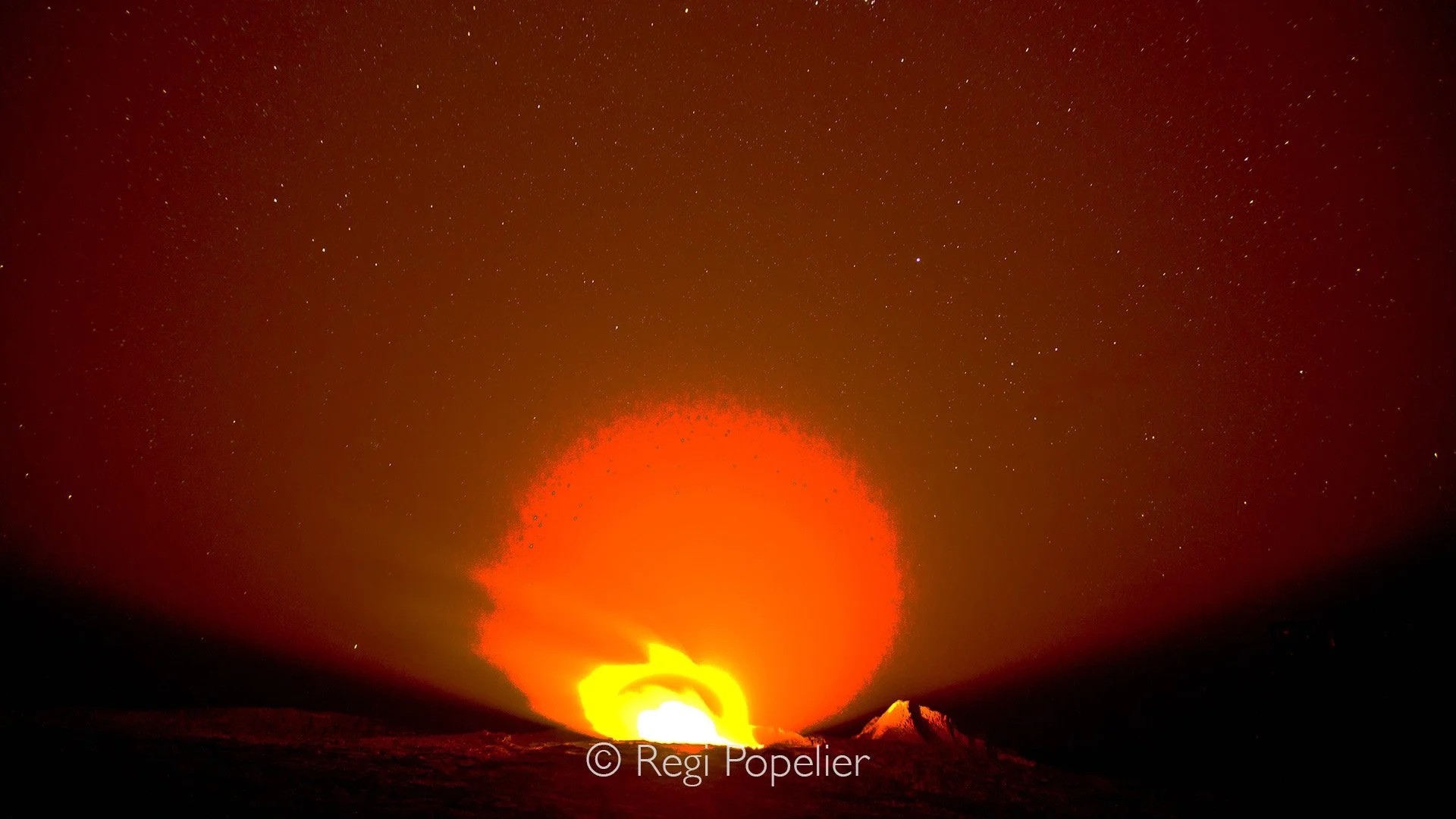
ETH049 - Before I went to sleep on the rim of the crater , still some photography to be made.
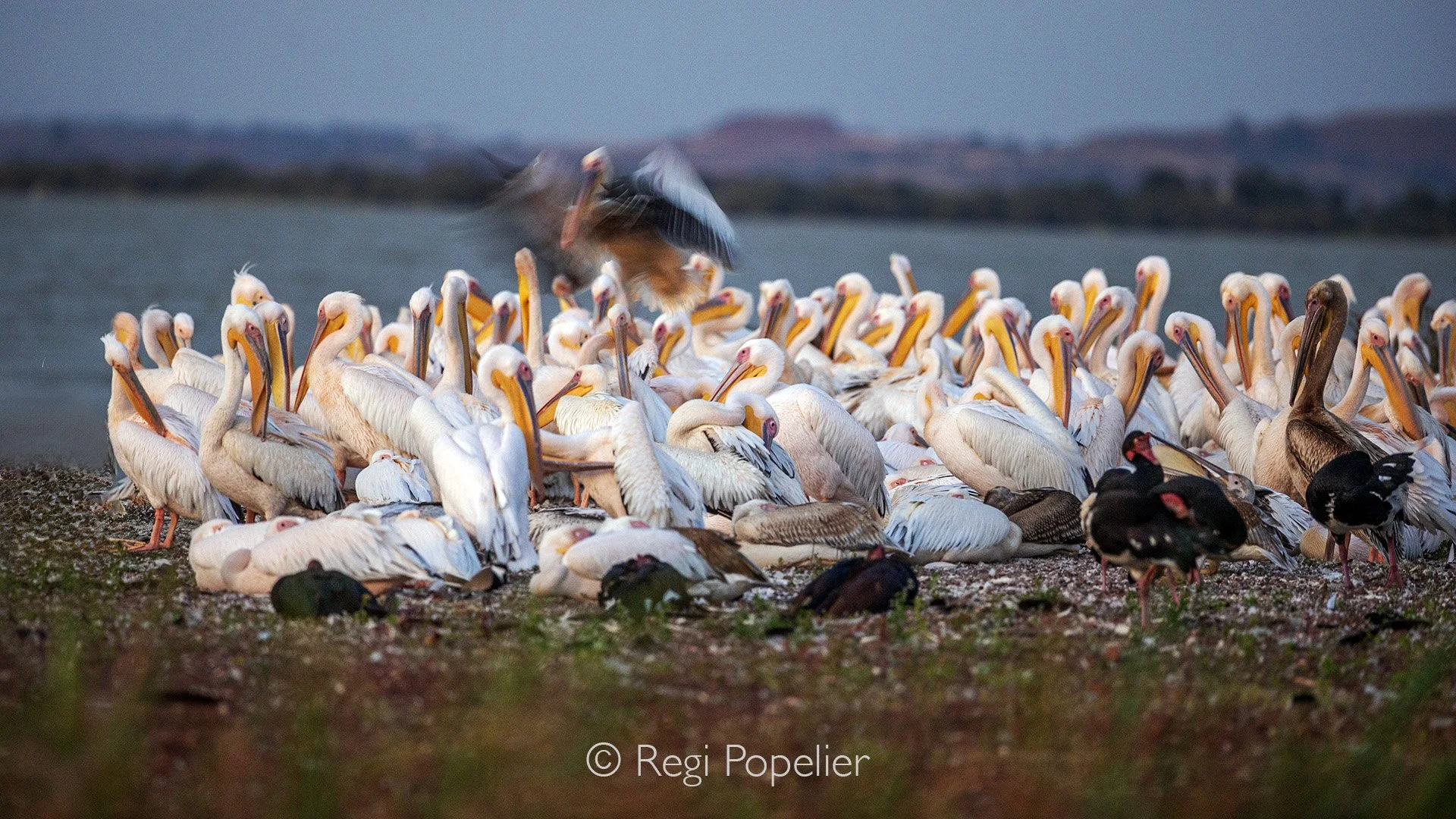
ETH050 - Lake Tana, Ethiopia’s largest lake, source of the Blue Nile, and a UNESCO Biosphere Reserve, celebrated for its rich ecology, culture, history, and iconic Great White Pelicans.
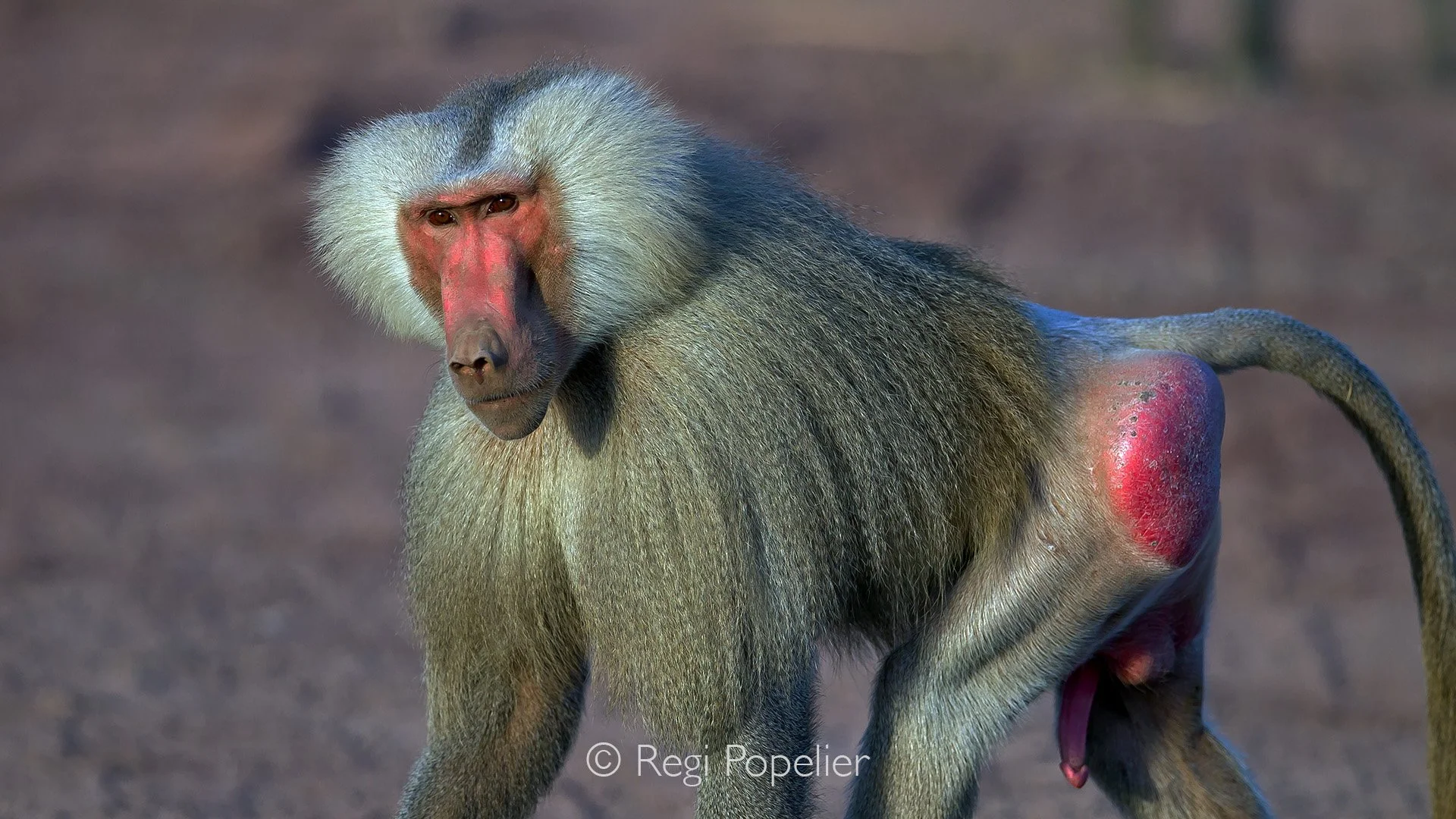
ETH051 - Hamadyras baboon male, they have a strong red hind when exited and are quite territorial.
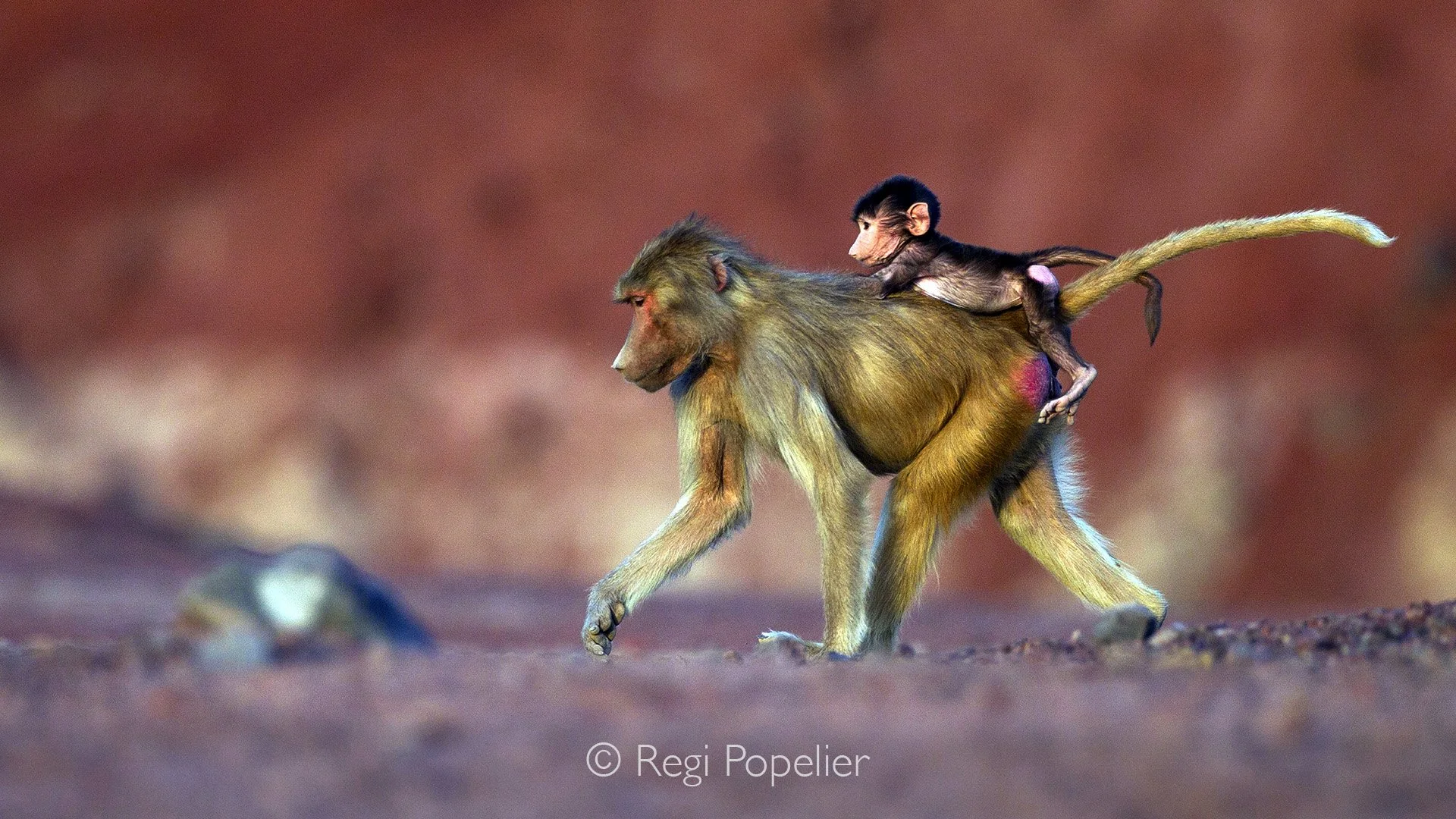
ETH052 - On the walk with her body clinging baby.
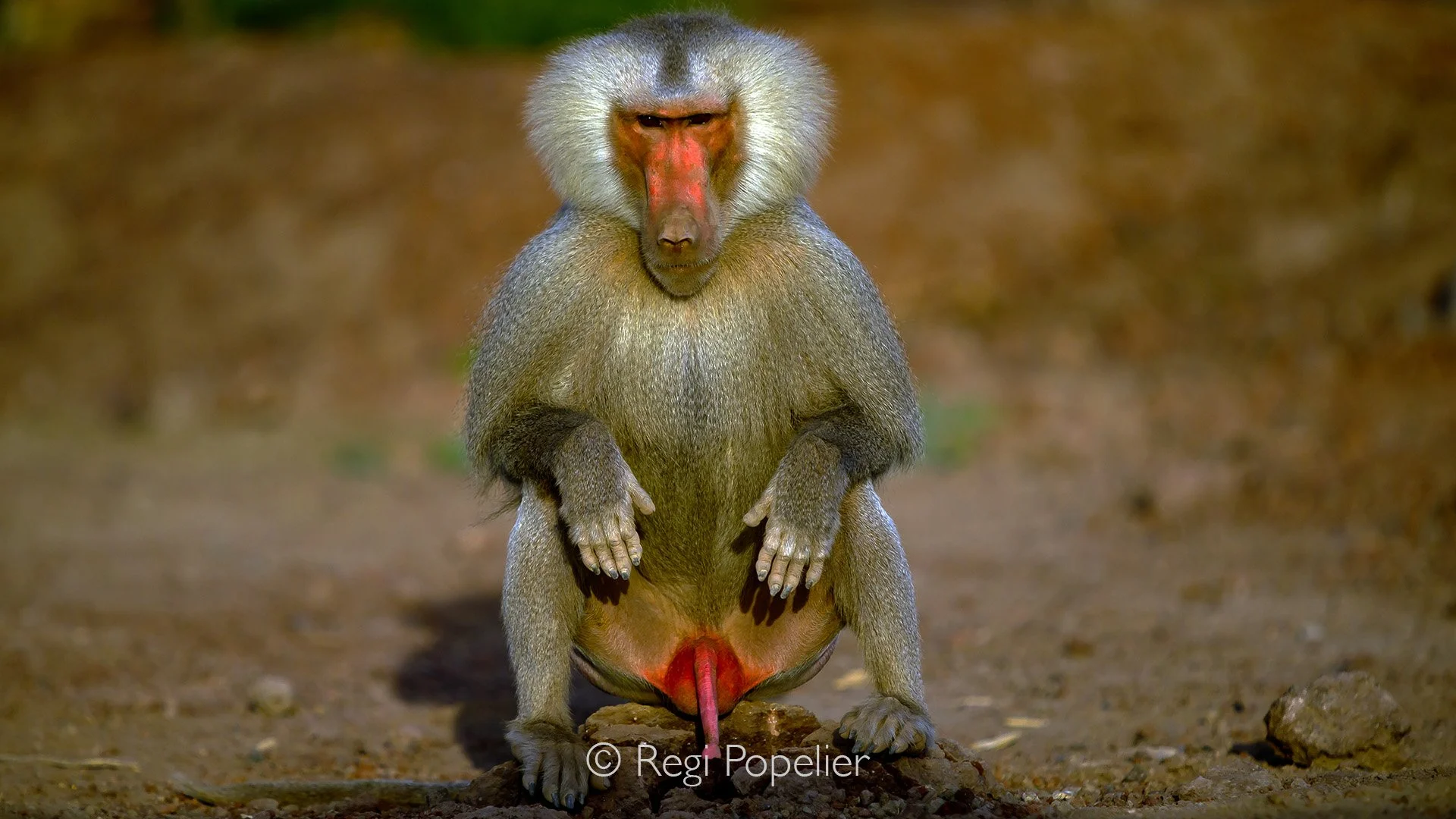
ETH053 - Male in full ornate showing he and only he is the master of this area.
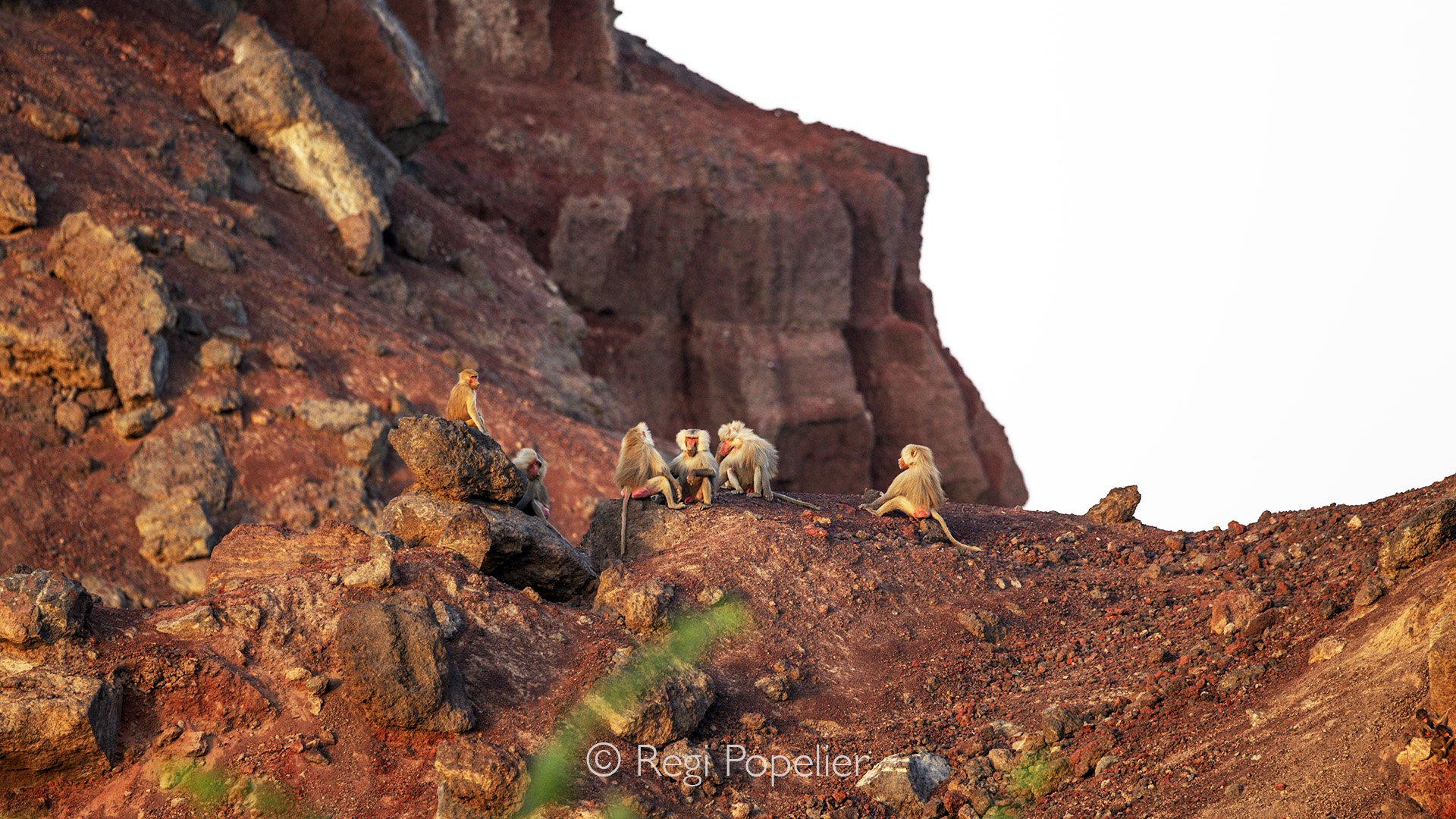
ETH054 - Male hamadryas on the way to their sleeping places high in the mountains near Awash NP.
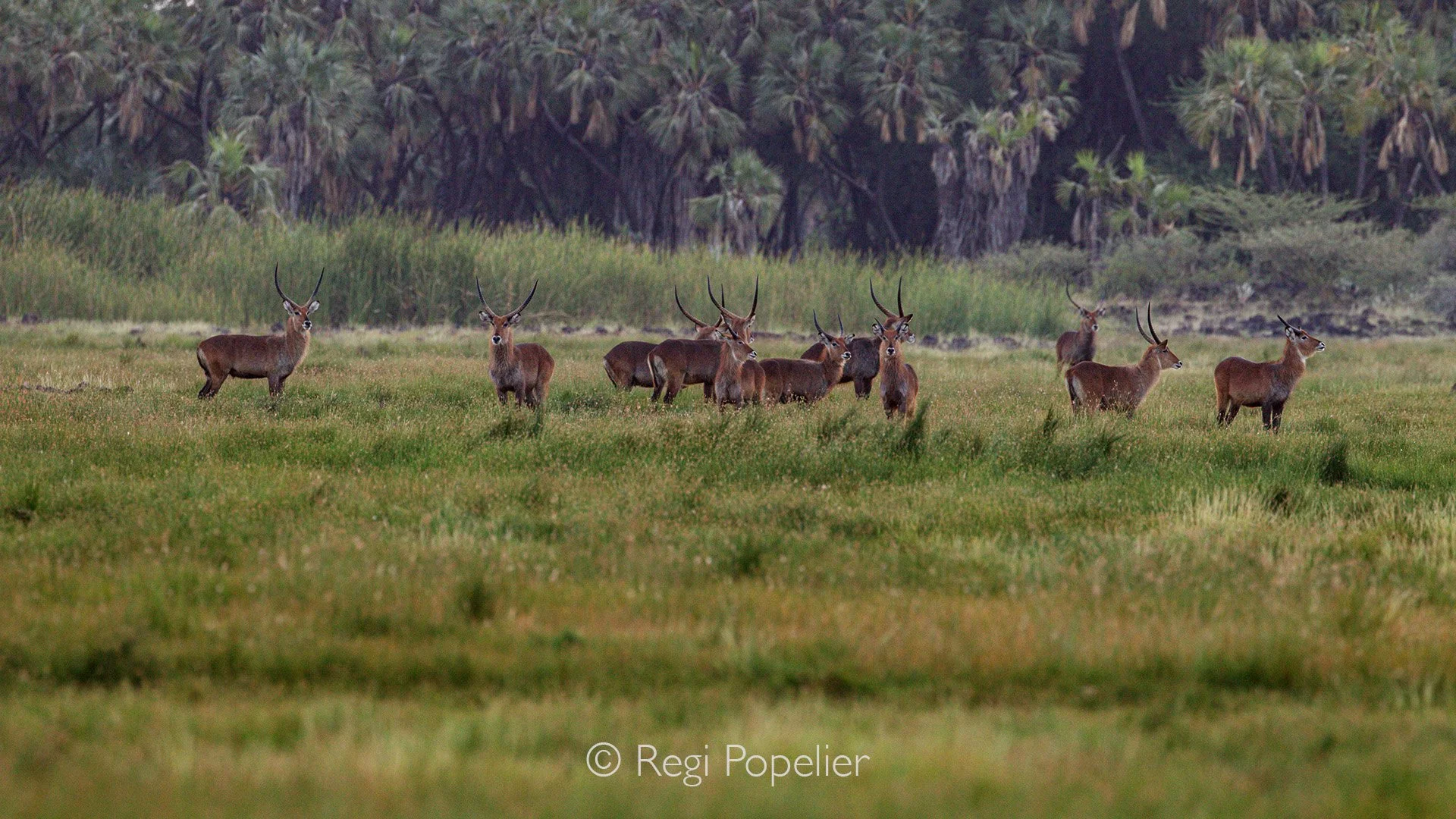
ETH055 - Group of waterbuck in front of a nice backdrop in awash NP.
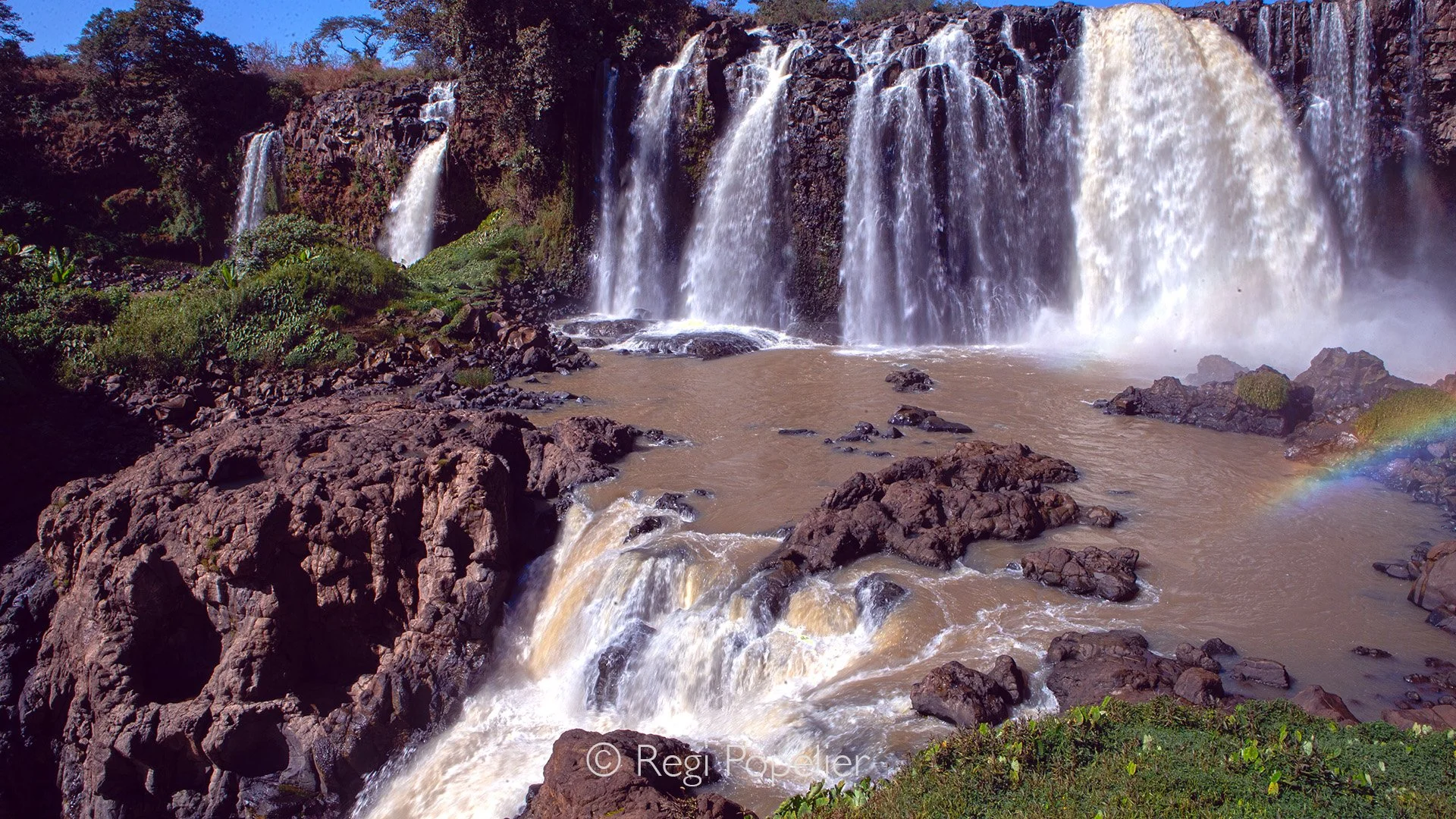
ETH056 - From a photographic point of view, the Blue Nile Waterfalls offer dramatic motion, misty atmosphere, and powerful contrasts, rushing white water against dark basalt cliffs, framed by rainbows, lush greenery, and ever changing light that makes each shot dynamic and timeless.
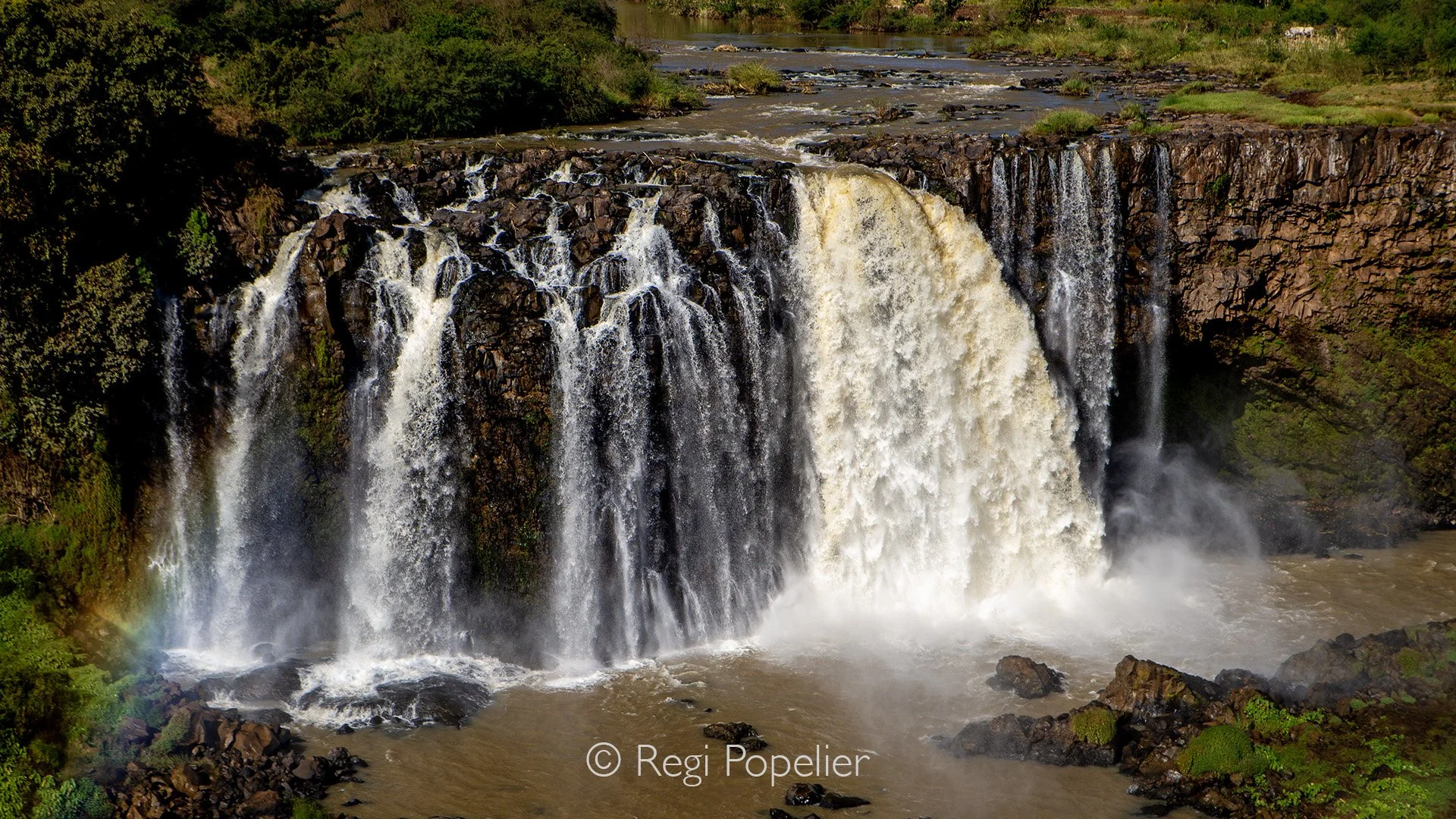
ETH057 - The falls of the Blue Nile from short distance and other angle.
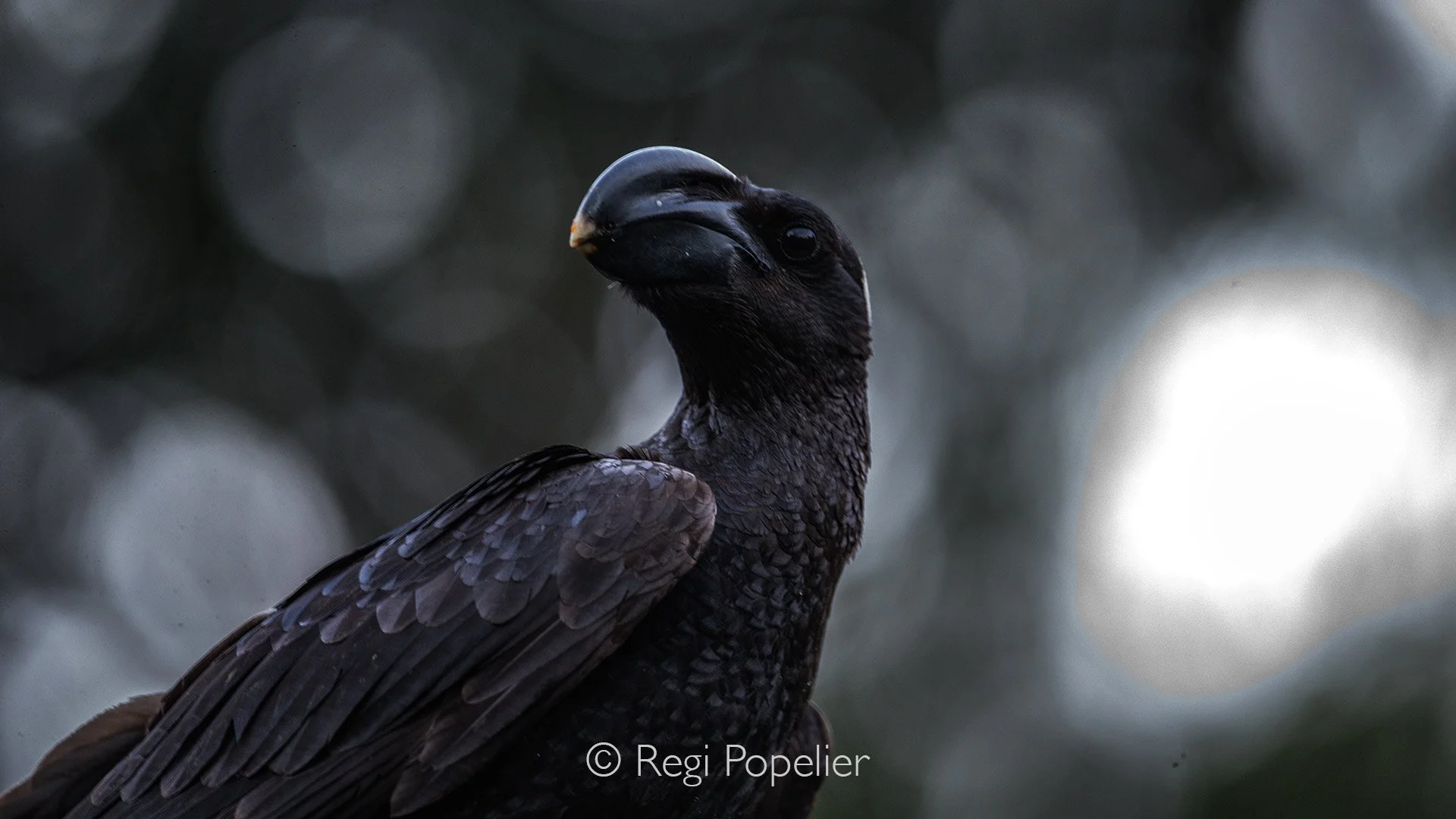
ETH058 - In the Simien Mountains, ravens soar effortlessly above cliffs, their dark silhouettes contrasting against vast skies adding drama and contrast.
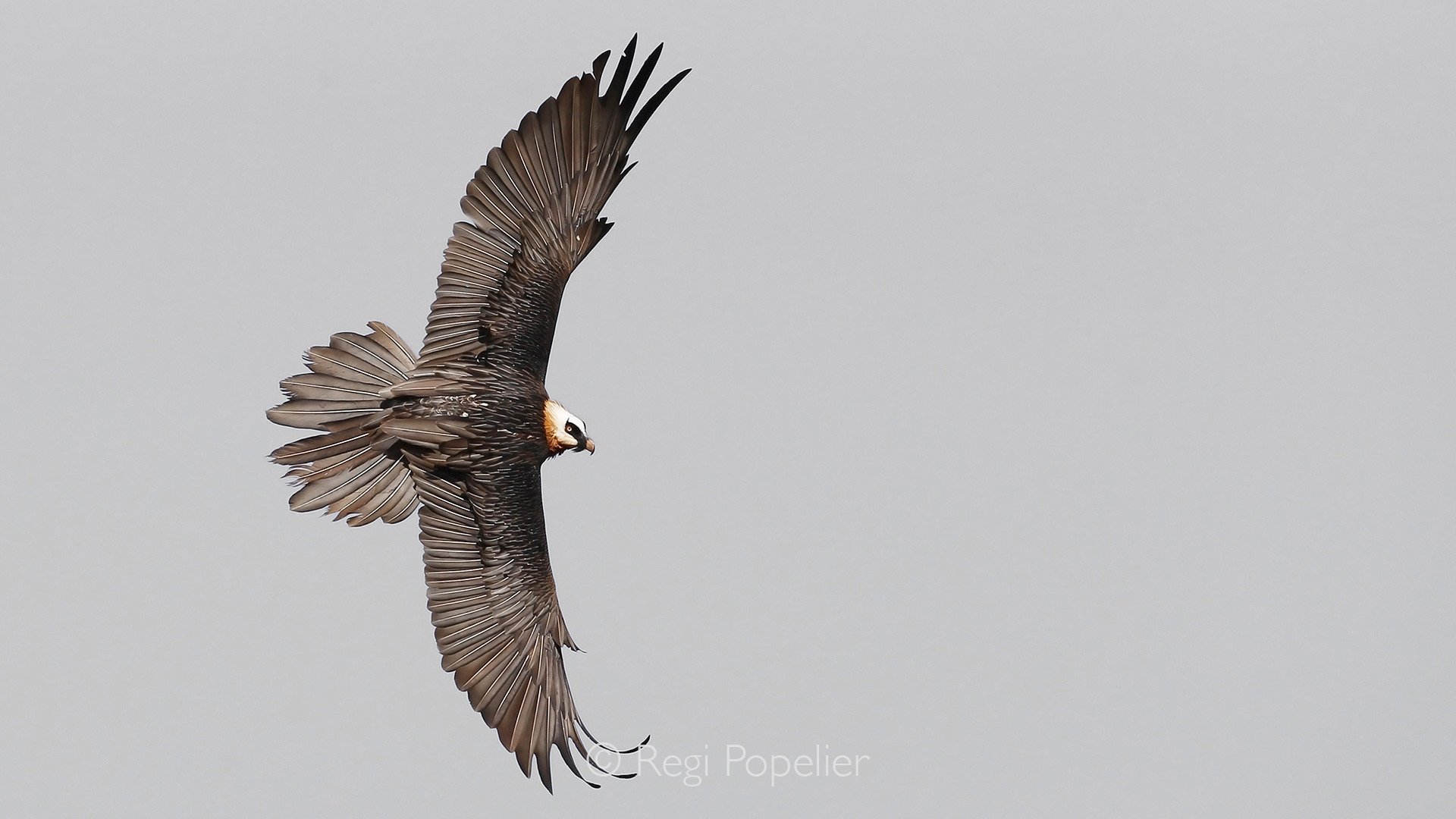
ETH059 - Lammergeier in it's flight over the Simien Mountains.
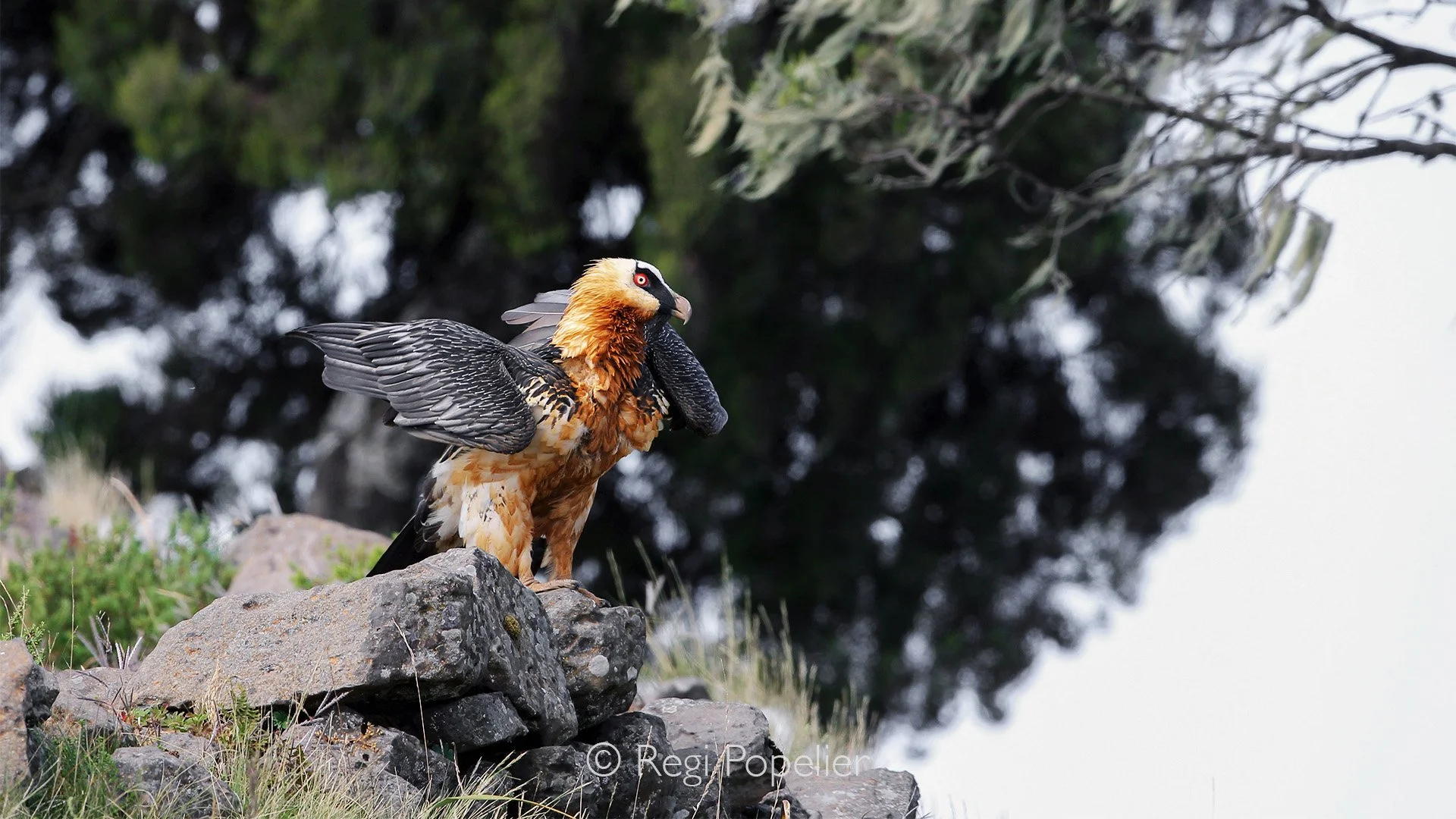
ETH060 - Waiting to be fed with the bones of slaughtered lambs at the lodge of Simien mountains.
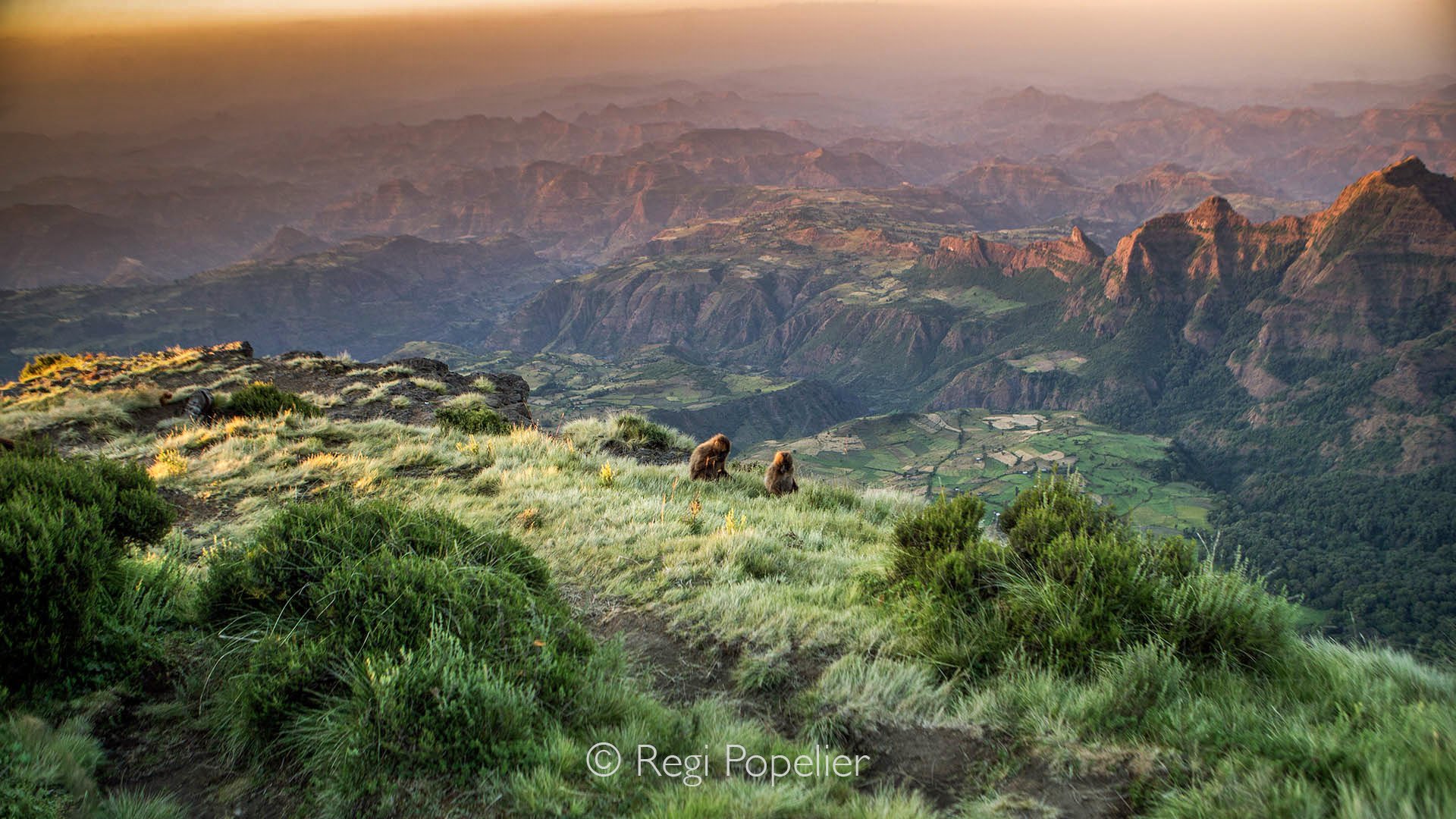
ETH061 - At early morning, gelada baboons bask in the first rays of the sun, warming themselves against the backdrop of an immense, awe-inspiring landscape.
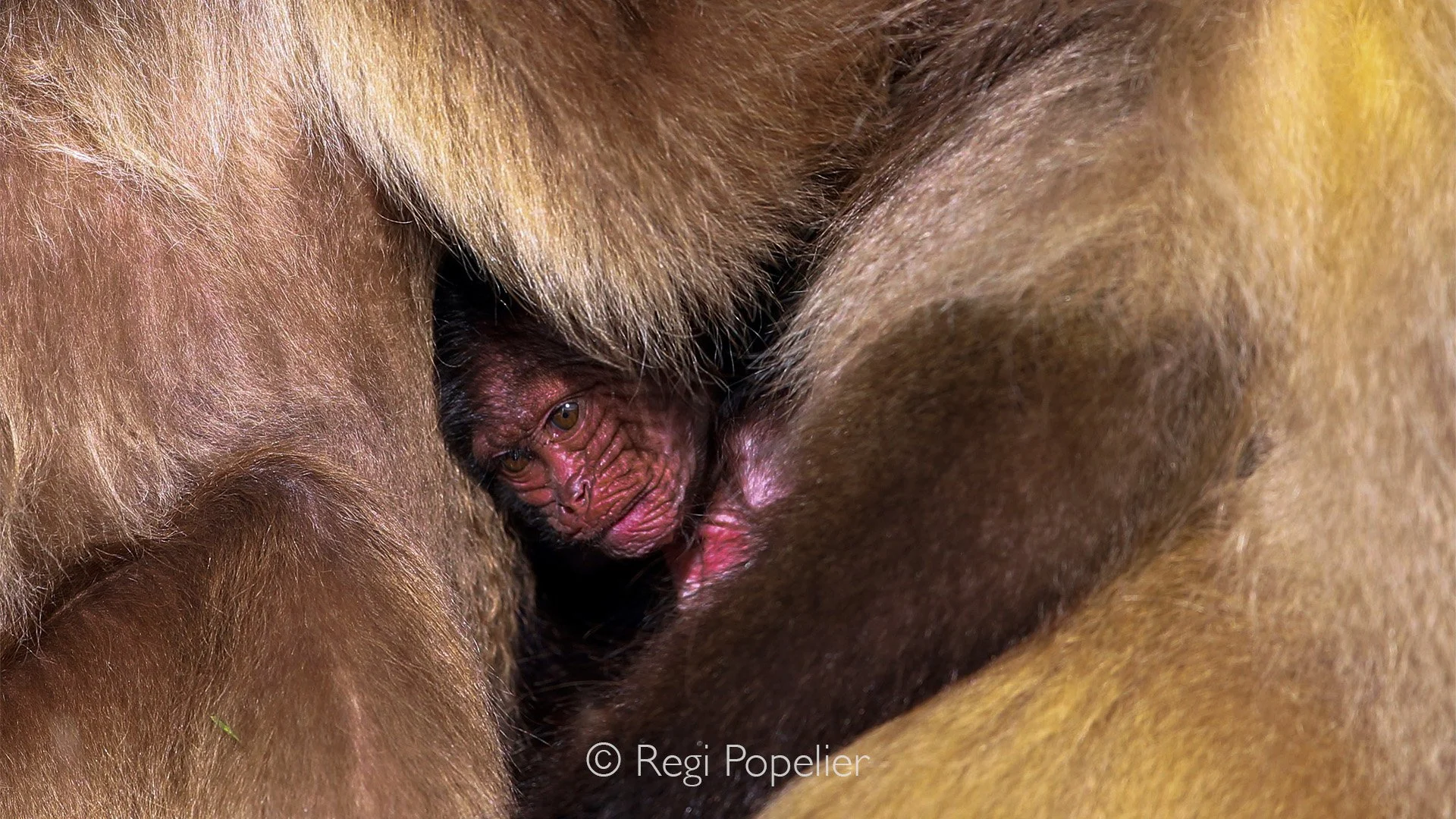
ETH062 - Baby Gelada or bleeding hart baboon peeping out the body's of grooming parents.
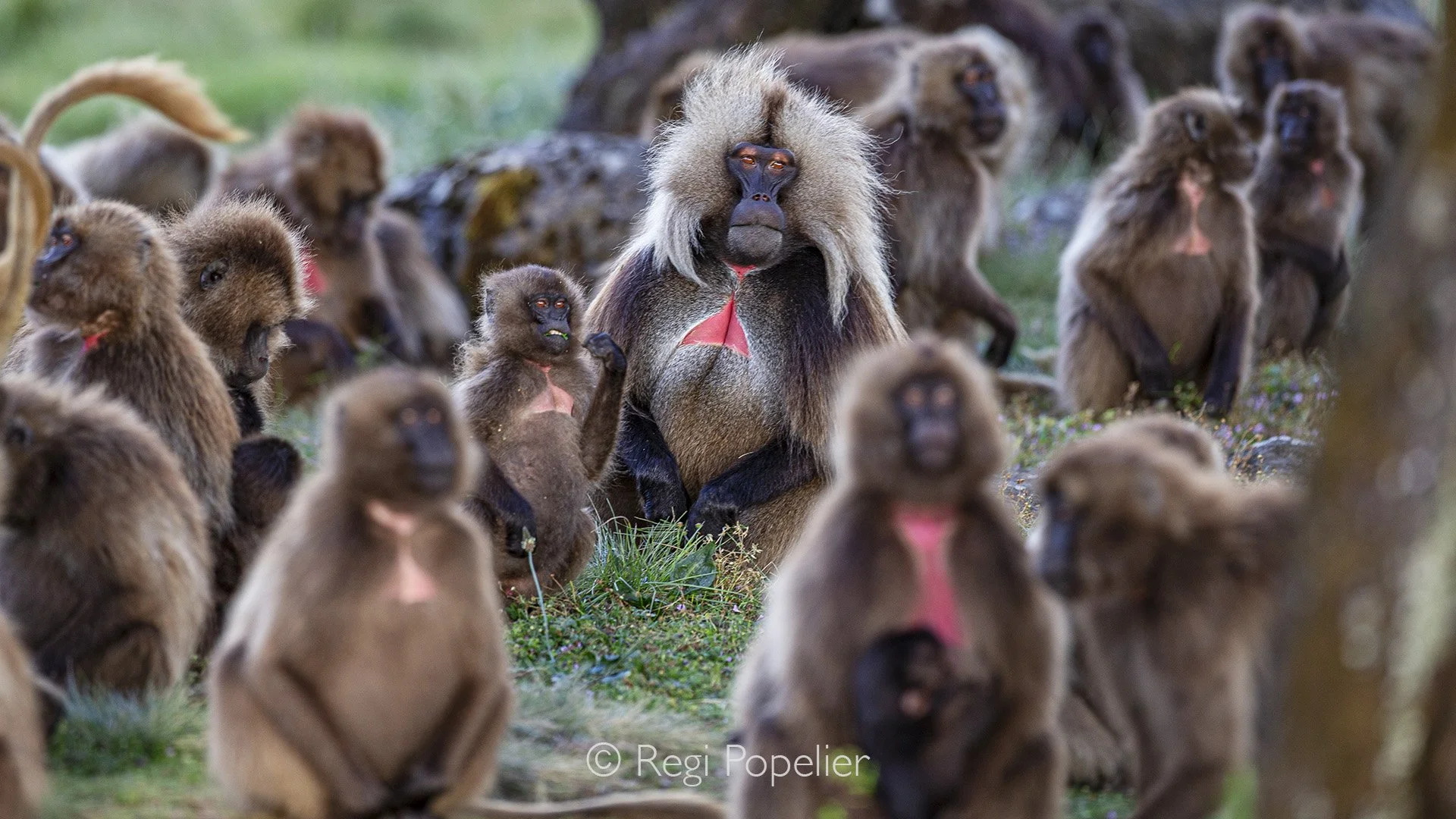
ETH063 - A dominant male surrounded by his family at dawn nearby the protective mountains.
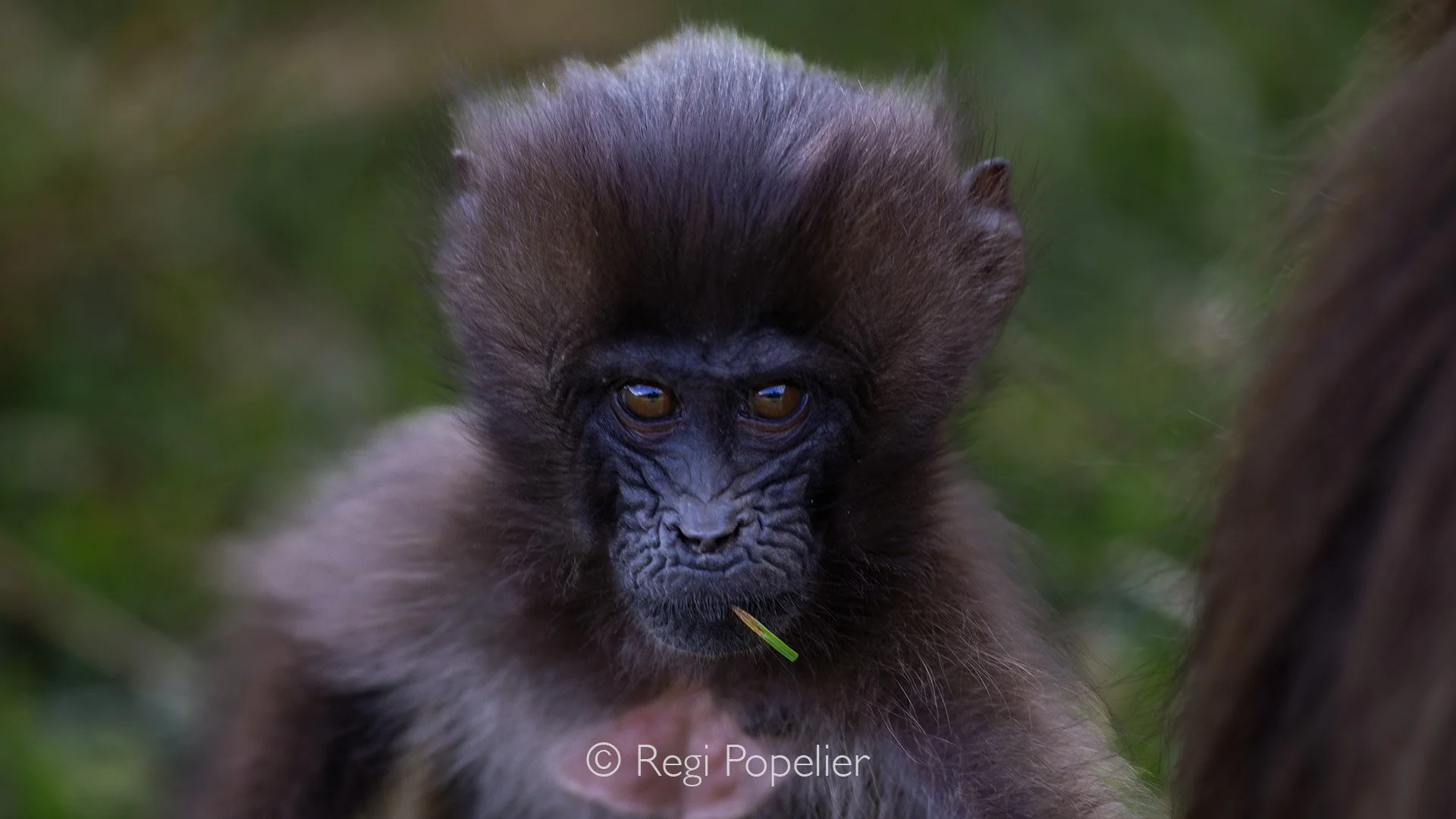
ETH064 - Expressions of an innocent.
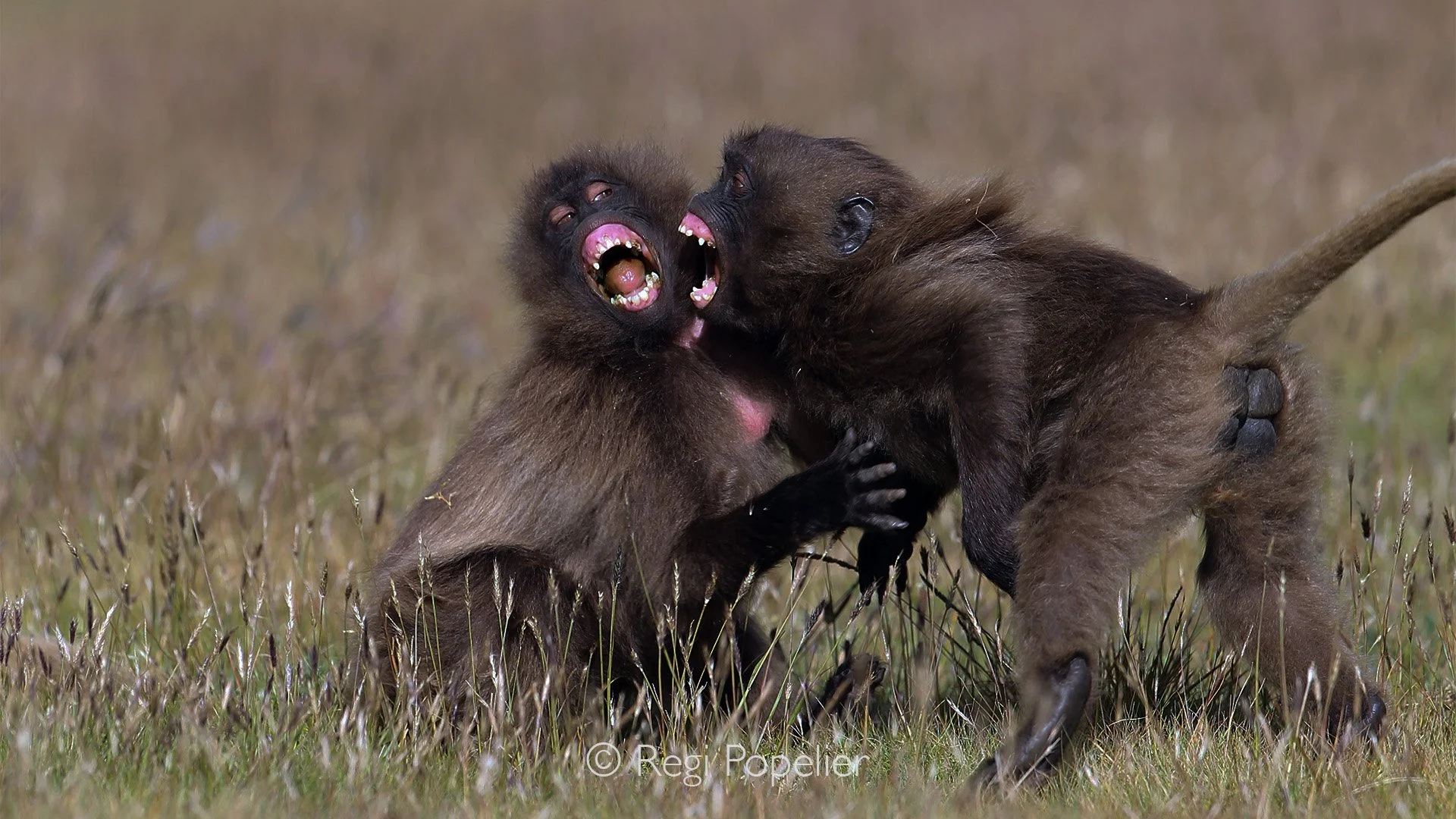
ETH065 - Two juvenile gelada baboons, brimming with youthful energy and testosterone, play-fight intensely as they test strength and establish dominance.
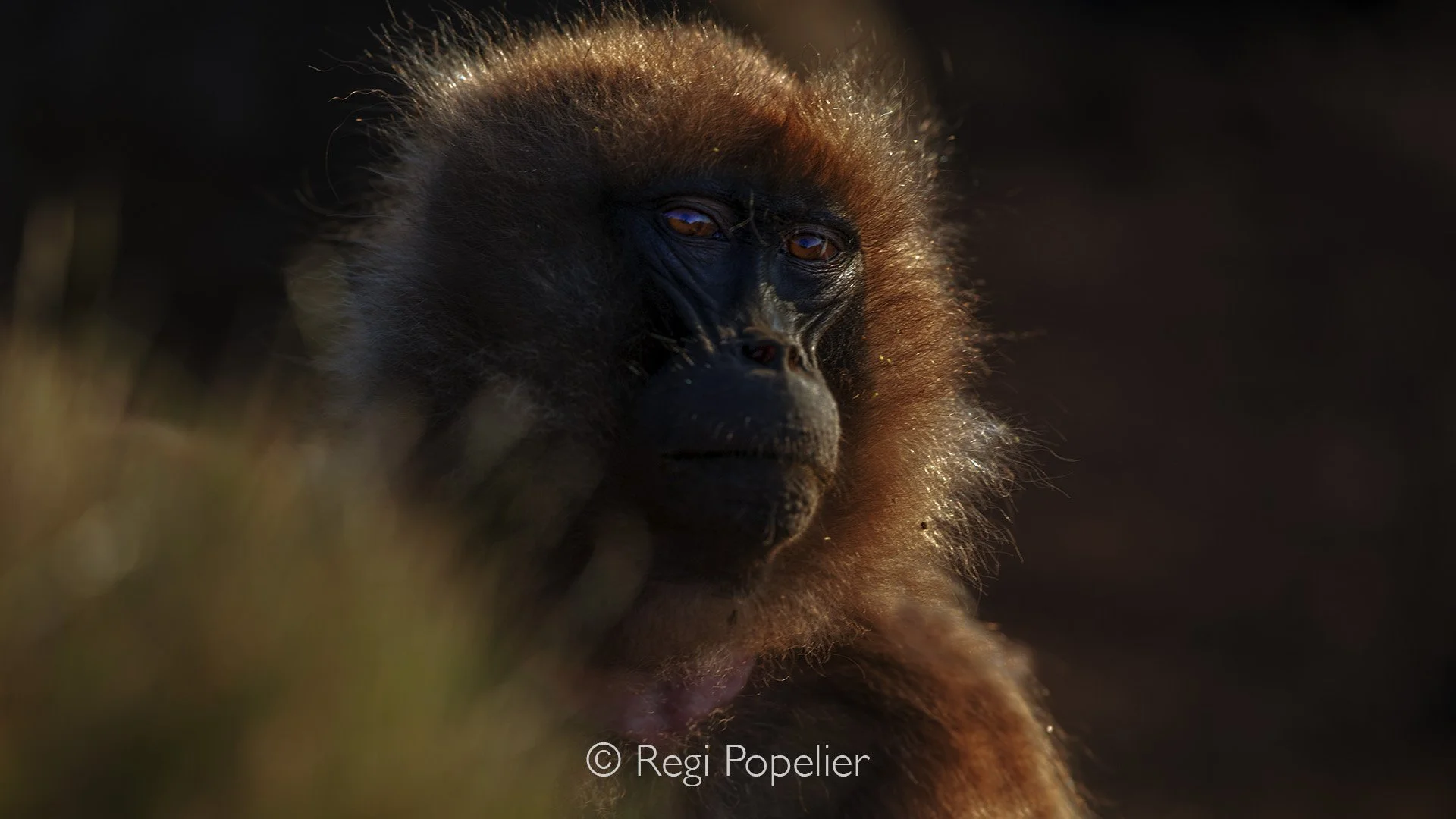
ETH066 - Profile of a female baboon photographed against light.
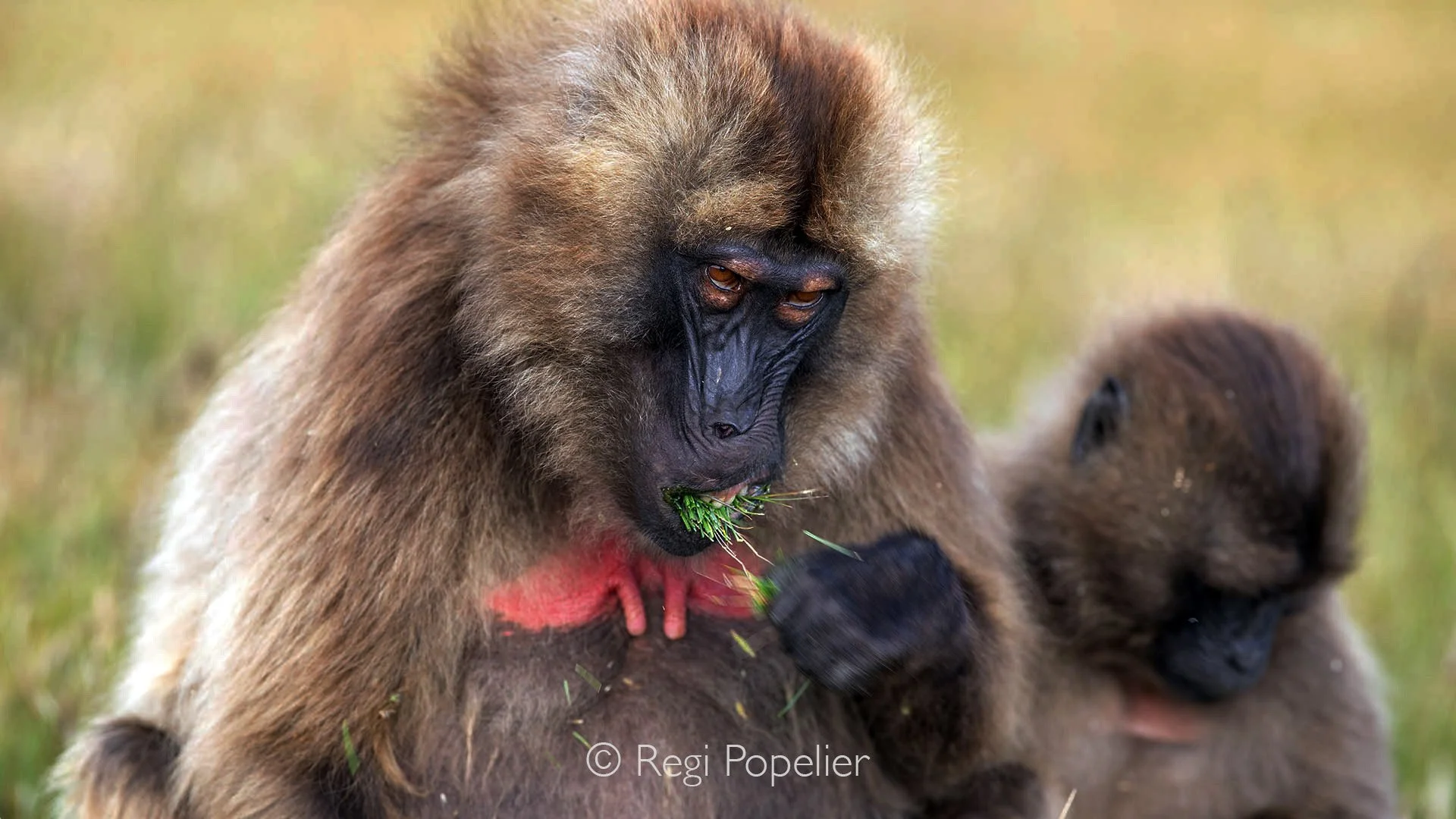
ETH067 - Mother gelada teaching her youngster while selecting grasses.
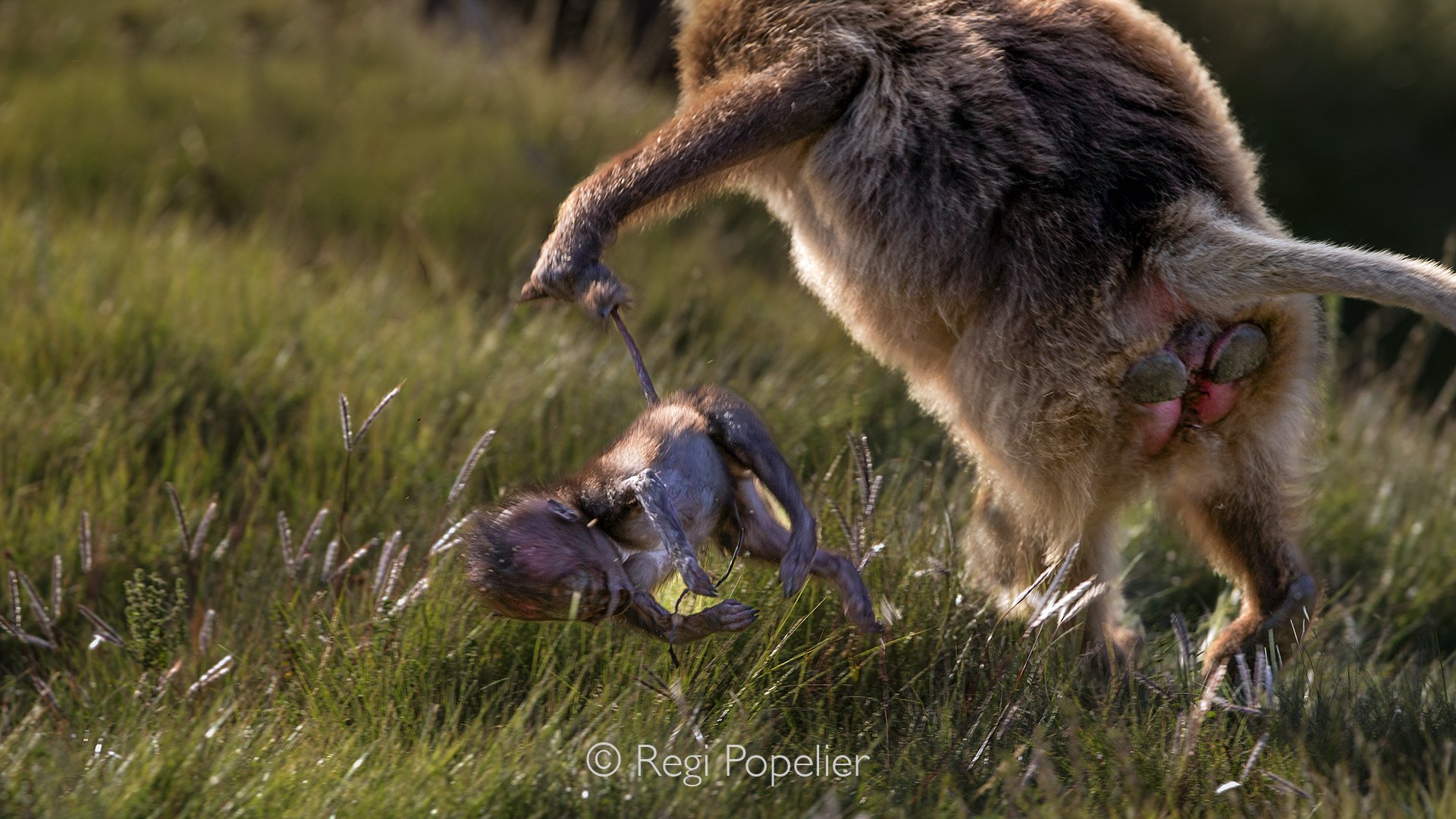
ETH068 - A grieving mother gelada baboon carries her lifeless infant for days, a quiet and powerful expression of loss, revealing the deep emotional bonds and mourning behavior within the species.
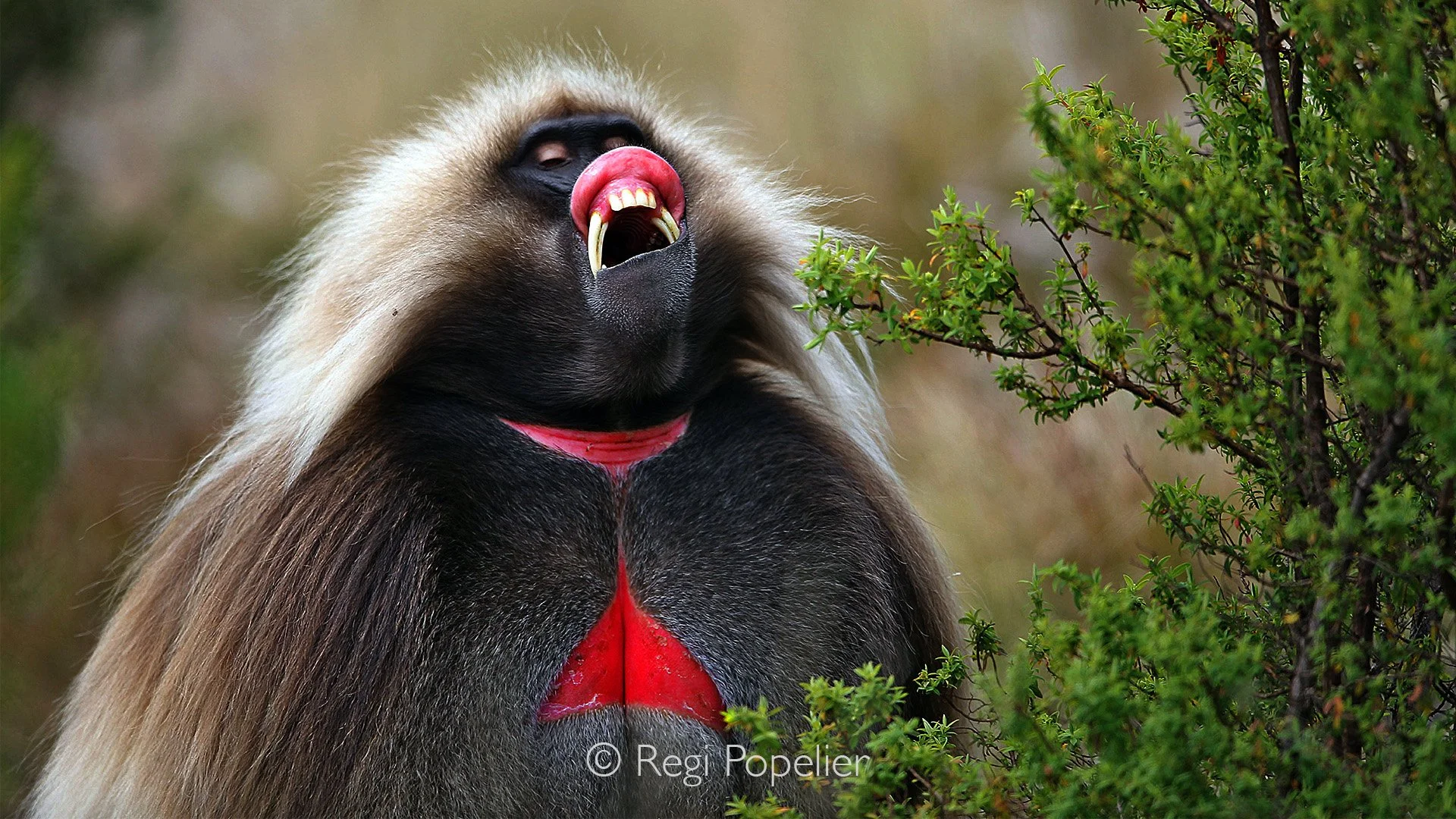
ETH069 - Display of dominance.
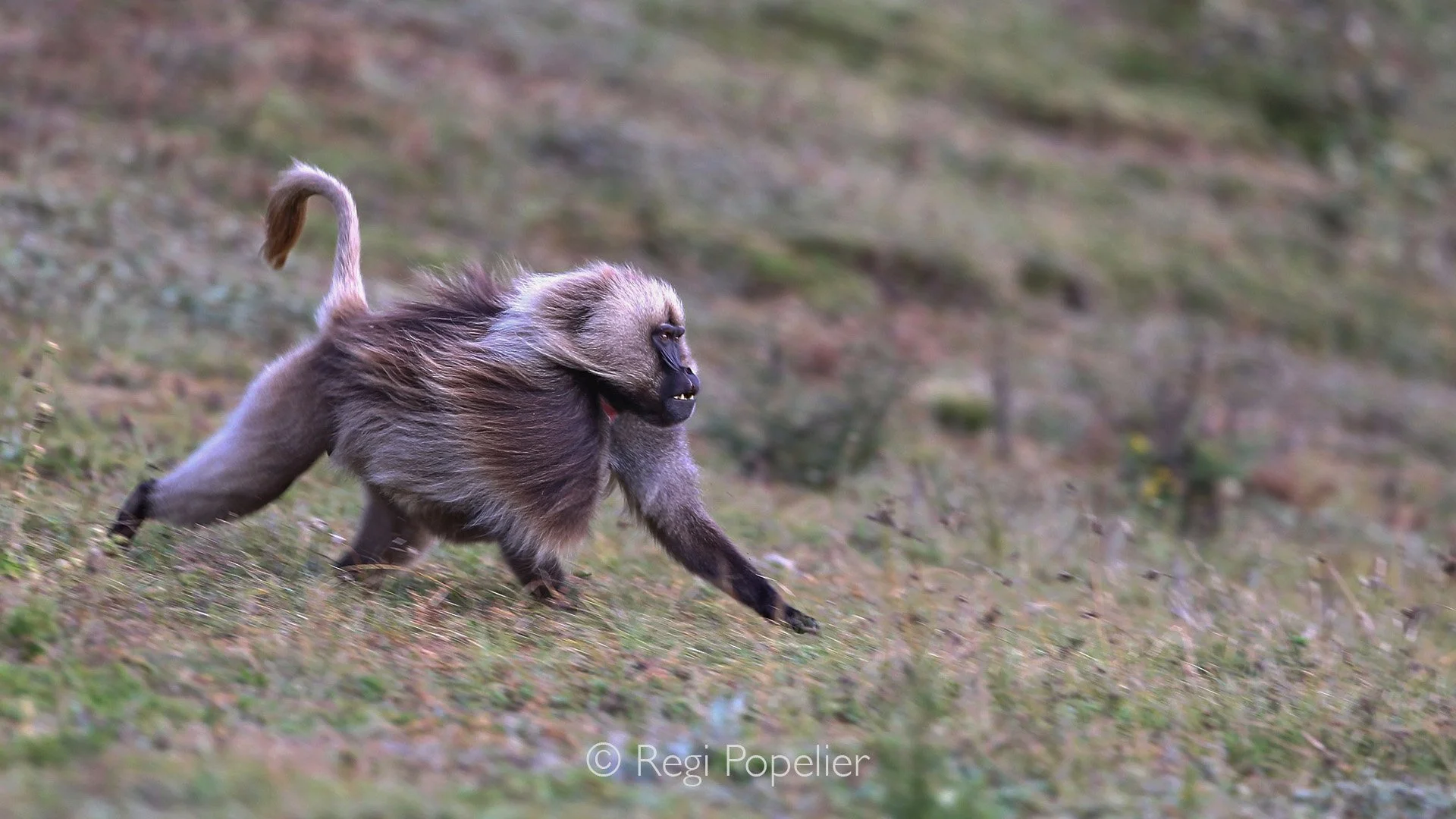
ETH070 - On the chase, gelada baboons display remarkable agility, swift, focused, and perfectly adapted to the rugged terrain.
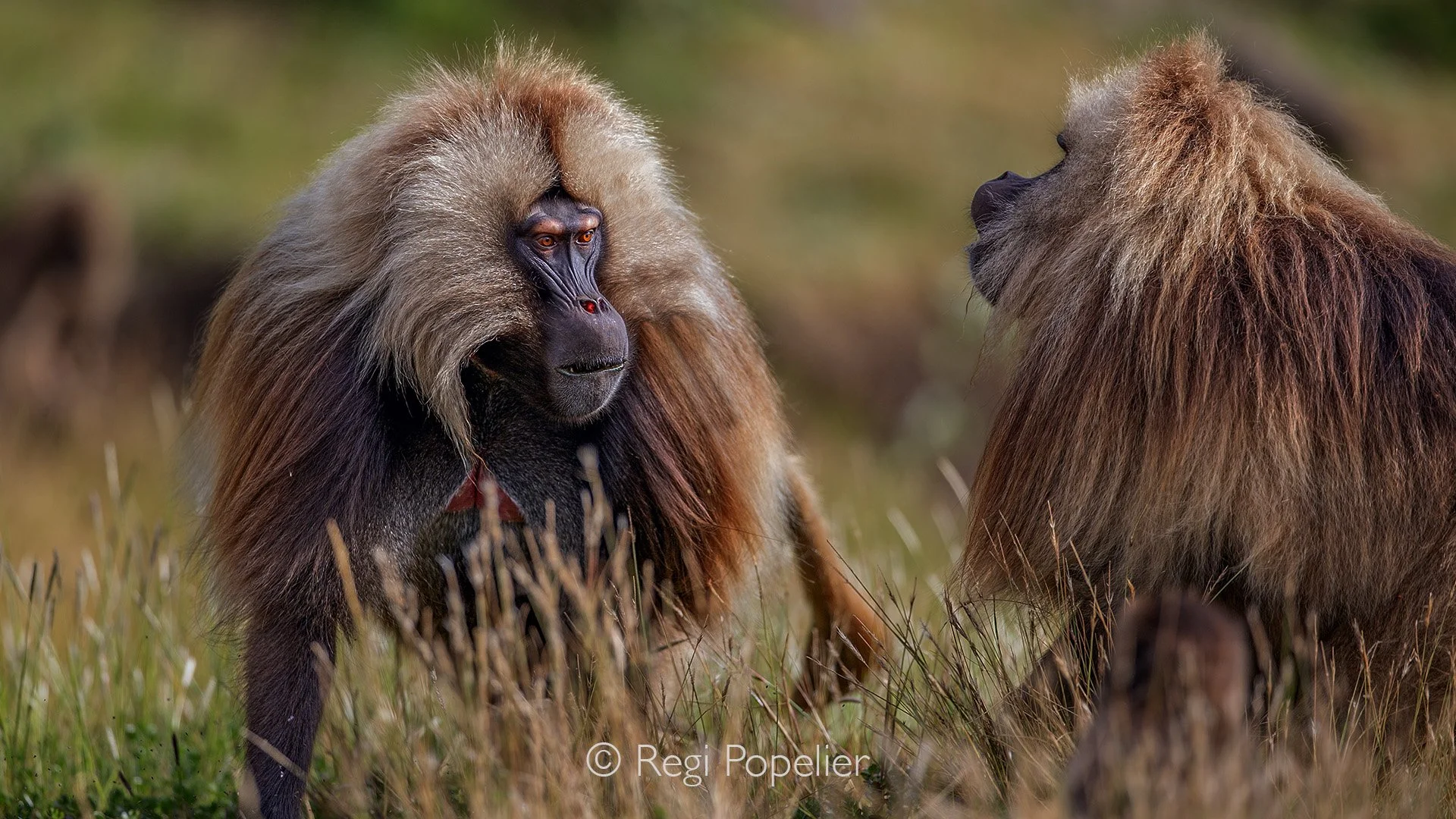
ETH071 - The confrontation approaches as two males size each other up, tension building while they test strength.
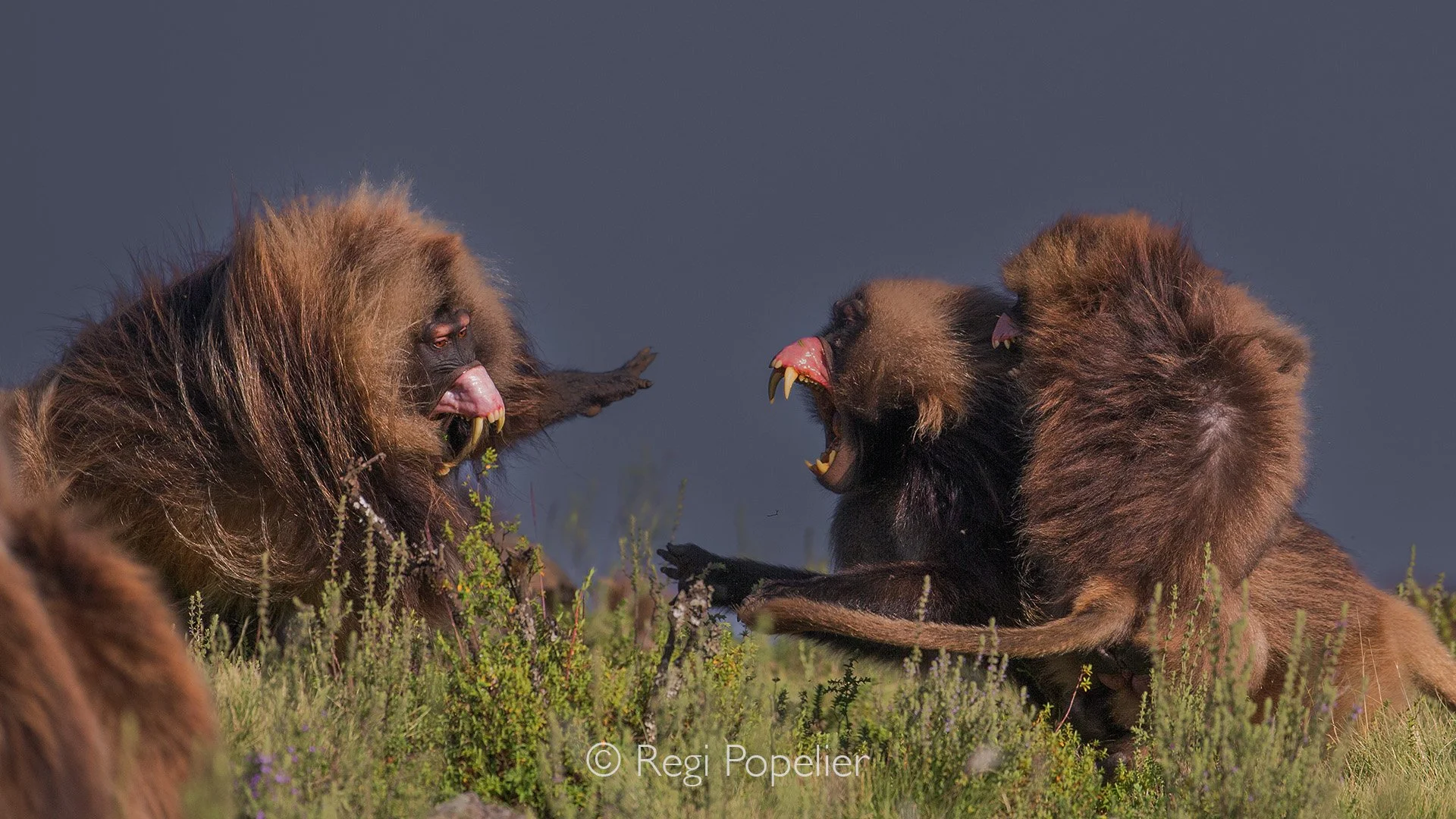
ETH072 - The clash begins, raw power and instinct collide in a sudden burst of intensity.
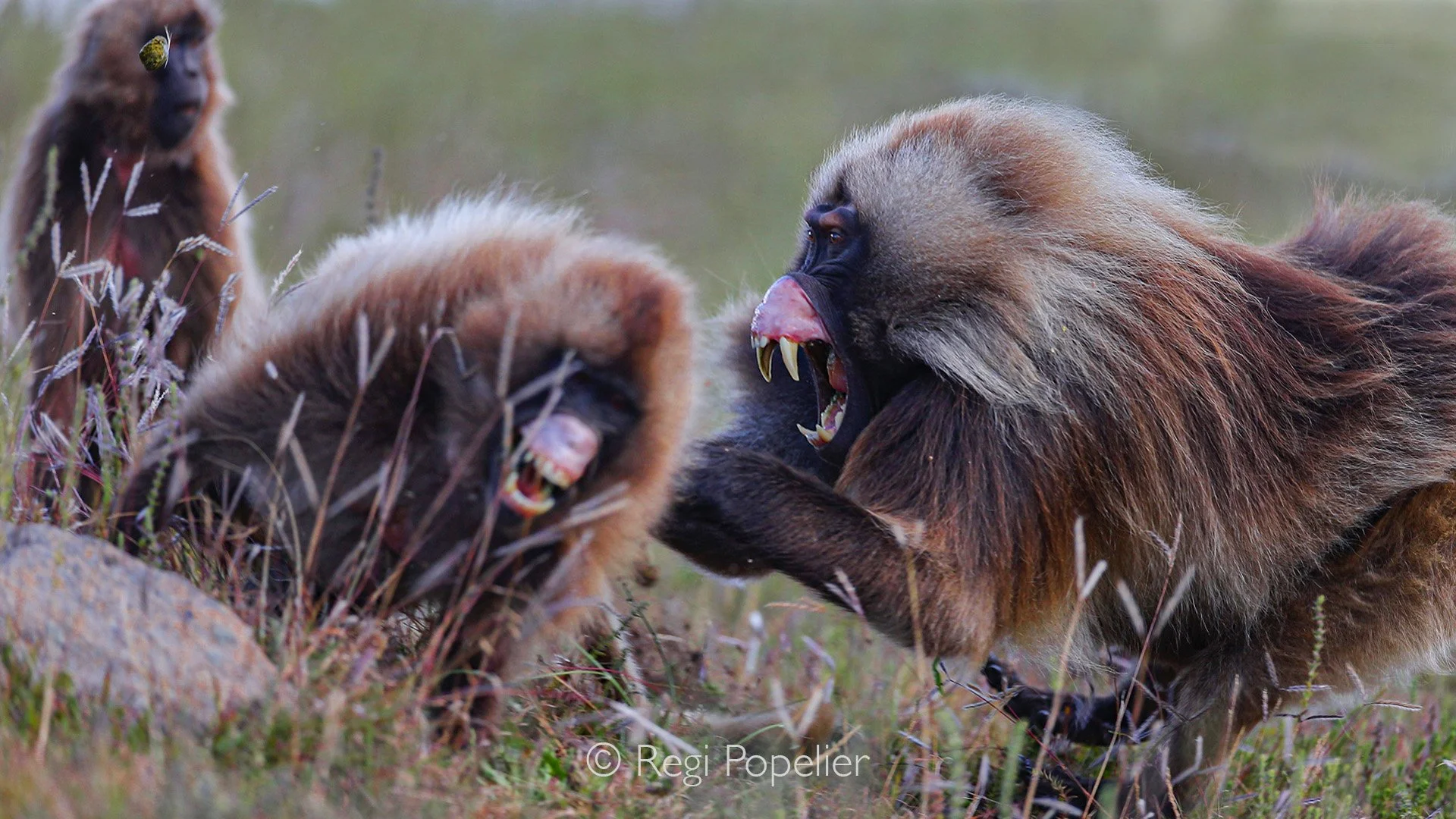
ETH073 - Fights between male gelada baboons often begin under the influence of females, as rivalry and competition for dominance and mating rights intensify.
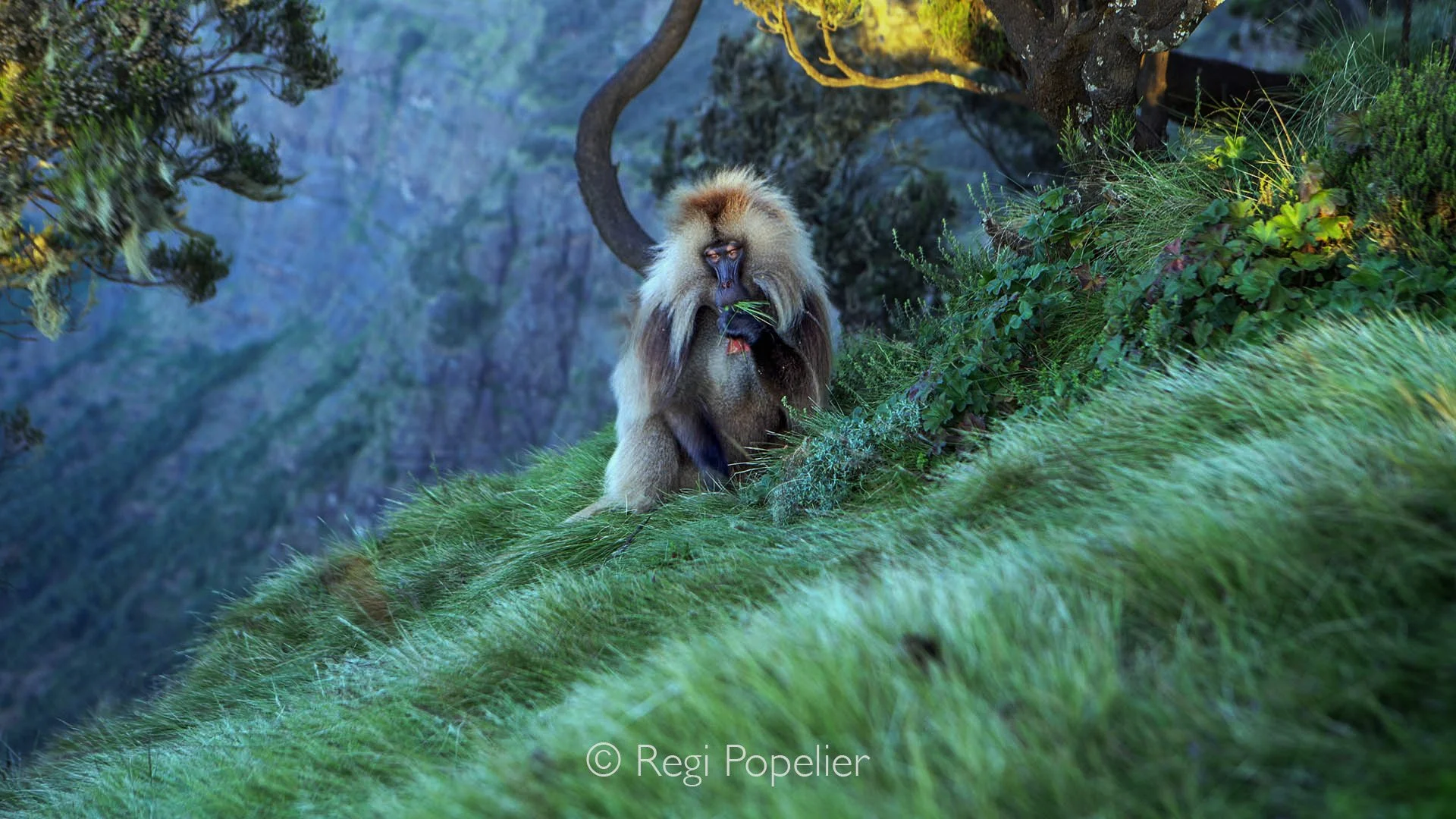
ETH074 - At evening, a male retreats to the mountain rim, seeking safety and vigilance against lurking predators.
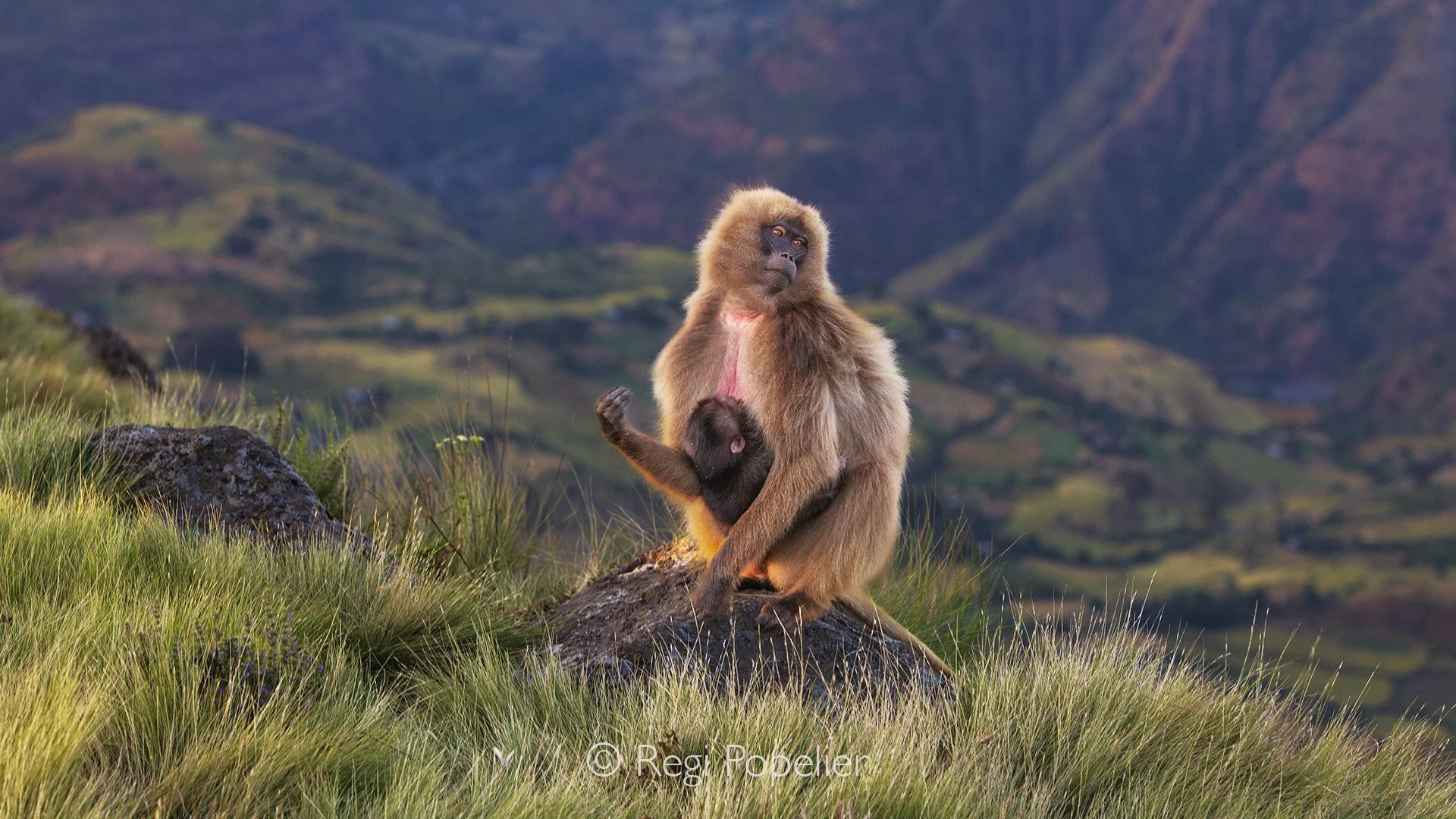
ETH075 - isolated with her baby on the return to the rims of the mountains.
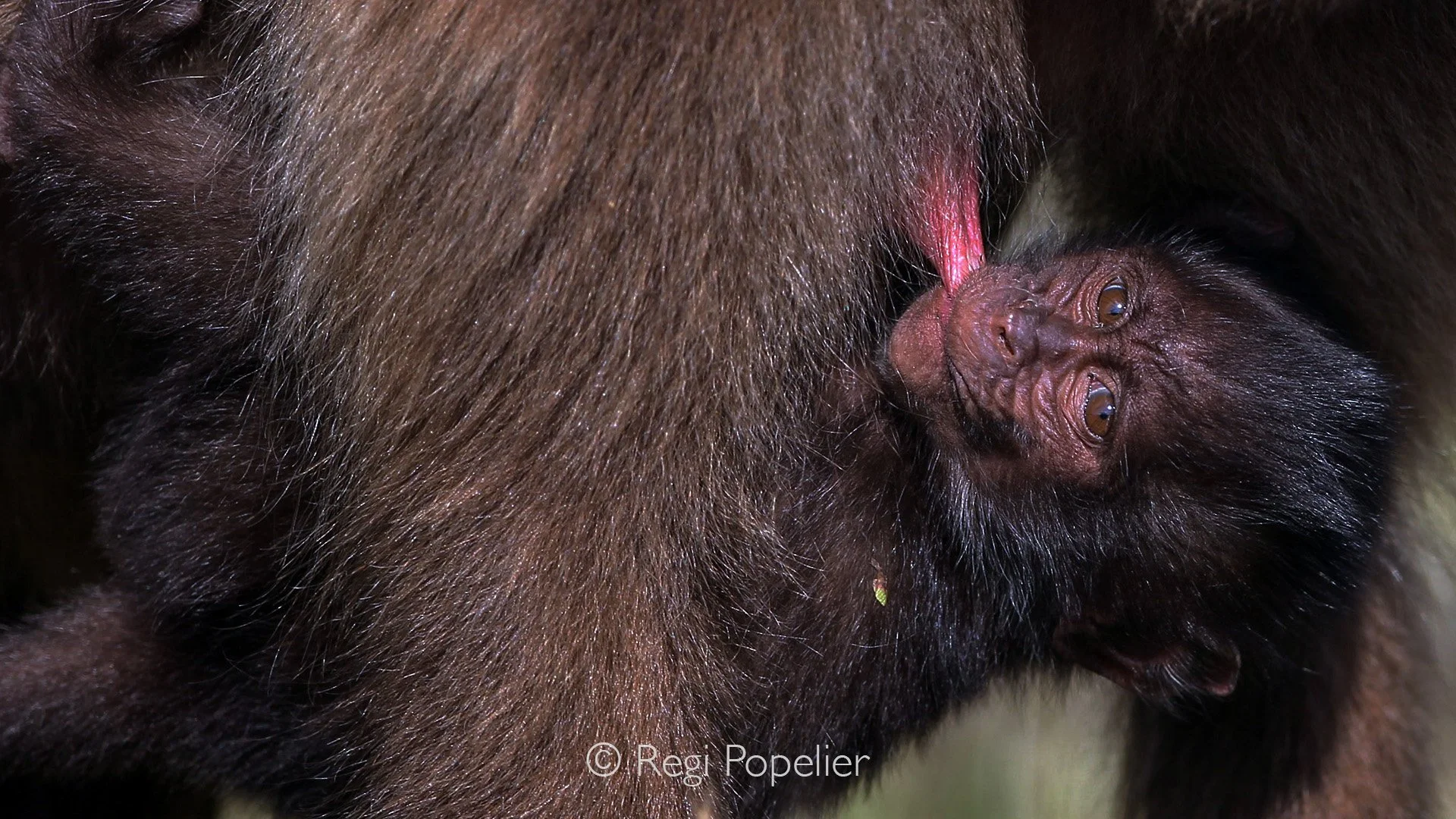
ETH 076 - I am thirsty mom.
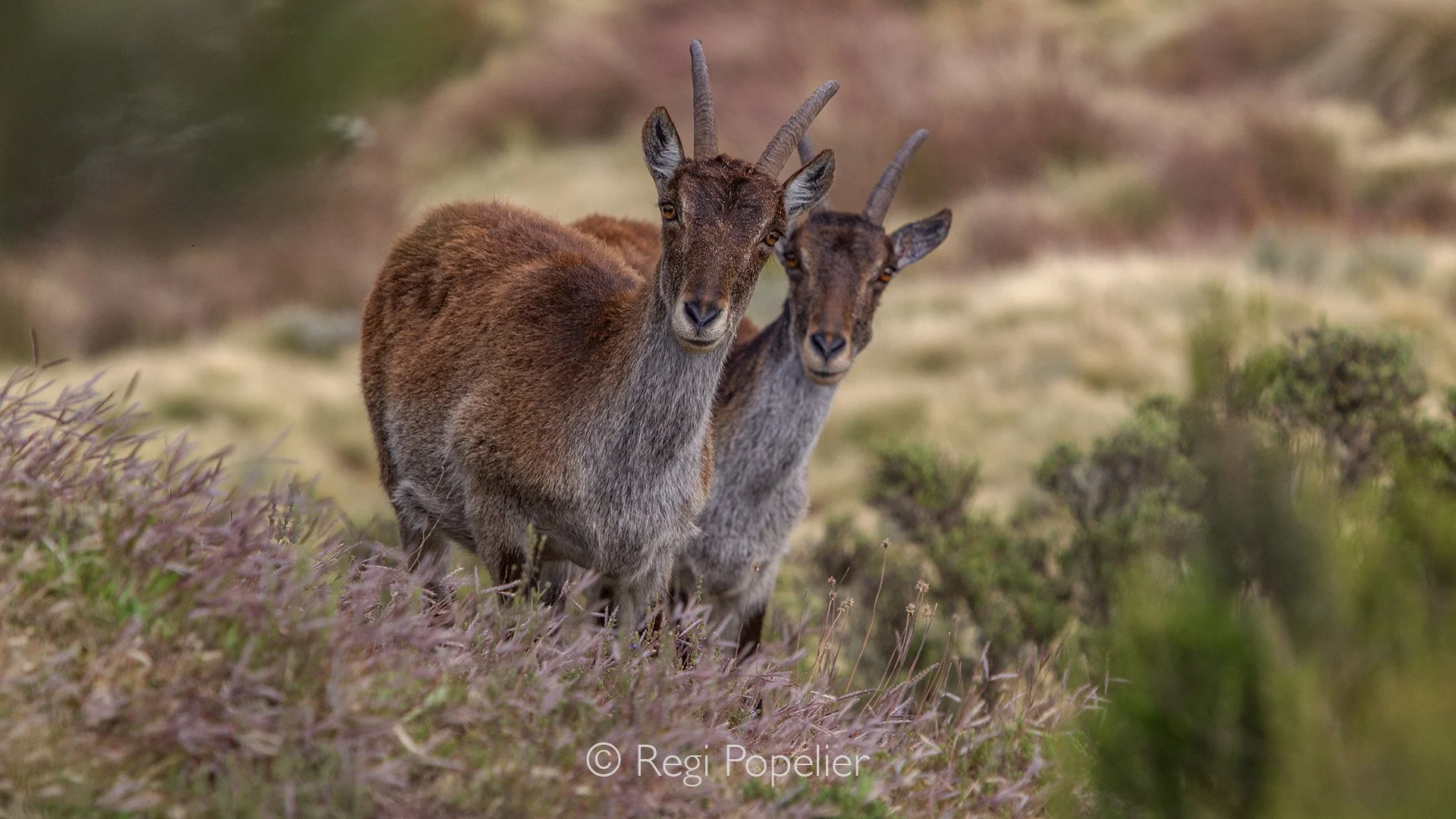
ETH077 - Ibex moves gracefully through the high grasses of the Simien Mountains, blending agility and alertness amid the rugged, windswept terrain.
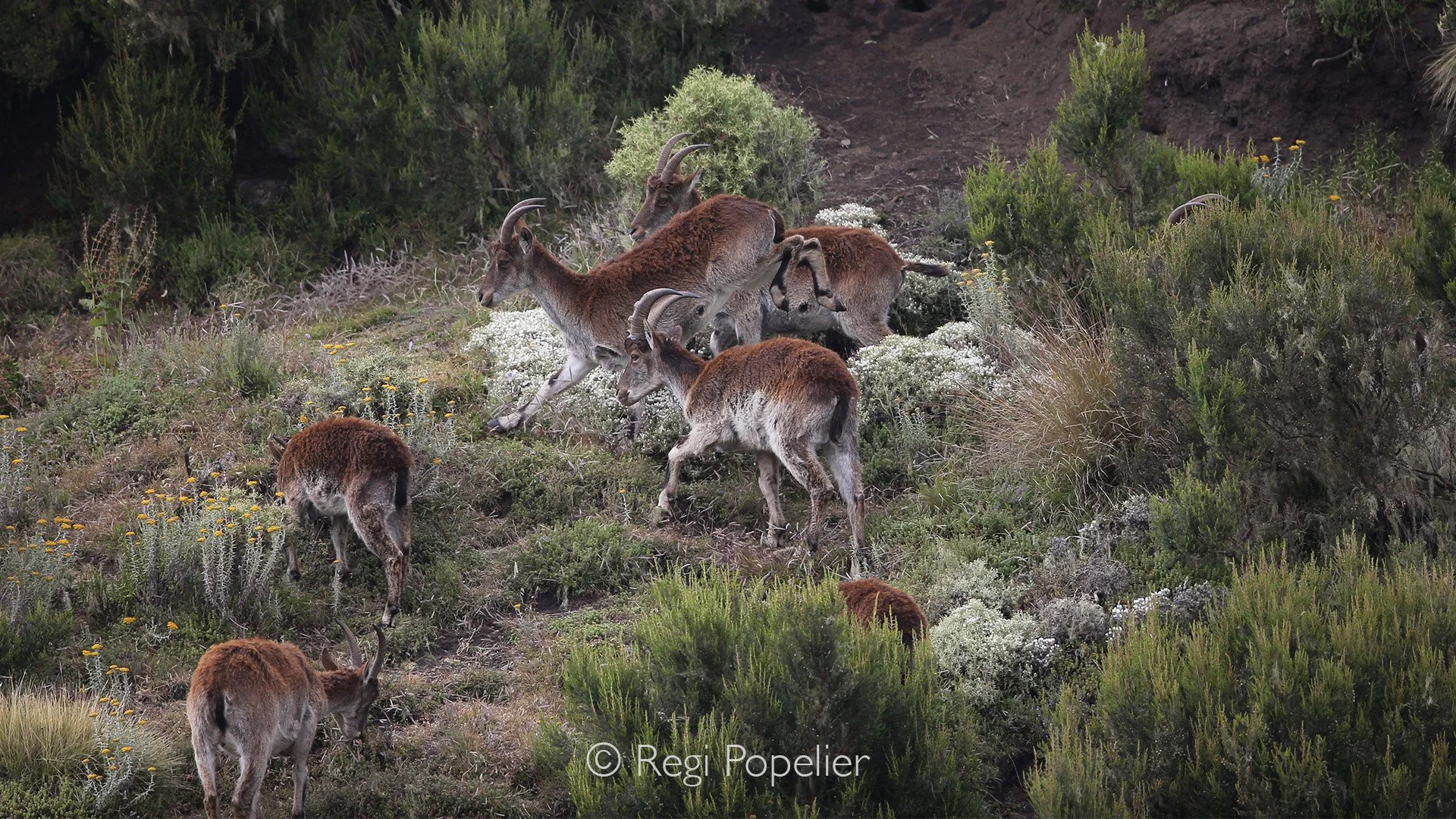
ETH078 - Foraging together, these ibexes ascend to higher elevations in the evening, moving as a cautious, coordinated group across the rugged slopes.
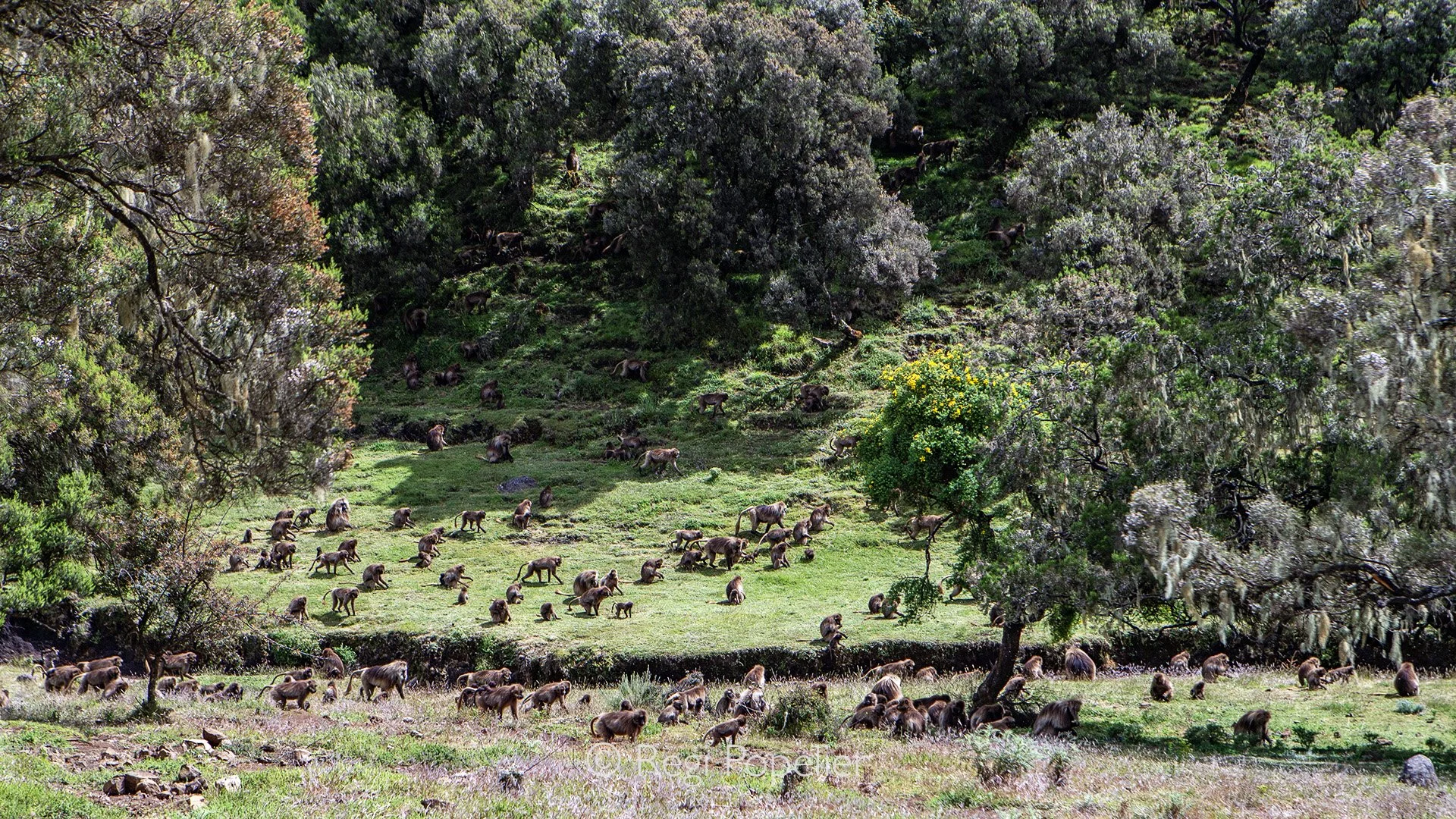
ETH079 - Gelada baboons are moving in great numbers feeding on grasses.
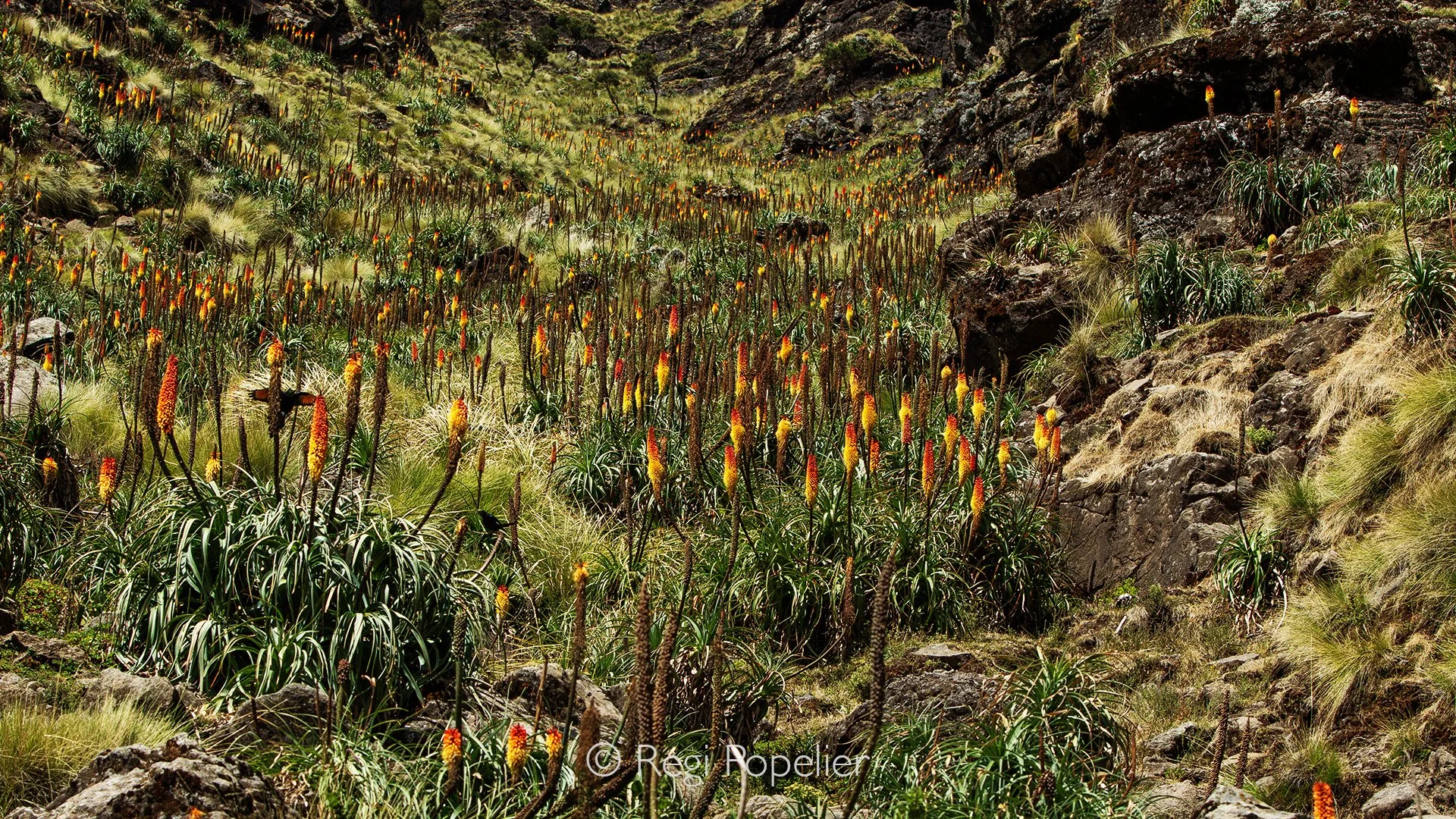
ETH080 - Flower of Kniphofia Foliosa at the slopes of Simien Mountains.